4 Best Best+Image+Camera Models for 2027 You Can’t Miss
You’ll love the Sony RX100 VII for its compact design and vibrant 20.1MP sensor, perfect for travel. It fits easily in your pocket, making it super convenient when you’re on the go.
If you want flexibility, Canon’s EOS R100 Double Zoom Kit offers interchangeable lenses and excellent autofocus. This setup is great for capturing everything from wide landscapes to detailed close-ups.
Need extreme reach? The Nikon COOLPIX P1000’s massive 125x zoom won’t disappoint. It’s ideal for wildlife or sports photography where you can’t get too close.
For versatile content creation, the Canon EOS R100 Mirrorless Bundle covers wide to telephoto needs effortlessly. These picks balance image quality, portability, and zoom power—you’ll find plenty more insights to help choose the right fit.
| Image | Name | Editor's Rating | Price |
|---|---|---|---|
|
|
||

|
|
||
|
|
Sony RX100 VII Premium Compact Camera 1.0-Type CMOS Sensor Black
No products found.
Experience the perfect blend of portability and professional-grade imaging with the Sony RX100 VII Premium Compact Camera. Designed for photographers who demand high-quality results on the go, this camera tackles common challenges in travel and street photography with ease. Its 1.0-type stacked CMOS sensor captures detailed 20.1 MP images, ensuring sharp and vibrant photos wherever you are.
The camera’s compact design, weighing just 275 grams, makes it easy to carry all day without fatigue. The integrated Zeiss Vario-Sonnar T lens provides an impressive 8x optical zoom (24–200mm equivalent), allowing you to frame distant subjects clearly without changing lenses. This versatility supports a wide range of shooting styles from landscapes to portraits.
Maintaining quick and accurate focus is effortless thanks to the Fast Hybrid AF system with 357 phase-detection points, delivering focus speeds as fast as 0.02 seconds. This responsiveness helps capture fleeting moments sharply, improving your success rate in dynamic environments. The 3-inch tilting touchscreen also allows intuitive control and creative angles.
For multimedia creators, the RX100 VII offers 4K video recording with image stabilization, reducing blur and shake for smooth footage. While the aperture narrows to f/4.5 at full zoom, careful lighting management can maximize image quality. Users should note the single SD card slot when planning extended shoots.
Best for: Photography enthusiasts and travelers seeking a compact camera that balances powerful zoom, fast autofocus, and high-resolution imaging in a lightweight body.
What We Like:
- High-resolution 1.0-type stacked CMOS sensor for detailed images
- Versatile Zeiss lens with 8x optical zoom covering wide to telephoto
- Ultra-fast Hybrid AF system ensures sharp focus in challenging conditions
- 4K video capture with built-in stabilization for smooth recordings
Specification:
| Feature | Details |
|---|---|
| Manufacturer | Sony |
| Sensor Type | 1.0-type stacked CMOS |
| Resolution | 20.1 Megapixels |
| Lens | Zeiss Vario-Sonnar T |
| Optical Zoom | 8x (24–200mm equivalent) |
| Aperture Range | f/2.8 to f/4.5 |
| Weight | 275 grams |
| Screen Size | 3 inches (tilting touchscreen) |
| Video Resolution | 4K with stabilization |
| Storage Slot | Single SD card slot |
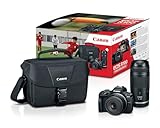
Canon EOS R100 Double Zoom Lens Kit, Black
- EOS R100 Mirrorless camera.
- RF75-300mm F4-5.6 telephoto zoom lens (approx.120-480mm on APS-C equipped bodies).
- RF-S 18-45mm F4.5-6.3 lens (approx. 29-72mm on APS-C equipped bodies).

Capture life’s precious moments with the Canon EOS R100 Double Zoom Lens Kit in Black. This mirrorless camera kit is designed to help beginner photographers explore their creativity with ease. It combines a high-resolution 24.1MP APS-C sensor with two versatile lenses to cover a wide range of shooting scenarios.
The RF-S 18-45mm lens is perfect for everyday photography, from family gatherings to travel adventures, while the RF 75-300mm telephoto zoom brings distant subjects like wildlife and sports into clear view. Dual Pixel CMOS AF with eye detection ensures your shots are always sharp and focused, even when capturing fast-moving subjects.
Recording vivid 4K videos is simple and stable, thanks to the camera’s optical image stabilization. The included Shoulder Bag 200 ES keeps your equipment protected and organized on the move, making maintenance and transport hassle-free. Though the lenses have moderate aperture ranges, they provide reliable performance for most lighting conditions.
Best for: beginner photographers seeking a versatile and lightweight mirrorless camera kit with wide-angle and telephoto lenses for everyday and distant subject photography.
What We Like:
- Two lenses cover a broad focal range for diverse shooting needs.
- Fast and accurate autofocus with Dual Pixel CMOS AF and eye detection.
- 4K video capability paired with optical image stabilization.
- Lightweight design with a protective carrying bag included.
Specification:
| Feature | Details |
|---|---|
| Manufacturer | Canon |
| Dimensions | Compact mirrorless body |
| Weight | Lightweight design |
| Sensor Resolution | 24.1MP APS-C |
| Lens Options | RF-S 18-45mm and RF 75-300mm |
| Color | Black |
Nikon COOLPIX P1000 Superzoom Digital Camera (Black)
- 3000 millimeter optical zoom-the most powerful zoom lens; Ever put on a Nikon Coolpix camera
- 4k ultra hd video with HDMI out, stereo sound and an accessory hot shoe
- Rock steady dual detect image stabilization and great low light capability. Vibration reduction: Lens shift VR (still...
Experience the thrill of capturing distant moments with the Nikon COOLPIX P1000 Superzoom Digital Camera. Its remarkable 125x optical zoom lets you bring faraway subjects into stunning focus. Whether you’re photographing wildlife or sports, this camera expands your creative possibilities without needing extra lenses.
The camera’s design supports easy framing with a 3.2-inch vari-angle LCD and an electronic viewfinder. This makes it simple to compose shots from various angles, even in bright outdoor light. The built-in hybrid vibration reduction helps keep your images and videos steady, reducing blur caused by hand movement.
With a 16MP sensor, the P1000 delivers clear photos, though its smaller sensor size means performance in low light is moderate. You can record 4K UHD video with stereo sound, ideal for capturing high-quality footage on the go. Wireless connectivity via Wi-Fi and Bluetooth allows quick sharing and remote control.
Maintenance is straightforward; keep the lens and sensor clean and protect the camera body from moisture. Due to its weight of 3.1 pounds, it’s best suited for handheld use over shorter periods or supported setups.
Best for: Photographers and enthusiasts who need extreme telephoto reach and versatile shooting features in a compact superzoom camera.
What We Like:
- Powerful 125x optical zoom with fast aperture for detailed distant shots
- Hybrid vibration reduction for clearer photos and stable 4K video
- Vari-angle LCD and electronic viewfinder for flexible composition
- Built-in Wi-Fi and Bluetooth for easy sharing and control
Specification:
| Feature | Details |
|---|---|
| Manufacturer | Nikon |
| Dimensions | Approx. 6.1 x 4.4 x 5.5 in |
| Weight | 3.1 lb (1.4 kg) |
| Sensor Size | 1/2.3-inch |
| Color Options | Black |
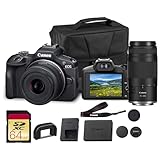
Canon EOS R100 Mirrorless Camera with 18-45mm & 75-300mm Double Lens Bundle
- Capture every perspective with the Canon EOS R100 mirrorless camera kit, featuring two versatile lenses — the RF-S...
- High-Resolution Imaging with APS-C Sensor - Equipped with a 24.2MP APS-C CMOS sensor and DIGIC 8 image processor, the...
- Canon’s renowned Dual Pixel CMOS AF ensures accurate and responsive focusing across the frame, perfect for moving...
Experience a new level of creativity with the Canon EOS R100 Mirrorless Camera. This kit is designed to help beginners and content creators capture sharp, vibrant images with ease. Its compact, lightweight design makes it simple to carry and use anywhere.
The camera features a 24.2MP APS-C sensor paired with the DIGIC 8 processor, which delivers clear photos and smooth 4K videos. Eye Detection and Dual Pixel CMOS AF ensure your subjects stay in sharp focus, solving common challenges in fast-moving or portrait photography.
Two versatile lenses, 18-45mm wide-angle and 75-300mm telephoto, provide flexibility for capturing landscapes, wildlife, and everyday scenes. Though the apertures are modest, the lenses cover a wide range of shooting situations without the need to switch equipment frequently.
Maintenance is straightforward thanks to the camera’s durable build and simple controls. Connectivity options like Wi-Fi and USB allow easy file transfer, and the included 64GB card offers ample storage to keep shooting without interruption.
Best for: Beginners and content creators seeking an affordable, versatile mirrorless camera kit with interchangeable lenses for photography and 4K video.
What We Like:
- Two lenses cover wide-angle to telephoto zoom for diverse shooting needs
- 24.2MP sensor with Eye Detection ensures sharp, high-quality images
- Lightweight and compact with built-in Wi-Fi and USB connectivity
- Includes a 64GB memory card for immediate use
Specification:
| Feature | Details |
|---|---|
| Manufacturer | Canon |
| Sensor | 24.2MP APS-C |
| Processor | DIGIC 8 |
| Lens Kit | 18-45mm f/4.5-6.3 & 75-300mm f/4-5.6 |
| Video | 4K UHD |
| Display | 3-inch fixed LCD (720 x 480) |
| Connectivity | Wi-Fi, USB |
| Included Storage | 64GB memory card |
| Dimensions | Compact, lightweight design |
Factors to Consider When Choosing the Best Image Camera
When choosing the best image camera, you’ll want to focus on sensor size and lens quality since they directly affect image clarity. Don’t overlook autofocus performance and image stabilization, especially if you shoot action or low-light scenes.
Also, consider your video needs to make certain the camera matches your creative goals. It’s all about finding the right fit for what you want to capture!
Sensor Size Importance
Because sensor size directly impacts image quality, understanding its importance helps you choose the best camera for your needs. Larger sensors, like full-frame or APS-C, capture more light and deliver superior low-light performance with less noise compared to smaller sensors.
They also provide a shallower depth of field, enabling you to isolate your subject with pleasing background blur. Additionally, bigger sensors offer higher dynamic range, preserving details in both shadows and highlights, even in high-contrast scenes.
With more area per pixel, they improve color fidelity and overall image quality. Keep in mind, sensor size affects field of view and focal length equivalence—smaller sensors crop images, altering how wide or telephoto your shots appear.
Lens Quality Impact
Sensor size lays the foundation for image quality, but lens quality shapes the final look of your photos. When choosing a lens, consider focal length and aperture; wider apertures let in more light and create beautiful background blur, while longer focal lengths compress perspective and bring distant subjects closer.
The lens’s optical construction—like aspherical or low-dispersion elements—directly impacts sharpness and reduces chromatic aberrations. Keep in mind that many lenses are softer wide open, sharpen up a few stops down, then lose resolution if stopped down too much.
Optical image stabilization in the lens helps you shoot sharper handheld shots, especially in low light or with telephoto lenses. Prioritize quality optics to guarantee your images are crisp, vibrant, and professional-looking every time.
Autofocus Performance
Although autofocus performance often goes unnoticed until you need it most, it plays a crucial role in capturing sharp, well-focused images quickly and reliably. When choosing your next camera, pay close attention to the autofocus system type—phase-detection, contrast-detection, or hybrid—and the number of AF points.
More phase-detection points and wider coverage mean faster, more accurate subject acquisition and tracking. Consider AF speed too; top models can lock focus in as little as 0.02 seconds.
For shooting moving subjects, continuous AF tracking stability and high AF/AE update rates guarantee sharp results during bursts or video. Don’t overlook specialized features like eye, face, or animal detection—they boost focus accuracy using machine learning.
Finally, check low-light AF sensitivity and assist aids for reliable focusing in dim environments. It’s these little details that can make a big difference when the lighting isn’t perfect.
Image Stabilization Benefits
Autofocus systems perform better when the image stays steady, which is where image stabilization comes in. Optical image stabilization (OIS) reduces camera shake by shifting lens elements or sensors, letting you capture sharper handheld shots in low light by recovering 2–5 stops of exposure.
In-body image stabilization (IBIS) works across multiple axes, benefiting every lens you attach and improving stills and video smoothness. Electronic stabilization complements these by cropping and shifting images digitally, though it can reduce resolution.
Effective stabilization extends your telephoto reach, making it easier to shoot distant subjects without blur. It also enhances autofocus tracking, keeping moving subjects steadier in your frame, so you get more sharp shots during burst mode or fast action.
Choosing a camera with robust stabilization pays off in sharper, clearer images. It’s definitely worth considering if you want to up your photography game!
Video Capability Needs
When choosing a camera for video, you’ll want to focus on resolution and frame rates that match your style, like 4K at 24–30 fps for cinematic looks or 60 fps and above for smooth slow motion. Check that the camera supports UHD 2160p recording with those frame rates.
Also, pay attention to codecs and bitrates—higher bitrates or less compressed formats like XAVC S preserve detail and color, which is vital for editing. Audio matters, too: opt for models with external mic jacks, manual audio controls, and headphone outputs for monitoring.
Stabilization tailored for 4K video reduces shake, improving handheld shots. And don’t forget to verify continuous recording limits and heat management; cameras that cap clips around 30 minutes or throttle may disrupt long takes.
Portability and Weight
How much does your camera weigh once you add the battery and lens? Every extra 100–300 grams can impact comfort during long shoots or travel, so it’s vital to take into account the total weight.
Don’t forget to check physical dimensions to make certain your camera fits your preferred carrying case or bag. Compact bodies with foldable or tilting screens are easier to stow than bulky mirrorless or DSLR models.
Remember, interchangeable-lens systems can quickly add weight when you factor in your most-used lenses. If you plan on handheld shooting for extended periods, a lighter camera reduces fatigue and may eliminate the need for extra support gear.
However, balance portability with features—super lightweight cameras might lack advanced controls, grip size, or battery life. Decide which trade-offs work best for your shooting style.
Frequently Asked Questions
How Do Camera Sensor Sizes Impact Image Quality?
Camera sensor size impacts image quality by affecting light capture; bigger sensors let you shoot clearer, less noisy photos with better dynamic range.
You’ll notice improved detail, especially in low light situations and vibrant colors. It really makes a difference when you’re trying to capture those tricky lighting moments.
What Are the Best Memory Cards for 2027 Cameras?
You’ll want memory cards with at least 300MB/s write speeds—like the SanDisk Extreme Pro or Lexar Professional 2000x—for smooth 8K video and burst shooting.
They handle huge files without slowing your creative flow. So, you can keep shooting without a hitch.
How Does Weather Sealing Affect Camera Durability?
Weather sealing boosts your camera’s durability by protecting it from dust, moisture, and light rain.
It helps you shoot confidently outdoors without worrying about damage. Plus, it extends your camera’s lifespan and keeps performance steady in tough conditions.
What Accessories Enhance Mirrorless Camera Performance?
You’ll boost your mirrorless camera’s performance with accessories like external microphones, fast SD cards, and gimbals for stability. Extra batteries and versatile lenses are also super helpful to keep you shooting longer and with more creative options.
Don’t forget a sturdy tripod—it makes a huge difference for steady shots. And protective cases? They’re a must to keep your gear safe and sound while you’re out and about.
Can Smartphone Cameras Replace Dedicated Image Cameras?
Smartphone cameras can’t fully replace dedicated image cameras because they’re like pocket knives—handy but limited. You’ll get convenience, but for professional quality, manual controls, and versatility, dedicated cameras still hold the edge.
They’re super easy to carry and always with you, which is great for quick shots. But when it comes to serious photography, the extra features and better sensors in dedicated cameras really make a difference.
Conclusion
When choosing your next camera, remember that 85% of photographers say sensor quality impacts their shots the most. So, whether you pick the sleek Sony RX100 VII, versatile Canon EOS R100 kits, or the powerful Nikon COOLPIX P1000, focus on what fits your style and needs.
These top models for 2027 offer something for everyone, ensuring you capture stunning images every time. Don’t miss out—your perfect shot awaits!
With the best image camera models for 2027, you’re set to elevate your photography game. Whether you’re into compact cameras or powerful zooms, these picks combine innovation and quality. So get ready to snap breathtaking photos that truly stand out. Your next camera could be the key to unlocking amazing memories—don’t wait!