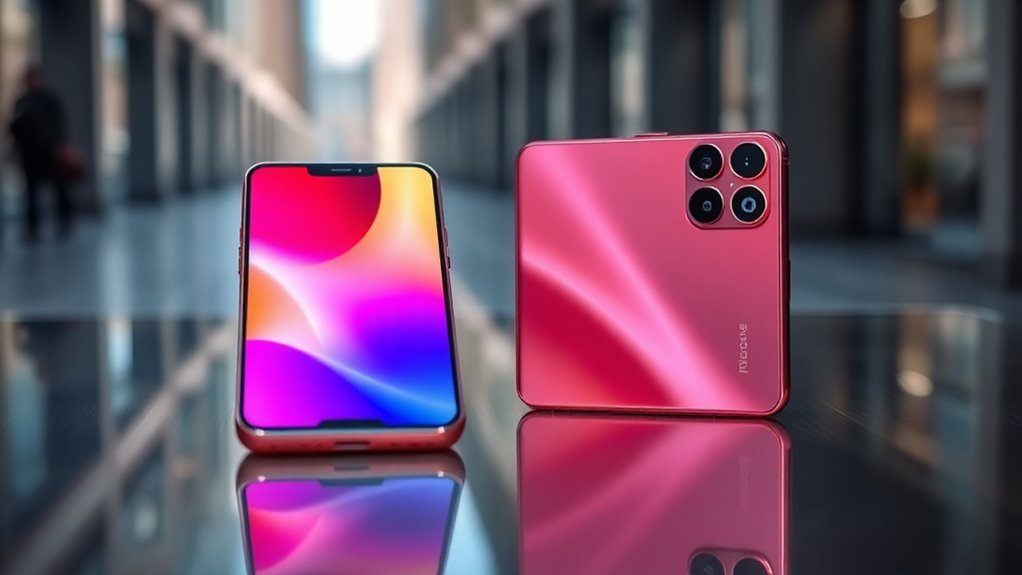
2 Best Camera Phones of 2026: Flagship Comparison Guide
If you’re on the hunt for the best camera phones of 2026, look no further than the Google Pixel 11 and Pixel 11 Pro. These flagship phones come packed with powerful camera features that make them stand out. Both are powered by the Google Tensor G6 chip, which uses advanced AI to deliver stunning low-light shots.
The Pixel 11 features a sharp 48 MP sensor and offers up to 30× zoom. On the other hand, the Pixel 11 Pro steps it up with a triple-camera setup and an impressive 120× ProZoom. Plus, both models boast smooth 120 Hz OLED displays, making your photos and videos look even better.
Video stabilization? Check. Battery life? They’ve got you covered. Keep reading to see how these camera phones compare and which might be the perfect fit for your photography needs.
| Image | Name | Editor's Rating | Price |
|---|---|---|---|

|
|
||

|
|
Google Pixel 11 – Unlocked Smartphone, Gemini – 256 GB – Obsidian
- Google Pixel’s iconic design meets the latest evolution of the Pixel Camera on the new Pixel 11; Gemini Intelligence...
- Unlocked Android phone gives you the flexibility to change carriers and choose your own data plan: Works with Google Fi...
- Sleek, solid, and built to last: Pixel 11 has the slimmest camera bar yet in its class, a smooth satin back, and...

Experience photography like never before with the Google Pixel 11, designed to elevate your mobile photography and everyday use. Its 48 MP rear camera with 30x Super Zoom and Night Sight lets you take sharp, vibrant photos even in challenging low-light conditions. This means you can capture life’s moments clearly without needing extra equipment.
The 6.3-inch OLED display with a smooth 120 Hz refresh rate ensures every image and video looks fluid and bright, making scrolling and viewing a pleasure. Powered by the Google Tensor G6 processor paired with 12 GB of RAM, the Pixel 11 handles multitasking and demanding apps effortlessly, improving your productivity.
With 256 GB of storage, you have ample space for photos, apps, and files, while Titan M3 security safeguards your data. The phone’s IP68 water resistance adds durability, protecting it from everyday spills and splashes. However, the weight of 204 grams might feel a bit hefty for some, and it uses eSIM only, which might limit carrier options.
Best for: Photography enthusiasts and tech-savvy users seeking a powerful, stylish unlocked smartphone with advanced camera and security features.
What We Like:
- High-quality 48 MP camera with advanced zoom and night modes
- Smooth, vibrant 6.3-inch OLED display with 120 Hz refresh rate
- Robust performance with Google Tensor G6 and 12 GB RAM
- Secure data protection via Titan M3 and water resistance
- Large 256 GB storage for extensive media and apps
Specification:
| Feature | Details |
|---|---|
| Manufacturer | |
| Dimensions | Not specified |
| Weight | 204 g (0.45 lb) |
| Display | 6.3-inch OLED, 120 Hz |
| Rear Camera | 48 MP with 30x Super Zoom |
| Processor | Google Tensor G6 |
| RAM | 12 GB |
| Storage | 256 GB |
| Security | Titan M3 chip |
| Water Resistance | IP68 |
| SIM Type | eSIM only |
| Color | Obsidian |
Google Pixel 11 Pro – Unlocked Smartphone, Gemini – 1 TB – Canyon
- Attention-grabbing design meets the latest evolution of the Google Pixel Camera on the new Google Pixel 11 Pro; Gemini...
- Unlocked Android phone gives you the flexibility to change carriers and choose your own data plan: Works with Google Fi...
- Stay informed without looking at your screen: When your phone is face down, Pixel HiLight gently alerts you with subtle...
Experience photography like never before with the Google Pixel 11 Pro, a smartphone that transforms everyday moments into stunning visuals. Its 6.3-inch Super Actua OLED display with a 120 Hz refresh rate delivers bright, smooth images that bring your photos and videos to life.
Designed for those who crave professional camera performance, the Pixel 11 Pro features a triple rear camera system. The enhanced telephoto sensor with 120× ProZoom and Night Sight lets you capture sharp, detailed images even in challenging low-light conditions. This makes it ideal for both casual and advanced photography.
Powered by the Google Tensor G6 chip, paired with 16 GB RAM and a massive 1 TB of storage, this phone handles multitasking and large media files effortlessly. Its durable build, combined with IP68 water resistance, ensures it withstands daily wear and tear, offering reliable protection in various environments.
Maintenance is straightforward with this device. Regular software updates improve performance and camera capabilities, while its robust design minimizes damage risks. However, note that the phone’s larger size and weight may not suit users who prefer compact devices, and its premium features come at a higher cost.
Best for: Photography enthusiasts and power users seeking a high-performance, durable smartphone with professional camera features and substantial storage.
What We Like:
- Advanced camera system with 120× ProZoom and Night Sight for exceptional photos in low light
- Large 1 TB storage and 16 GB RAM for smooth, efficient performance
- Durable construction with IP68 water resistance for everyday protection
Specification:
| Feature | Details |
|---|---|
| Manufacturer | |
| Display | 6.3-inch Super Actua OLED, 120 Hz |
| Processor | Google Tensor G6 |
| RAM | 16 GB |
| Storage | 1 TB |
| Camera | Triple rear, 120× ProZoom, Night Sight |
| Water Resistance | IP68 |
| Weight | 226 g |
| Color | Canyon |
Factors to Consider When Choosing Camera Phones 2026 Flagship Comparison
When choosing your 2026 flagship camera phone, focus on sensor quality and zoom capabilities to capture sharp, detailed shots. Don’t overlook low-light performance and AI-driven image processing, which can make a huge difference in tricky conditions.
Also, consider video recording features to guarantee your phone handles both photos and videos with ease. It’s all about making sure your device performs well no matter what you’re shooting.
Camera Sensor Quality
Though many factors shape a phone’s camera performance, sensor quality stands at the core of image excellence. When choosing your 2026 flagship, focus on sensor size; larger sensors capture more light, enhancing dynamic range, reducing noise, and boosting low-light shots.
Pixel size and megapixel count matter too—bigger pixels minimize noise, while more megapixels let you crop with detail if the optics support it. Look for advanced sensor designs like backside-illuminated (BSI) and stacked architectures—they speed up readout and improve sensitivity, helping with high-ISO shots, fast bursts, and smooth video.
Finally, faster readout speeds reduce motion artifacts and rolling shutter effects, improving video quality and stabilization. Prioritize these sensor traits for superior image results.
Zoom Capabilities
Explore your zoom options carefully when choosing a 2026 flagship camera phone, as zoom capabilities vary widely and impact image quality markedly.
Optical zoom uses moving lens elements or periscope optics to magnify scenes without quality loss, preserving native sensor resolution and low noise. It’s the best way to keep your photos sharp and detailed when zooming in.
Hybrid zoom extends this range by blending optical zoom with high-resolution sensors and advanced demosaicing. This method offers better detail than digital zoom alone, often between 5× and 10×.
Digital zoom simply crops and enlarges images, which degrades resolution and increases noise. So, it’s best to keep digital zoom for casual use only.
Pay attention to telephoto sensor size, aperture, and pixel pitch. Larger sensors and wider apertures help maintain detail and color in zoomed shots.
Also, modern AI-based image processing greatly improves zoom clarity at very high magnifications, such as 30× and beyond. It’s pretty impressive what today’s phones can do with software enhancements!
Low-Light Performance
Zoom capabilities can enhance your shots in daylight, but capturing clear, vibrant images in low light demands a different set of strengths. Larger sensors and bigger pixels are key—they collect more photons and reduce noise, improving sensitivity.
You’ll want optical image stabilization (OIS) or sensor-shift stabilization so you can shoot longer exposures without blur. This lets you use lower ISO for cleaner shots. A wider lens aperture, like f/1.7, lets in more light but narrows depth of field, so balance matters.
Computational photography techniques like multi-frame stacking and denoising play a huge role in revealing detail and expanding dynamic range. Finally, a camera’s native ISO performance and RAW processing capabilities affect how well it preserves color and detail when you brighten images during editing.
Image Processing AI
When you pick up a flagship camera phone in 2026, its image-processing AI will play a huge role in the quality of your photos. It combines sensor RAW data with multi-frame fusion and motion-aware alignment to reduce noise while preserving fine detail. This boosts the low-light signal-to-noise ratio by 3 to 6 times compared to single-frame shots.
Neural demosaicing and learned denoising networks, trained on vast camera-specific datasets, cut color artifacts and enhance resolution without adding noise. Plus, computational zoom uses super-resolution models to create sharp detail up to 10–20× digital zoom with minimal texture smearing.
Real-time AI scene understanding applies tailored processing per region, preserving natural colors and dynamic range. And powerful on-device AI accelerators enable these complex tasks instantly. That means you can capture stunning, true-to-life images every time.
Video Recording Features
Image-processing AI sets a high bar for photo quality, but video recording features also play a big role in choosing a 2026 flagship camera phone. You’ll want native 4K recording at 24/30/60 fps plus high-frame-rate 1080p options like 120 or 240 fps for flexibility in cinematic and slow-motion shots.
Check optical and digital zoom alongside stabilization systems—OIS, EIS, or hybrid gimbals—to keep your footage sharp during handheld 4K/60 recording or zoomed-in captures. Low-light video matters too, so look for larger sensors, multi-frame noise reduction, and dedicated night modes.
Prioritize codecs like HEVC, ProRes, or RAW with high bitrates over 100 Mbps and HDR support for richer color grading. Finally, built-in manual controls, multi-mic spatial audio, and AI stabilization tools speed up production and enhance quality.
Display Quality Impact
Although many focus on camera hardware and software, the quality of a phone’s display materially impacts your ability to capture and evaluate photos and videos. Higher refresh rates like 120 Hz make previews and playback smoother, helping you frame shots and assess stabilization in real time.
A high resolution with over 400 ppi lets you accurately judge fine details, sharpness, and noise, especially when zooming in on crops. Color accuracy and wide gamut coverage (P3 or better) guarantee you see true white balance and skin tones without guesswork.
Peak brightness and HDR support are essential outdoors for evaluating highlights and shadows in high-contrast scenes. And finally, a wide viewing angle and low reflectivity help you critique images consistently from different positions and lighting conditions.
Battery Life Considerations
Since battery life directly influences how long you can shoot photos and videos without interruption, it’s crucial to evaluate capacity and real-world stamina carefully. Aim for phones with batteries around 4,800–5,000 mAh or those rated for 30+ hours under mixed usage.
Fast charging that restores 50–55% in 30 minutes and efficient wireless charging can keep you shooting longer with less downtime. Remember, camera-heavy tasks like continuous 4K recording or zoom sessions drain power faster, especially with 120 Hz displays.
Look for smart software features—adaptive refresh rates and AI-driven power management—that extend battery life beyond raw capacity. Finally, balance battery size with portability; bigger batteries last longer but add weight and thickness, which might affect comfort during extended shoots or travel.
Frequently Asked Questions
How Do Camera Phones Perform in Low-Light Conditions?
You’ll find that camera phones now excel in low-light conditions, thanks to advanced sensors and AI enhancements. They capture clearer, brighter images with less noise.
What Video Recording Features Are Available on Flagship Phones?
You’ll find flagship phones offering 8K video, super slow-motion, HDR10+ recording, and advanced stabilization. They also support Pro modes, Dolby Vision, and real-time AI enhancements, letting you capture cinematic-quality videos effortlessly.
It’s pretty amazing how these features come together to make shooting videos so smooth. Plus, the AI tweaks things on the fly, so your footage looks great without much effort.
Are There Any Software Updates Improving Camera Performance?
Yes, you’ll see software updates regularly enhancing camera performance, improving image processing, low-light capabilities, and stabilization.
Manufacturers often push these updates to optimize features and fix bugs, ensuring your phone’s camera keeps getting better over time.
How Does Battery Life Affect Camera Usage During Extended Shoots?
You know what they say, “A chain is only as strong as its weakest link.” Battery life directly impacts your camera usage during extended shoots.
If it’s low, you won’t capture every moment without interruptions or power-saving restrictions.
Can These Phones Support Professional Photography Apps?
Yes, these phones can support professional photography apps. You’ll find powerful hardware and optimized software that handle advanced editing, RAW processing, and manual controls.
This means you can shoot and edit like a pro right from your device. Pretty convenient, right?
Conclusion
So, if you’re ready to set free your inner paparazzi without lugging around a DSLR, the Pixel 11 and 11 Pro have got your back—unless you prefer blurry selfies that scream “I tried.” With sensors sharp enough to catch a fly’s eyebrow and AI that judges your lighting choices, these phones make you look like a pro (or at least pretend you are).
Just remember: battery life’s a sprint, not a marathon, so keep that charger close! When comparing flagship camera phones of 2026, the Pixel 11 series stands out with its impressive image quality and smart features. Whether you’re snapping quick portraits or low-light shots, these phones handle it all with ease.
In the world of best camera phones 2026, the Pixel 11 and 11 Pro deliver exceptional performance that balances advanced tech and user-friendly design. So, if you want a phone that captures stunning photos without the bulk, these flagships are definitely worth considering.