
10 Tips When Substituting Canning Salt for Kosher Salt
When substituting kosher salt for canning salt, always measure by weight to guarantee accuracy—volume can mislead due to crystal size differences. Kosher salt crystals are larger and fluffier, so using the same volume as canning salt won’t give you the right saltiness. Increasing the kosher salt quantity by about 25% helps match the flavor more closely.
Also, make sure your kosher salt is additive-free to avoid cloudy brine in your preserves. Grinding coarse kosher salt finer and dissolving it well ensures even flavor throughout your jars.
Store your salt properly in airtight containers to keep it fresh and prevent clumping.
Avoid common mistakes like assuming volumetric equivalence between different salts. Keep these tips in mind, and you’ll master safe, flavorful preservation with confidence every time. It’s all about getting the right balance for delicious, long-lasting results!
Key Takeaways
- Measure kosher salt by weight and increase the amount by about 25% to match the saltiness of canning salt.
- Make sure your kosher salt doesn’t have anti-caking agents. These can cause cloudy brine and weird colors when you’re pickling.
- If your kosher salt is coarse, try grinding it into finer grains. This helps it dissolve faster and keeps your brine clearer.
- It’s best not to substitute by volume because kosher and canning salts have different crystal sizes and densities.
- When possible, adjust salt levels gradually and taste as you go, especially in recipes that aren’t for canning. This helps keep the flavor consistent and your food safe.
How to Weigh Canning and Kosher Salt Correctly
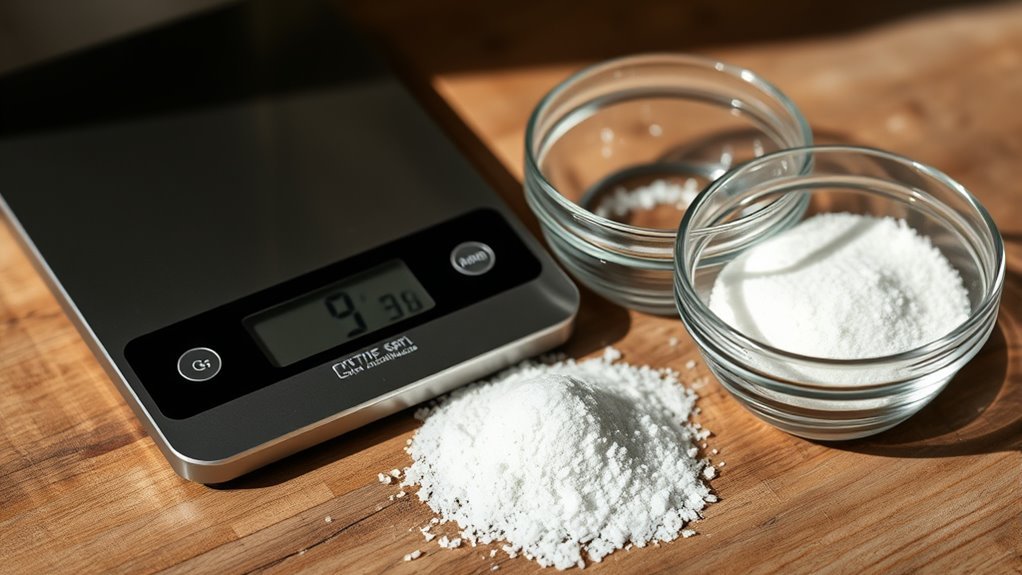
To weigh canning and kosher salt correctly, start by using a digital kitchen scale for the most accurate results. Measuring by weight helps you avoid guesswork and guarantees your recipe stays consistent.
Remember, 1 tablespoon of kosher salt usually weighs about 0.625 ounces, while 1 tablespoon of canning salt weighs roughly 0.75 ounces. Because of these differences in weight and crystal size, you can’t simply swap volume measurements without adjusting.
When you measure kosher salt as a substitute for canning salt, increase the amount by about 25% to match the saltiness properly. Always check your salt’s composition before you measure to ensure it doesn’t contain anti-caking agents, which could affect your pickling or canning outcomes.
Why Measuring by Weight Matters More Than Volume
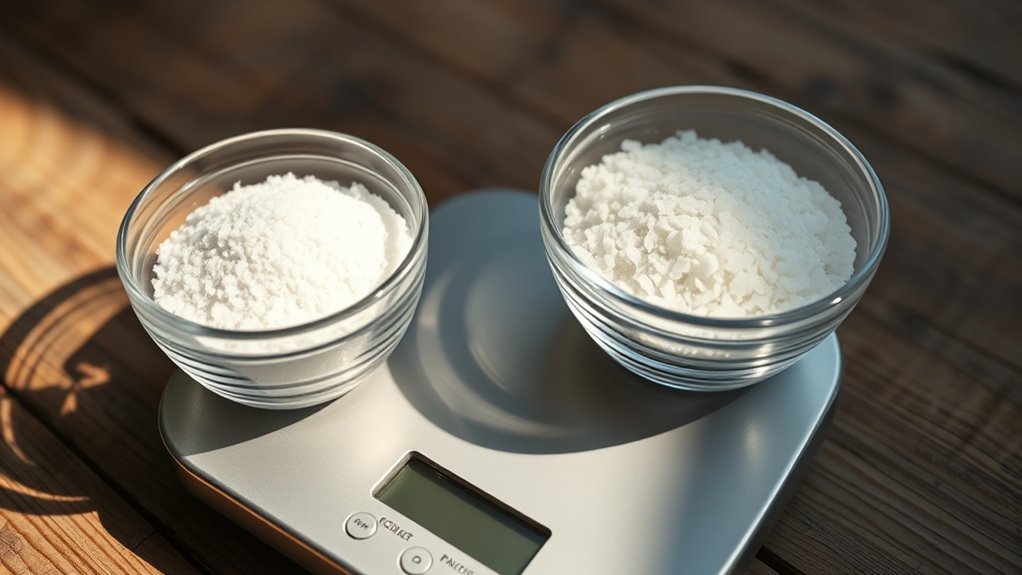
When you measure salt by volume, the crystal size and density can throw off your amounts, leading to inconsistent results. Using weight guarantees you get the exact salt quantity needed, no matter the type you’re substituting.
This accuracy is key to maintaining flavor and safety in your canning recipes. So, weighing your salt really takes the guesswork out of the process. It’s a simple step that makes a big difference!
Weight Versus Volume
Three key reasons make measuring salt by weight more reliable than by volume, especially in canning and pickling. When you measure by volume, differences in crystal size and density can throw off your salt concentration.
For example, kosher salt’s flakes take up more space than canning salt’s fine grains, so the same volume doesn’t equal the same weight. Using weight guarantees:
- Consistent salt concentration
- Accurate salt-to-water ratios
- Prevention of under- or over-salting
- Reliable substitutions between salt types
- Improved safety and quality of preserved foods
Since one tablespoon of kosher salt weighs about 5/8 oz and canning salt about 3/4 oz, relying on volume can mislead you. It’s better to trust weight over volume for precise, safe canning results.
Accuracy In Salt Measurement
Relying on volume measurements can easily lead you astray because salt crystals vary widely in size and density. When you measure salt by volume, differences in crystal size between canning and kosher salt cause inconsistent results.
Instead, measuring by weight ensures accuracy and consistency. Using a kitchen scale allows you to precisely substitute about 25% more kosher salt by weight for canning salt, maintaining the proper salt concentration.
Volume measurements can mislead you, resulting in under- or over-salting, which compromises safety and preservation quality. By prioritizing weight over volume in your salt measurement, you control the exact amount used.
This guarantees your canned goods are both safe and delicious every time. Accurate salt measurement is essential for successful canning.
Adjust Salt Quantities When Substituting Kosher Salt
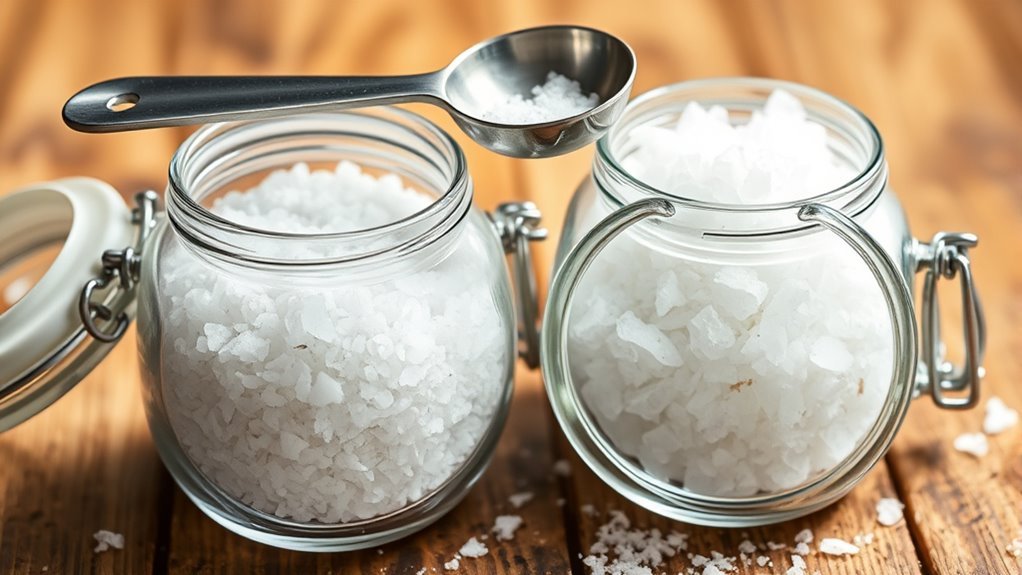
Because kosher salt has a coarser grain than canning salt, you’ll need to increase the amount by about 25% to achieve the same level of saltiness. When adjusting salt quantities, precise measurements are essential to maintain flavor balance and food safety.
Keep these tips in mind:
- Use a conversion factor of 1.25 to calculate kosher salt amounts.
- Measure kosher salt by weight, not volume, for accuracy.
- Different kosher salt brands vary in crystal size; weight-based measurements ensure consistency.
- Confirm your kosher salt contains no anti-caking agents to avoid cloudiness or off-flavors.
- Adjust gradually and taste when possible, especially in non-canning recipes.
How Salt Texture Affects Pickling Flavor and Dissolution
You’ll notice that the grain size of your salt directly affects how quickly it dissolves in your pickling brine. Coarser salts take longer to break down and may not disperse evenly.
This can change the flavor and clarity of your final product. Paying attention to salt texture guarantees your pickles taste just right and your brine stays clear.
Grain Size Importance
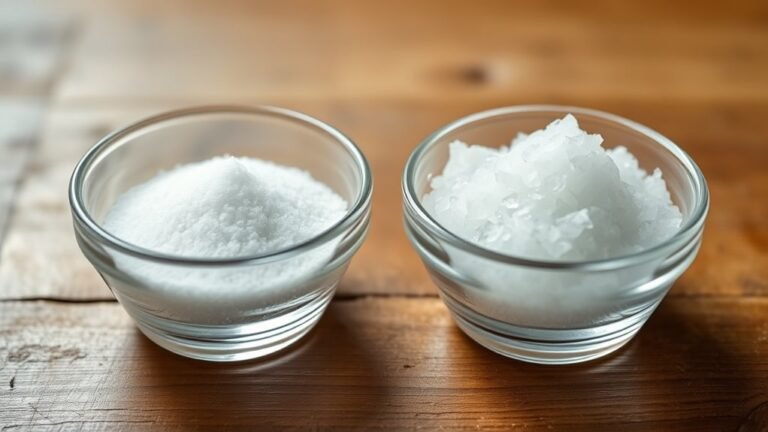
When you choose a salt for pickling, its grain size plays a crucial role in how quickly it dissolves and distributes flavor in your brine. Fine grain salts, like canning salt, dissolve faster than coarser kosher salt, ensuring even flavor throughout.
Here’s why grain size matters:
- Fine grain salt promotes consistent and predictable dissolution.
- Coarser salts may take longer or need grinding to fully dissolve.
Also, measurement accuracy varies because the volume differs between fine and coarse grains.
Proper dissolution helps maintain brine clarity. And since effective microbial control depends on salt fully dissolving, it’s pretty important to get it right.
Dissolution Rate Effects
Grain size influences more than just how quickly salt dissolves; it also impacts the flavor and clarity of your pickling brine. Fine-milled canning salt dissolves rapidly, ensuring even seasoning and a clear brine.
In contrast, coarser kosher salt takes longer to dissolve, which can cause cloudiness or sediment if not fully dissolved. To improve the dissolution rate of coarse salt, pulse or grind it into finer grains. This adjustment helps maintain consistency and preserves the pickling liquid’s clarity.
| Salt Type | Grain Size | Dissolution Rate |
|---|---|---|
| Canning Salt | Fine | Rapid, even |
| Kosher Salt | Coarse | Slow, uneven |
| Ground Kosher | Medium-Fine | Improved, faster |
Understanding this helps you control your brine’s quality effectively. It’s a simple tweak that makes a big difference!
Texture Impact On Flavor
Although salt type affects flavor, its texture plays a crucial role in how your pickling brine tastes and feels. The crystal size influences how quickly salt dissolves, impacting the evenness of flavor.
When substituting, keep these points in mind: finer canning salt dissolves rapidly, ensuring consistent flavor throughout. On the other hand, coarser kosher salt may leave undissolved grains, causing a gritty texture.
Larger crystals require more time or pre-grinding for proper dissolution. Also, texture affects perceived saltiness; finer salts taste saltier per volume.
And don’t forget, uneven salt dissolution can cloud the brine and alter the intended taste. So, it’s worth paying attention to the texture of the salt you use!
How to Pick Kosher Salt Without Anti-Caking Agents
How can you be sure your kosher salt doesn’t contain unwanted anti-caking agents? Start by choosing brands that clearly state they’re free of these additives on the label.
Coarse-grained kosher salt is often a safer bet, as finer varieties tend to include anti-caking agents to prevent clumping. Always read the ingredient list carefully—pure kosher salt should list only salt without any additives.
If you’re unsure, reach out directly to the manufacturer or check their website for detailed information about their product’s contents. Another smart move is to shop at specialty or natural food stores, which often stock kosher salt without anti-caking agents.
How Anti-Caking Agents Affect Pickling Brine Clarity
When you use kosher salt with anti-caking agents, you’ll often notice your pickling brine turns cloudy or hazy. These additives can leave residue that affects the brine’s clarity and the final look of your pickles.
To keep your brine clear and visually appealing, it’s best to avoid salts containing these agents. Trust me, it makes a noticeable difference!
Impact On Brine Appearance
Because kosher salt often contains anti-caking agents, you might notice your pickling brine turning cloudy or developing off-colors over time. These additives can really change how the brine looks, making it less visually appealing.
Here’s what to keep in mind:
- Anti-caking agents cause a cloudy brine, reducing transparency
- Murkiness becomes more noticeable with long-term storage
- Off-colors or discoloration may develop in the pickling liquid
- Canning salt, free of additives, ensures a clearer brine
- For best appearance, opt for additive-free salt in pickling
Using pure canning salt helps maintain a bright, clear brine, which really enhances the overall look of your pickled goods. So, avoiding anti-caking agents is the way to keep your brine looking pristine.
Effects Of Additive Residue
Even though kosher salt’s anti-caking agents help keep it free-flowing, they can leave residues that cloud your pickling brine. These additives that prevent clumping, such as sodium ferrocyanide, don’t fully dissolve and can cause a hazy or murky appearance, especially during long-term storage.
Residual additives may also impact the brine’s color, leading to off-colors that reduce the visual appeal of your preserved foods. This cloudiness can make your pickles look less fresh and affect how others perceive their quality.
To maintain clear, attractive brine, it’s best to use pure, additive-free salt like canning salt. Doing so avoids complications from residual additives and keeps your pickles looking crisp and inviting every time.
How to Dissolve Coarse Kosher Salt in Brines
If you want your brine to be perfectly smooth, you’ll need to tackle the challenge of dissolving coarse kosher salt effectively. Coarse grains can take longer to dissolve, which may leave your brine grainy and uneven.
To avoid this, try these simple techniques that help coarse kosher salt dissolve faster and more completely:
- Pulse coarse kosher salt briefly in a food processor to create finer grains.
- Soak the salt in warm water before adding it to your brine.
- Use hot or warm water when preparing the brine to speed up dissolution.
- Stir continuously while adding the salt to ensure even mixing.
- Let the brine sit for a few minutes after stirring to allow any remaining crystals to dissolve fully.
Common Kosher Salt Mistakes to Avoid in Canning
When using kosher salt in canning, it’s essential to avoid common mistakes that can compromise your results. One of the most frequent common kosher salt mistakes is not checking for anti-caking agents or iodine, which can cause cloudiness, discoloration, and affect the safety of your canned foods.
Also, don’t assume kosher salt and canning salt are interchangeable by volume. Kosher salt grains vary in size and can lead to under- or over-salting if you don’t measure by weight.
Using coarse or chunky kosher salt without grinding it finer is another misstep—it won’t dissolve properly, affecting flavor and preservation.
Ultimately, never substitute table salt for kosher salt without adjusting the amount since table salt is saltier and finer, potentially throwing off your recipe. Avoiding these pitfalls ensures you get the best from your kosher salt in canning and maintain the quality and safety of your preserved foods.
How to Store Salt Properly for Pickling
Properly storing your salt plays a big role in maintaining its quality for pickling. When you focus on good salt storage, you’ll keep your pickling salt free from moisture and contaminants. This means you’ll get consistent results every time.
Here’s how to store your salt properly for pickling:
- Use an airtight container to prevent moisture absorption and clumping. This keeps your salt nice and dry.
- Store the container in a cool, dry place like a pantry or cupboard. Avoid spots that get warm or humid.
- Keep salt away from heat sources and direct sunlight to avoid degradation. Salt doesn’t like to be too hot or exposed to light.
- Always use a dry, clean scoop or spoon to prevent introducing moisture. Wet utensils can ruin your salt.
- Label containers clearly if you have different types of salt to avoid mix-ups. It saves you from confusion later on.
When to Consult Trusted Sources for Salt Substitution
Because salt types vary in texture and additives, you should always check trusted canning and preserving resources before substituting one for another. Trusted sources like “The Big Book of Preserving the Harvest” or official extension service recommendations provide specific guidelines to guarantee your salt substitution won’t compromise safety or quality.
Always consult trusted canning resources before substituting salts to ensure safety and quality.
When you’re adjusting salt types in recipes, these authoritative references help you maintain the proper preservation and fermentation processes.
Before swapping canning salt for kosher salt, verify the substitute is free from anti-caking agents, which can cause cloudiness or spoilage. Use reputable websites and publications that detail measurement conversions and safety considerations for different salts used in home canning.
Consulting trusted sources prevents common pitfalls, like discoloration or unsafe preservation, and ensures your canned goods turn out just right. Don’t guess—always seek expert advice or official guidelines when making salt substitutions in preserving recipes.
Frequently Asked Questions
How Much Kosher Salt to Replace Canning Salt?
You’ll want about 1 and 1/3 tablespoons of kosher salt to replace 1 tablespoon of canning salt.
Weigh it if possible, since kosher salt’s coarser grains mean you need more for the same saltiness. It’s a little tricky because the texture changes how it measures out.
What Happens if I Use Sea Salt Instead of Kosher Salt?
If you use sea salt instead of kosher salt, you might get uneven brine due to larger crystals. You could also experience unpredictable flavors from the minerals in sea salt.
This can lead to inconsistent fermentation, which is not ideal. So, make sure to measure by weight carefully. That way, you won’t accidentally change the taste or texture of your canned food.
How Much Table Salt Is Equal to 1/2 Tsp Kosher Salt?
You want precision, you want flavor, you want balance. Use about 1/4 teaspoon of table salt to equal 1/2 teaspoon kosher salt.
If you want to get really exact, weigh 8.8 grams for your recipe’s success. It’s all about hitting that perfect taste every time.
Can I Use Sea Salt Instead of Kosher Salt for Canning?
Yes, you can use sea salt instead of kosher salt for canning, but make sure it’s pure and additive-free.
Measure by weight to match salt levels accurately, since crystal size and minerals affect flavor and preservation.
It’s a good idea to double-check your measurements, just to be safe. That way, your canned goods come out tasting great and stay preserved properly.
Conclusion
When you swap canning salt for kosher salt, picture a perfectly balanced brine—each grain dissolving just right, flavor blooming like a garden in spring. Weighing carefully and choosing the right texture guarantees your pickles stay crisp and delicious.
Avoid common pitfalls, store your salt properly, and don’t hesitate to seek trusted advice.
With these tips, your jars will shine with vibrant, tangy goodness every time you open them. Remember, using the right amount of canning salt instead of kosher salt ensures your pickles have that perfect salty tang without any unwanted cloudiness or bitterness.
So, whether you’re a beginner or a seasoned pro in pickling, these simple steps will help you master the art of substitution. Your homemade pickles and preserves will turn out crisp, flavorful, and just how you like them every time.