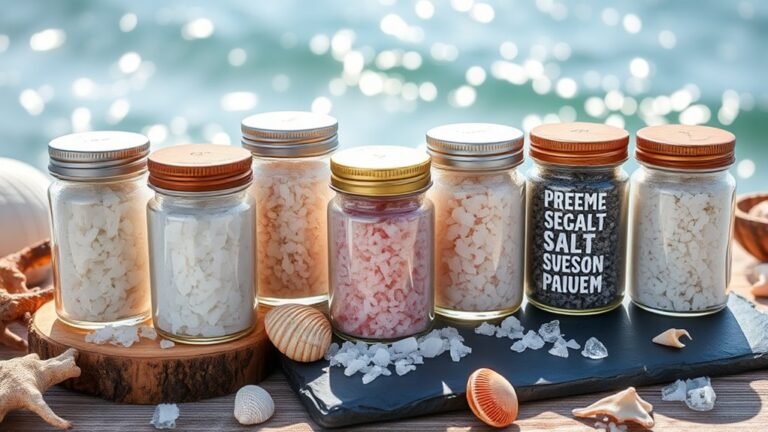

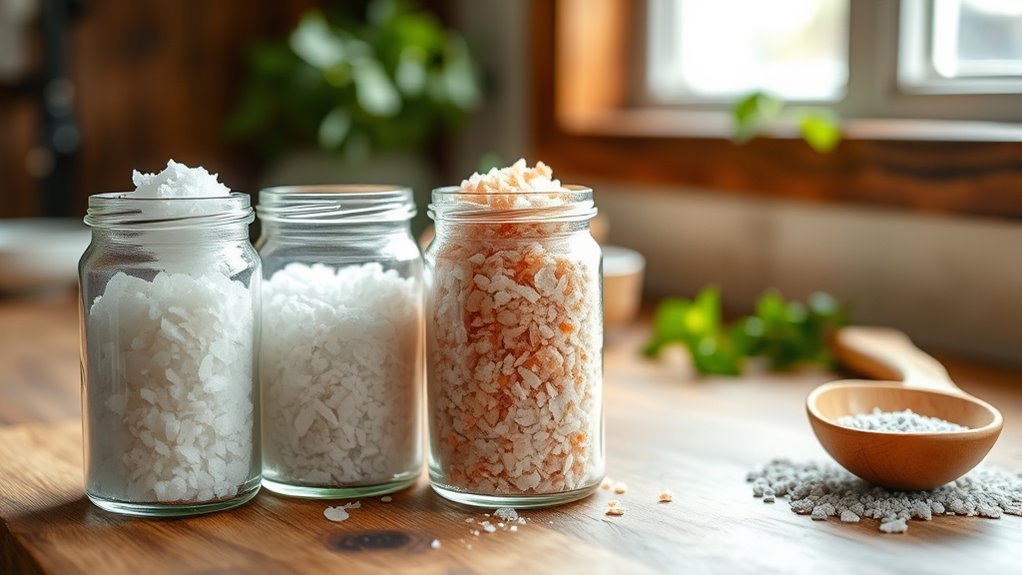
Which Sea Salt Is Best for Your Kitchen?
You want a sea salt that boosts your dishes with natural minerals like magnesium and iodine, offering both flavor and nutrition. Choosing the best sea salt for your kitchen means understanding the different types and how they enhance your cooking.
From fine-grain to flaky salts, each brings something special to the table.
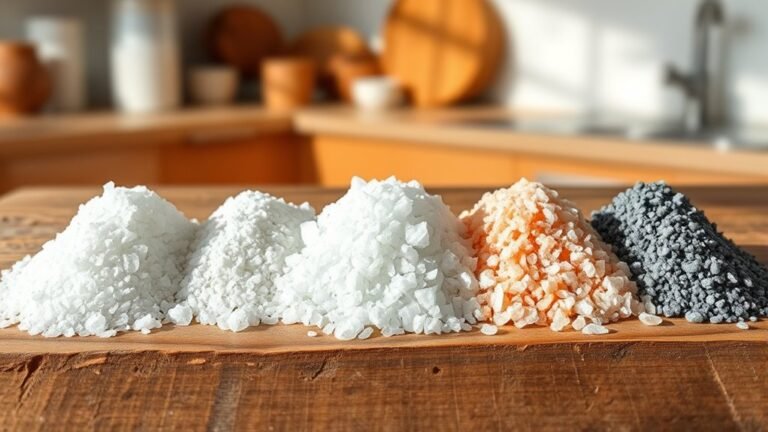
Fine-grain sea salt works great for everyday seasoning, while coarse-grain suits grinding and storage.
Flaky salts like fleur de sel add crunch and elegance as finishing touches.
If you’re after subtle flavor nuances, mineral-rich or flavored salts can elevate your cooking.
Keep exploring to discover how to perfectly match sea salt to your style and meals. It’s all about finding the right salt that fits your flavor preferences and cooking needs.
Key Takeaways
- Choose fine-grain sea salt for quick, even seasoning in everyday cooking. It dissolves fast, making it super convenient.
- Use coarse-grain sea salt for grinding and long-term storage needs. It holds up well over time and adds a nice crunch when used whole.
- Select flaky finishing salts like fleur de sel to add texture and visual appeal. These are perfect for sprinkling on top just before serving.
- Opt for mineral-rich sea salts to enhance flavor complexity in dishes. They bring a deeper, more interesting taste to your meals.
- Incorporate flavored salts, such as smoked varieties, to complement specific recipes. They can really elevate the overall flavor profile.
What Makes Sea Salt Stand Out From Other Salts
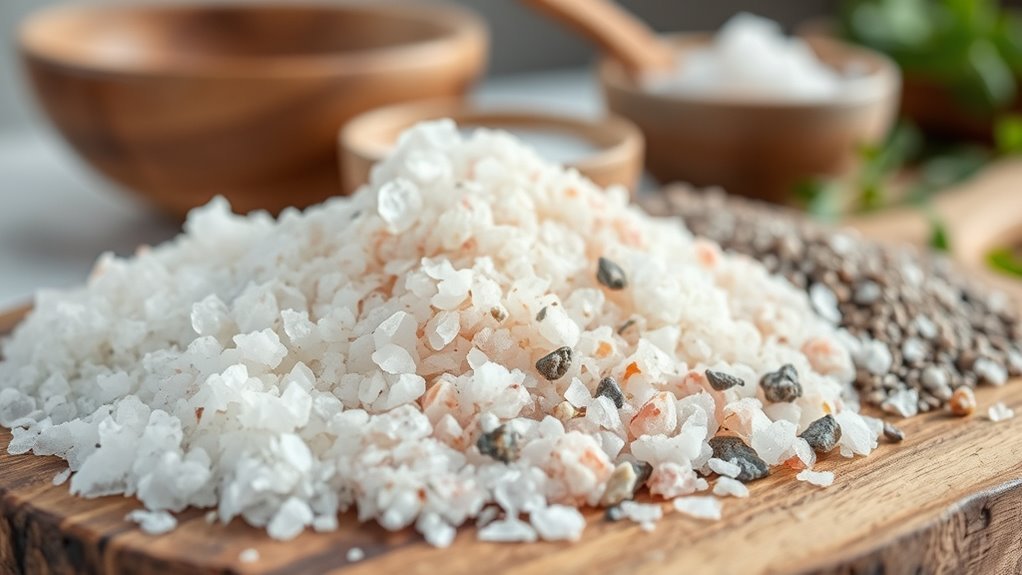
Sea salt stands out from other salts because it’s minimally processed, preserving natural minerals like magnesium, calcium, and iodine that boost both flavor and nutrition. When you choose unrefined sea salt, you’re getting a product rich in mineral minerals that give it a distinct briny taste.
This mineral content varies with each source, creating a unique flavor profile that refined salts lack. The natural evaporation process used to harvest sea salt results in coarse grains and flaky salt crystals.
These characteristics make sea salt versatile—not just for cooking but also as a finishing salt. Finishing salts like fleur de sel feature large, flaky crystals that add texture and a delicate crunch to dishes while visually enhancing them.
Whether you sprinkle it over salads or use it during cooking, sea salt’s combination of mineral minerals and natural texture elevates your dishes in ways regular table salt simply can’t match.
How to Pick Sea Salt That Suits Your Cooking Style
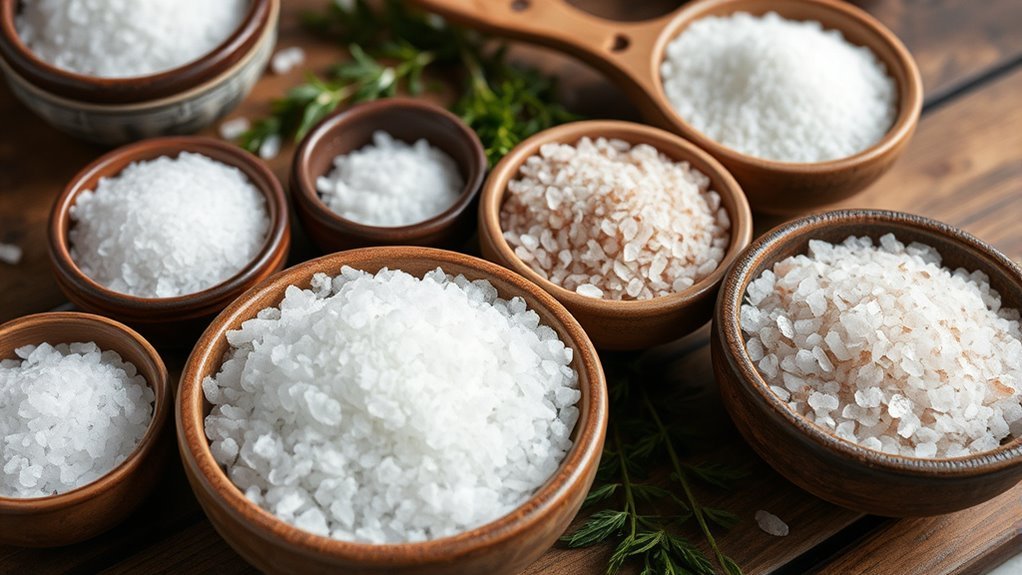
The unique mineral content and texture of different salts influence how they perform in your kitchen. To pick sea salt that suits your cooking style, think about how you use salt—whether for seasoning, finishing, or specialized culinary techniques.
Fine-grain sea salt offers quick dissolution, which is perfect for everyday seasoning. Coarse-grain salt works well for grinding over dishes and long-term storage.
Fine-grain sea salt dissolves quickly for everyday use, while coarse-grain salt is ideal for grinding and storing.
Finishing salts like flaky or Sel Gris add texture and visual appeal to plated dishes. Mineral-rich salts, such as French or Mediterranean varieties, bring subtle complexity to your flavors.
Flavored salts, including smoked options, introduce unique tastes to grilled or roasted foods. So, here’s how to choose wisely:
Use fine-grain sea salt for fast, even seasoning. Add finishing salts for texture and visual appeal on final dishes.
Try mineral-rich or flavored salts to enhance flavor complexity in specific culinary techniques. Matching salt texture and origin to your cooking style really elevates every dish.
Frequently Asked Questions
What Is the Healthiest Salt to Use in Your Kitchen?
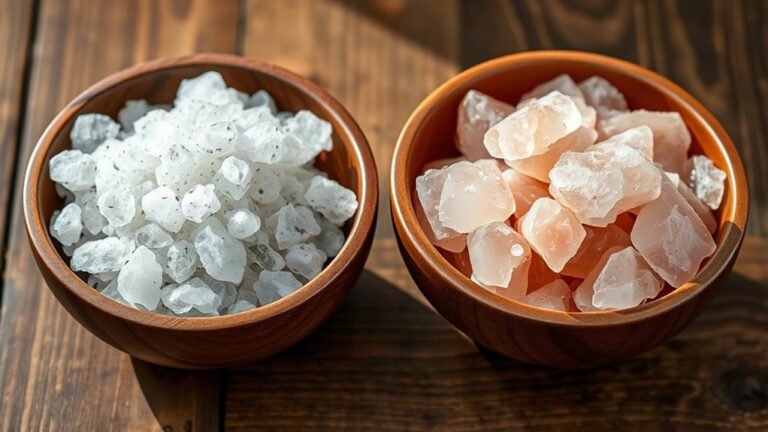
You’ll want to use unrefined sea salts like Celtic or Himalayan because they retain natural minerals, contain less sodium, and avoid additives.
They support better hydration and provide a healthier, mineral-rich option for your kitchen. It’s a simple swap that can make a real difference!
Which Is Better, Himalayan or Celtic Sea Salt?
You know, “variety is the spice of life.”
You’ll find Celtic salt adds moist crunch and bold flavor, while Himalayan salt offers a subtle mineral finish—choose based on your dish’s texture and taste needs.
What Is the Healthiest Brand of Sea Salt?
You’ll want to choose unrefined brands like Celtic or Himalayan pink sea salt, which keep natural minerals intact.
Look for pure, additive-free options with certifications to guarantee you get the healthiest, most natural sea salt possible.
It’s all about keeping things simple and natural, right? That way, you know you’re getting the good stuff without any unwanted extras.
What Sea Salt Do Chefs Use?
Chefs often use Diamond Crystal kosher salt for its light texture, Maldon flakes for finishing, and French Grey for rich flavor.
You’ll find they pick salts based on texture, flavor, and how they enhance the dish’s presentation. It really depends on what they want to achieve in the kitchen.
Conclusion
Choosing the best sea salt for your kitchen isn’t just about flavor—it’s about transforming every dish into a masterpiece. You’ll find that the right sea salt can elevate your cooking to heights so incredible, it’s like tasting the ocean itself.
Trust your palate, consider your recipes, and pick a sea salt that matches your style. Once you do, you’ll wonder how you ever cooked without it!
Finding the perfect sea salt is key to enhancing your dishes with natural, vibrant flavors. Whether you prefer a fine or coarse texture, the best sea salt can add that unique touch to your meals. So, explore different varieties and bring the essence of the sea right to your kitchen.