

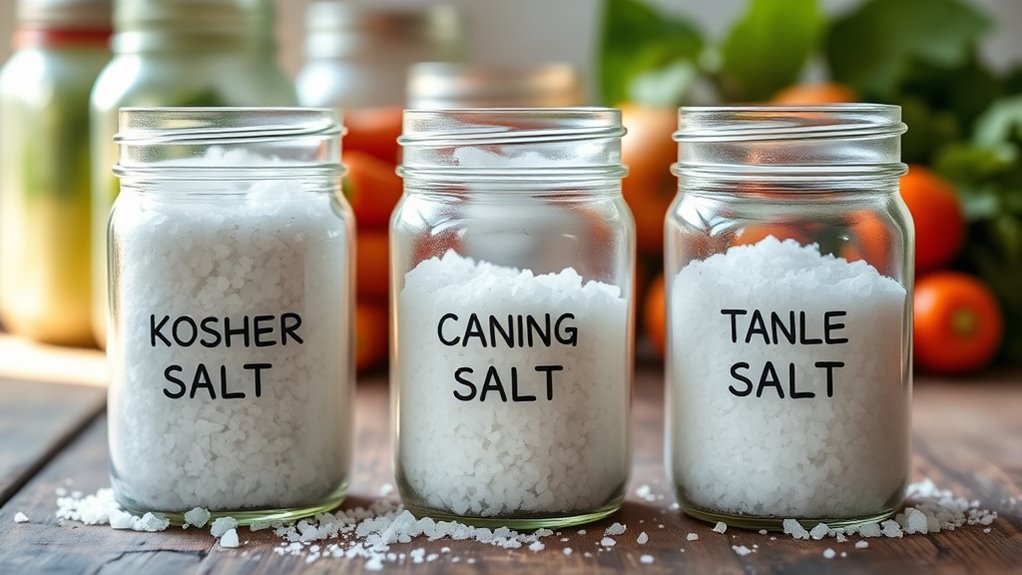
5 Things You Should Know Before You Substitute Kosher Salt for Canning Salt
Before you substitute kosher salt for canning salt, it’s important to know a few key things about these two types of salt.
Kosher salt has larger grains and often contains additives like anti-caking agents, which can cloud your brine and affect the pickling process.
Always weigh kosher salt to match canning salt’s salinity since volume measurements won’t be accurate.
If your kosher salt has additives, grind it finer for even dissolving.
Using the right amount guarantees safe preservation and clear brine.
Keep these points in mind, and you’ll master safer, clearer pickling results without any guesswork.
It’s all about getting that perfect balance for your brine!
Key Takeaways
- Kosher salt grains are larger and less dense, so measure by weight, not volume, when substituting for canning salt. It’s a simple trick but makes a big difference.
- Make sure your kosher salt doesn’t have any anti-caking agents. Those can cause your brine to get cloudy and might even lead to spoilage.
- When swapping, use about 3/4 ounce of kosher salt to replace 1 tablespoon of canning salt. This helps keep the salinity just right for your recipe.
- Grinding kosher salt finer can really help it dissolve evenly. That way, you get consistent preservation results every time.
- Finally, weighing your kosher salt accurately is key. It ensures your pickling is safe from microbes and turns out just how you want it.
What Makes Kosher Salt Different From Canning Salt
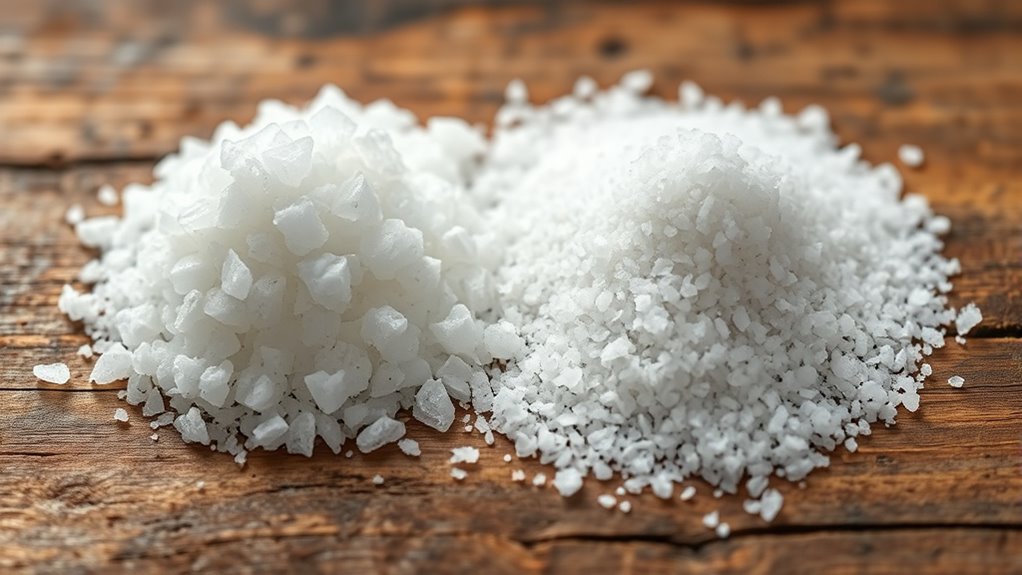
Although kosher salt and canning salt might seem similar, they actually have some key differences that can affect your canning results. Kosher salt has larger, coarser grains, giving it a distinct texture compared to the fine, uniform texture of canning salt.
Because of this, kosher salt doesn’t dissolve as quickly, which can impact food preservation by changing how clear your brine looks. Also, kosher salt often contains anti-caking agents like sodium ferrocyanide. On the other hand, canning salt is pure sodium chloride without any additives, making it ideal for pickling and preserving.
Since kosher salt’s grains are less dense, if you swap it in directly, you’ll need to adjust the measurements to make sure you get the right salt concentration. Canning salt’s fine grains help it dissolve quickly and evenly, which is super important for consistent results in food preservation.
Knowing these differences helps you pick the best salt and avoid any issues in your canning process.
Why You Should Always Weigh Kosher Salt for Canning
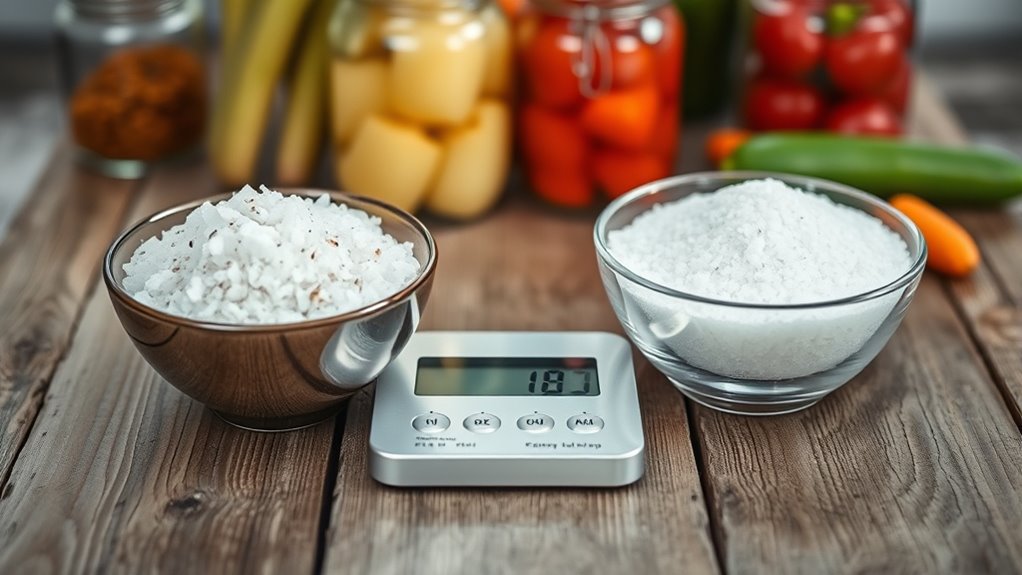
When you use kosher salt for canning, weighing it is essential because its coarse crystals don’t measure consistently by volume. Since kosher salt’s density varies with grain size, relying on volume can lead to inaccurate measurement, affecting the critical salt-to-water ratio.
By using a kitchen scale to weigh kosher salt, you guarantee precise amounts every time, which is indispensable for effective preservation and microbial safety. Under- or over-salting can compromise the acidity and safety of your canned goods, increasing the risk of spoilage.
Weighing also guarantees consistency across batches, maintaining the intended flavor and preservation standards. Unlike table salt, kosher salt often contains anti-caking agents, but weighing focuses on the pure salt content, helping you avoid guesswork.
To protect your canned foods and achieve reliable results, always weigh kosher salt rather than measuring by volume. This simple step safeguards your canning process and ensures your preserved foods stay safe and delicious.
Watch Out for These Additives in Kosher Salt
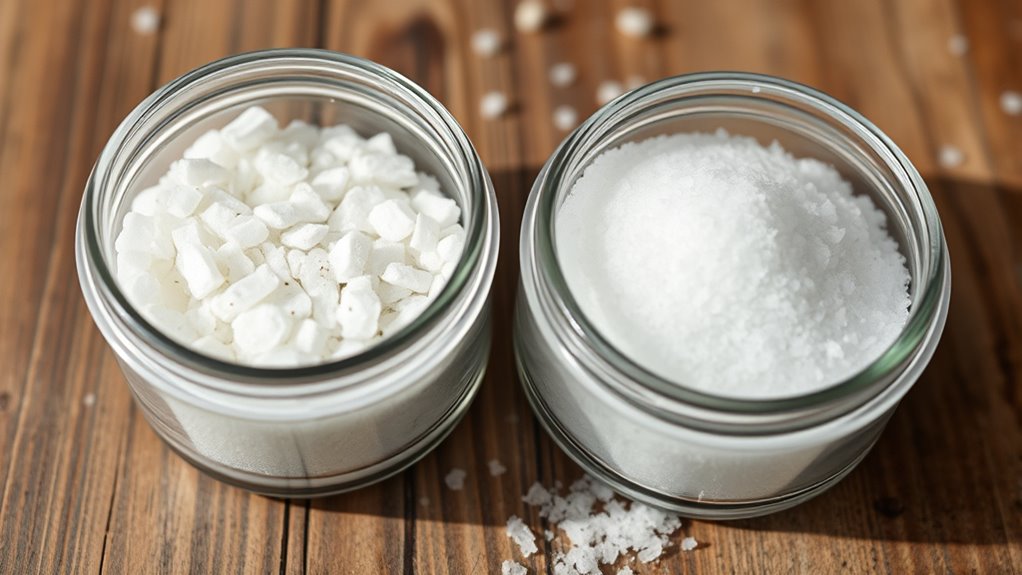
Because many kosher salts contain additives like anti-caking or anti-clumping agents, you need to check the label carefully before using them for canning. These additives, such as sodium ferrocyanide, help prevent clumping but can introduce impurities that cause cloudiness in your brine, affecting the appearance and safety of preserved foods.
Some kosher salts may also contain iodine, which is rare but can discolor pickling solutions. So, opting for non-iodized kosher salt is best.
Additionally, preservatives and other additives can alter the flavor and clarity of your canned goods. Since purity is key in canning, any unwanted additives in kosher salt might compromise your results.
To avoid issues like cloudiness or off-flavors, always choose kosher salt without anti-caking agents, anti-clumping agents, iodine, or preservatives when substituting for canning salt. Checking your salt’s ingredient list helps ensure a clean, clear final product free from impurities.
How to Substitute Kosher Salt for Canning Salt Safely
If you want to substitute kosher salt for canning salt, you need to weigh it carefully and use about 3/4 ounce of kosher salt per tablespoon of canning salt to maintain the right salinity. Since kosher salt has larger grains, relying on volume measurements can throw off your salt potency, risking unsafe fermentation or spoilage.
Always measure by weight for precise results. Before substituting, verify your kosher salt is free of anti-caking agents, which can affect the purity of your brine and the quality of preservation.
If your kosher salt contains additives, pulse it in a food processor or grind it to a finer consistency similar to canning salt. This step helps maintain clarity and consistency in your recipes.
Tips for Clear Brine and Safe Pickling With Kosher Salt
Although kosher salt’s larger crystals can slow dissolution, using the right preparation techniques will help you achieve a clear brine vital for safe pickling. First, choose kosher salt free of anti-caking agents to avoid cloudiness and off-flavors.
Since kosher salt crystals are bigger than pickling salt, grinding or pulsing them helps the salt dissolve evenly, improving brine clarity. Always measure salt by weight rather than volume, adjusting the amount to match the weight of pickling salt because volume measurements can be misleading.
Precise measurement is essential since too much or too little salt impacts fermentation safety. Before using your brine, test its clarity—fully dissolved kosher salt ensures your pickles stay crisp and safe.
Frequently Asked Questions
Can I Substitute Kosher Salt for Canning Salt?
Yes, you can substitute kosher salt for canning salt, but you must measure by weight, not volume, and guarantee your kosher salt has no additives.
This keeps your preserves safe and properly salted every time. It’s all about getting the right amount so your recipe turns out just right.
What Can I Use if I Don’t Have Canning Salt?
If you don’t have canning salt, you can use kosher salt by weighing it to match the canning salt amount.
Avoid table or sea salt unless you adjust for additives and grain size carefully.
It’s a bit tricky because those salts can change the flavor or texture if you don’t measure right.
How Much Canning Salt Equals 1 Cup Kosher Salt?
One cup of kosher salt equals about ¾ cup of canning salt by weight. Since kosher salt’s crystals are larger, you’ll need less canning salt to match the saltiness and weight of one cup of kosher salt.
What Happens if I Use Sea Salt Instead of Kosher Salt?
Switching sea salt for kosher salt can skew seasoning since sea salt’s size and saltiness vary. You’ll risk ruining recipes with rougher grains and random minerals, resulting in cloudy cans and compromised canned creations.
Conclusion
Think of kosher salt and canning salt as two different keys—each designed to open the perfect flavor and safety in your preserves. When you substitute one for the other, you’re not just swapping ingredients; you’re changing the whole melody of your recipe.
By weighing your kosher salt carefully and avoiding additives, you’ll keep your brine clear and your pickles safe. Handle this key with care, and your jars will sing with crisp, delicious success.
Remember, kosher salt has larger crystals and can contain additives, which can affect the safety and taste of your canned goods. Canning salt, on the other hand, is pure and finely ground, making it ideal for preserving. So, before you substitute kosher salt for canning salt, weigh it properly and watch for additives to maintain the perfect balance of flavor and safety in your preserves. This way, your pickles and brines stay clear, tasty, and safe every time.