
What Electrolytes Does Salt Give?
Salt provides you with essential electrolytes, mainly sodium and chloride, that help maintain your body’s fluid balance and support nerve signaling. These electrolytes enable muscle contractions, regulate blood pressure, and assist digestion.
While salt is vital for keeping your electrolyte levels stable, too much can cause health issues like high blood pressure. Understanding how salt works and balancing it with minerals like potassium can enhance your overall well-being and bodily functions.
So, it’s important to keep an eye on your salt intake and make sure you’re getting a good mix of electrolytes to keep your body running smoothly.
Key Takeaways
- Salt primarily provides sodium and chloride ions, which are essential electrolytes for our body’s functions.
- Sodium from salt plays a key role in regulating fluid balance and nerve signaling. It basically helps keep everything running smoothly.
- Chloride from salt supports digestion and helps maintain the right pH levels in our body.
- When salt dissolves in water, it breaks apart into these ions, allowing electrical signals to happen. This process is crucial for muscle contractions.
- Overall, the electrolytes from salt are fundamental for keeping our electrolyte balance and hydration in check. They really do a lot for us!
Salt Electrolytes: What They Are and How They Work
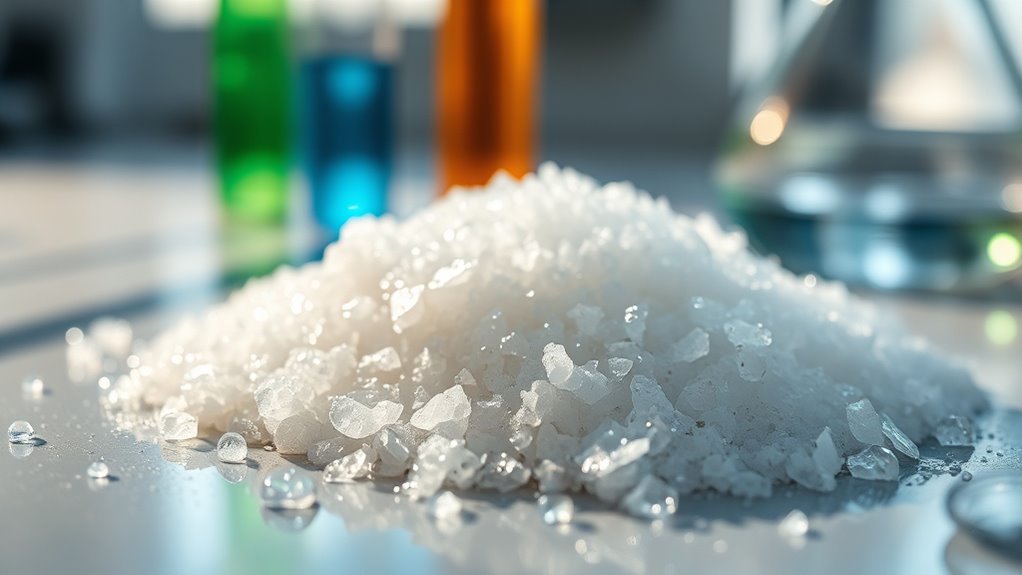
Although you might think of salt simply as a seasoning, it actually provides essential electrolytes—sodium and chloride—that keep your body’s fluids balanced and enable electrical signals. When salt dissolves in water, it undergoes dissociation, splitting into sodium and chloride ions.
These electrolytes play a pivotal role in maintaining fluid balance and supporting nerve function throughout your body. Sodium helps regulate blood pressure and facilitates muscle contractions by creating electrical gradients across cell membranes.
Meanwhile, chloride contributes to electrolyte balance and supports proper pH levels and digestion. Together, sodium and chloride enable electrical signaling necessary for nerve impulses and muscle movements.
Benefits and Risks of Salt Electrolytes for Your Health
Salt electrolytes like sodium and chloride play an essential role in keeping your body balanced and functioning, but it’s important to be aware of both their benefits and potential risks.
Sodium and chloride help maintain electrolyte balance, support fluid regulation, and enable nerve signaling and muscle function. However, consuming too much salt can lead to high blood pressure and increase heart disease risk, especially without enough potassium to balance it.
Relying solely on salt for electrolytes may cause an electrolyte imbalance since it lacks minerals like potassium. Choosing mineral-rich salts can provide additional trace minerals that aid electrolyte absorption and overall health.
| Benefit | Role in Body | Risk |
|---|---|---|
| Sodium & Chloride | Fluid regulation, nerve signaling, muscle function | High blood pressure if excessive |
| Rapid electrolyte replenishment | After exercise or heat exposure | Electrolyte imbalance without potassium |
| Mineral-rich salts | Additional minerals support balance | Refined salt lacks trace minerals |
Frequently Asked Questions
Does Salt Give You Enough Electrolytes?
No, salt doesn’t give you enough electrolytes by itself. It mainly provides sodium and chloride.
But you’ll need other foods to get potassium, magnesium, and calcium for proper electrolyte balance and overall health.
What Are the Big 3 Electrolytes?
The Big 3 electrolytes are sodium, potassium, and chloride—your body’s ultimate power trio! You need them for nerve signals, muscle function, and fluid balance.
Without them, you’d feel like a deflated balloon in no time! They really keep everything running smoothly.
Does Salt Hydrate You or Dehydrate You?
Salt can both hydrate and dehydrate you. It helps retain water when you drink enough.
But if you consume salt without enough fluids, it pulls water from your cells, causing dehydration and dizziness. So, it really depends on how much water you’re drinking along with the salt.
Is Gatorade Electrolyte Just Salt?
No, Gatorade isn’t just salt. It gives you sodium and potassium plus other electrolytes like magnesium and calcium.
It also has sugars and flavorings to help you hydrate and recover better than salt alone. Makes it way more effective than just plain salt, right?
Conclusion
You might not realize it, but the salt you sprinkle daily gives you essential electrolytes like sodium and chloride. These electrolytes keep your body’s fluids balanced and nerves firing properly.
It’s a bit surprising that something so simple plays such a crucial role in your health. Just remember, while salt supports your electrolytes, too much can tip the scale.
So, enjoy salt wisely—it’s a small addition with a big impact on your wellbeing. Balancing electrolytes like sodium and chloride is key to staying healthy, but moderation is important to avoid any negative effects. In the end, salt is more than just a seasoning; it’s an essential contributor to your body’s electrolyte balance and overall health.