
Are Bath Salt and Epsom Salt the Same?
No, bath salt drugs and Epsom salts aren’t the same thing. Bath salt drugs are synthetic stimulants that contain harmful chemicals. These can cause serious health issues like hallucinations and paranoia.
Epsom salts, on the other hand, are natural magnesium sulfate. People use them safely to relax muscles and soothe aches in baths. It’s important to always buy true Epsom salts from reliable sources to avoid any risks.
Keep reading to understand how to spot genuine bath salts and how to safely use them. This way, you’ll know the difference and can enjoy the benefits without worry.
Key Takeaways
- Bath salts are synthetic recreational drugs, while Epsom salts are natural magnesium sulfate used for therapeutic baths.
- Bath salt drugs pose serious health risks, unlike safe and beneficial Epsom salts when used properly.
- Epsom salts have a consistent chemical composition, whereas bath salt drugs contain varied synthetic chemicals.
- True Epsom salts are labeled as magnesium sulfate and sold by reputable pharmacies or drug stores.
- Bath salts are for recreational use with harmful effects, while Epsom salts promote muscle relaxation and wellness.
Bath Salt Drugs vs. Epsom Salts: Key Differences
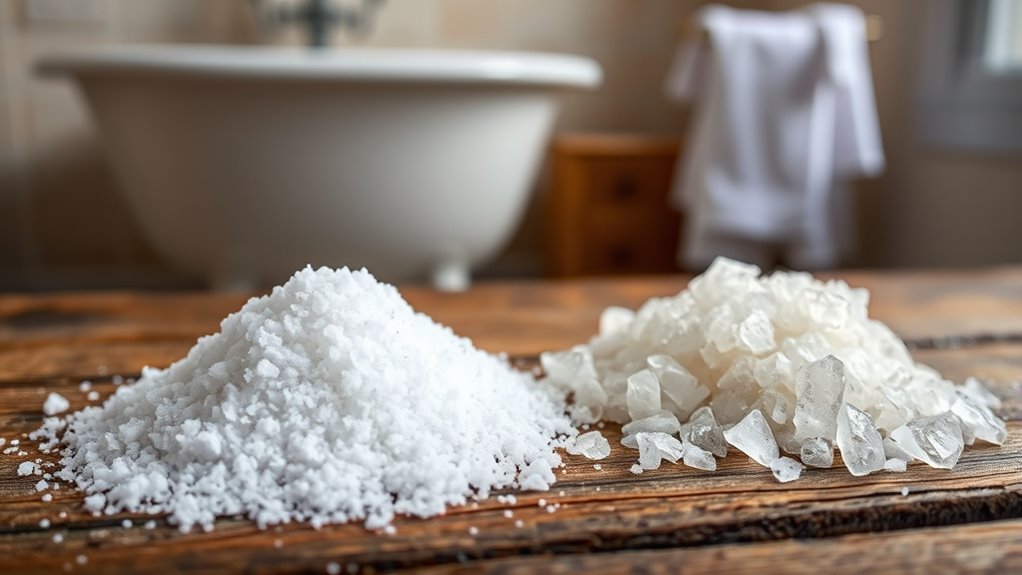
Although both share the name “bath salt,” bath salt drugs and Epsom salts couldn’t be more different.
Bath salts as drugs are synthetic stimulants containing chemicals like MDPV and mephedrone. They’re designed to mimic illegal drugs and often sold under misleading labels to avoid detection.
Bath salt drugs are synthetic stimulants mimicking illegal substances, often sold under deceptive labels to evade detection.
Their chemical composition varies widely, posing serious health risks such as hallucinations and paranoia when used for recreational purposes.
In contrast, Epsom salts consist solely of magnesium sulfate, a naturally occurring compound used safely in therapeutic baths.
People use Epsom salts to relax muscles and soothe aches. Unlike bath salts linked to drug abuse, Epsom salts aren’t psychoactive and carry minimal risk when used properly.
Understanding these differences is essential because bath salts as illegal drugs threaten both physical and mental health, whereas Epsom salts promote wellness.
How to Identify and Use True Bath Salts Safely
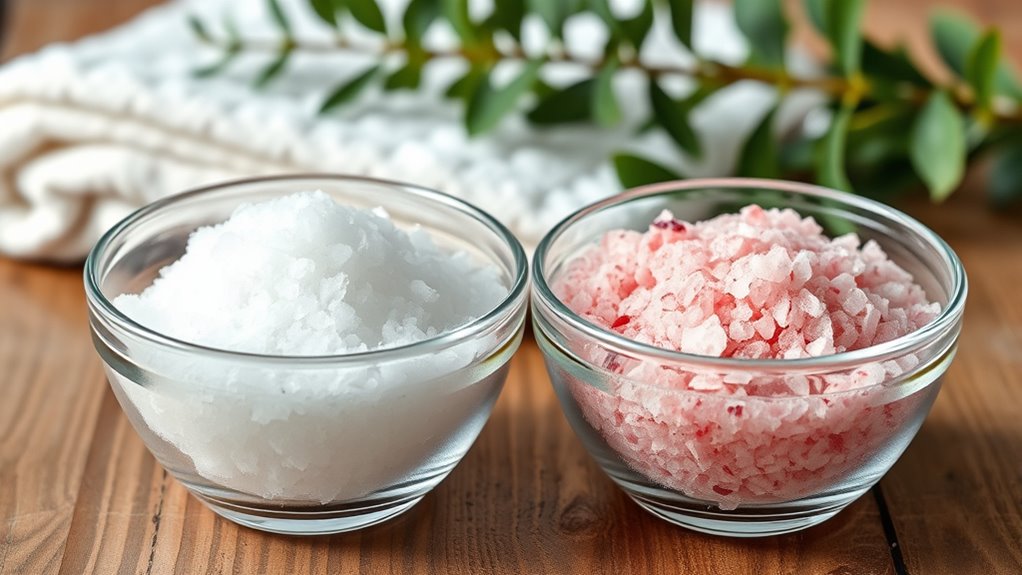
Knowing the differences between synthetic bath salt drugs and genuine Epsom salts is the first step to using bath salts safely. For proper identification, look for clear labeling that specifies magnesium sulfate or shows USP certification—this confirms you’re buying true bath salts meant for therapeutic use.
Avoid products with vague packaging or those marketed as jewelry cleaners or plant food. These often contain synthetic bath salts that pose serious health risks.
To guarantee safe use, purchase Epsom salt only from reputable drug stores or pharmacies. These sources assure products free of harmful additives.
When using true bath salts, follow the recommended amounts and instructions to enjoy benefits like muscle relaxation without danger. Remember, synthetic bath salts are not only ineffective in therapy but can cause severe harm.
Frequently Asked Questions
Can I Use Regular Salt Instead of Epsom Salt for a Bath?
You shouldn’t use regular salt instead of Epsom salt for a bath because it won’t provide the muscle relaxation or stress relief benefits Epsom salt offers.
Plus, it might even irritate your skin or cause dehydration. So, it’s best to stick with Epsom salt if you want those soothing effects.
When Should You Not Use Epsom Salt?
You shouldn’t use Epsom salt if you’re allergic to magnesium sulfate, have broken skin, or kidney issues.
Also, avoid it if you’re pregnant and haven’t gotten medical advice yet.
Watch out for symptoms of magnesium overdose like dizziness or irregular heartbeat.
It’s always best to check with your doctor first before using Epsom salt.
Is Epsom Salt Better Than Bath Salt?
Like a calming wave washing over sore muscles, Epsom salt is better than bath salt for relaxation and pain relief.
You’ll benefit more from its magnesium content and proven therapeutic effects every time you soak. Trust me, your body will thank you!
What Happens if You Don’t Rinse off After an Epsom Salt Bath?
If you don’t rinse off after an Epsom salt bath, you might experience dryness, irritation, or clogged pores from leftover minerals.
It can also cause discomfort or make skin sensitivities worse.
Conclusion
You might think bath salts and Epsom salts are the same, but they’re not—and using true bath salts safely can actually benefit you. While “bath salts” as drugs are dangerous and illegal, Epsom salts are natural minerals that help soothe muscles and relax you in the tub.
So, don’t let the name confuse you; choosing genuine Epsom salts means you’re treating yourself to a safe, calming soak every time. Using Epsom salts in your bath can ease muscle tension, reduce stress, and promote overall relaxation.
In short, bath salts and Epsom salts are very different—one is harmful, and the other is a natural, beneficial mineral. When looking for a soothing bath experience, always opt for Epsom salts. They’re a simple, safe way to unwind and take care of your body.