
How to Use Kosher Salt vs Regular Salt in Cooking
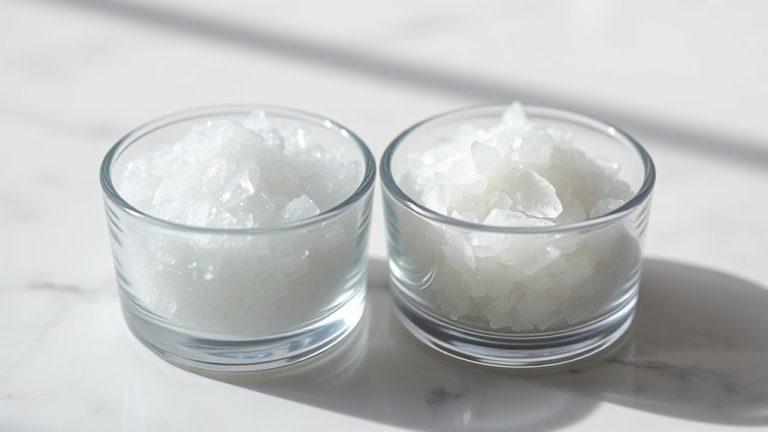
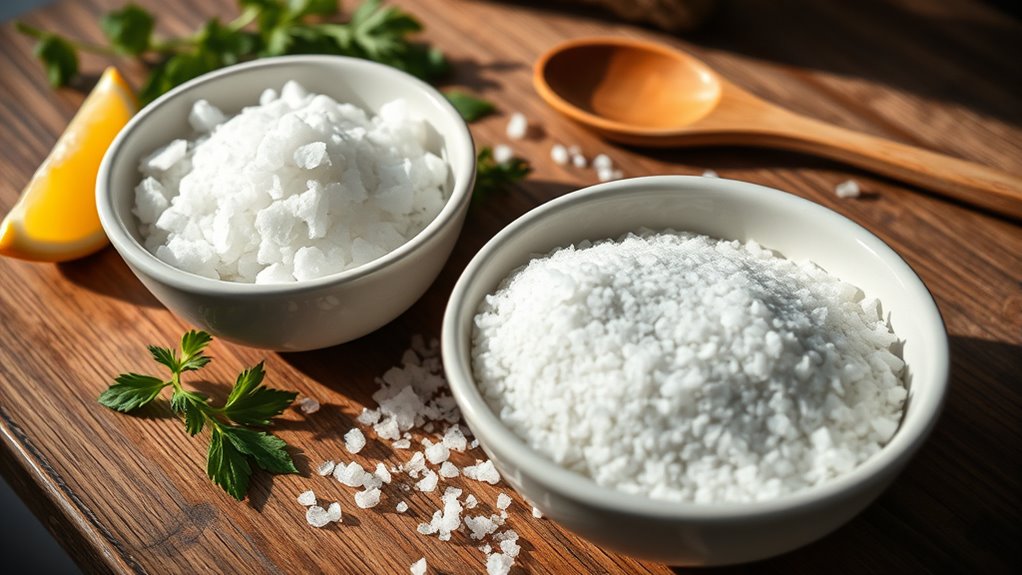
When you use kosher salt instead of regular table salt in cooking, it’s important to know the difference. Kosher salt has larger crystals and is less dense, so it doesn’t taste as salty by volume as regular salt.
This means you can’t just swap them teaspoon for teaspoon and expect the same flavor. You’ll want to use about half as much table salt to match the flavor intensity of kosher salt.
Measuring by weight and tasting as you go is a smart way to avoid over-salting your dishes. Understanding these differences helps you season your food more precisely and get better results every time.
Keep experimenting and you’ll find even more tips to make your cooking shine. Cooking with the right salt, whether kosher or regular, can really elevate your meals!
Key Takeaways
- Kosher salt has larger crystals and is less dense than regular table salt, which affects volume measurements in recipes.
- So, when you’re swapping kosher salt for table salt, use about half the volume to avoid over-salting.
- The best way to get it right? Measure salt by weight instead of volume. That way, your seasoning is accurate and consistent every time.
- Plus, kosher salt’s coarse grains are easier to pinch and spread evenly while you cook.
- Just remember to taste your dish as you go. That way, you can adjust the salt levels depending on which type you’re using.
What Makes Kosher Salt and Table Salt Different
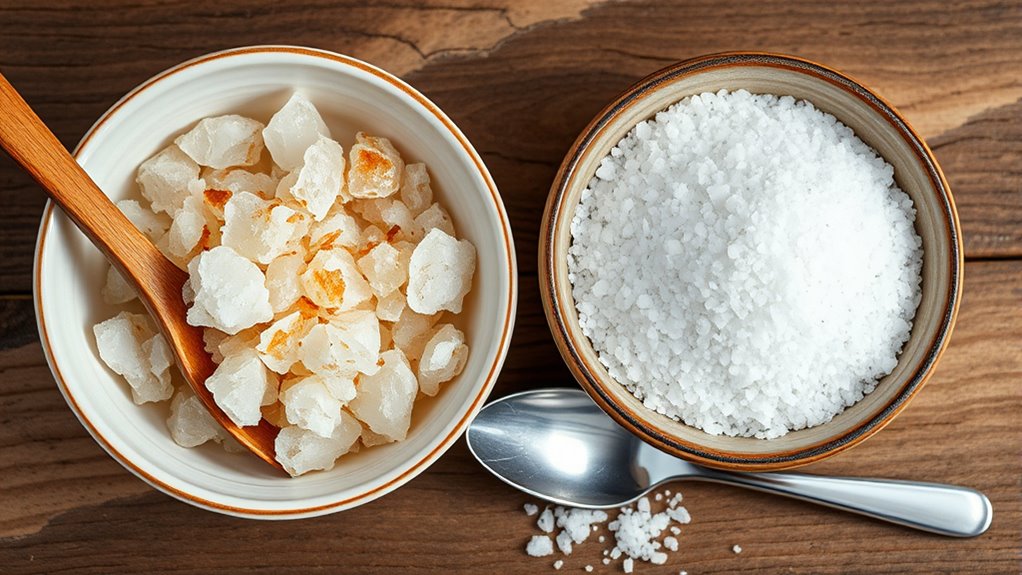
Although both kosher salt and table salt serve the same basic purpose, they differ especially in crystal size, density, and additives. Kosher salt has larger, irregularly shaped crystals that create more air space, making it less dense than table salt.
Kosher and table salt differ mainly in crystal size, density, and added ingredients.
Table salt features small, uniform, dense grains, often treated with anti-caking agents and iodine to prevent clumping and add nutritional iodine. Because of these differences in grain shape and crystal size, a teaspoon of kosher salt weighs less and tastes less salty than the same volume of table salt.
This means its saltiness by volume measurement is roughly half that of table salt. You’ll find kosher salt preferred for seasoning by hand since its larger grains are easier to pinch and distribute evenly.
Understanding these physical and chemical differences helps you appreciate why each salt behaves differently in cooking and seasoning, even though they’re both fundamentally salt.
How to Adjust Measurements and Use Them for Best Cooking Results
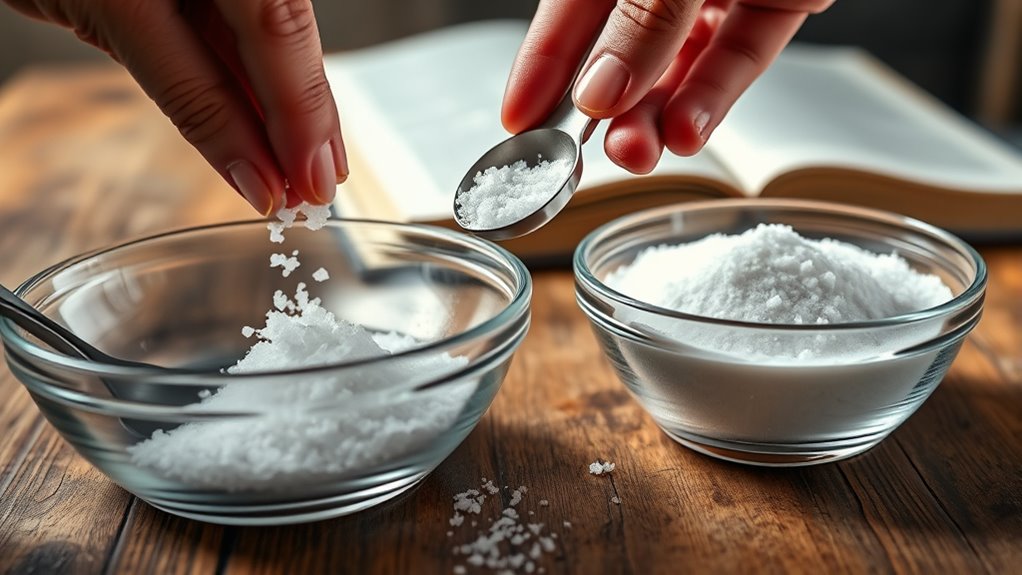
Because kosher salt and table salt differ so much in density and crystal size, you’ll need to adjust your measurements when substituting one for the other. Regular salt is denser and saltier per teaspoon, so when swapping it for kosher salt, reduce the volume by about 50%.
For instance, use roughly 1.5 teaspoons of regular salt to replace 1 teaspoon of kosher salt. Since a cup of kosher salt weighs less than a cup of regular salt, relying solely on volume can lead to over-salting.
To guarantee consistent cooking results, measure salts by weight rather than volume, focusing on salt density and crystal size differences. Always perform taste adjustments during cooking, especially with salt substitution, to achieve the desired saltiness.
This volume to weight approach helps you balance flavor perfectly, avoiding common pitfalls and enhancing your dishes every time.
Frequently Asked Questions
Does It Matter if I Use Kosher Salt or Regular Salt?
Yes, it matters because kosher salt has larger crystals and less sodium per teaspoon than regular salt. You’ll need to adjust amounts to avoid over- or under-salting your dish for the best flavor.
It’s kind of like using different measuring cups. So, if a recipe calls for regular salt and you’re using kosher salt, just remember to tweak the amount a bit. That way, your dish will taste just right!
Why Do Chefs Use Kosher Salt Instead of Regular Salt?
You use kosher salt because its large crystals let you control seasoning better, preventing over-salting. It’s easier to pinch and spread evenly, and its pure flavor without additives gives your dishes a cleaner, brighter taste.
Plus, the texture makes it simple to sprinkle just the right amount. So, you end up with perfectly seasoned food every time.
How Much Regular Salt Do I Substitute for Kosher Salt?
Use about half the volume of regular table salt when substituting for kosher salt.
For example, if a recipe calls for 1 tablespoon kosher salt, use roughly 1/2 tablespoon regular salt to avoid over-salting your dish.
It’s a simple swap, but it makes a big difference in taste!
How Much Regular Salt Equals 2 Teaspoons of Kosher Salt?
You’ll want to use about 1 teaspoon of regular table salt to equal 2 teaspoons of kosher salt. Since kosher salt’s crystals are larger, using less table salt prevents over-salting your dish.
It’s all about the size of the crystals. Kosher salt is fluffier, so it takes up more space. That’s why you need less table salt to get the same salty flavor.
Conclusion
Using kosher salt instead of regular salt in your cooking is like choosing the right brush for a masterpiece—each has its unique texture and strength. You’ll want to adjust measurements since kosher salt flakes are larger and less dense than table salt.
By understanding these differences, you’ll bring out the best flavors in your dishes with ease and precision. Kosher salt’s coarse texture makes it perfect for seasoning meat and vegetables, while regular salt dissolves quickly, ideal for baking and finishing touches.
So, trust your taste buds and salt wisely for delicious results every time. Knowing when to use kosher salt vs regular salt can elevate your cooking and help you achieve perfect seasoning every time. It’s all about balance, texture, and flavor!