
How to Verify if Costco Pink Salt Is Himalayan
To verify if Costco pink salt is truly Himalayan pink salt, start by checking the label carefully. Make sure it states the origin as Pakistan, India, or specifically the Himalayan region. Also, look for any certifications that confirm the salt’s purity and quality.
Next, you can do some simple home tests to be more certain. Try dissolving a bit of the salt in water and see if there’s any sediment left behind.
Take a close look at the salt’s color—it should have a consistent pink hue.
You can even taste it; genuine Himalayan salt usually has a mild, mineral-rich flavor.
These quick and easy steps can help you spot authentic Himalayan pink salt and avoid any impurities.
Keep exploring and learning more ways to ensure you’re getting the real deal when buying Costco pink salt!
Key Takeaways
- Check the Costco pink salt label for origin from Pakistan, India, or the Himalayan region and look for “mined” or “harvested” wording. This can give you a good clue about where it actually comes from.
- Also, verify if the product includes certifications or disclosures about testing for heavy metals and contaminants. That way, you know it’s been checked for safety.
- Try dissolving the salt in water to observe sediment and ensure it dissolves evenly without gritty residue. If there’s any leftover grit, it might not be pure.
- Take a close look at the salt’s color and crystalline structure for consistent pink hues and natural mineral inclusions using a magnifying glass. This helps confirm it’s truly Himalayan.
- Finally, taste the salt for a mild, mineral-rich flavor. Avoid any metallic or overly processed tastes, as those could mean the salt is adulterated.
How to Tell If Costco Pink Himalayan Salt Is Authentic by Checking Its Label
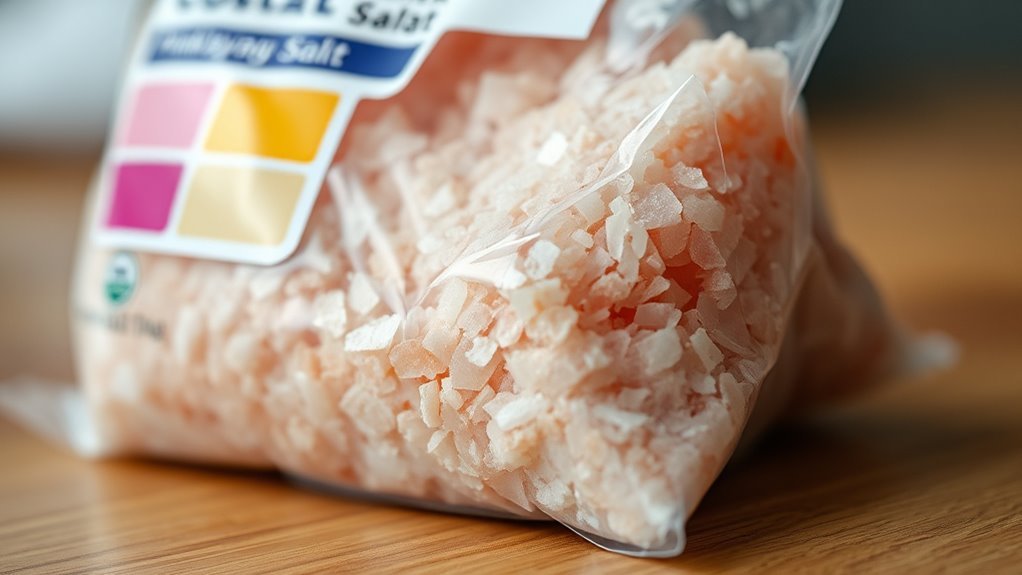
When you want to verify if Costco pink Himalayan salt is authentic, start by carefully examining its label. Check if the label clearly states the salt’s origin as Pakistan, India, or the Himalayan region—these are the true sources of authentic pink Himalayan salt.
Look for details about sourcing and packaging that mention the salt is “mined” or “harvested” from the Himalayan mountains. Authentic products often include certifications or disclosures regarding testing for heavy metals and contaminants, which helps confirm the salt’s purity and authenticity.
Be cautious if the label only says “Himalayan” without specifying a country, as this can indicate mislabeling. Also, compare the label’s information with reputable brands and consider researching the company’s transparency about trace minerals and sourcing practices.
Paying attention to these label details ensures you’re getting genuine Himalayan pink salt rather than a mislabeled or inferior product. It’s worth taking a little extra time to check—after all, you want the real deal!
Easy Home Tests to Spot Real Himalayan Salt
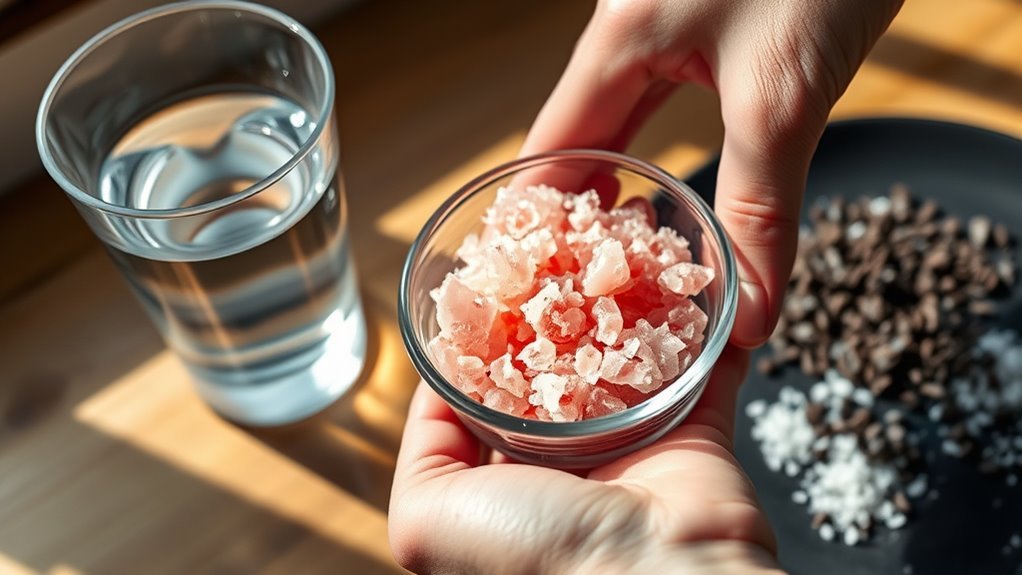
Although lab testing offers the most certainty, you can perform simple home tests to help determine if your pink salt is truly Himalayan. These easy methods focus on the salt’s authenticity by examining its purity, mineral content, and physical traits.
Simple home tests can help verify your pink salt’s authenticity by examining purity, minerals, and physical traits.
Try these home verification steps:
- Sediment test: Dissolve salt in water and check for sandy sediment, which suggests impurities.
- Color check: Look for a consistent pink hue with subtle variations typical of Himalayan salt.
- Crystalline structure: Use a magnifying glass to spot uniform crystals with natural mineral inclusions.
- Solubility test: Genuine Himalayan salt dissolves evenly without gritty residue.
- Taste test: Real Himalayan salt has a mild, mineral-rich flavor, unlike metallic or processed tastes.
These simple tests help you quickly assess the salt’s mineral content, color, and crystalline structure. They give you a good sense of its authenticity without costly lab work.
Frequently Asked Questions
Is Costco’s Pink Salt Actually Himalayan Salt?
Costco’s pink salt isn’t always truly Himalayan. You should check the packaging, contact the manufacturer, and look for certifications or third-party tests to confirm its origin.
It’s better to be sure before trusting it’s authentic Himalayan salt. After all, not all pink salts come from the Himalayas!
How Do I Know if My Pink Himalayan Salt Is Real?
You probably didn’t expect salt to be this tricky, but you can tell if your pink Himalayan salt is real by checking its natural pink hue.
Another way is to dissolve it completely in water. It should dissolve without leaving any residue.
Also, make sure to verify the supplier’s authenticity with a COA. That way, you know you’re getting the real deal.
Does Costco Have Himalayan Pink Salt?
Yes, Costco does have Himalayan pink salt. You can find it in large jars, usually labeled clearly.
Just make sure to check the packaging or contact Costco if you want to confirm its exact origin or authenticity. It’s always good to double-check!
What Is the Lawsuit Against Costco Pink Himalayan Salt?
The lawsuit claims Costco falsely labeled pink Himalayan salt, saying it’s from India or the Himalayas when it’s actually from Pakistan.
You should know it also alleged misleading health and mineral content claims.
Conclusion
You can verify if Costco pink salt is Himalayan by checking the label for origin, inspecting the color and texture, and performing simple home tests like the water solubility or taste test.
Don’t just trust the packaging, trust your senses. Don’t just look for color, look for consistency. Don’t just rely on price, rely on authenticity.
By staying attentive, staying curious, and staying informed, you’ll always get the real Himalayan salt you’re after. Remember, genuine Himalayan pink salt has a distinct mineral-rich flavor and a slightly coarse texture that sets it apart.
So, when verifying Costco pink salt, focus on origin, color, texture, and simple home tests. This way, you can confidently enjoy authentic Himalayan pink salt every time.