
Are Kosher Salt and Pickling Salt the Same?
Kosher salt and pickling salt aren’t the same, even though both are popular for seasoning food. Kosher salt has larger, coarser crystals and often includes additives. This gives it a milder taste and makes it dissolve more slowly.
Pickling salt, on the other hand, features fine, pure grains without any additives. It dissolves quickly, which helps keep brines clear and free from cloudiness.
If you ever swap one for the other, you’ll want to measure by weight. Their different textures and purity levels can affect both cooking results and safety.
Keep reading to discover more about their differences and best uses!
Key Takeaways
- Kosher salt has larger, coarser crystals, while pickling salt has fine, pure grains.
- Pickling salt contains no additives; kosher salt often includes anti-caking agents.
- Kosher salt dissolves slower and is ideal for seasoning meat; pickling salt dissolves quickly for brines.
- Their taste differs: kosher salt has a milder flavor, pickling salt provides a pure sodium chloride taste.
- When substituting, measure by weight to account for grain size differences and maintain recipe accuracy.
How Kosher Salt and Pickling Salt Differ: Texture, Taste, and Use
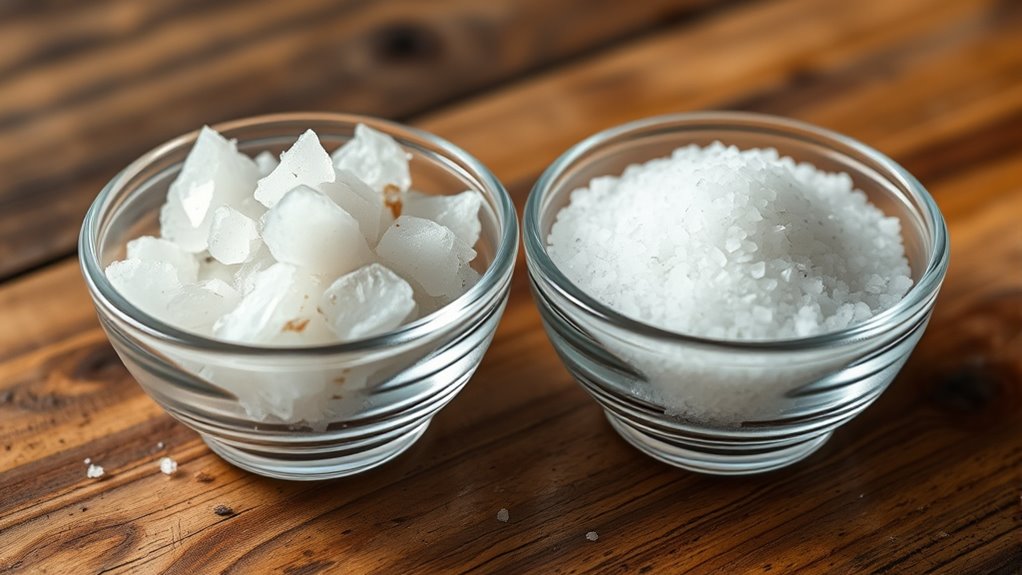
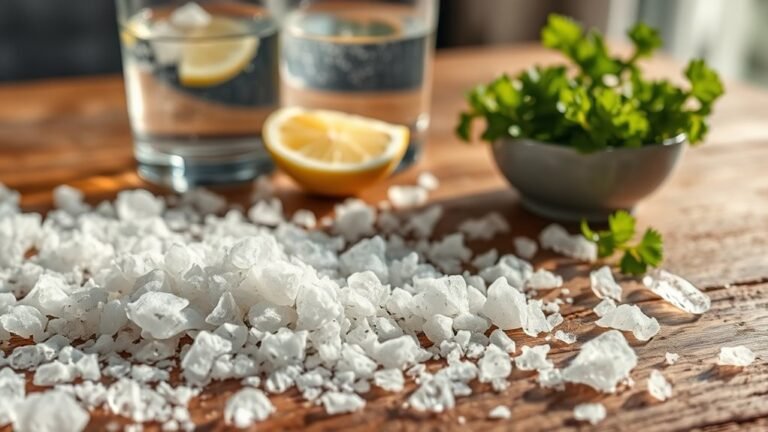
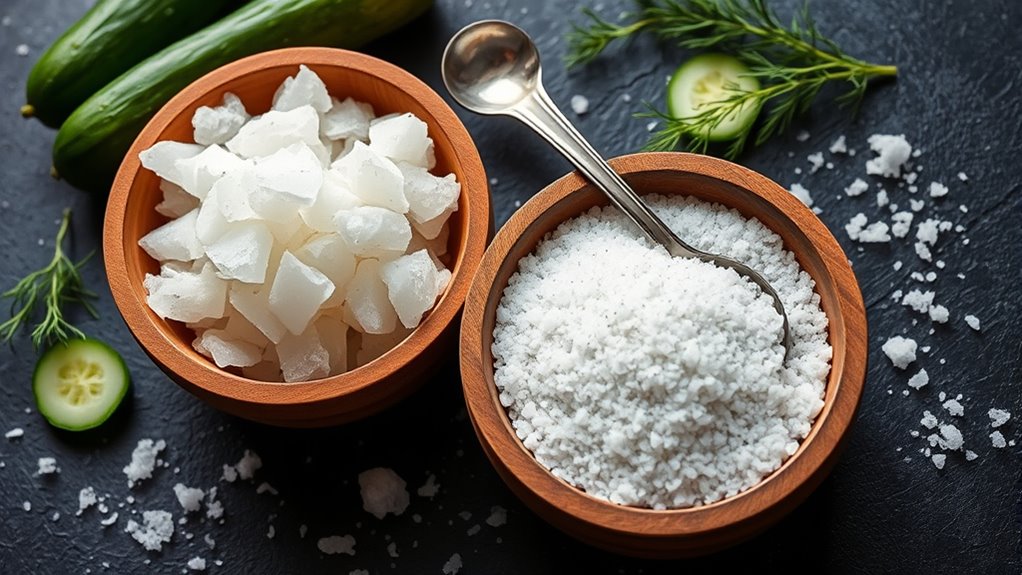
Although kosher salt and pickling salt might seem similar, their differences in texture, taste, and use are significant. Kosher salt has larger, coarser crystals with a distinct crystal size and grain size that give it a milder taste. It often contains anti-caking agents to prevent clumping, which can affect purity.
Kosher salt’s coarse crystals and mild taste contrast with pickling salt’s fine, pure grains.
In contrast, pickling salt features fine grains, is pure sodium chloride without any additives, and delivers a more concentrated flavor. Because of its fine texture, pickling salt dissolves rapidly, making it ideal for brines and pickling recipes.
Kosher salt’s coarser texture means it dissolves more slowly, which suits different culinary uses like seasoning meats or finishing dishes. Understanding these differences helps you choose the right salt for your cooking needs.
Keep in mind that their distinct grain sizes and purity levels impact how they perform in recipes, so each salt serves a unique purpose in the kitchen.
Substituting Kosher Salt for Pickling Salt: What You Need to Know
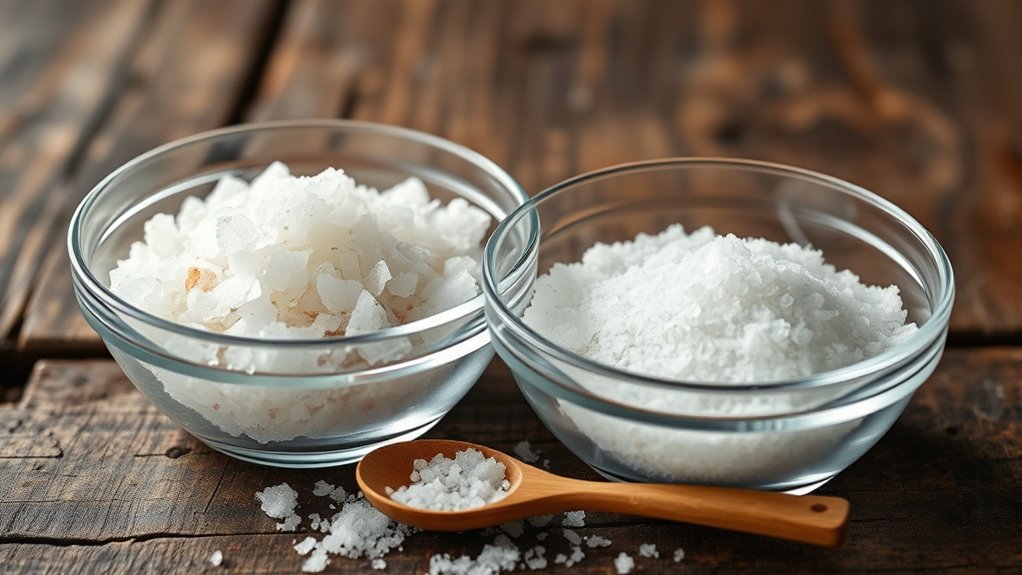
When you substitute kosher salt for pickling salt, it’s vital to measure by weight rather than volume to get the salinity right. Kosher salt has larger grain size compared to the fine grains of pickling salt, so using the same volume will throw off your measurement and affect the brine’s salinity.
For accuracy, weigh your kosher salt to match the weight of pickling salt needed—about 5/8 oz per teaspoon of pickling salt. This guarantees consistent salinity, which is essential for safe canning and flavor balance.
Since pickling salt contains no additives and dissolves clearly, kosher salt can still work well if you adjust measurement precisely. Just avoid relying on tablespoons or teaspoons when substituting because the difference in grain size means those volumes don’t translate equally.
Frequently Asked Questions
Can I Substitute Kosher Salt for Pickling Salt?
Yes, you can substitute kosher salt for pickling salt, but adjust the amount because kosher salt’s crystals are larger.
Weigh your salt to get accuracy, and watch for any additives that might affect flavor or preservation.
It’s a good idea to double-check the ingredients on the label. That way, you’ll avoid anything that could change the taste or the pickling process.
What Can I Use if I Don’t Have Pickling Salt?
You can use kosher salt if you measure by weight, not volume, since it’s 25% less dense. Just avoid table salt with additives, which can cloud your brine.
Fine sea salt works if it’s additive-free, too. So, just keep an eye on what’s in your salt, and you’ll be good to go!
How Much Kosher Salt to Replace Pickling Salt?
Use about 1 ¼ tablespoons of kosher salt to replace 1 tablespoon of pickling salt by volume. For accuracy, weigh kosher salt—roughly 0.625 oz per tablespoon—to match salt content precisely in your recipe.
It’s a good idea to measure by weight if you want to be exact. Kosher salt flakes can vary in size, so weighing helps keep your pickles tasting just right.
What Is the Best Substitute for Kosher Salt?
Pickling salt perfectly pairs as your prime kosher salt substitute. Because both boast bright, basic purity without additives, you’ll want to weigh wisely.
Winning with well-measured amounts leads to wonderful, consistent culinary creations every time. It’s all about getting those measurements right!
Conclusion
Now that you know kosher salt and pickling salt aren’t exactly twins, you can make smarter choices in your kitchen. While you *could* swap kosher salt for pickling salt, it’s like trying to fit a square peg in a round hole—sometimes it just won’t work perfectly.
So, keep both on hand if you want your pickles and recipes to shine. Pickling salt dissolves better and doesn’t contain additives, making it ideal for brines and preserving. Kosher salt, with its larger flakes and sometimes added anti-caking agents, is better suited for seasoning and cooking.
Trust me, your taste buds will thank you for it! Having the right salt for the right purpose ensures your pickling process and overall flavor are spot on. So, next time you’re in the kitchen, remember: kosher salt and pickling salt are not interchangeable, and keeping both handy will elevate your culinary game.