
Are Pickling Salt and Kosher Salt the Same?
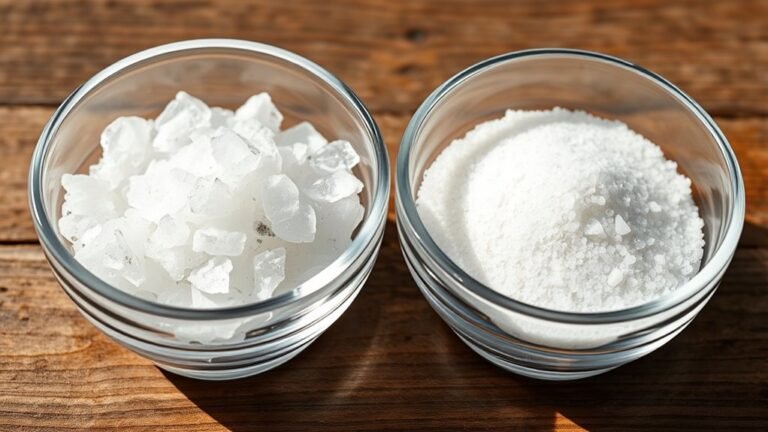
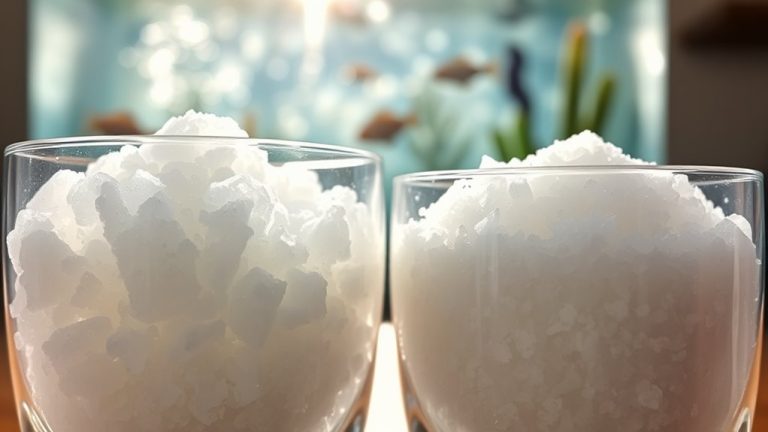
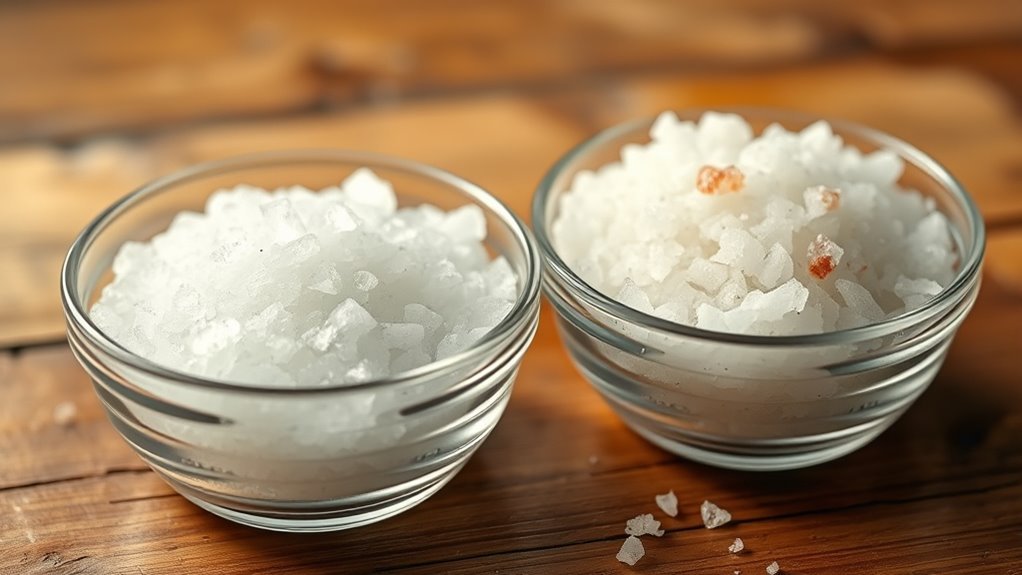
You might think pickling salt and kosher salt are the same, but they aren’t. Pickling salt is pure sodium chloride with fine grains that dissolve quickly and keep your brine clear. This makes it perfect for pickling since it won’t leave any cloudy residue.
Kosher salt, on the other hand, has larger flakes and may contain additives. It doesn’t dissolve as fast, which can affect preservation. So, if you’re using kosher salt for pickling, things might not turn out quite right.
If you want to substitute one for the other, weigh your salt carefully to avoid over-salting. Keep going to discover how each salt’s texture and additives impact your recipes. You’ll see why choosing the right salt matters!
Key Takeaways
- Pickling salt is pure sodium chloride with no additives, while kosher salt may contain anti-caking agents. Pickling salt has a fine grain that dissolves quickly; kosher salt has larger, coarser flakes.
- Pickling salt is ideal for clear brines in pickling and canning. On the other hand, kosher salt is suited for meat preparation.
- Kosher salt’s coarser texture and additives can slow dissolution and cloud brine, unlike pickling salt.
- When substituting, measure salts by weight due to different densities and grain sizes. It’s important because the texture and size really affect how much salt you’re actually using.
What’s the Difference Between Pickling Salt and Kosher Salt?
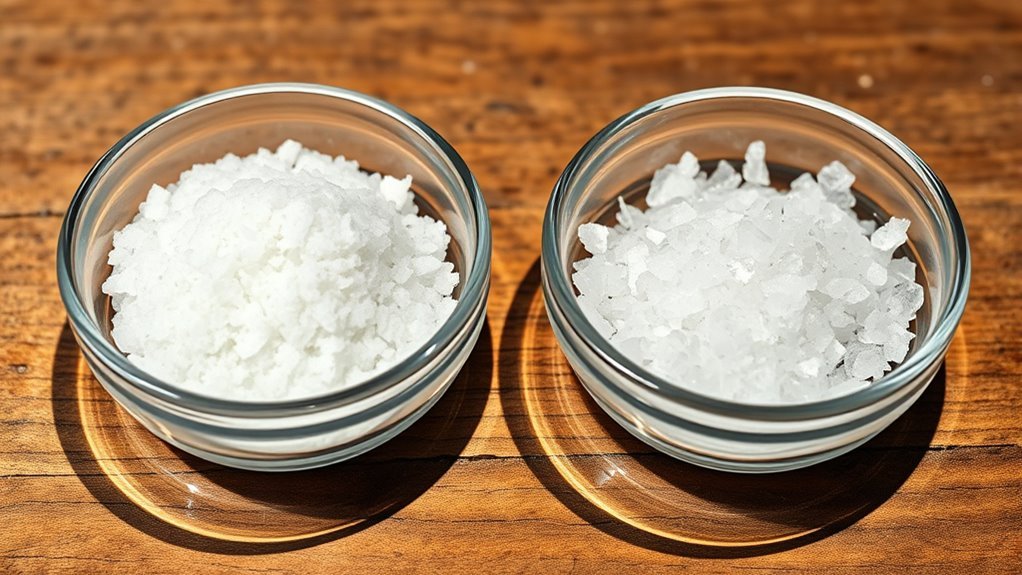
Although both pickling salt and kosher salt are free of iodine, they differ in texture, composition, and purpose. Pickling salt is pure sodium chloride with no additives, featuring a fine grain size that dissolves quickly in pickling liquid. This ensures excellent brine clarity.
In contrast, kosher salt has larger, coarser flakes and may contain anti-caking agents, which can slow dissolution and sometimes cloud your brine if not ground finely. These additives and grain size differences affect how each salt behaves when used for preservation.
Additionally, pickling salt’s higher density means a tablespoon weighs more than kosher salt, leading to measuring differences you’ll want to take into account. While kosher salt is popular for koshering meat and dry brining, pickling salt is specifically formulated to maintain clear brine and quick salt integration.
Knowing these distinctions helps you choose the right salt for your pickling needs without compromising texture or clarity.
How to Substitute Kosher Salt for Pickling Salt Safely and Accurately
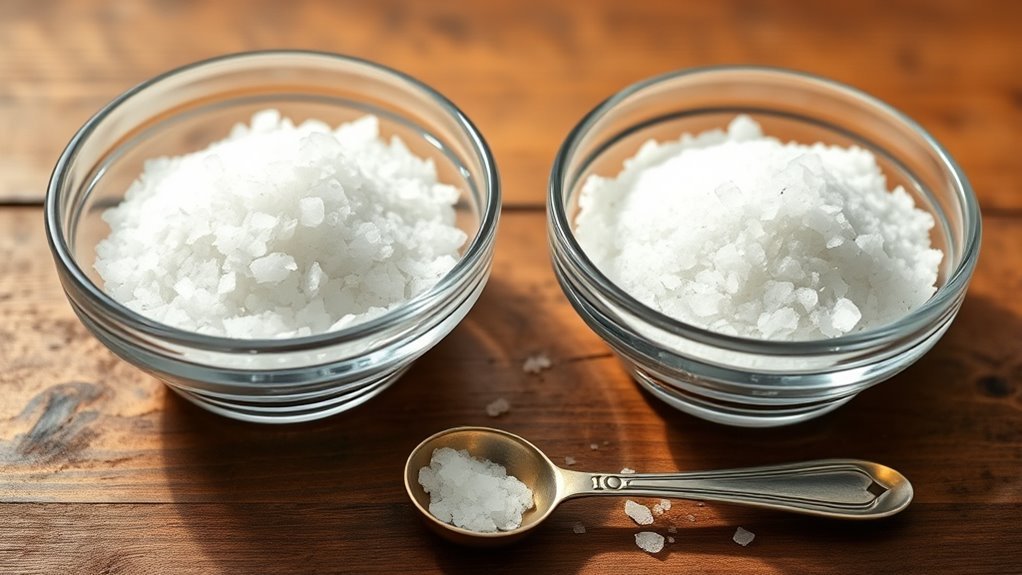
When you don’t have pickling salt on hand, you can use kosher salt as a substitute, but you need to be careful to get the measurements right. Since kosher salt has larger salt crystals and a coarser texture, it’s essential to measure by weight, not volume, to maintain the correct salt concentration in your brine or canning recipe.
Here’s the thing—if you just swap them by volume, you might end up with way too much salt. So, always weigh it out to keep things balanced.
To substitute kosher salt safely and accurately:
- Use equal weight amounts (e.g., 1 ounce kosher salt for 1 ounce pickling salt) instead of volume measurements.
- Grind coarse salt into a fine grain to ensure it dissolves completely in the brine.
- Avoid kosher salt with anti-caking agents, which can cloud the brine and interfere with preservation.
- Remember that pickling salt is denser, so relying on volume can cause over-salting.
Basically, take your time measuring and make sure your kosher salt is pure and finely ground for the best results.
Frequently Asked Questions
Can I Replace Pickling Salt With Kosher Salt?
You can replace pickling salt with kosher salt if you weigh it accurately, since kosher salt’s larger grains can throw off volume measurements.
Just make sure your kosher salt has no additives for best pickling results. It really makes a difference when you’re aiming for that perfect pickle!
What Can I Use if I Don’t Have Pickling Salt?
Wondering what to use without pickling salt? You can grab kosher salt, just weigh it properly to match salinity.
Avoid table salt with additives, or it might cloud your brine and spoil your pickling clarity. It’s all about keeping things clean and clear!
How Much Kosher Salt to Replace Pickling Salt?
Use about 5/8 ounce of kosher salt per tablespoon of pickling salt by weight. Since kosher salt flakes vary, weighing guarantees accuracy.
It’s a good idea to avoid anti-caking agents too, as they might cloud your brine when substituting. Just keep that in mind to get the best results!
Do I Really Need Pickling Salt?
You don’t always need pickling salt, but 90% of home canners prefer it for clear brine and consistent results.
Kosher salt works, but it might cloud your pickles and affect their appearance over time. So, if you want your pickles looking perfect, pickling salt is usually the way to go.
Conclusion
When you choose between pickling salt and kosher salt, think of them as different tools in your kitchen toolbox—each designed for a specific job. Pickling salt dissolves cleanly without additives, while kosher salt’s flakes add texture and flavor.
If you substitute kosher salt for pickling salt, just adjust the amount carefully to keep your recipe balanced. With the right salt, you’ll turn your pickling adventure into a perfectly seasoned success every time.
Remember, pickling salt is pure and free of additives, making it ideal for clear brine in pickling. Kosher salt, on the other hand, has a coarser texture and often contains anti-caking agents, which can affect the final taste and clarity. So, when deciding between pickling salt and kosher salt, consider the role each plays. Using the correct salt ensures your pickles come out crisp, flavorful, and beautifully seasoned every time.