
How to Tell If Himalayan Salt Is Sea Salt
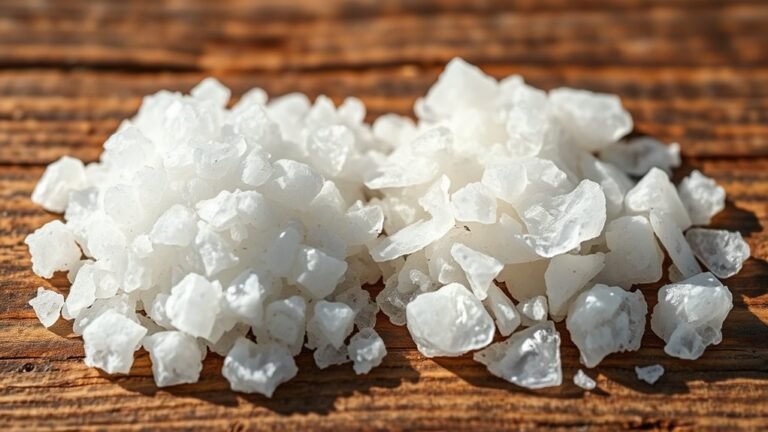
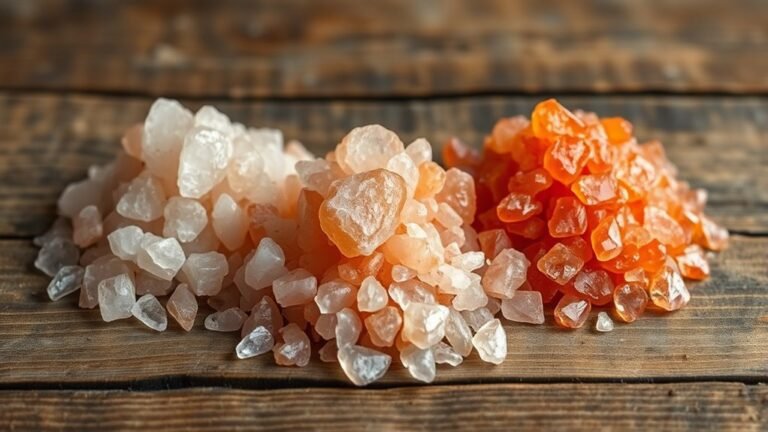
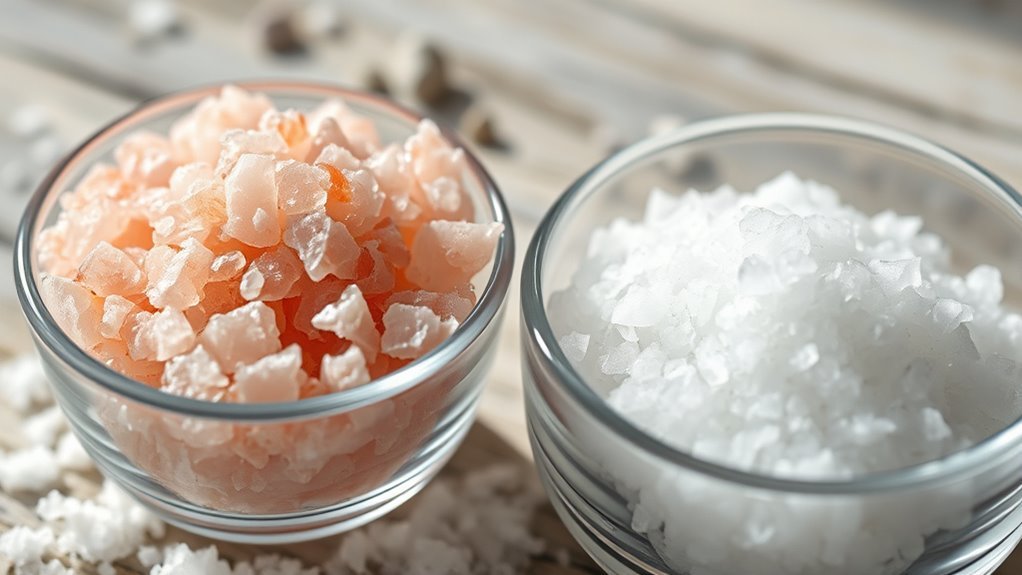
You can tell Himalayan salt from sea salt by checking its color and crystal shape. Himalayan salt has a vibrant pink or orange hue due to minerals like iron oxide, while sea salt is usually whiter or translucent.
Its crystals are uniform and coarse, unlike irregular sea salt grains.
When dissolved, Himalayan salt clears quickly without residue, which suggests purity. This is a handy tip if you want to be sure you’re getting genuine Himalayan salt.
If you want to uncover more ways to spot genuine Himalayan salt, keep exploring these key traits.
Key Takeaways
- Himalayan salt has a consistent crystalline structure, unlike the irregular grains of sea salt. Its vibrant pink or orange color comes from minerals like iron oxide, distinguishing it from sea salt’s typically white or gray hues.
- Pure Himalayan salt dissolves quickly in water and leaves the water clear, whereas sea salt may dissolve differently. Himalayan salt’s sediment is minimal, clean, and fine, while sea salt may leave gritty or colored residue.
- The presence of bright, uniform crystals and a natural mineral-rich color indicates Himalayan salt, not sea salt. So, if you see these signs, you’re likely looking at genuine Himalayan salt.
How To Identify Genuine Himalayan Salt By Look And Feel
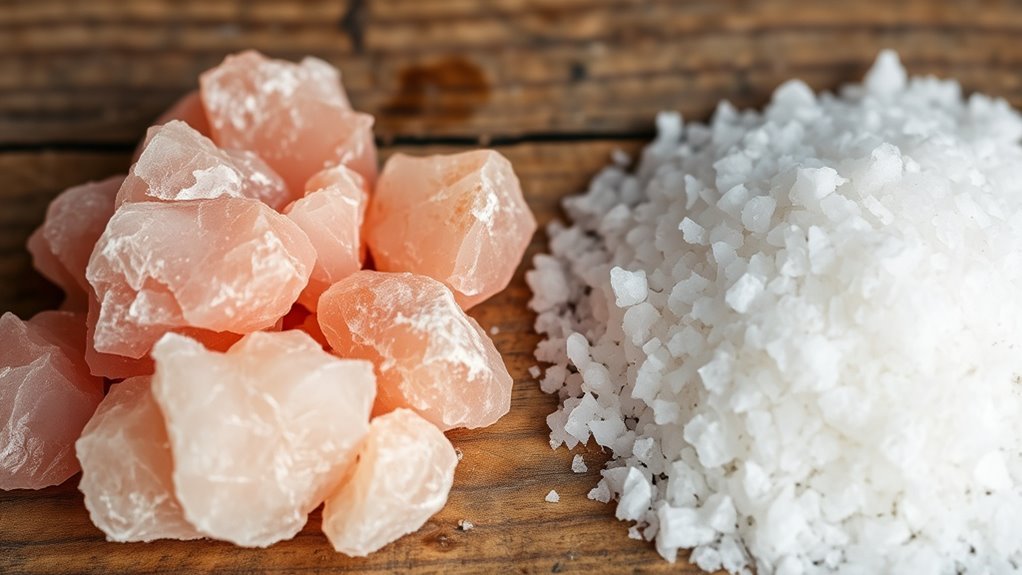
Although Himalayan salt shares some similarities with sea salt, you can identify genuine Himalayan salt by its consistent crystalline structure and vibrant pink or orange hue. This color comes from its rich mix of 84 essential trace minerals.
Genuine Himalayan salt stands out with its uniform crystals and vibrant pink or orange hues from 84 trace minerals.
When you look closely, the crystalline appearance is uniform and coarse, unlike the often irregular grains of sea salt. The natural color results from minerals like iron oxide, which really sets it apart visually.
If you notice dullness or cloudiness, it might mean there are impurities or contamination—something common in lower-quality salts. Genuine Himalayan salt dissolves quickly and cleanly, without leaving any sediment or taint behind.
You’ll also find it free of microplastics or pollutants, giving it a pure, granular texture. When you hold authentic Himalayan salt, its vibrant color and consistent crystalline form make it easy to spot compared to sea salt, which tends to be paler and less uniform.
How To Test Himalayan Salt Purity Using Dissolution And Sediment
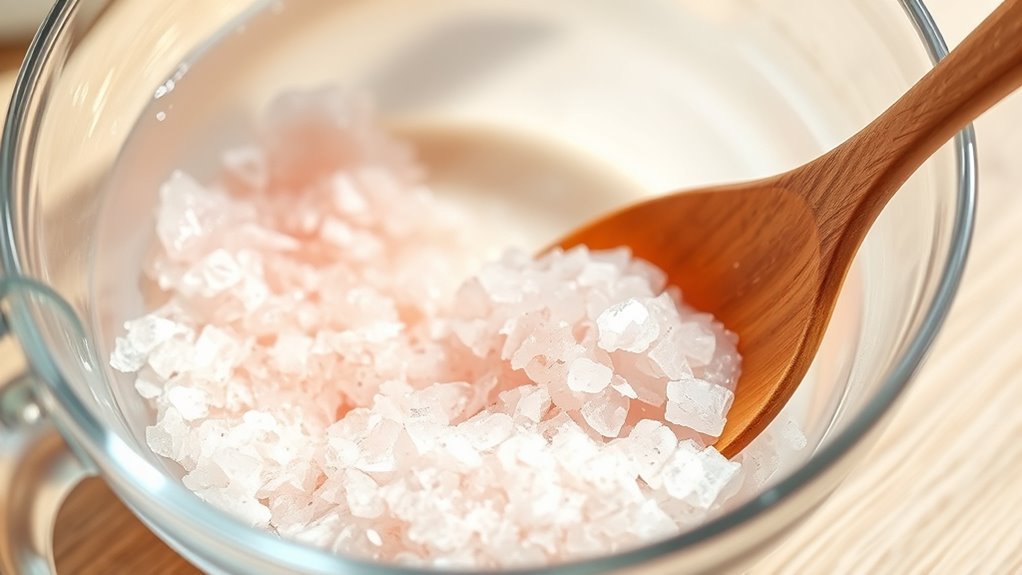
Once you’ve identified Himalayan salt by its vibrant color and uniform crystals, the next step is to test its purity through how it dissolves in water and the sediment it leaves behind.
Start by adding a small amount of salt to clear water and observe the dissolution process. Pure Himalayan salt dissolves quickly and leaves the water clear, without cloudiness. If the salt dissolves slowly or creates a cloudy solution, it may be contaminated.
Next, check the sediment that settles at the bottom. Genuine salt produces minimal sediment, which should look clean and fine.
If you notice tainted, paint-like specks or residue resembling impurities, that’s a red flag. Rubbing the sediment between your fingers can also help; gritty or colored sediment indicates poor purity.
Frequently Asked Questions
Is There a Difference Between Pink Himalayan Salt and Sea Salt?
Yes, there’s a difference. You’ll notice pink Himalayan salt has more minerals, a distinctive color, and purity because it’s mined.
Sea salt varies by source, often has fewer minerals, and may contain pollutants from ocean water. So, they’re not exactly the same.
Is Morton Himalayan Salt Real or Fake?
Morton Himalayan salt is real but often processed, which can reduce minerals. You should check the label and source carefully to verify authenticity, since some products might be blended or refined, affecting quality and purity.
It’s a good idea to be a bit cautious when buying. Not all Himalayan salts are created equal, so make sure you’re getting the genuine article.
Is Dollar Store Himalayan Pink Salt Real?
Dollar store Himalayan pink salt might not be real or pure. You should check its source, dissolve some in water to spot sediment, and look for reputable certifications before trusting its authenticity and safety.
It’s always better to be cautious with products from dollar stores, especially when it comes to something like Himalayan pink salt. Sometimes, the quality can vary a lot, so taking a few simple steps can save you trouble later on.
Is Himalayan Salt Really Healthier Than Regular Salt?
You might just find yourself choosing Himalayan salt more often because it’s richer in minerals and free from additives.
It’s healthier than regular salt, supporting hydration and electrolyte balance while avoiding pollutants common in sea salt.
Pretty neat, right?
Conclusion
You might think all pink salts are Himalayan, but appearance alone can be misleading. To be sure, trust your senses and simple tests: genuine Himalayan salt has a distinct texture and dissolves cleanly without residue.
If you’re worried about spending extra on fakes, these quick checks help you avoid that. By taking a moment to test purity, you’ll confidently enjoy the unique taste and benefits only true Himalayan salt offers.
When trying to tell if Himalayan salt is sea salt, remember that true Himalayan salt is mined from ancient salt deposits, not evaporated from seawater. So, if the salt doesn’t match the texture or dissolve the way you expect, it might just be sea salt with added coloring. Using these easy methods ensures you get authentic Himalayan salt, known for its mineral content and culinary qualities. This way, you can enjoy the genuine flavor and health benefits without any doubt.