

Are Sea Salt and Kosher Salt the Same Thing?
You might think sea salt and kosher salt are the same, but they’re actually quite different. Both are popular types of salt used in cooking, but they come from different sources and have distinct qualities.
Sea salt comes from evaporated seawater and keeps natural minerals that add a subtle flavor.
On the other hand, kosher salt is mined and refined, giving it larger, cleaner flakes with a neutral taste.
Their textures and flavors suit different uses—sea salt is great for finishing dishes, while kosher salt works well for seasoning and koshering meat.
Keep going to uncover more about their unique qualities.
Key Takeaways
- Sea salt is produced by evaporating seawater, while kosher salt is mined from underground salt deposits.
- Sea salt retains more minerals, giving it a subtle flavor boost; kosher salt is refined for purity and a neutral taste.
- Kosher salt has large, coarse flakes, whereas sea salt crystals vary from fine to flaky textures.
- Sea salt is commonly used as a finishing salt, while kosher salt is preferred for seasoning and koshering meat.
- They differ in production, mineral content, texture, flavor, and culinary uses, so they are not the same.
How Sea Salt and Kosher Salt Are Made

Although both sea salt and kosher salt come from natural sources, they’re made in very different ways. You’ll find sea salt is produced by evaporating seawater in natural or artificial evaporation ponds. This method leaves behind mineral-rich crystals that retain much of their original mineral content because sea salt undergoes minimal processing.
On the other hand, kosher salt typically comes from mined rock salt or underground mineral deposits. Its production methods involve solution mining or direct mining, followed by evaporation or compression to form larger, irregular crystals. During processing, kosher salt is often refined to remove impurities, resulting in a cleaner salt.
While both salts originate from seawater or mineral deposits, their production methods—whether through evaporation ponds for sea salt or solution mining and compression for kosher salt—affect their mineral content and structure. Understanding these differences helps you appreciate how each salt’s unique manufacturing process shapes its characteristics.
Differences in Texture, Flavor, and Culinary Use

The way sea salt and kosher salt are made directly impacts their texture and flavor, which in turn affects how you use them in the kitchen. Kosher salt features large, coarse, and uneven flakes that dissolve slowly, making it perfect for seasoning and koshering meat.
Sea salt and kosher salt differ in texture and flavor, shaping their ideal uses in cooking.
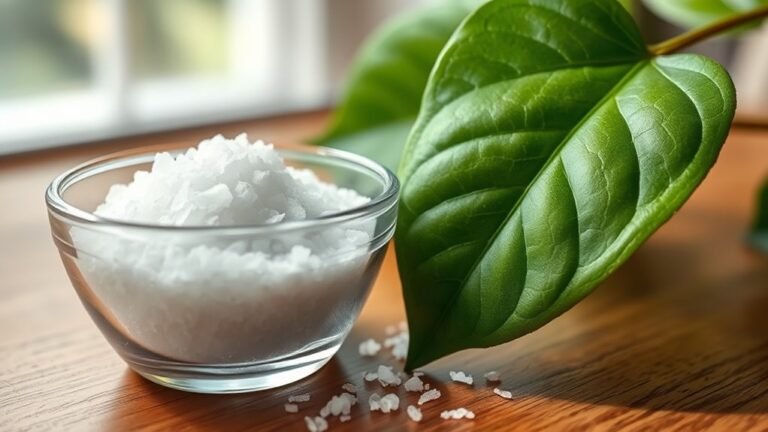
Its neutral flavor allows you to add saltiness without altering the dish’s taste. Sea salt varies from flaky to fine crystals and often carries mineral content, giving it a subtle flavor boost.
Because of its texture and flavor, sea salt works best as a finishing salt, adding crunch and a burst of taste right before serving. You’ll find kosher salt easier to control by hand due to its coarse flakes, while sea salt’s texture influences how quickly it melts on your food.
Understanding these differences in texture, flavor, and culinary use helps you choose the right salt for every recipe. It’s pretty handy to know when to reach for one or the other, depending on what you’re cooking.
Frequently Asked Questions
Can I Substitute Kosher Salt for Sea Salt?
You can substitute kosher salt for sea salt, but keep in mind their crystal sizes differ.
Adjust the amount and taste as you go, since kosher salt is less dense and may affect your recipe’s seasoning.
It’s a good idea to start with less and add more if needed. This way, you don’t accidentally over-salt your dish!
Why Do Chefs Use Kosher Salt Instead of Sea Salt?
You’ll find chefs use kosher salt 70% more often because its coarse grains give you better control and even seasoning. Its pure flavor and slow dissolving crystals let you adjust tastes perfectly while cooking.
It’s pretty handy, right? The texture really helps you pinch just the right amount, making your dishes come out balanced every time. Plus, it’s easier to spread evenly than sea salt.
Is It Better to Use Sea Salt or Kosher Salt?
It’s better to use kosher salt when you want easy, precise seasoning, but choose sea salt if you want subtle mineral flavors.
You’ll adjust amounts since their textures and saltiness differ, so pick based on your dish. Just think about what you’re cooking and how you want it to taste!
Is Morton Sea Salt Kosher?
Morton sea salt can be kosher, but you’ll need to check the packaging for a kosher certification symbol like OU or K. Not all Morton sea salts are certified, so don’t assume it’s kosher without that label.
It’s always a good idea to double-check before using it, especially if kosher certification is important to you. Just keep an eye out for those symbols on the package!
Conclusion
Now that you know sea salt and kosher salt differ in texture and flavor, you can choose the right one for your cooking. Imagine seasoning a juicy steak: kosher salt’s large flakes give you control and a perfect crust, while sea salt adds subtle mineral notes.
Knowing these differences helps you elevate every dish, making your meals taste just the way you want—whether you’re grilling, baking, or finishing with a sprinkle. Using the right salt, like sea salt or kosher salt, can really change the flavor and texture of your food. So next time you’re in the kitchen, remember that picking between sea salt and kosher salt isn’t just about preference—it’s about enhancing your cooking. Whether you want that crunchy crust or a delicate mineral touch, understanding these salts will make your dishes shine.