
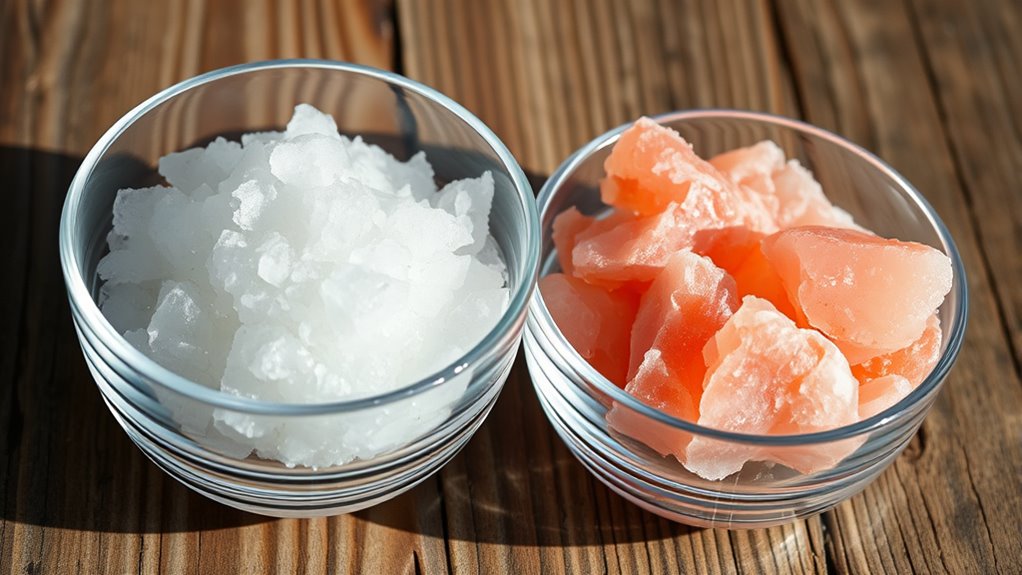
3 Reasons Which Salt Is Better: Sea or Himalayan?
You’ll want to choose Himalayan salt because it contains all 84 essential minerals and comes from pollution-free mountain deposits.
This makes it purer than sea salt. It also has lower sodium, which helps reduce fluid retention and supports hydration without raising blood pressure as much.
Sea salt, while less processed, often carries microplastic contamination from ocean water.
Keep exploring to understand how these differences align with your health and flavor preferences.
Key Takeaways
- Himalayan salt contains more essential trace minerals and offers a richer mineral profile than sea salt.
- It’s less processed and free from microplastic contamination compared to sea salt.
- Sea salt has higher sodium content, which can increase fluid retention more than Himalayan salt.
- Himalayan salt is mined from ancient, pollution-free deposits, making it environmentally safer than sea salt.
- Both salts support hydration, but Himalayan salt’s lower sodium makes it better for sodium reduction goals.
- So, if you’re watching your sodium intake, Himalayan salt might be the smarter choice.
What Are the Mineral and Purity Differences Between Himalayan Salt and Sea Salt?
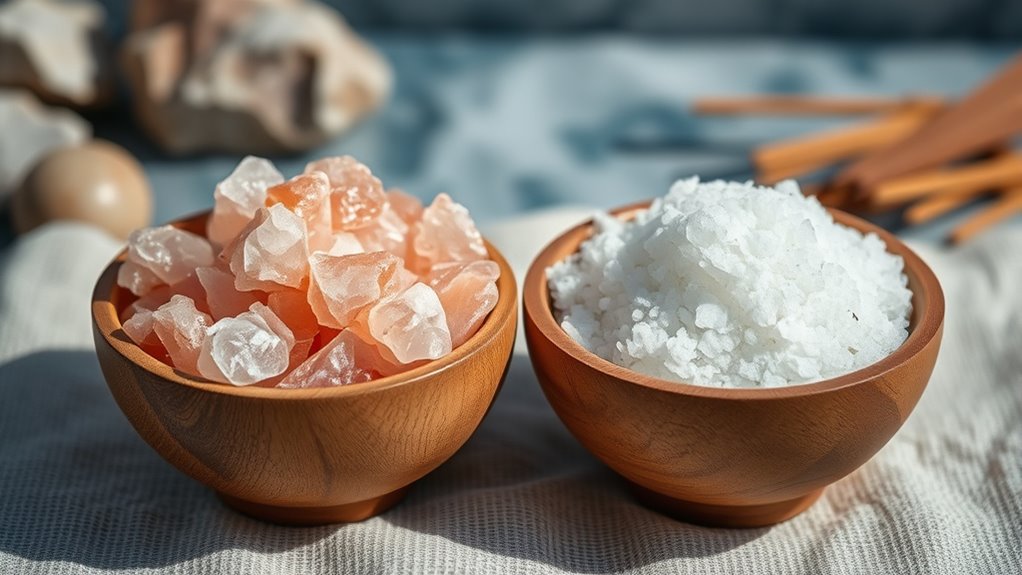
Although both Himalayan salt and sea salt contain essential minerals, they differ in their composition and purity. Himalayan salt boasts all 84 essential trace minerals, including iron, calcium, and magnesium, which give it its unique pink or grey hue.
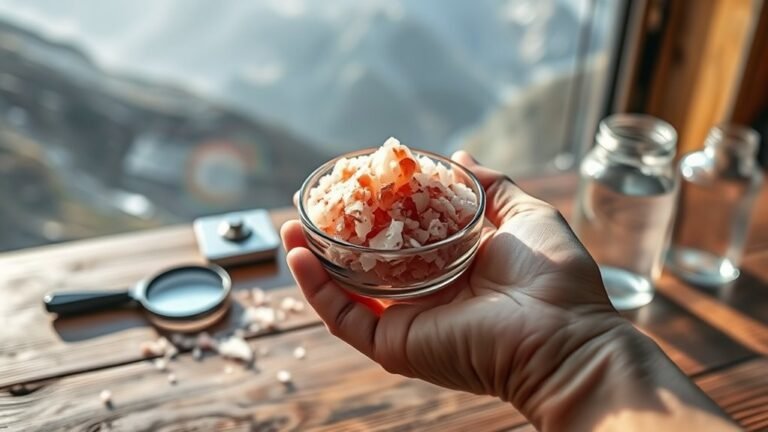
Himalayan salt contains all 84 essential trace minerals, giving it a distinctive pink or grey color.
Its mineral composition comes from ancient deposits, making it less processed and free from environmental pollutants like microplastics. In contrast, sea salt’s mineral content varies depending on its source but typically includes magnesium, potassium, and calcium.
However, sea salt is more prone to contamination from microplastics and other ocean-derived pollutants, affecting its purity. While both salts provide minimal mineral levels unlikely to offer significant health benefits beyond basic electrolytes, Himalayan salt is often regarded as purer due to its extraction from pollution-free environments.
If you’re concerned about contamination and purity, Himalayan salt might be the better choice. But it’s essential to weigh both types’ mineral content and potential exposure to environmental pollutants.
How Himalayan Salt and Sea Salt Affect Hydration and Blood Pressure Differently
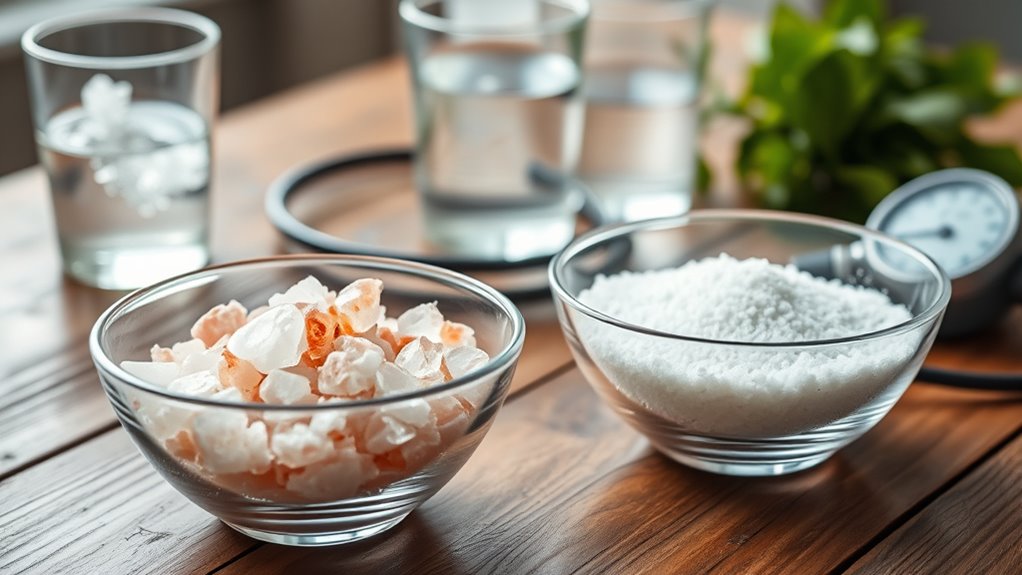
Understanding the mineral and purity differences between Himalayan salt and sea salt sets the stage for examining how they impact your hydration and blood pressure. Himalayan salt contains lower sodium—about 380 mg per 1/4 teaspoon—compared to sea salt’s 540 mg, which affects your sodium intake and fluid balance.
Both salts, rich in sodium chloride, support hydration by aiding water absorption in your cells. However, sea salt’s higher sodium content can cause more fluid retention, potentially raising your blood pressure.
In contrast, Himalayan salt’s mineral content and lower sodium help reduce excess water retention, offering a slight advantage for blood pressure management. While both salts play roles in maintaining hydration, choosing Himalayan salt may help you better control blood pressure due to its marginally lower sodium levels.
Still, it’s important to moderate your sodium intake overall, as excessive consumption from either salt can negatively impact your blood pressure and hydration. So, whatever salt you pick, keep an eye on how much you use!
How to Choose Himalayan Salt or Sea Salt Based on Your Health Goals
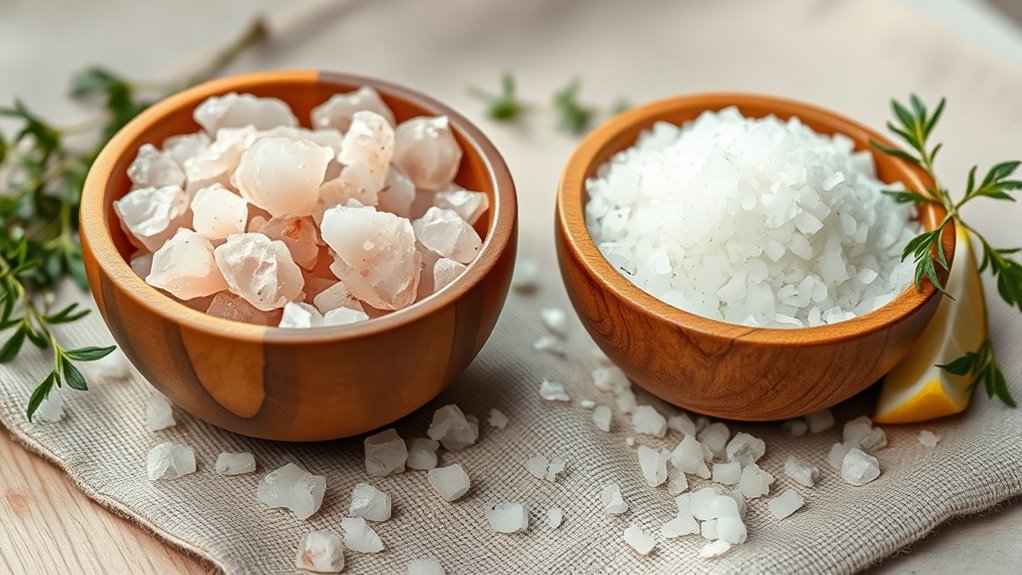
When deciding between Himalayan salt and sea salt, consider your specific health goals and how each type aligns with them. Your choice depends on factors like sodium intake, mineral composition, and environmental concerns.
Choose Himalayan salt for a richer mineral composition, offering 84 trace minerals that enhance flavor and nutrition. It’s a great option if you want more than just salt in your diet.
Himalayan salt provides 84 trace minerals, adding rich flavor and nutrition beyond just salt.
Opt for sea salt if you want minimal processing, though it may carry risks of microplastic contamination. So, if you’re all about keeping things natural but don’t mind a bit of risk, sea salt might work for you.
To reduce sodium intake, Himalayan salt is preferable due to its lower sodium content (~380 mg per teaspoon) compared to sea salt (~540 mg). That means you get less sodium with the same amount of salt.
If avoiding microplastic contamination is a priority, Himalayan salt is safer since it’s hand-mined from ancient mountain deposits. It’s like choosing salt that’s been around forever and kept away from the ocean’s pollution.
Consider environmental concerns; Himalayan salt’s extraction avoids ocean pollution linked to sea salt production. So, if you care about the planet, Himalayan salt might be the better pick.
Frequently Asked Questions
Is Sea Salt or Himalayan Salt Healthier for You?
Himalayan salt is generally healthier for you because it contains fewer contaminants like microplastics found in sea salt.
That said, you’ll still need to use both salts in moderation to keep your sodium intake balanced and safe.
It’s all about finding the right balance for your diet!
What Are the Disadvantages of Himalayan Pink Salt?
Himalayan pink salt’s charm hides a shadow—trace heavy metals and microplastics can sneak in.
Don’t let its rosy glow fool you; relying on it too much risks excess sodium and unwanted contaminants in your diet.
What Is the Healthiest Form of Salt to Eat?
The healthiest salt to eat is iodized table salt since it provides essential iodine for thyroid function. You should still use any salt sparingly to avoid excess sodium, which can harm your heart and overall health.
It’s all about balance, really. A little iodine goes a long way, but too much salt can be a problem. So, keep an eye on how much you’re using!
Can I Replace Sea Salt With Pink Himalayan Salt?
Yes, you can replace sea salt with pink Himalayan salt in most recipes. Just keep in mind the grain size and flavor differences.
You might need to adjust the amounts a bit to keep the taste and texture just right in your dishes. It’s pretty simple once you get the hang of it!
Conclusion
When it comes to choosing between Himalayan salt and sea salt, remember the wisdom of the ages: just as the ocean and mountains shape the earth, these salts shape your health. You’ll want to weigh their mineral content, impact on hydration, and blood pressure carefully.
By tuning into your body’s needs, you can pick the salt that best supports your goals—just like a seasoned traveler choosing the right path for a thriving journey. Both sea salt and Himalayan salt have unique benefits, so understanding how they affect you is key. Whether you prioritize minerals, hydration, or blood pressure control, your choice matters.
In the end, choosing the right salt—sea salt or Himalayan salt—depends on what your body truly needs. Listen closely, and you’ll find the perfect salt to enhance your health and well-being.