
5 Best Salts to Buy in 2027
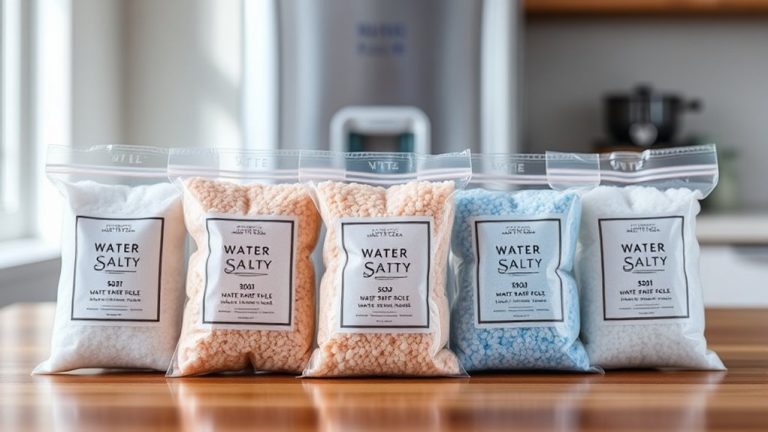
In 2027, the best salts to buy are all about blending rich minerals with careful harvesting for flavor and health. Whether you’re cooking at home or experimenting with new recipes, choosing the right salt can make a big difference.
Opt for iodized salt to support thyroid health, which is super important for your overall wellness.
Pair it with natural choices like Himalayan pink salt or flaky sea salts like Maldon and fleur de sel. These salts aren’t just tasty; they bring unique textures that can really elevate your dishes.
Don’t forget to consider smoked or flavored salts if you want to add something special to your meals.
If you’re looking to balance taste with nutrition and explore smart substitutes, there’s a lot more to discover about these standout salts.
Trust me, once you start experimenting, your cooking game will never be the same!
Key Takeaways
- Choose iodized salt for essential iodine and thyroid health, avoiding heavily treated salts with anti-caking agents. It’s a simple way to keep your body happy and healthy.
- Opt for minimally processed sea salts for better mineral retention, texture, and natural flavor complexity. These salts bring a little extra something to your dishes.
- Himalayan pink salt offers unique trace minerals and subtle flavor, enhancing culinary dishes with distinctive color and texture. It’s more than just a pretty pink shade.
- Gourmet salts like fleur de sel and Maldon provide delicate crystals ideal for finishing and elevating food presentation. They add that special touch to your meals.
- Consider potassium chloride-based salt substitutes to reduce sodium intake, but consult healthcare providers for safe use. Your health always comes first!
Key Factors When Choosing Salt in 2027
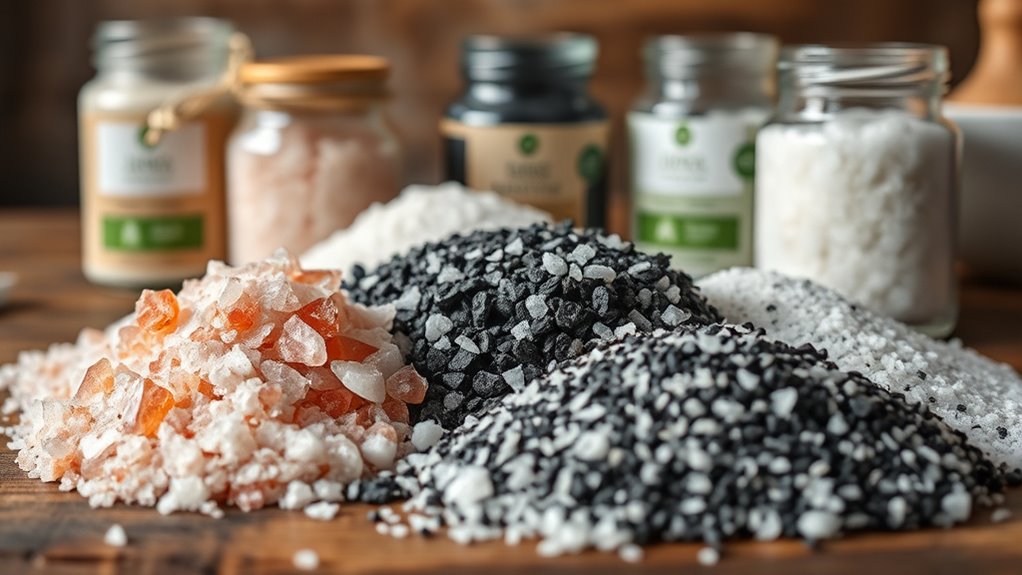
When choosing salt in 2027, you should focus on its mineral content and processing methods, as these directly affect both flavor and health benefits. Different salts boast unique mineral profiles that influence taste and nutritional value.
For example, iodized salt provides essential iodine to support thyroid health, which is vital if your diet lacks this nutrient. You’ll want to avoid salts heavily treated with anti-caking agents or other additives to guarantee purity and a more natural experience.
Processing methods vary widely, from refined table salt to minimally processed sea salts, impacting texture and mineral retention. While harvesting methods do affect salt’s characteristics, you’ll explore that more in the next section.
Prioritize salts that align with your dietary needs and preferences, paying close attention to their mineral content and how they’re processed. This approach helps you pick a salt that not only tastes great but also supports your well-being.
How Salt Harvesting Methods Affect Quality and Taste
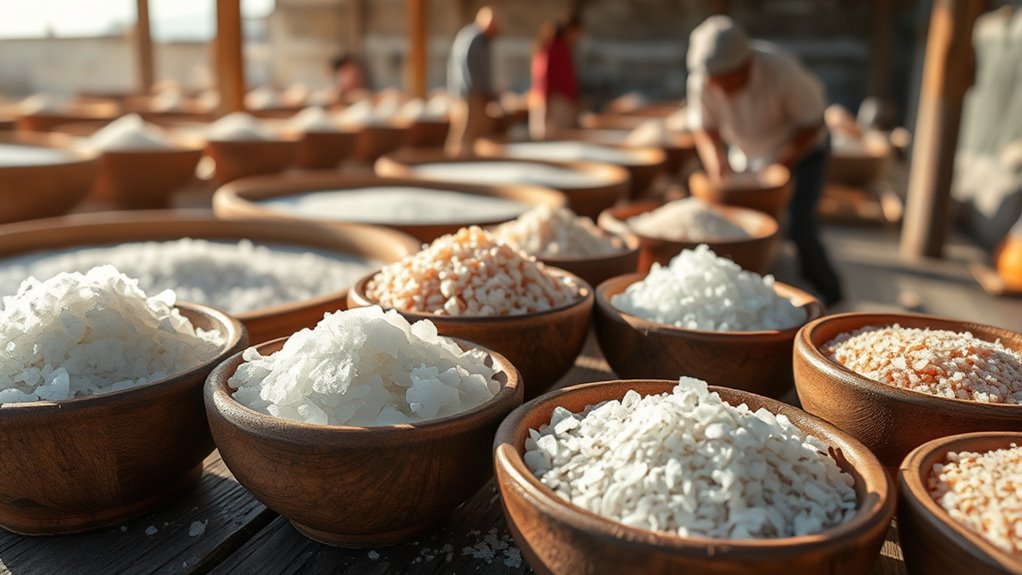
How does the way salt is harvested influence its quality and taste? The harvesting methods play a vital role in shaping a salt’s mineral content, texture, and flavor.
For example, sea salt results from evaporation of seawater, where traditional evaporation ponds or modern solar techniques impact its mineral profile and texture. This variation directly affects the salt’s flavor, making each batch unique.
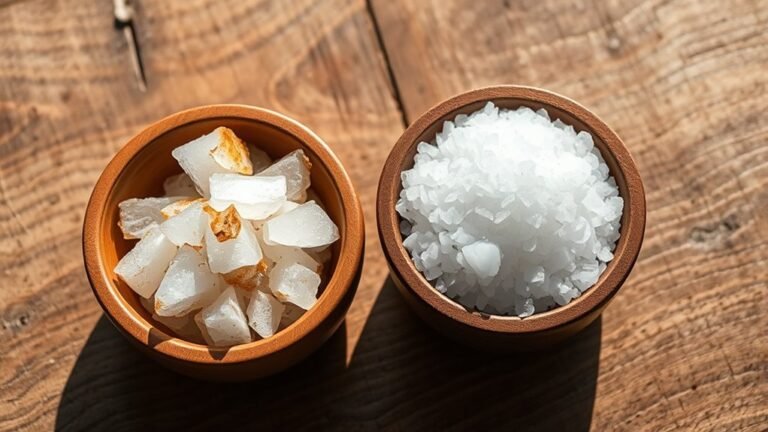
Himalayan pink salt is another great example; whether mined or hand-extracted, its purity and mineral presence differ, influencing its overall quality and taste. The extraction process also determines the salt’s texture—coarser or finer—and purity, which can enhance or mellow its flavor.
When you choose a salt, understanding these harvesting methods helps you appreciate why some salts taste more complex or have a distinctive crunch. So, the next time you pick salt, consider how its origin and harvesting technique contribute to the quality and flavor you experience.
Top Natural Salts With Unique Flavors and Textures
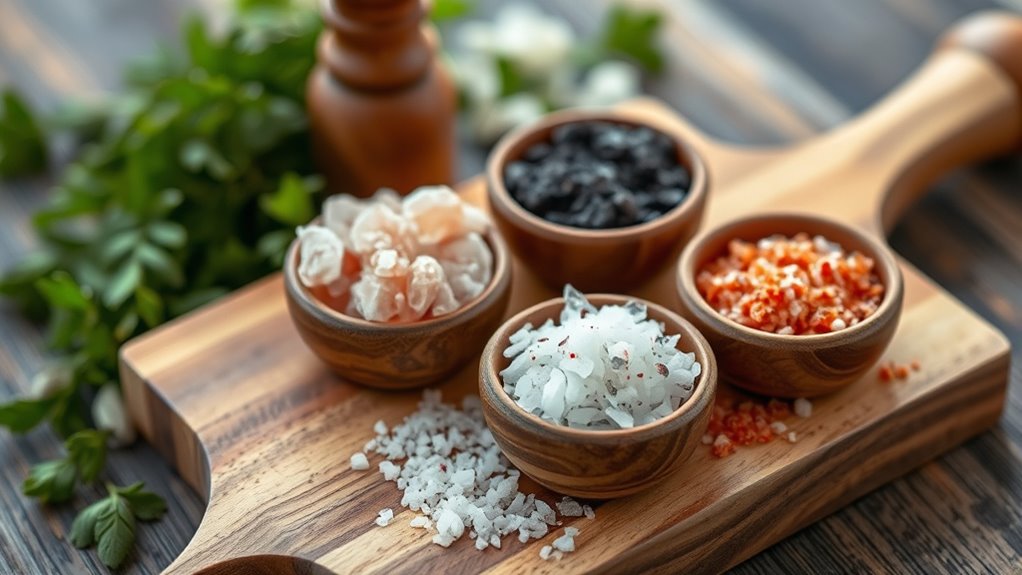
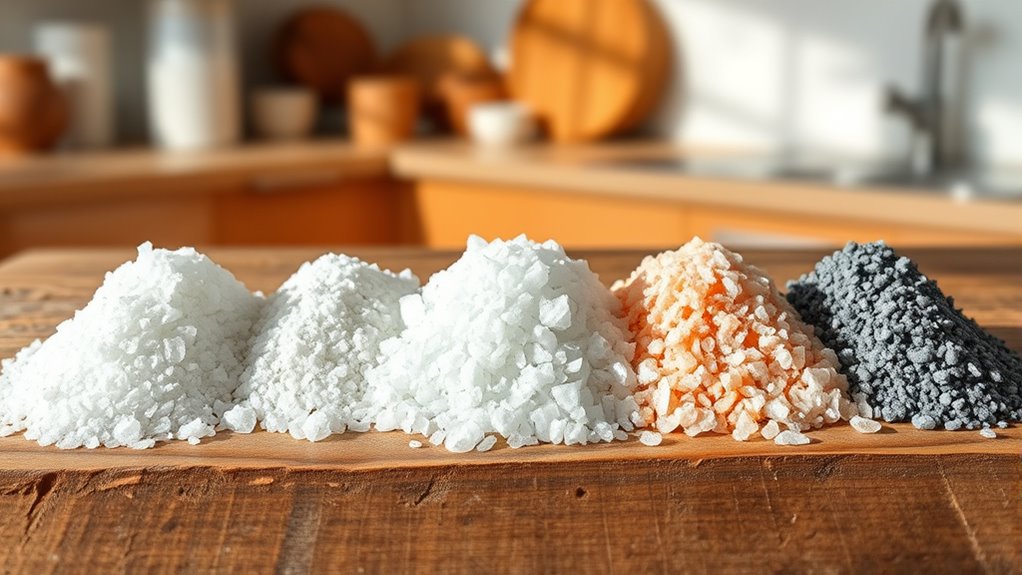
Natural salts offer a world of unique flavors and textures that can transform your cooking. Take Himalayan salt, for example—its distinctive pink color comes from trace minerals that give it a subtle, complex flavor.
Sea salts vary widely too; depending on their source, they can range from fine grains to flaky salts that add a delightful crunch and texture to dishes. Gourmet options like fleur de sel and Maldon sea salt are prized for their delicate crystals, perfect for finishing touches.
You’ll also find flavored salts, such as smoked varieties, that bring an added depth and complexity beyond basic seasoning. When you choose these natural salts, you’re not just adding saltiness—you’re enhancing dishes with unique mineral profiles and textures that elevate every bite.
Why Iodized and Mineral-Rich Salts Matter for Your Health
While unique flavors and textures make mineral-rich salts exciting in the kitchen, it’s important to take into account their impact on your health. Understanding why iodized salts and mineral-rich salts matter can help you make smarter choices.
Iodized salts contain potassium iodide, which prevents iodine deficiency—a key factor for maintaining good thyroid health. Mineral-rich salts like Himalayan pink salt offer trace minerals that add subtle flavor but don’t provide significant health benefits compared to iodized salts.
Iodized salts supply essential iodine for thyroid health, while mineral-rich salts enhance flavor without major health benefits.
The mineral content varies by harvesting method, affecting texture and potential microparticle contamination, so choose quality sources. Regardless of type, consuming too much salt can cause hypertension, so moderation is vital for your overall health.
Incorporating iodized salts ensures you get essential iodine for thyroid health, while mineral-rich salts can enhance your dishes without major health benefits. Balancing both supports taste and nutrition effectively.
Salt Substitutes and Future Trends
As you consider reducing your sodium intake, salt substitutes featuring potassium chloride offer a promising alternative that can help lower blood pressure. These salt substitutes replace sodium chloride with potassium chloride, helping you achieve effective sodium reduction.
Future trends focus on reformulating processed foods with potassium-based salts to improve overall population health. However, you should be aware of potential health impacts, especially if you have kidney disease or potassium sensitivity, as excess potassium can lead to hyperkalemia.
Policy discussions continue to balance the benefits of increased potassium consumption with its risks, emphasizing cautious use. Emerging research shows that integrating potassium chloride in your diet by substituting some sodium chloride could notably reduce hypertension and cardiovascular disease rates.
Before making salt substitutes a regular part of your diet, it’s wise to consult healthcare professionals to ensure safety, particularly if you belong to at-risk groups. Staying informed about these future trends empowers you to make healthier salt choices in 2027 and beyond.
Frequently Asked Questions
What Are the Highest Quality Salt Brands?
You’ll find Maldon and Himalayan Chef offer the highest quality salts, known for their purity and unique flavors.
Look for brands emphasizing sustainable sourcing, mineral richness, and certifications like organic or fair-trade to guarantee top-tier quality.
These little details really make a difference when you want the best salt for your cooking.
What Is the Healthiest Salt to Eat Daily?
The healthiest salt to eat daily is iodized table salt since it provides essential iodine for your thyroid.
Just watch your overall sodium intake to avoid health risks, and consider potassium salt substitutes if you need to lower blood pressure.
What Is the Best Salt Without Heavy Metals and Microplastics?
Imagine choosing water from a clear mountain spring—that’s what you want in salt.
You’ll want Himalayan pink or sea salt tested by trusted labs, ensuring no heavy metals or microplastics sneak into your daily sprinkle.
What Is the Unhealthiest Salt?
The unhealthiest salt is highly processed table salt with added anti-caking agents and excessive iodine. You’ll want to avoid salts with preservatives, flavorings, or contaminants.
These extras can increase health risks compared to pure, natural salts. So, sticking to more natural options is usually a better choice.
Conclusion
Choosing the right salt in 2027 is like finding the perfect seasoning for your life—it adds flavor, health benefits, and a touch of uniqueness to every meal. When you pick salts harvested naturally or enriched with minerals, you’re not just enhancing taste but also supporting your well-being.
Embrace the evolving world of salts and substitutes, and let your kitchen adventures sparkle with every sprinkle. Whether it’s Himalayan pink salt, sea salt, or specialty blends, each brings something special to the table. Your palate—and your body—will thank you for choosing the best salts to buy in 2027.