
What Is the Difference Between Kosher Salt and Regular Salt?
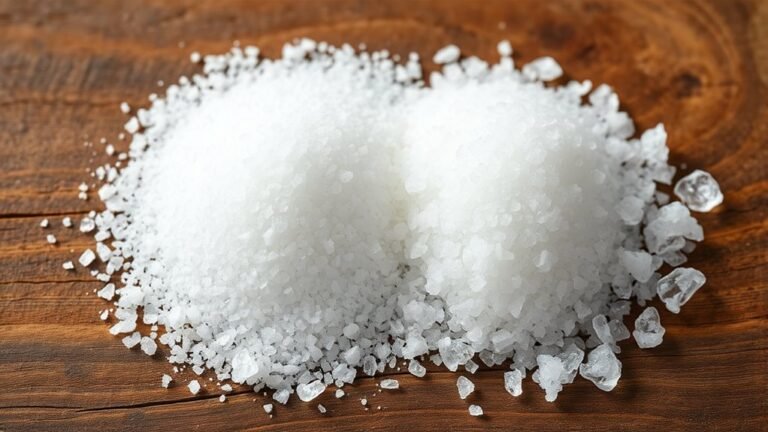
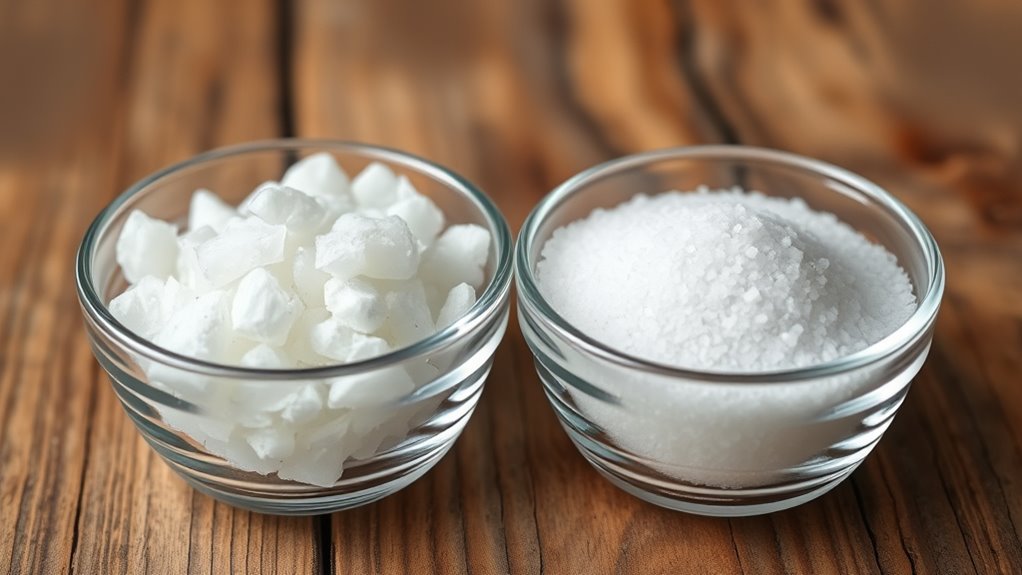
You’ll notice kosher salt has larger, coarser crystals without additives, while regular table salt features fine, uniform grains often mixed with iodine and anti-caking agents.
This means kosher salt has a purer flavor but less salinity per teaspoon, so you’ll need to use less when substituting.
Table salt dissolves faster, making it better for quick seasoning.
If you want to master their uses and measurements, there’s more to explore about how they impact your cooking.
Understanding the difference between kosher salt and regular salt can really elevate your dishes and help you season just right every time.
Key Takeaways
- Kosher salt has larger, coarser crystals, while regular table salt features small, uniform, cube-shaped grains.
- Table salt often contains iodine and anti-caking agents; kosher salt typically has no additives.
- A teaspoon of kosher salt weighs less and is less salty than the same volume of table salt.
- Kosher salt dissolves slower, making it ideal for dry brining, whereas table salt dissolves quickly for fast seasoning.
- When substituting, reduce kosher salt by about 25% to match the saltiness of table salt.
Differences Between Kosher and Table Salt
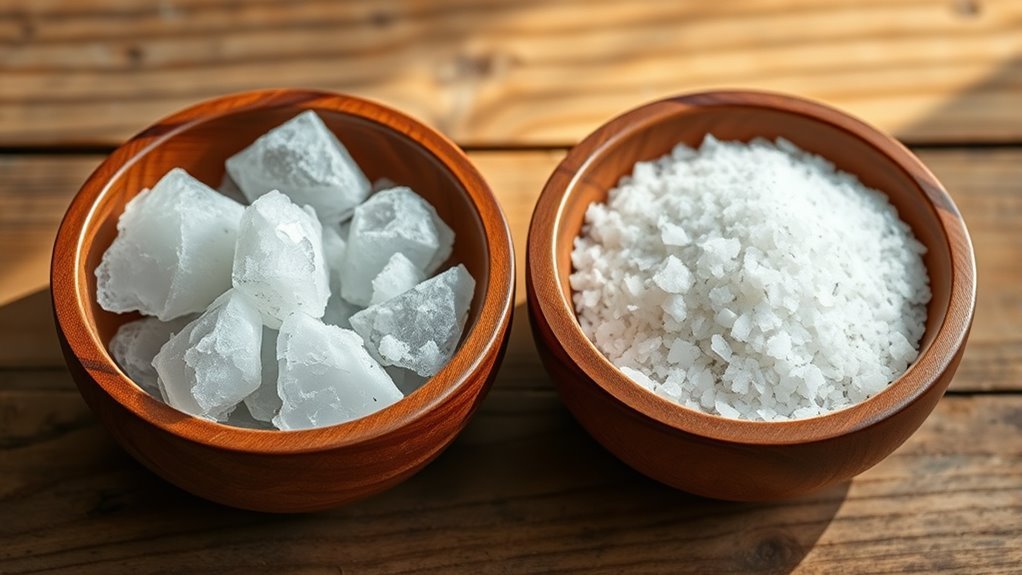
Although both kosher salt and table salt serve the same basic purpose, their differences in crystal size, texture, and additives considerably affect how you use them in cooking. Kosher salt features larger, coarser, and irregular crystals, giving you better tactile control for seasoning and dry brining.
Table salt, on the other hand, has small, uniform, cube-shaped grains that dissolve quickly. You’ll notice kosher salt contains no additives or iodine, while table salt often includes iodine and anti-caking agents to prevent clumping.
Because of these differences in grain size and density, a teaspoon of kosher salt weighs less and delivers less salinity than the same volume of table salt. This impacts measurement and the intensity of flavor when seasoning your dishes.
Understanding these distinctions helps you use each salt type more effectively, ensuring your recipes come out just right without unexpected saltiness or texture issues. It’s all about picking the right salt for the right job!
Adjusting Salt Quantities When Substituting Kosher Salt for Table Salt

When you substitute kosher salt for table salt, you need to reduce the amount by about 25% because kosher salt’s larger crystals take up more space but contain less salt by weight. For example, 1 teaspoon of Diamond Crystal kosher salt roughly equals 0.6 teaspoons of Morton’s table salt in saltiness by volume.
Since crystal size affects salt volume, measuring salt by weight is more accurate for recipe modifications. Keep in mind that kosher salt’s coarse salt crystals dissolve slower, so you might need cooking adjustments like longer simmering or grinding it finer for quick dissolution.
Because saltiness varies by brand and crystal size, always taste and adjust seasoning as you go when making salt substitutions. If a recipe was developed using table salt, you may want to increase kosher salt slightly to match saltiness, but be cautious.
Understanding these differences ensures your dishes maintain proper flavor without over- or under-salting during salt substitution.
Frequently Asked Questions
Is Kosher Salt Healthier Than Regular Salt?
Yes, kosher salt is healthier because it’s less processed and contains no additives. You’ll also avoid iodine’s metallic taste.
Plus, its larger crystals mean you might consume less sodium per pinch, which can help with your overall intake.
Why Use Kosher Salt Instead of Regular Salt?
Why settle for less control when seasoning? You’ll use kosher salt because it’s easier to handle, lets you season precisely, and avoids over-salting thanks to its larger crystals and purer flavor.
Isn’t cooking better that way?
Can You Substitute Regular Salt for Kosher Salt?
Yes, you can substitute regular salt for kosher salt, but use about half the amount by volume.
Measuring by weight is best to avoid over-salting since regular salt is finer and more concentrated than kosher salt.
Is Pink Himalayan Salt Kosher?
Wondering if pink Himalayan salt is kosher? It can be, but only if it’s certified by a reliable kosher authority.
Conclusion
Now that you know kosher salt has larger, coarser grains than regular table salt, you can better adjust your recipes. Remember, kosher salt is about 30-40% less salty by volume, so you’ll need more if you’re swapping it for table salt.
This difference matters because nearly 70% of home cooks prefer kosher salt for seasoning meat due to its texture and ease of control. It’s easier to pinch and sprinkle evenly, making it a favorite in many kitchens.
Keep this in mind, and your dishes will always be perfectly seasoned! Whether you’re using kosher salt or regular salt, understanding their differences helps you get the flavor just right every time. So next time you cook, choose the salt that suits your needs best for delicious results.