
10 Reasons Himalayan Salt Is Better Than Sea Salt
You’ll find Himalayan salt offers cleaner minerals harvested from ancient mines, so it’s free from microplastics and environmental contaminants common in sea salt. Its rich trace minerals add subtle flavor and hydration benefits, while its natural pink color signals purity.
Plus, hand-mining reduces ecological harm compared to sea salt harvesting.
Whether you use it for cooking or wellness, Himalayan salt combines quality, sustainability, and health perks.
Keep exploring to discover all its unique advantages.
Key Takeaways
- Mined from ancient underground deposits, Himalayan salt is naturally purer and free from surface pollutants and microplastics common in sea salt.
- It contains up to 84 trace minerals, offering a richer and more consistent mineral profile than sea salt. This means better hydration and electrolyte support for you.
- Hand-mined using traditional methods, Himalayan salt has a lower environmental impact. It also avoids disrupting marine habitats, unlike sea salt harvesting.
- Its distinctive pink color signals mineral richness and minimal processing. Plus, it adds a nice visual appeal and a sense of quality in your cooking.
- Himalayan salt’s coarser texture is great for versatile culinary uses, from seasoning dishes to salt blocks. It also supports skin health and holistic wellness without contaminants.
What Makes Himalayan Salt Unique Compared to Sea Salt
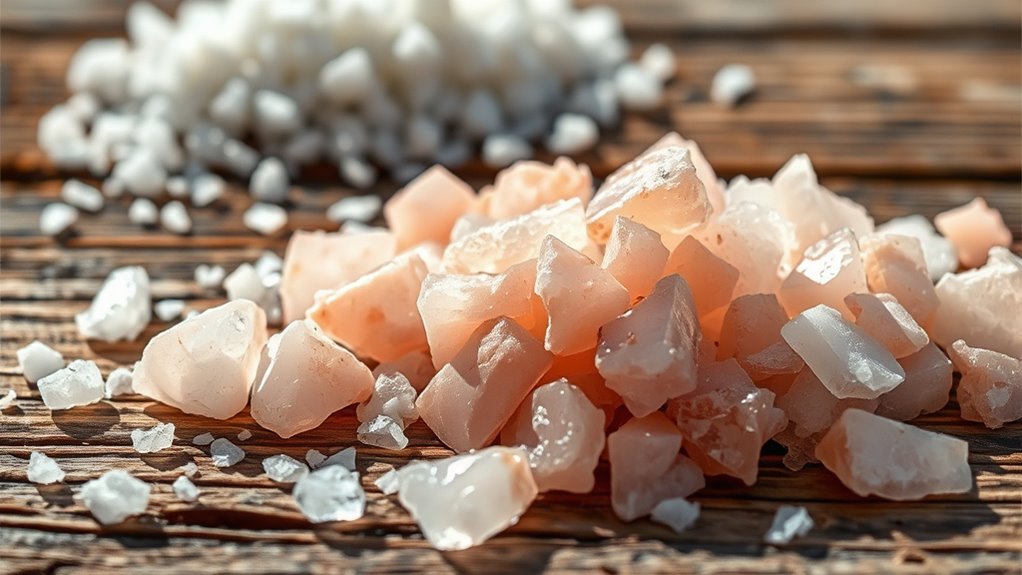
Although both Himalayan salt and sea salt come from natural sources, Himalayan salt stands out because it’s mined from ancient deposits in the Khewra Salt Mine, formed millions of years ago. This stable geographic origin gives Himalayan salt a consistent mineral content, unlike sea salt, which varies depending on where it’s harvested.
Himalayan salt’s ancient origins ensure a consistent mineral profile, unlike the variable nature of sea salt.
When you choose Himalayan salt, you get a product rich in trace minerals—up to 84 different types—including iron, magnesium, calcium, and potassium. These trace minerals give it that distinctive pink color and unique profile.
You’ll also appreciate that Himalayan salt undergoes minimal processing. It’s often hand-mined and free from additives or contaminants, unlike sea salt, which can carry microplastics and other impurities from ocean water.
This careful processing preserves its natural purity and enhances its appeal. So, when you pick Himalayan salt, you’re choosing a naturally sourced salt with a unique mineral profile and a clean, reliable origin.
Himalayan vs Sea Salt: Mineral Content and Health Benefits
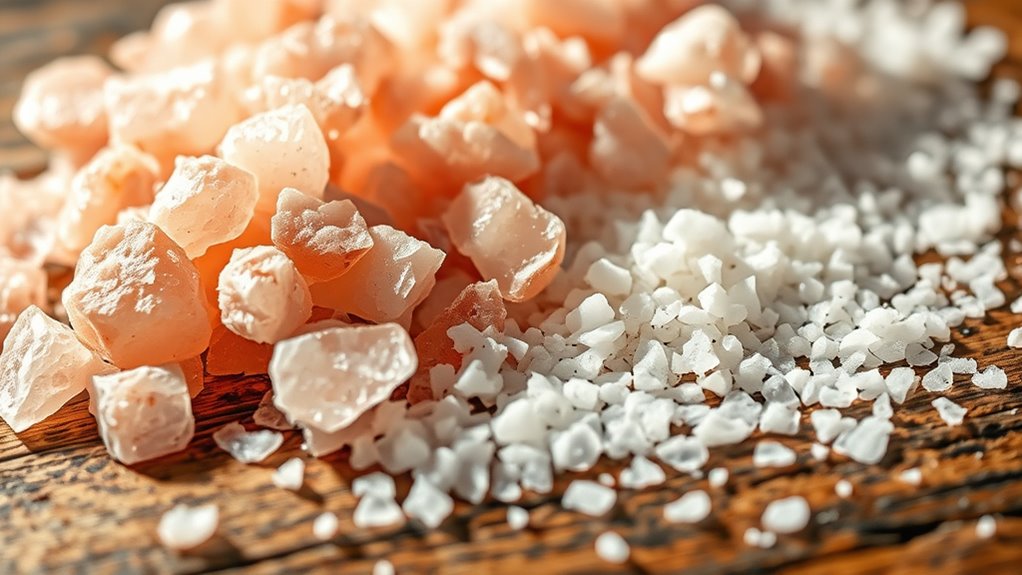
You’ll notice that Himalayan salt contains a wider variety of minerals compared to most sea salts. Many people believe these extra minerals offer added health benefits, but the actual impact is often minimal.
Let’s explore how these differences affect your choice between the two salts. It’s not always as straightforward as it seems, so understanding the details can help you decide what works best for you.
Mineral Variety Comparison
When comparing Himalayan salt and sea salt, you’ll notice that Himalayan salt contains up to 84 trace minerals like iron, calcium, magnesium, and potassium. It offers a more consistent mineral profile due to its specific mining location.
This steady mineral composition sets it apart from sea salt, whose mineral content can vary widely depending on the seawater source and environmental factors. Himalayan salt’s distinctive pink hue comes from iron oxide, present in higher and more stable amounts than in sea salt.
While both salts have similar sodium levels, Himalayan salt’s richer mineral variety often appeals to those seeking a more diverse mineral intake. This consistent mineral profile means you get a reliable source of trace minerals with Himalayan salt, unlike the fluctuating mineral content typical of sea salt.
Health Benefit Claims
How much do the minerals in Himalayan salt really benefit your health? While Himalayan salt contains up to 84 trace minerals, the amounts are minimal and unlikely to impact your well-being.
The salt composition in both Himalayan and sea salt is primarily sodium chloride, providing similar sodium content and electrolyte functions. Although minerals like iron, calcium, and magnesium are present in Himalayan salt, scientific evidence shows their quantities are too low to offer significant health benefits compared to sea salt.
Claims that Himalayan salt improves health due to its mineral content aren’t supported by research. Ultimately, both salts contain negligible trace minerals, so you won’t see meaningful differences in health benefits by choosing one over the other based solely on mineral content.
Fewer Contaminants in Himalayan Salt Compared to Sea Salt
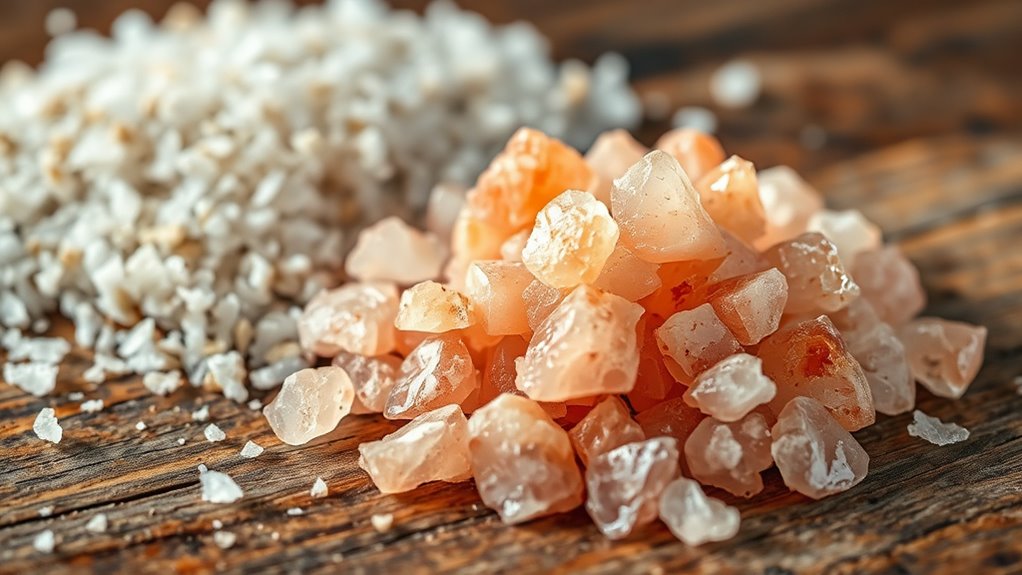
Although both Himalayan salt and sea salt come from natural sources, Himalayan salt usually contains fewer contaminants because it’s mined from deep underground deposits. This means it’s away from surface pollutants and the microplastics common in seawater.
When you choose Himalayan salt, you reduce your exposure to microplastics and environmental pollution that often affect sea salt during evaporation and processing. Its mineral composition stays more stable and pure thanks to limited processing, while sea salt can absorb heavy metals and other contaminants.
| Factor | Himalayan Salt |
|---|---|
| Source | Deep underground deposits |
| Contaminants | Minimal, fewer microplastics |
| Environmental Impact | Less exposure to pollution |
| Processing | Minimal, preserving purity |
| Mineral Composition | Stable and consistent |
This natural protection means you get a cleaner, more reliable product with fewer contaminants than typical sea salts exposed to surface environmental pollution. So, it’s a smart choice if purity matters to you.
How Himalayan Salt’s Pink Color Reflects Its Quality
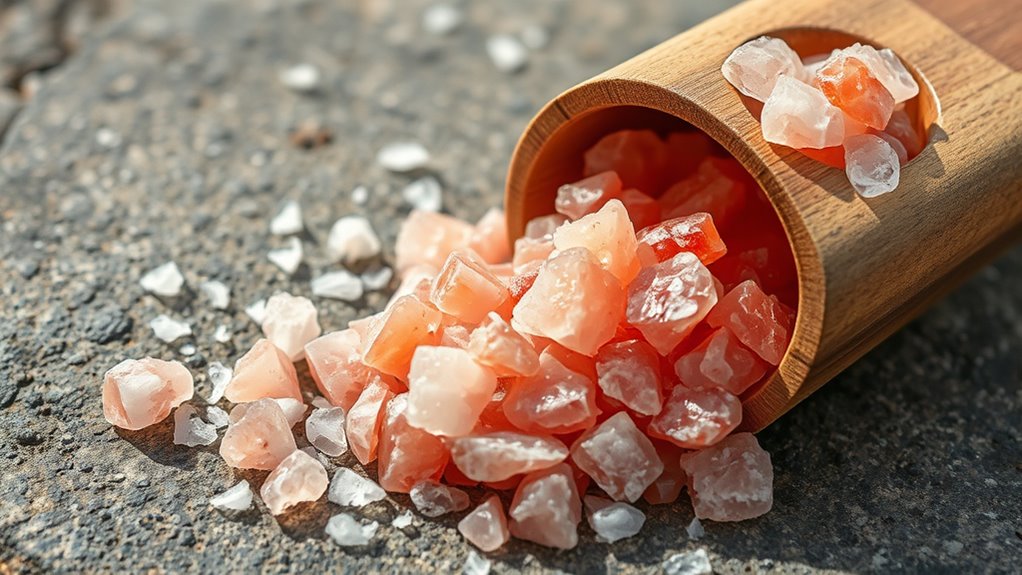
Because Himalayan salt owes its distinctive pink color to iron oxide, you can use this hue as a quick indicator of its mineral richness and overall quality. The vibrant pink color reflects the natural minerals embedded within the salt, signaling minimal processing and higher purity compared to other salts.
When you see a deeper or more intense pink color, it often means the mineral content is richer, indicating greater mineral diversity. This diversity includes essential trace elements that contribute to Himalayan salt’s reputation for premium quality.
Unlike sea salt, whose color can vary widely, Himalayan salt maintains a consistent pink hue due to its unique mineral composition formed over millions of years. By paying attention to the pink color, you’re fundamentally evaluating the salt’s natural mineral content and mineral richness.
That gives you confidence in its superior quality and health benefits. This visual cue makes Himalayan salt stand out as a more natural and mineral-rich option.
Culinary Advantages of Himalayan Salt Over Sea Salt
You’ll notice Himalayan salt brings a subtle, unique flavor to your dishes thanks to its mineral content. Its finer, consistent grain size makes it easier to measure and use in cooking compared to sea salt’s variable crystals.
Plus, its versatility lets you enhance both the taste and presentation of your meals with ease. It’s a simple way to add a little something special to your cooking!
Flavor Profile Differences
When you use Himalayan salt in your cooking, you’ll notice its mildly sweet, mineral-rich flavor stands out compared to typical sea salts. This unique flavor profile comes from its iron oxide content and minimal processing, which preserves a balanced mineral composition.
Himalayan salt’s larger, coarser crystals not only add a distinctive crunch but also deliver a burst of pure, clean saltiness with subtle mineral nuances. This really helps enhance the overall taste of your dishes.
Unlike some sea salts that carry earthy or smoky notes, Himalayan salt offers a more refined flavor. Plus, its attractive pink hue adds visual appeal, making it a popular finishing touch.
Choosing Himalayan salt means you get both taste enhancement and a striking presentation in one. It’s a win-win for your cooking!
Cooking Versatility Benefits
Many chefs and home cooks appreciate Himalayan salt for its remarkable versatility in the kitchen. Its unique mineral content and crystalline structure open doors to diverse culinary applications that sea salt can’t match.
Here’s why you’ll love using it:
- Salt blocks let you grill, serve, and present food with added flavor and visual appeal.
- Its granular size gives you precise control for seasoning, finishing, or decoration.
- The preserved mineral content boosts flavor complexity, enhancing every dish’s taste.
- Its firmness allows salt curing and smoking, expanding your cooking techniques.
How Himalayan Salt’s Texture Enhances Cooking and Presentation
Because of its unique crystalline structure, Himalayan salt adds more than just taste to your dishes—it transforms how you cook and present food. Its large crystalline blocks double as natural salt blocks, perfect for grilling or serving, imparting subtle mineral notes while withstanding high heat.
Himalayan salt’s unique crystals elevate cooking and presentation, serving as natural salt blocks with subtle mineral flavors.
You’ll find the coarse texture allows saltiness to release gradually, providing balanced flavor enhancement without overpowering your meals.
Beyond cooking, the varied grain sizes lend themselves beautifully to culinary presentation. Sprinkling these crystals adds a rustic, tactile element that elevates any dish visually.
Whether you use chunks for finishing or fine grains for seasoning, the unrefined texture offers a striking contrast to smooth plates and vibrant foods. Himalayan salt’s natural texture not only enhances flavor but also brings an artisanal touch, making your meals look as good as they taste.
Himalayan Salt’s Natural and Wellness Uses Beyond Cooking
Though you may know Himalayan salt primarily for its culinary appeal, its uses extend far beyond the kitchen. Thanks to its natural purity and rich mineral content, Himalayan salt plays a significant role in wellness applications you might find appealing.
You can add Himalayan salt to baths to harness up to 84 trace minerals that support skin health and promote relaxation. Using it in salt lamps provides a natural way to improve air quality and create a calming atmosphere.
Salt therapy or halotherapy involves inhaling microcrystals of Himalayan salt, which some believe can aid respiratory wellness. Its detoxification properties make it a favored ingredient in holistic wellness routines, free from the microplastics often found in sea salt.
Choosing Himalayan salt means embracing a cleaner, mineral-rich option for your natural and wellness needs beyond cooking. It’s a simple switch that could make a big difference.
Hydration Benefits of Himalayan Salt Versus Sea Salt
Beyond its wellness applications, Himalayan salt also offers notable advantages when it comes to hydration. Thanks to its rich mineral content, including essential trace minerals like magnesium and calcium, Himalayan salt helps support your body’s electrolyte balance more effectively than sea salt.
These minerals enhance water absorption and retention, boosting hydration efficiency. Because Himalayan salt undergoes minimal processing, it preserves its natural mineral profile, which plays a key role in maintaining proper fluid levels in your body.
In contrast, sea salt often contains microplastics and contaminants, making its mineral content less reliable for hydration support. Plus, Himalayan salt’s iron and other minerals contribute to better water mineralization, enhancing the quality of hydration you receive.
Himalayan Salt and Blood Pressure: What You Should Know
Both Himalayan salt and sea salt contain similar sodium levels, which can affect your blood pressure if you consume too much. Himalayan salt usually has slightly less sodium, but neither is a magic solution for managing blood pressure.
It’s important to stick to recommended daily limits to keep your numbers in check. So, don’t rely on one type of salt to control your blood pressure—it’s all about balance and moderation.
Sodium Content Comparison
You’ll find that Himalayan salt contains about 380 mg of sodium per 1/4 teaspoon, which is generally less than sea salt. When comparing sodium content, it’s important to take into account these points:
- Both Himalayan salt and sea salt have roughly 2,200 mg of sodium per teaspoon, but crystal size affects sodium intake.
- Himalayan salt’s finer crystals mean you might consume less sodium per sprinkle compared to coarser sea salt.
- The mineral composition in Himalayan salt adds trace elements that sea salt lacks, slightly altering its density and sodium delivery.
- Managing overall sodium intake matters more than the salt type, so use either sparingly to maintain healthy levels.
Choosing Himalayan salt can subtly help reduce your sodium intake, thanks to its unique mineral composition and crystal structure. It’s a small change that can make a difference!
Impact On Blood Pressure
How does Himalayan salt affect your blood pressure compared to sea salt? Both salts contain similar sodium levels, which can raise your blood pressure if you consume too much.
However, Himalayan salt typically has slightly less sodium per teaspoon than sea salt, which might reduce its impact on your blood pressure. Still, any excessive salt intake, including Himalayan salt, can cause water retention and increase blood pressure.
Your individual response to sodium varies—some people are more sensitive to salt’s effects on blood pressure than others. Ultimately, controlling your overall sodium consumption is vital for managing blood pressure, no matter if you choose Himalayan salt or sea salt.
Recommended Daily Limits
Limiting your daily sodium intake to 1,500 mg is essential for managing blood pressure, according to the American Heart Association. When using Himalayan salt, keep these points in mind to stay within daily sodium limits:
One teaspoon of Himalayan salt contains about 380-540 mg of sodium, depending on grain size. Its slightly lower sodium content compared to table salt may help manage blood pressure better.
The mineral composition of Himalayan salt provides trace minerals but doesn’t mean you can ignore your total sodium intake. Exceeding the recommended amount increases your risk of high blood pressure and cardiovascular issues. So, it’s still important to keep an eye on how much you’re using.
Environmental and Ethical Advantages of Himalayan Salt Mining
Because Himalayan salt is mined by hand using traditional methods, it causes far less environmental harm than sea salt extraction, which can disrupt marine habitats. This sustainable mining approach minimizes environmental impact and supports ecological preservation by avoiding damage to delicate marine ecosystems.
Unlike sea salt, which relies on energy-intensive evaporation and can contribute to ocean pollution, Himalayan salt comes from ancient underground deposits. This reduces energy use and eliminates microplastic contamination risks.
You’ll also appreciate the ethical sourcing behind Himalayan salt. The mining often involves local communities who follow time-honored traditional practices, ensuring fair labor conditions and respect for the environment.
These mines are located in protected areas, emphasizing responsible and sustainable extraction. In contrast, sea salt harvesting often involves large-scale industrial operations that may overlook environmental and ethical concerns.
Choosing Himalayan salt means supporting a product that values both the planet and the people involved in its production.
Frequently Asked Questions
Is Himalayan Salt as Healthy as Sea Salt?
Yes, Himalayan salt is as healthy as sea salt. Both mainly contain sodium chloride, and their trace minerals don’t considerably impact health.
You should focus more on overall sodium intake rather than choosing one salt over the other. It’s really about how much salt you use, not which kind you pick.
What Is the Healthiest Form of Salt to Eat?
The healthiest salt to eat is unprocessed, like pink Himalayan salt, because it’s free from contaminants and contains trace minerals.
Just remember, no salt is a health miracle, so use it sparingly to stay balanced.
What Are the Disadvantages of Himalayan Pink Salt?
You might think Himalayan pink salt is a treasure, but it can harbor microplastics and heavy metals. Plus, it’s pricey without real health perks.
And like any salt, too much can raise your blood pressure. So, it’s not all that great despite the hype.
Is Himalayan Salt Ok With High Blood Pressure?
You can use Himalayan salt if you have high blood pressure, but don’t overdo it. Its sodium content still affects blood pressure, so moderation is key regardless of salt type.
Keep an eye on how much you’re using to help keep your levels in check. It’s all about balance, no matter what kind of salt you choose.
Conclusion
So, if you’re still choosing sea salt, why not opt for the salt that’s basically a pink treasure chest from the mountains? Himalayan salt not only sprinkles a bit of sparkle on your meals but also claims the health and ethical high ground.
Sure, sea salt might be the popular kid, but you deserve the salt that’s got minerals, fewer contaminants, and a conscience. Go ahead, upgrade your salt game—your taste buds and blood pressure will thank you!
Choosing Himalayan salt means embracing a natural source rich in essential minerals like potassium, magnesium, and calcium, which sea salt often lacks. Plus, it’s harvested with care, resulting in fewer impurities and a more sustainable impact on the environment.
So next time you reach for salt, remember that Himalayan salt offers more than just flavor—it’s a healthier, cleaner, and more ethical choice. Your meals and your body will appreciate the upgrade, making Himalayan salt the smarter alternative to sea salt every time.