
Best Salt for Baking – 3 Top Choices
For the best baking results, choosing the right salt is key. Fine-grained, non-iodized salts like table salt, Morton’s kosher salt, or fine sea salt work beautifully in your recipes. They help enhance flavor without overpowering your baked goods.
Table salt dissolves quickly, giving you an even flavor throughout. Kosher salt is great for pinching and sprinkling, but remember, you’ll need to adjust the volume since its flakes are larger.
Sea salt adds subtle mineral notes, which can bring a nice twist to your baking. Just pick finer grains for easier mixing.
Measuring salt by weight is the best way to guarantee precision and consistent taste every time. Keep experimenting with different salt types and measuring methods — it’s a simple step that can really perfect your baked treats!
Key Takeaways
- Fine-grained table salt is ideal for baking because it measures precisely and dissolves quickly and evenly. This makes it super reliable when you need consistent results.
- Morton’s kosher salt is another favorite for baking. Its coarser crystals are perfect if you like to pinch and sprinkle your salt.
- Many bakers prefer non-iodized salts to avoid any off-flavors in their baked goods. It just keeps the taste clean and pure.
- Remember, when measuring kosher salt, it’s best to weigh it. That’s because its crystals are lighter per volume compared to table salt.
- Lastly, save flaky sea salt for finishing touches. It’s great for adding a nice crunch and burst of flavor, but it’s not ideal for the baking process itself.
How To Choose The Best Salt For Baking
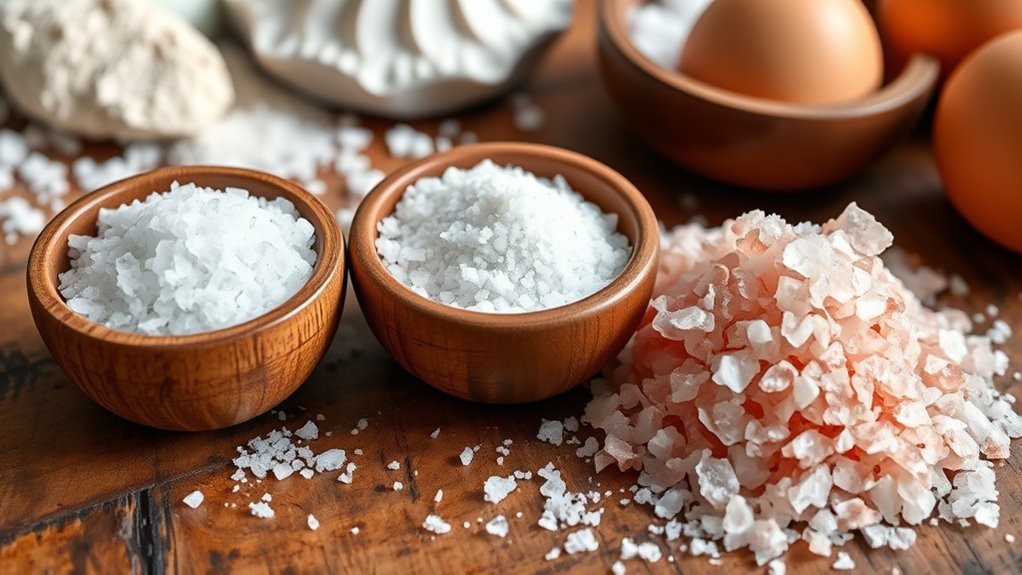
When choosing the best salt for baking, you’ll want to pick fine-grained options like table salt or Morton’s kosher salt to assure precise measurement and even distribution. Fine-grained salt ensures consistent crystal size, which helps the salt dissolve evenly throughout your batter or dough.
For baking, choose fine-grained salts like table salt or kosher salt for even distribution and precise measurement.
For baking, using non-iodized salt is a smart choice because it won’t introduce any chemical flavors that might alter your recipe’s taste. When measuring salt for baking, keep in mind that kosher salt and table salt have different crystal sizes, so you may need to adjust amounts accordingly—halving table salt if a recipe calls for kosher salt, for example.
Choosing salts with consistent crystal size is key to achieving uniform flavor and texture. While finishing salt like flaky sea salt adds great texture and visual appeal, it’s best reserved for after baking rather than during.
Following these tips helps you select the right salt for baking success.
Top Baking Salts: Table, Kosher, And Sea Explained
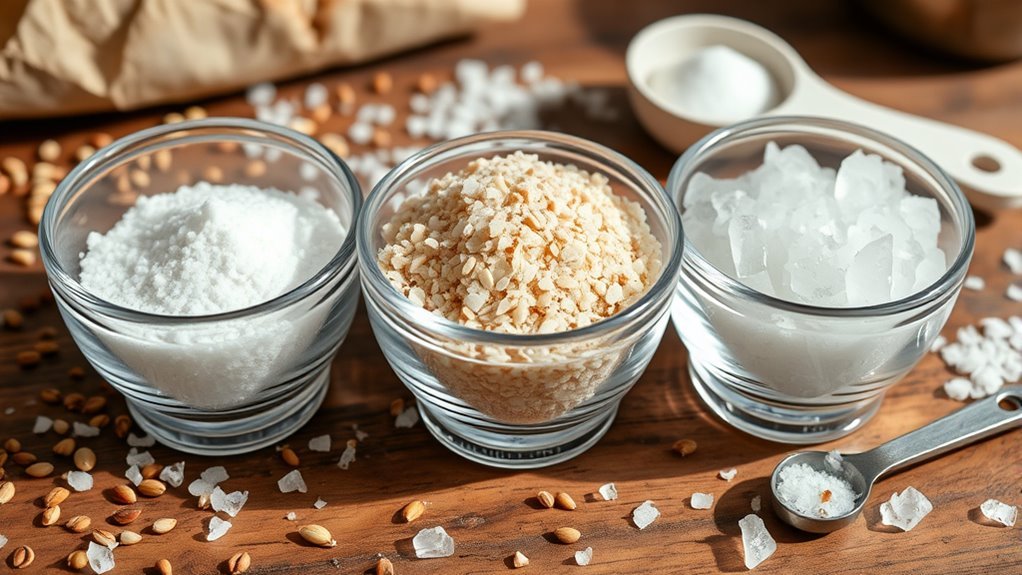
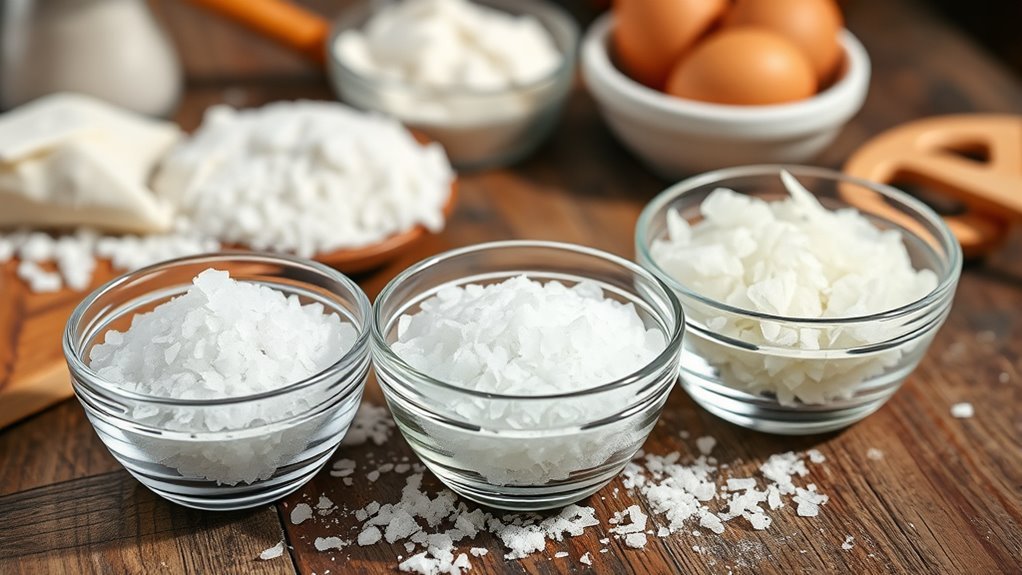
Although many salts exist, table salt, kosher salt, and sea salt stand out as the top choices for baking due to their distinct textures and flavors. Table salt features fine granules that dissolve quickly, making it ideal for precise measurement in recipes. Its consistent crystal size guarantees even salinity, which helps you control the flavor balance in your baked goods.
Kosher salt, on the other hand, has larger, coarser crystals, favored for its ease of pinching and sprinkling. However, different brands vary in crystal size and salinity, so you’ll want to keep that in mind when substituting it in baking.
Sea salt varies widely in crystal size and mineral content, often resulting in irregular granules that don’t dissolve as uniformly. While it can add subtle flavor, it’s generally less suited for baking where consistent texture and salinity matter most. Choosing between these salts depends on your recipe and how you want the salt to interact during baking.
How To Measure Salt Accurately For Baking
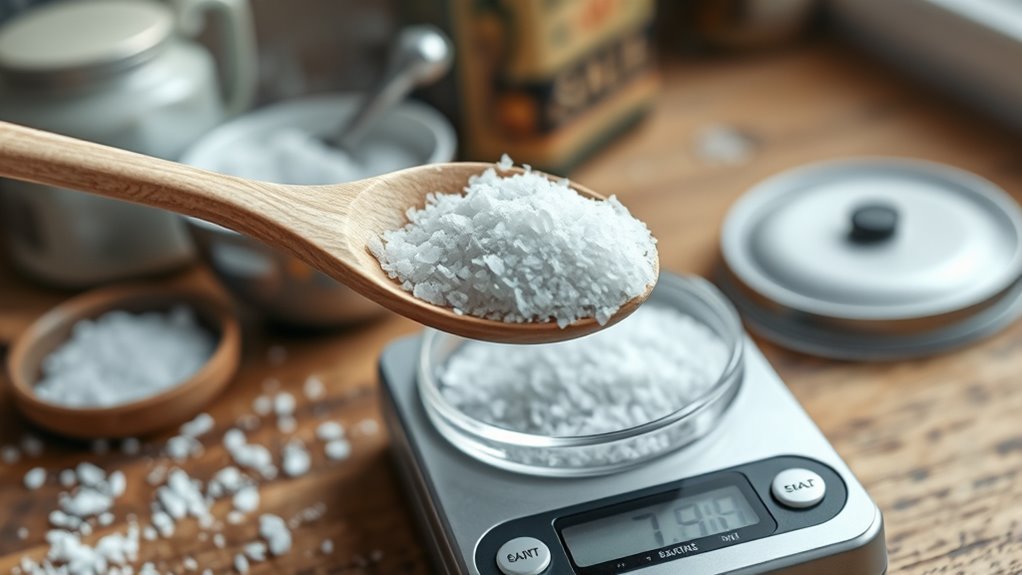
Because salt crystal sizes vary so much, measuring by volume can lead to inconsistent results in your baking. When measuring salt, crystal size plays a vital role—kosher salt crystals are larger and lighter than table salt, so 1 tablespoon of kosher salt weighs less than the same volume of table salt.
Salt crystal size affects volume measurements, making weight-based measurements more reliable for consistent baking results.
This difference means you need to adjust your measurements depending on salt types to maintain recipe precision. For the most accurate measurement, use a digital kitchen scale to weigh salt rather than relying on volume.
For example, 1 tablespoon of table salt is about 18 grams, while Diamond Crystal kosher salt is roughly 10 grams per tablespoon. If you substitute kosher salt for table salt, use about half the volume.
Always level off your measuring spoon or cup for consistent amounts when measuring by volume. Prioritizing weight over volume and using proper measuring tools guarantees your baking results stay consistent and delicious every time.
Frequently Asked Questions
What Is the Best Salt to Use in Baking?
You should use fine-grained, non-iodized salt or finely ground kosher salt for baking. Diamond Crystal kosher salt works great since it dissolves quickly, helping you control flavor without adding any unwanted metallic taste.
It’s all about getting that perfect balance. Using the right salt means your baked goods will taste just right, without any surprises. So, stick to these types and you’ll be good to go!
What Salt Do Professional Bakers Use?
Professional bakers often use Diamond Crystal kosher salt because it’s flaky and easy to measure.
You’ll also find them choosing non-iodized table salt or fine sea salt, depending on texture and flavor needs in your recipes.
It really comes down to what works best for the specific bake and the flavor you want to achieve.
What Salt Does Ina Garten Recommend?
When it comes to salt, Ina Garten swears by Diamond Crystal kosher salt. You’ll find its flaky texture and mild flavor really hit the nail on the head.
It gives your baking the perfect balance and seasoning every time. Seriously, once you try it, you’ll see why she recommends it so much.
What Is Better for Baking, Iodized Salt or Regular Salt?
You should use regular, non-iodized salt for baking because it won’t add any off-flavors or interfere with yeast activity.
Iodized salt can sometimes introduce a metallic taste or affect dough fermentation. So, if you want the best results, stick with regular salt. It just works better in your recipes!
Conclusion
Now that you know the best salts for baking—table, kosher, and sea salt—you’re ready to elevate your recipes like a true kitchen wizard from the Renaissance. Measuring salt accurately is just as essential as picking the right kind.
With these tips, your baked goods will come out perfectly seasoned every time. So, grab your trusty spoon, and get baking like the pros do today!
Remember, choosing the right salt can change the texture and flavor of your baked treats. Whether it’s the fine grains of table salt, the flaky texture of kosher salt, or the subtle mineral notes from sea salt, each one brings something special to the table.
By mastering salt selection and measurement, you’re well on your way to baking success. So go ahead—use the best salt for baking and watch your recipes rise to delicious new heights!