
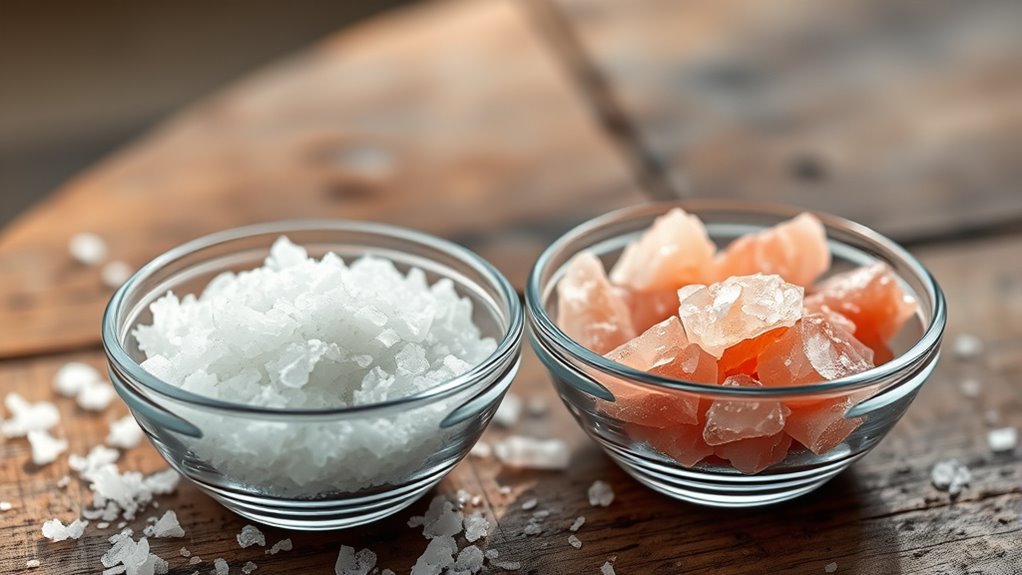
5 Reasons Which Salt Is Better: Sea or Himalayan Pink
If you want cleaner sourcing and better sodium control, Himalayan pink salt is a solid choice. It offers all 84 essential trace minerals, giving it richer flavor and color. This makes it a popular option for those who want more than just plain salt in their meals.
It contains less sodium than sea salt, which may help with hydration and blood pressure. Plus, it’s mined underground, so it has fewer microplastics compared to sea salt.
For a pinch of mineral variety and purity, Himalayan salt often comes out ahead—there’s more to explore about how these salts compare.
Key Takeaways
- Himalayan salt contains all 84 essential trace minerals, offering a broader mineral variety than sea salt. That means you get a wider range of nutrients with Himalayan salt.
- Sea salt has higher sodium per serving, which can impact hydration and electrolyte balance differently than Himalayan salt. So, if you’re watching your sodium intake, this is something to consider.
- Himalayan salt’s lower sodium and magnesium content may better support blood pressure and cardiovascular health. It could be a gentler option for your heart.
- Himalayan salt is less likely to contain microplastics due to its underground mining origin. This makes it a cleaner choice compared to sea salt, which might have some contamination.
- Himalayan salt’s unique mineral profile and cleaner sourcing enhance flavor and culinary appeal over sea salt. Many people find it adds a special touch to their dishes.
Mineral Differences Between Himalayan and Sea Salt
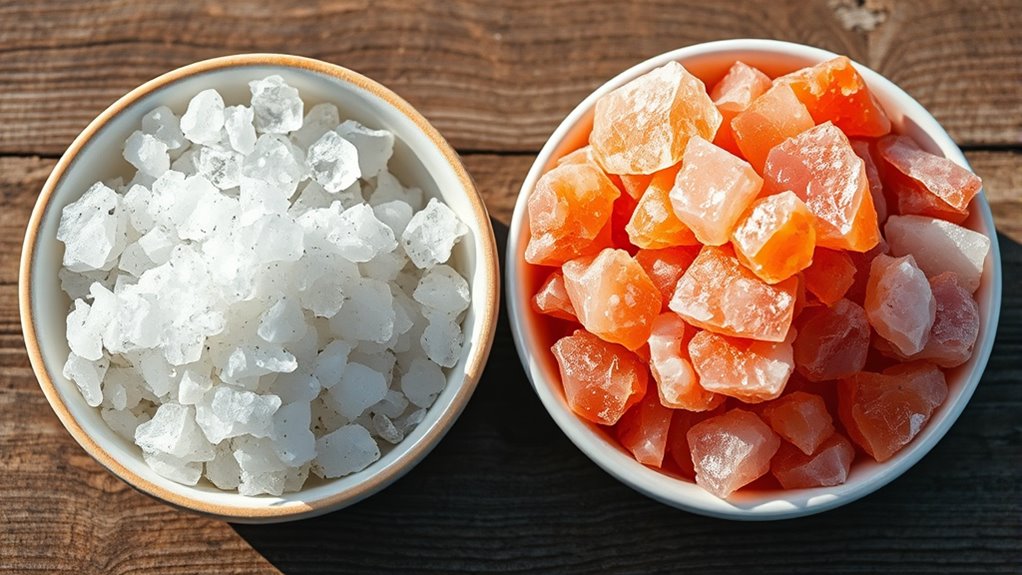
How do Himalayan and sea salt differ in their mineral content? Himalayan salt contains a broader spectrum of trace minerals, including all 84 essential elements, which makes its mineral profile unique.
You’ll notice higher levels of calcium, magnesium, and iron in Himalayan salt, giving it that characteristic pink or gray color. On the other hand, sea salt’s mineral profile varies depending on where it’s harvested, often including magnesium, potassium, and calcium but in different amounts.
While these mineral differences are clear, their nutritional impact is minimal because you typically consume salt in small quantities. Still, the distinct mineral content in Himalayan salt contributes to its unique flavor and appearance compared to sea salt.
Hydration and Electrolyte Effects of Himalayan and Sea Salt
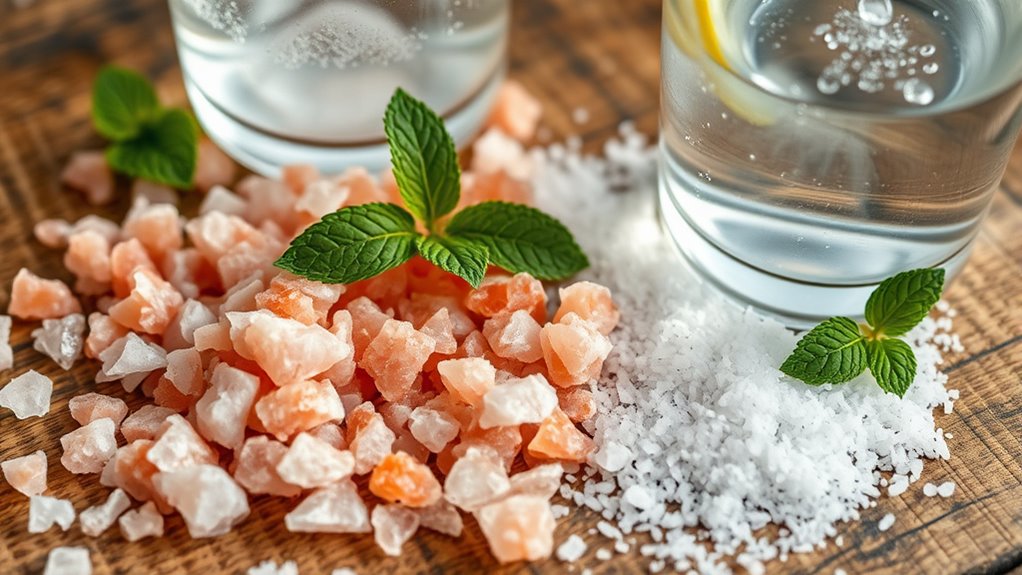
Although both Himalayan and sea salt contain sodium, their differing amounts influence how effectively they support your body’s hydration and electrolyte balance. Himalayan salt has about 380 mg of sodium per 1/4 teaspoon, while sea salt contains roughly 540 mg. This difference affects hydration support, as sodium plays a key role in water absorption and electrolyte replenishment.
Himalayan and sea salt differ in sodium content, impacting hydration and electrolyte balance effectiveness.
When you consume small amounts of these salts, their larger salt crystals help regulate sodium content and enhance mineral balance, promoting better water retention in your cells. This can improve hydration after sweating or during dehydration.
Consider these hydration and electrolyte effects of Himalayan and sea salt:
- Both aid electrolyte replenishment without the added sugars found in sports drinks.
- Their distinct mineral balance influences how your body processes hydration.
- Larger salt crystals mean less sodium per teaspoon, moderating sodium intake while supporting water absorption.
Choosing between Himalayan salt and sea salt depends on your hydration needs and preference for mineral content. So, it really comes down to what feels best for you and your body’s needs.
How Himalayan and Sea Salt Affect Blood Pressure
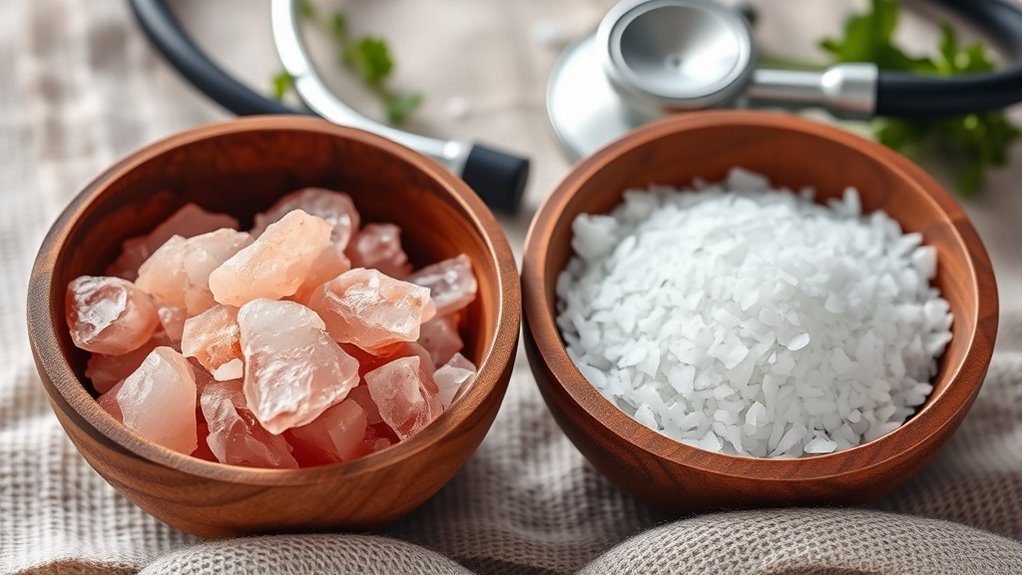
When you consume Himalayan or sea salt, their sodium content directly influences your blood pressure levels. Himalayan salt usually has less sodium per teaspoon (about 380-540 mg) compared to sea salt. This might slightly lessen its effect on blood pressure.
However, both salts can cause water retention and elevate blood pressure if you consume too much sodium. The mineral content in Himalayan salt, including trace elements like magnesium, may support cardiovascular health by helping your blood vessels. But these minerals are generally too low to make a big difference.
Some studies suggest sea salt might have a small protective effect against hypertension in animal models, though human evidence is limited. Regardless of whether you choose Himalayan salt or sea salt, managing your overall sodium intake is essential to avoid hypertension and maintain healthy blood pressure.
Moderation is key to protecting your cardiovascular health and preventing complications related to excessive sodium consumption. So, it’s really about how much salt you use, no matter the type.
Microplastics and Heavy Metals in Himalayan and Sea Salt
Beyond their impact on blood pressure, the safety of Himalayan and sea salt also depends on contaminants like microplastics and heavy metals. Microplastic pollution is more common in sea salt because it’s made from ocean water that’s exposed to lots of environmental toxins.
Himalayan salt, on the other hand, is mined from deep underground, so it usually has less microplastic contamination. This means it’s more protected from surface pollutants. But keep in mind, both types of salt can still have trace metals and mineral contamination depending on where they come from and how they’re processed.
Here are some things to consider about contamination:
- Sea salt often contains higher levels of microplastics and heavy metals like lead and aluminum.
- Himalayan salt tends to have fewer microplastics but might still contain trace metals due to environmental factors.
If you consume contaminated salt over a long time, it could increase health risks like inflammation and oxidative stress.
Knowing these differences can help you make safer choices when it comes to microplastic and heavy metal contamination in your salt.
Choosing the Best Salt for Your Health and Cooking
Since your choice of salt affects both health and culinary results, it’s important to weigh the benefits and drawbacks of Himalayan pink salt and sea salt carefully.
Himalayan salt boasts a richer mineral content, offering all 84 essential trace minerals that can enhance flavor and color. This makes it ideal for culinary use.
Himalayan salt’s rich mineral profile enhances both flavor and color, making it perfect for cooking.
It’s also mined from ancient, pollution-free deposits, unlike sea salt, which may contain microplastics and pollutants. Both salts have similar sodium levels, but Himalayan salt might have a slight edge for managing sodium intake and supporting health benefits like blood pressure control.
However, neither salt naturally contains iodine, so if you’re concerned about iodine deficiency, you’ll need to get it from other dietary sources.
Ultimately, if you want a salt that combines appealing flavor, culinary versatility, and cleaner sourcing, Himalayan salt is a strong choice. But remember, your overall diet and iodine intake are still the most important factors in selecting the best salt for your health.
Frequently Asked Questions
Is Himalayan Pink Salt as Healthy as Sea Salt?
You’ll find Himalayan pink salt is about as healthy as sea salt since both mainly provide sodium with minimal minerals. Neither naturally contains iodine, so you’ll need iodine from other sources for a balanced diet.
Which Is the Healthiest Salt to Take?
If you want the healthiest salt, choose Himalayan pink salt. Imagine Sarah, who switched to it and noticed fewer digestive issues, thanks to its purity and rich minerals.
Unlike sea salt, which can contain microplastics and pollutants, Himalayan pink salt offers a cleaner option. It’s pretty cool how something as simple as salt can make a difference, right?
Do You Drink Pink Salt in the Morning or at Night?
You can drink pink salt in the morning to boost hydration and energy. Or, try it at night to relax your muscles and improve sleep.
It really depends on what you need. Either way, pink salt helps support your body’s electrolyte and mineral balance effectively.
What Are the Disadvantages of Himalayan Pink Salt?
Imagine swallowing tiny, hidden hazards—Himalayan pink salt can contain heavy metals and microplastics you can’t see.
You’ll also pay more for minimal mineral benefits, risking excessive intake without real health rewards.
Choose wisely.
Conclusion
When it comes to choosing salt, you might think it’s just a sprinkle, but picking Himalayan pink over sea salt could change your life! With its unique minerals, better hydration support, and cleaner profile free from microplastics, Himalayan salt isn’t just salt—it’s your health’s secret weapon.
Don’t settle for ordinary sea salt when you can elevate every meal and boost your well-being with every pinch of pink magic! Himalayan pink salt offers a richer mineral content that can enhance your body’s electrolyte balance and improve hydration better than sea salt.
Plus, it’s naturally free from the microplastics often found in sea salt, making it a cleaner, healthier choice. So, if you’re looking to upgrade your salt game, Himalayan pink salt is definitely the way to go for better health and tastier dishes.