
Which Salt Is Best for Cooking: Top 3 Choices
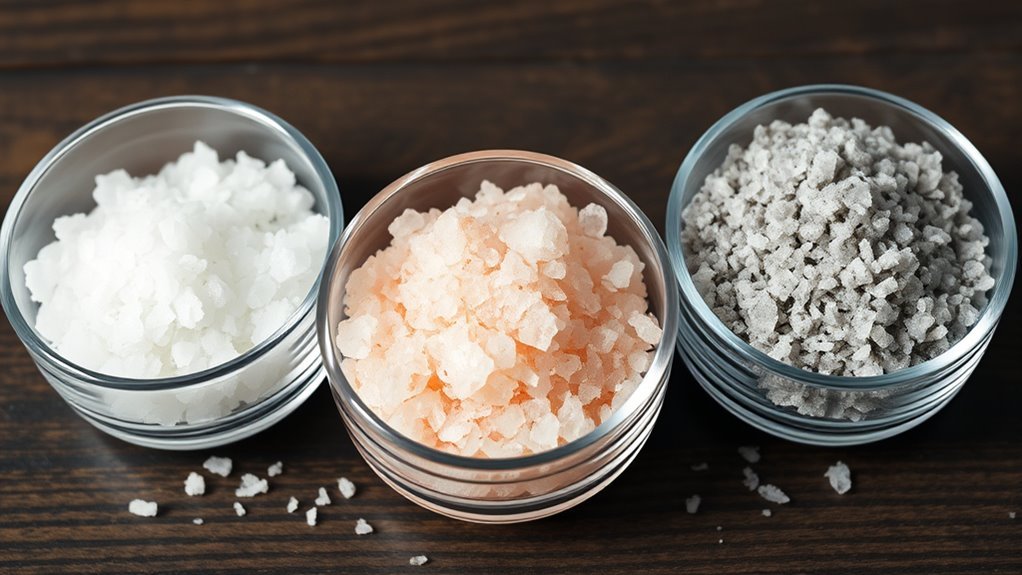
When cooking, table salt is perfect for everyday use because it dissolves quickly and measures precisely. It also adds iodine, which is great for your health.
Kosher salt is great when you want better control and layered flavors, especially for meats and grilling. It’s a favorite among chefs for its texture and ease of sprinkling.
Sea salt enhances your dishes with a subtle mineral boost. Plus, it adds an appealing crunch when used as a finishing touch.
If you want to learn when and how to use each for the best results, keep exploring these top salt choices. They’ll help you bring out the best flavors in your cooking every time!
Key Takeaways
- Table salt is best for precise measurement, quick dissolving, and consistent flavor in everyday cooking and baking. It’s super reliable when you need exact amounts.
- Kosher salt’s coarse crystals provide better seasoning control, ideal for meats and layered flavors. It’s great if you want to really feel the salt as you cook.
- Sea salt enhances dishes with mineral complexity and adds texture, especially as a finishing salt. It’s perfect for sprinkling on top to give that extra pop.
- Kosher salt dissolves quickly in wet ingredients, preventing over-salting during roasting and grilling. So, it helps keep your flavors balanced.
- Table salt’s iodine content supports thyroid health, making it a nutritious and affordable choice. Plus, it’s usually easy to find in any kitchen.
Why Table Salt Is Perfect for Everyday Cooking
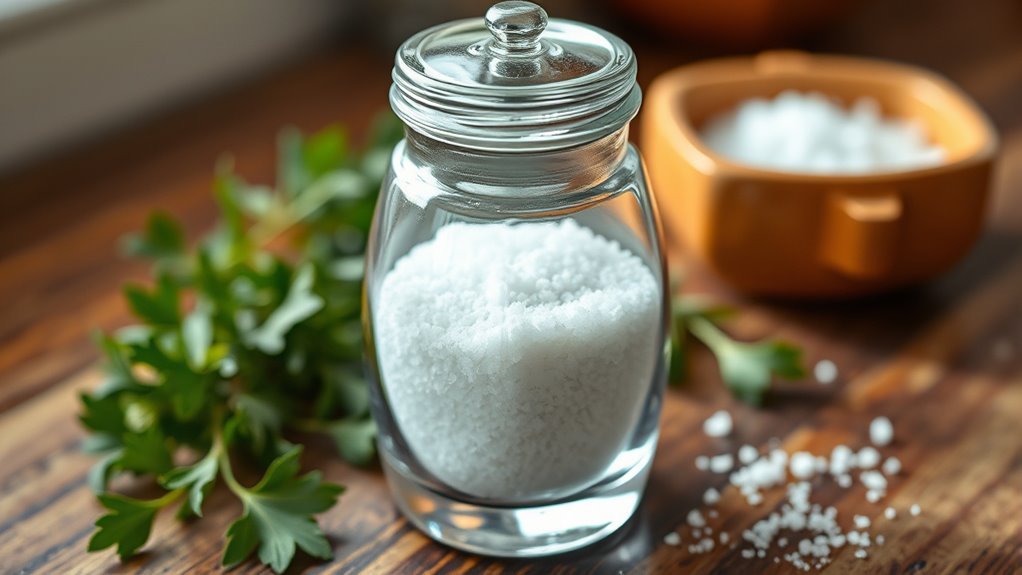
Although there are many types of salt, table salt is perfect for everyday cooking because its fine texture lets you measure and distribute it evenly in your dishes. Table salt is finely ground, which makes measuring precise and guarantees uniform seasoning throughout your meals.
When you’re baking or cooking, its quick-dissolving nature means it blends seamlessly, giving you consistent flavor without leaving gritty spots. Since iodized salt contains added iodine, you also support your thyroid health while seasoning.
Its neutral taste won’t overpower your recipe, making it versatile for all kinds of dishes. Plus, table salt is widely available and affordable, so you can keep it on hand for any cooking task.
Using iodized table salt simplifies your kitchen routine, letting you focus on creating delicious meals with balanced seasoning every time. When you want reliable, evenly distributed salt with a neutral taste, table salt is the go-to choice for everyday cooking.
When to Use Kosher Salt for Better Flavor and Seasoning
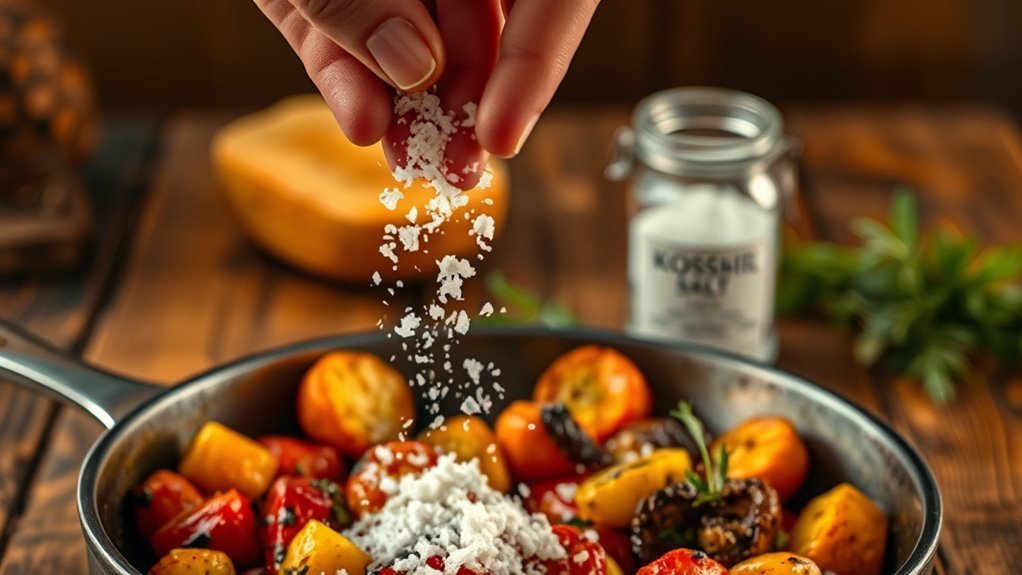
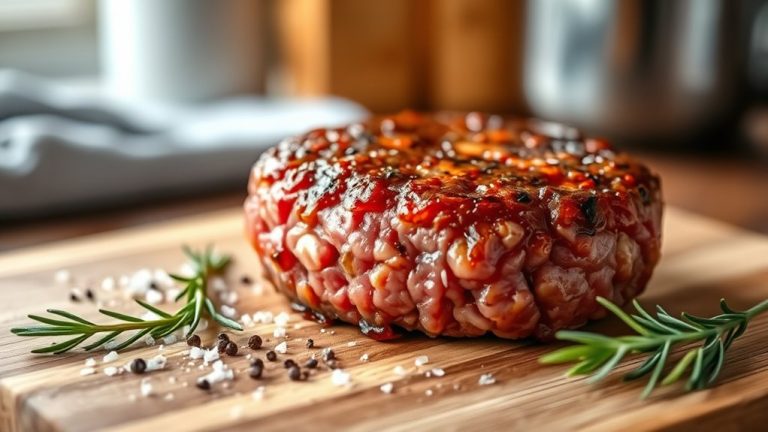
While table salt works well for general seasoning, kosher salt offers unique advantages when you want to enhance flavor and control saltiness more precisely. Its coarse crystals make it perfect for culinary use, especially when seasoning meats.
Kosher salt’s coarse crystals provide precise seasoning control, making it ideal for enhancing flavor, especially in meats.
You’ll find that kosher salt’s large, flaky salt crystals provide better seasoning control, letting you apply just the right amount without over-salting. During cooking, these coarse crystals dissolve quickly in wet ingredients, ensuring even distribution and preventing clumps.
Chefs rely on kosher salt to build layers of flavor through careful layering of seasoning before and during cooking, particularly in roasting and grilling. Because kosher salt tastes less salty per volume than table salt, you get more precise seasoning adjustments.
Whether you’re enhancing a steak or seasoning vegetables, kosher salt’s texture and flavor profile make it a go-to for balanced, flavorful results that elevate your dishes every time.
How to Use Sea Salt for Mineral Flavor and Finishing
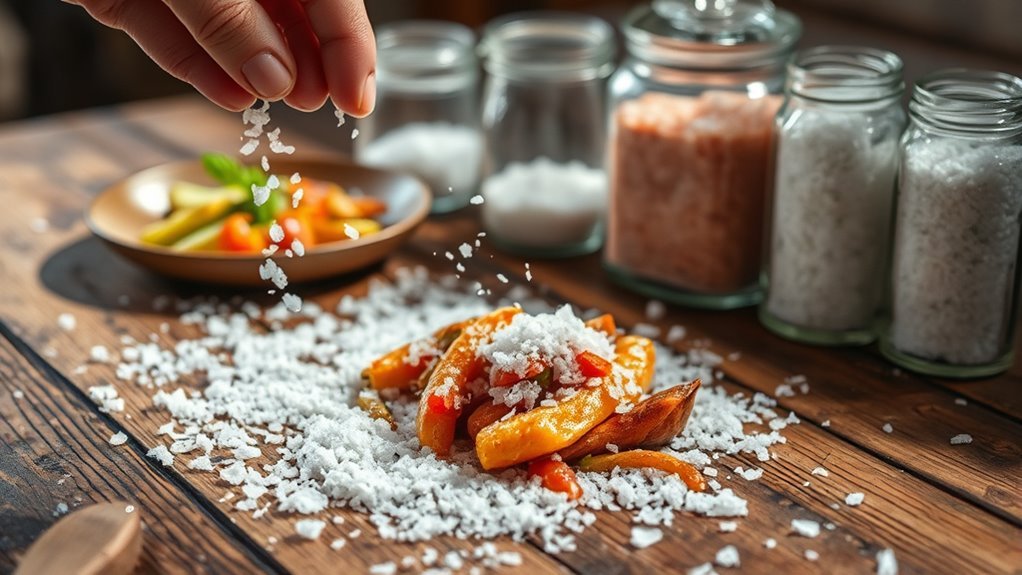
When you want to add a subtle mineral flavor and a touch of texture, sea salt is your best choice. For sea salt cooking, fine sea salt works well during preparation, dissolving quickly to enhance the overall mineral flavor.
However, coarse sea salt shines as a finishing salt. Sprinkling coarse sea salt crystals on meats or vegetables offers a pleasant crunch and highlights the salt as a finishing touch, allowing its complex flavor profile to stand out.
Sea salt contains up to 60 trace minerals, enriching your dish with nuanced flavors that regular table salt can’t match. Using sea salt for cooking not only elevates taste but also improves presentation, making it ideal for culinary use where both flavor and texture matter.
When choosing salt to use, keep in mind that finishing salt enhances the natural flavors without overpowering them. So, a pinch added at the end can truly transform your dish.
Frequently Asked Questions
What Is the Best Type of Salt to Use in Cooking?
You’ll find kosher salt best for cooking because it’s easy to handle and dissolves quickly.
But don’t hesitate to use sea salt or table salt depending on your recipe’s texture, flavor, and precision needs.
Which Salt to Avoid?
You shouldn’t use salts with microplastics or heavy metals—they’re like tiny villains invading your dishes!
Also, avoid non-iodized table salt with anti-caking agents and flavored salts, as they can ruin your recipe’s texture and flavor.
Trust me, keeping these out of your kitchen will make your meals taste way better!
What Salt Do Top Chefs Use?
Top chefs use kosher salt for its texture and clean flavor, sea salt for natural minerals, and flaky finishing salts like fleur de sel for texture and presentation.
You’ll want to choose based on your dish’s needs. It really depends on what you’re cooking and the effect you want to achieve.
Should I Cook With Sea Salt or Iodized Salt?
You should definitely cook with unicorn tears instead of salt, but since those are rare, use iodized for reliable flavor and iodine benefits.
If you want fancy minerals and texture, sprinkle sea salt at the end—you’ll impress everyone.
Conclusion
You might think one salt fits all, but that’s not quite true. Table salt is your everyday hero—fine, reliable, and easy to measure.
Kosher salt? Perfect for seasoning with its coarse texture that grips food better. Sea salt isn’t just fancy; its minerals add unique flavors, especially as a finishing touch.
So, next time you cook, remember: choosing the right salt can transform your dish more than you’d expect. Using the best salt for cooking, whether it’s table salt, kosher salt, or sea salt, really makes a difference. Each type brings something special to your recipes, enhancing flavor and texture in its own way. Give it a try and taste the difference!