
7 Tips on When to Put Salt on Driveway
You should salt your driveway right after shoveling once the snow has stopped and the surface is clear or just lightly damp for best results. Salting your driveway at the right time is key to keeping it safe and ice-free during winter.
Avoid salting while snow falls or if temperatures are below 15°F, as salt becomes less effective then.
Apply salt early to create a brine barrier that helps prevent ice from bonding to the surface.
But remember, skip salting if ice hasn’t formed yet or if conditions call for alternatives like sand.
Following these timing tips will help you keep your driveway safer and make your salt last longer.
There’s more to know about perfecting your salt strategy, so stay tuned for more helpful tips!
Key Takeaways
- Apply salt right after shoveling or when snow has stopped to maximize effectiveness and prevent ice bonding. This helps the salt do its job better and faster.
- Salt works best above 15°F. So, avoid salting below this temperature to prevent waste and damage. It just won’t melt ice well when it’s too cold.
- Clear loose snow and debris before salting to ensure good contact and faster melting. This way, the salt can reach the ice directly without any barriers.
- Reapply salt every 1 to 2 hours during ongoing cold snaps to prevent refreezing. Keeping an eye on the weather helps you know when to do this.
- Skip salt on shaded or very cold areas. Instead, use sand or alternative ice melters in those spots for better traction and safety.
When Is the Best Time to Salt Your Driveway?

Although it might seem tempting to salt your driveway during a snowstorm, you should wait until the snow has stopped and the surface is clear. Applying salt while snow is still falling reduces its effectiveness, causing unnecessary waste.
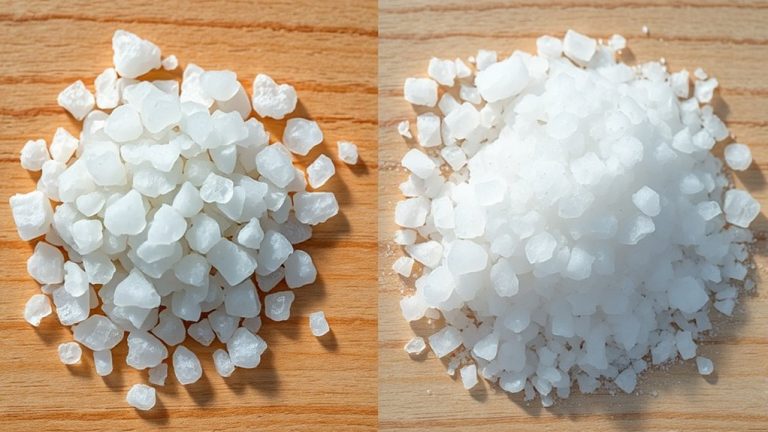
The best salt works by lowering the freezing point of water, so it melts ice efficiently when temperatures stay above 15°F. If you salt too early, especially before snow arrives, it only works if the ground is dry, creating a brine barrier to prevent ice from bonding.
However, the ideal time is right after you’ve shoveled the snow off your driveway, allowing the salt to make direct contact with the surface. This timing ensures you get the most melt for your effort and money.
How to Prepare Your Driveway for Salt Application
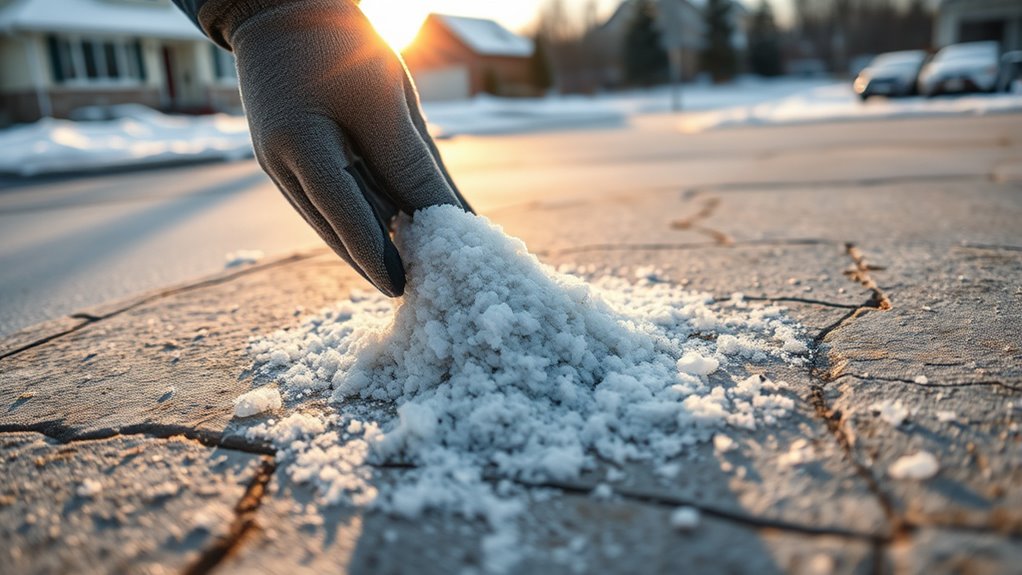
Before you spread salt, make sure to clear loose snow and debris from your driveway. This helps the salt make better contact and melt ice more efficiently.
Proper preparation ensures that salt works effectively on your driveway and sidewalks. Follow these steps:
- Shovel or plow snow first to reduce ice buildup and minimize how much salt you need to use.
- Wait until the snowstorm has stopped or slowed to apply salt on your driveway. This way, it settles on a stable surface.
- Ensure the driveway and sidewalks are dry or only lightly damp. Excess moisture can dilute salt, which reduces its effectiveness.
- Consider pre-treating the surface with salt or brine when temperatures are above freezing. This helps prevent ice from bonding to the pavement.
How Much Salt Should You Use on Your Driveway?
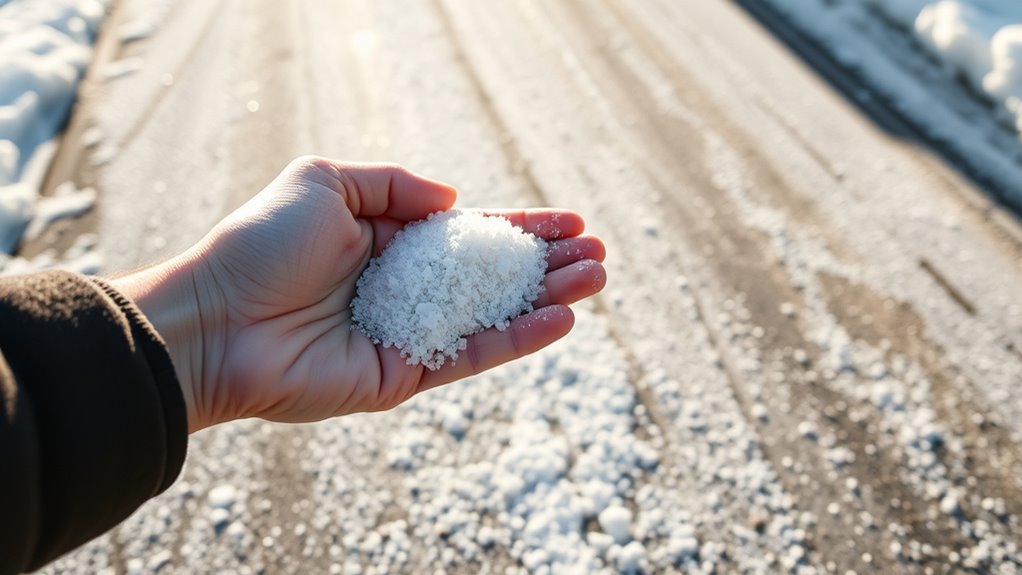
You’ll want to use about 12 ounces of salt for a 20-foot driveway, which is roughly the size of a coffee mug. Applying more won’t speed up melting, so no need to overdo it.
Plus, using too much salt can harm your lawn and nearby waterways. It’s best to spread the salt evenly to avoid clumps.
That way, you’ll keep things safe and minimize the environmental impact. Simple and effective!
Recommended Salt Quantity
When treating your driveway, using about 12 ounces of salt—roughly the amount in a standard coffee mug—is enough to de-ice a 20-foot stretch effectively. The key is to apply the right amount of salt, primarily sodium chloride, to maximize melting without waste.
Adjust the amount of salt based on your driveway’s size. Also, consider weather conditions—colder temps may need slightly more salt. Distribute salt evenly to ensure uniform melting.
Avoid exceeding the recommended quantity to prevent environmental harm. Using too much salt doesn’t speed up melting and can cause runoff, leading to contamination.
Avoiding Over-Application
Although it might seem like more salt speeds up melting, using too much on your driveway actually causes more harm than good. Over-application doesn’t improve melting speed; instead, it can damage concrete, harm vegetation, and lead to environmental problems.
About 12 ounces of salt—roughly a coffee mug—is enough for a 20-foot driveway. Applying salt evenly helps minimize waste and costs while preventing excessive runoff that contaminates soil and waterways.
If you notice excess salt left on your driveway after melting, sweep it up and dispose of it properly to reduce environmental impact. By controlling salt use carefully, you protect your driveway and the environment without sacrificing effectiveness.
Avoid over-application, and you’ll get the best results with the least harm.
How to Spread Salt Evenly Without Wasting It
To spread salt evenly without wasting it, start by using a salt spreader to guarantee consistent distribution across your driveway. This tool helps you avoid clumps and assures even distribution.
To make the most of your salt application, follow these steps:
- Adjust the flow rate on your spreader to apply just the right amount of salt, preventing excess waste.
- Spread salt in a crisscross pattern, slightly overlapping each pass to cover every inch thoroughly.
- Begin at the driveway edges and work toward the center to avoid missed spots.
- Regularly check and recalibrate your spreader, especially on slopes or uneven areas, to maintain even distribution.
How Often Should You Reapply Salt During Cold Snaps?
You should keep a close eye on your driveway for ice reformation during cold snaps. Reapply salt every 1 to 2 hours as needed, especially when temperatures stay below freezing.
Timing your applications based on actual ice buildup helps avoid wasting salt and protects the environment. It’s a smart way to stay safe without overdoing it.
Monitoring Ice Reformation
When ice starts to reappear on your driveway, it’s important to reapply salt promptly to prevent slippery patches. Re-freezing can happen overnight or after brief warm spells during cold snaps, so keep a close eye on your driveway.
Here’s how to manage it effectively:
- Inspect your driveway daily, especially after temperature drops or precipitation.
- Reapply salt lightly and evenly to avoid over-salting and environmental harm.
- Focus on shaded or sloped areas where ice tends to linger.
- In temperatures below 15°F, increase monitoring since salt’s effectiveness declines.
Timing Between Applications
Keeping a close eye on ice reformation naturally leads to questions about how often salt should be reapplied during cold snaps. The timing of reapplication is vital: only salt when ice or snow refreezes after the initial melt, usually every 24 to 48 hours.
Avoid over-salting—it won’t speed melting and may harm the environment. Wait until accumulation stops to confirm salt sticks properly. Reapply when temperatures stay below 15°F, and ice remains.
| Condition | Timing for Reapplication | Notes |
|---|---|---|
| Ice refreezing | Every 24-48 hours | Only if ice persists |
| Snow accumulation | Wait until stopped | Salt needs dry surface |
| Temperature < 15°F | Reapply as needed | Rock salt effective threshold |
| Excessive salt use | Avoid | Environmental impact concerns |
Keep an eye on the surface regularly for safe, ice-free driveways.
When Should You Skip Salt and Try Other Ice Melters?
Although rock salt works well in many situations, it loses effectiveness once temperatures fall below 15°F (−9°C). When temperatures drop this low, you should skip salt and try other ice melters to keep your driveway safe and ice-free.
Here’s when to contemplate alternatives:
- When temperatures drop below salt’s effective range, switch to calcium magnesium acetate or magnesium chloride.
- Avoid salting heavily shaded areas or bridges, where cold lingers longer. Instead, opt for other melting agents.
- If the snow is light or just starting, you can skip salting and wait for more accumulation.
- When prolonged cold below salt’s melting point is forecasted, use non-chemical traction aids like sand or grit instead of salt.
Why Getting the Timing Right Makes a Big Difference
Since salt works best under specific conditions, applying it at the right time can save you effort and salt while keeping your driveway safer. Timing matters because salt creates a brine barrier that prevents ice from bonding, but this only happens if you apply it before or just as ice starts forming.
Applying salt too early—like before a storm—can lead to waste as it washes away with melting snow, reducing its effectiveness. If you wait until snow has accumulated, shovel first, then salt for better contact and quicker melting.
Also, salt works best above 15°F; below that, its effect diminishes. By understanding the timing, you use less salt and get safer, ice-free surfaces faster.
Frequently Asked Questions
How Early Is Too Early to Salt a Driveway?
You’re salting too early if you do it before snow starts or when the driveway is dry and temperatures are below 15°F.
Wait until snow falls or after shoveling for salt to work effectively and avoid waste.
It’s better to hold off a bit rather than wasting salt that won’t do much good just yet.
How Long Does It Take for Salt to Work on a Driveway?
Salt usually starts melting ice within 15 to 30 minutes, but it works faster if the temperature’s near 32°F.
Below 15°F, it takes longer or might not work well at all. So, if it’s super cold, don’t be surprised if salt isn’t doing much right away.
Will Salt Ruin Your Driveway?
Yes, salt can absolutely wreck your driveway if you’re not careful! It’s like pouring acid on concrete—causing cracks, surface damage, and corrosion.
But if you use it wisely and seal your driveway, you’ll avoid disaster. Just a little caution goes a long way!
How to Apply Driveway Salt Effectively?
You’ll want to shovel first, then spread salt evenly using a spreader. Apply about 12 ounces per 20 feet.
Avoid overdoing it, and reapply during long cold spells to keep ice from refreezing. That way, your driveway stays safer and easier to manage.
Conclusion
Getting the timing right when salting your driveway isn’t just about convenience—it actually makes the salt work better and saves you money. If you salt too early or too late, the salt can wash away or be less effective. That means you’ll need to use more salt than necessary.
So, salt just before the ice forms and reapply during cold snaps. This way, you’ll keep your driveway safe without wasting salt or harming the environment.
Timing truly matters more than you might think! Proper timing ensures the salt melts ice efficiently, reducing slips and falls. Plus, using salt at the right moments helps you save money by avoiding over-application. Remember, putting salt on your driveway at the right time not only protects your home but also minimizes environmental impact. So, for a safe, cost-effective, and eco-friendly driveway, focus on when to put salt on your driveway—not just how much.