
7 Key Differences: Himalayan Pink Salt vs. Sea Salt
You’ll find seven key differences between Himalayan pink salt and sea salt in their origins, mineral content, processing, purity, culinary uses, environmental impact, and health factors.
Himalayan pink salt comes from ancient mountain deposits with stable minerals and lower contamination risks. On the other hand, sea salt is harvested from evaporated seawater and can sometimes contain microplastics.
Their flavors and textures vary, too. If you want to make the best choice for your taste and health, there’s plenty more to uncover.
So, let’s dive deeper into what sets these two salts apart and help you decide which one suits you best!
Key Takeaways
- Himalayan pink salt is mined from ancient salt deposits in Pakistan, while sea salt is harvested by evaporating seawater from oceans and saltwater lakes.
- Himalayan pink salt contains over 80 trace minerals, giving it a pink color and mildly sweet flavor. Sea salt has fewer minerals and a cleaner taste.
- Himalayan salt undergoes minimal processing, which helps reduce contamination risks. On the other hand, sea salt can contain microplastics and heavy metals because of ocean pollution.
- Both salts are safe for cooking, but Himalayan salt’s mineral content and purity make it especially popular for finishing dishes and decorative uses.
- When it comes to the environment, Himalayan salt mining generally has a lower impact. Large-scale sea salt evaporation can disrupt marine ecosystems and often uses energy-intensive methods.
Where Himalayan Pink Salt and Sea Salt Come From
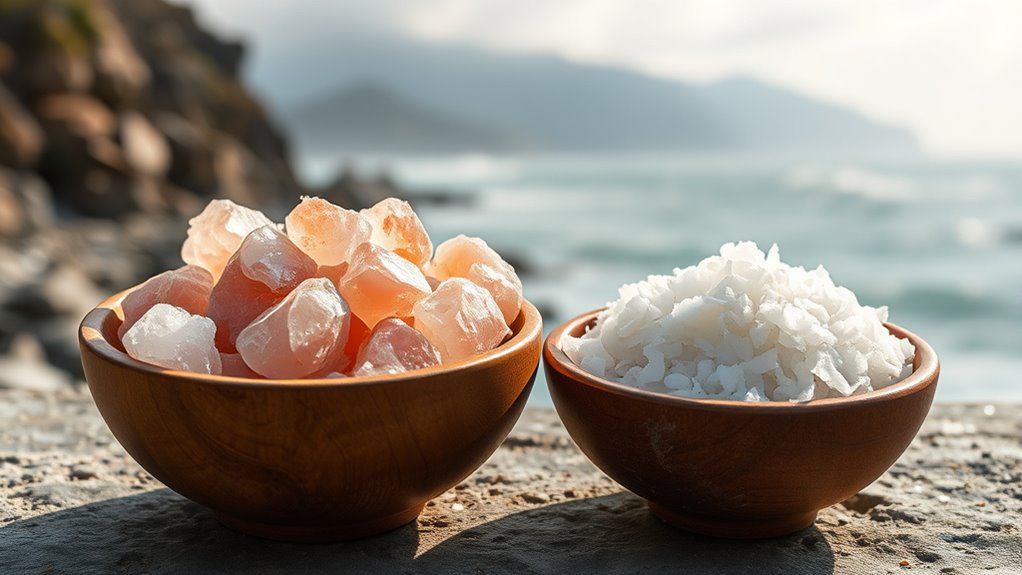
Although both Himalayan pink salt and sea salt come from natural sources, their origins differ markedly. Himalayan salt is extracted through salt mining from ancient salt deposits within the Khewra Salt Mine in Pakistan. These deposits formed millions of years ago when the Himalayan Mountains were submerged under the sea.
Himalayan pink salt is mined from ancient deposits formed under the sea in the Khewra Salt Mine.
In contrast, sea salt’s origin lies in the evaporation of seawater from various oceans and seas worldwide, such as the Atlantic Ocean and Mediterranean Sea. This evaporation process leaves behind crystallized salt, which you then harvest.
Himalayan salt deposits sit at high altitudes in mountain ranges, while sea salt comes directly from oceanic or saltwater lake environments. These distinct salt origins influence the mineral content of each type, with Himalayan salt generally containing more minerals due to its mountain formation.
Understanding where these salts come from helps you appreciate their unique characteristics and the natural processes that shape them.
Mineral Content, Flavor, and Color Differences
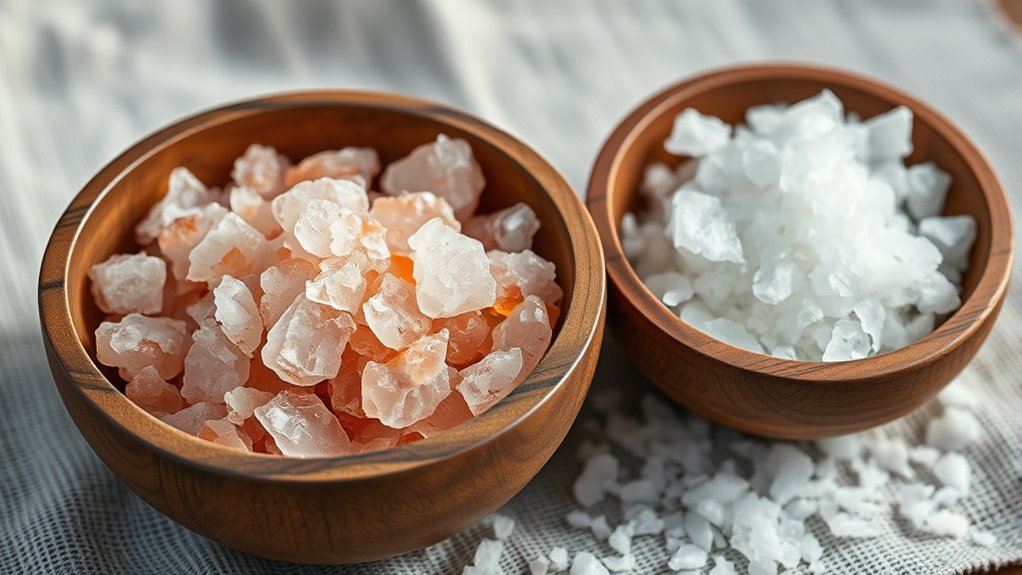
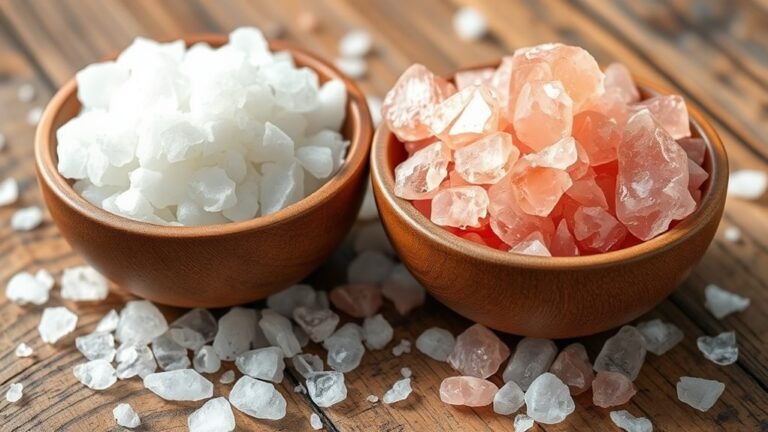
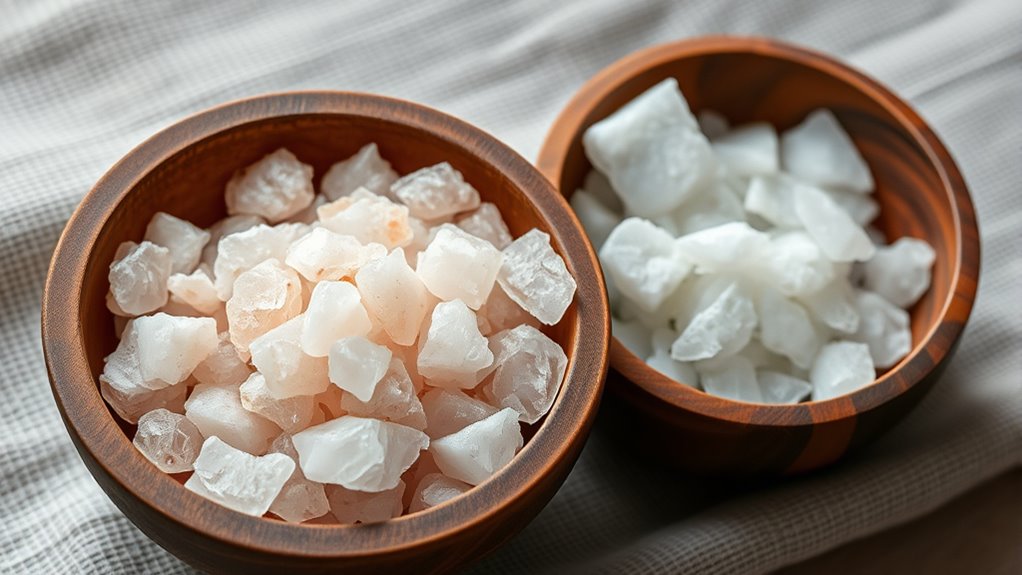
The unique origins of Himalayan pink salt and sea salt directly shape their mineral content, flavor, and color. Pink salt contains over 80 trace minerals like iron oxide, calcium, magnesium, and potassium, giving it a distinctive pink or grey hue.
Sea salt’s mineral content varies by source but typically includes magnesium, calcium, and potassium. This results in a cleaner, white appearance due to fewer impurities.
These mineral differences influence flavor: pink salt offers a mildly complex taste. Sea salt can range from earthy to herbal or smoky depending on where it’s harvested.
| Feature | Himalayan Pink Salt | Sea Salt |
|---|---|---|
| Mineral Content | 80+ trace minerals | Variable, fewer impurities |
| Color Differences | Pink or grey (iron oxide) | White (cleaner mineral profile) |
| Flavor | Mildly complex | Earthy, herbal, or smoky |
Understanding these distinctions helps you choose the right salt for your culinary needs.
Health Benefits and Safety Risks of Himalayan and Sea Salt
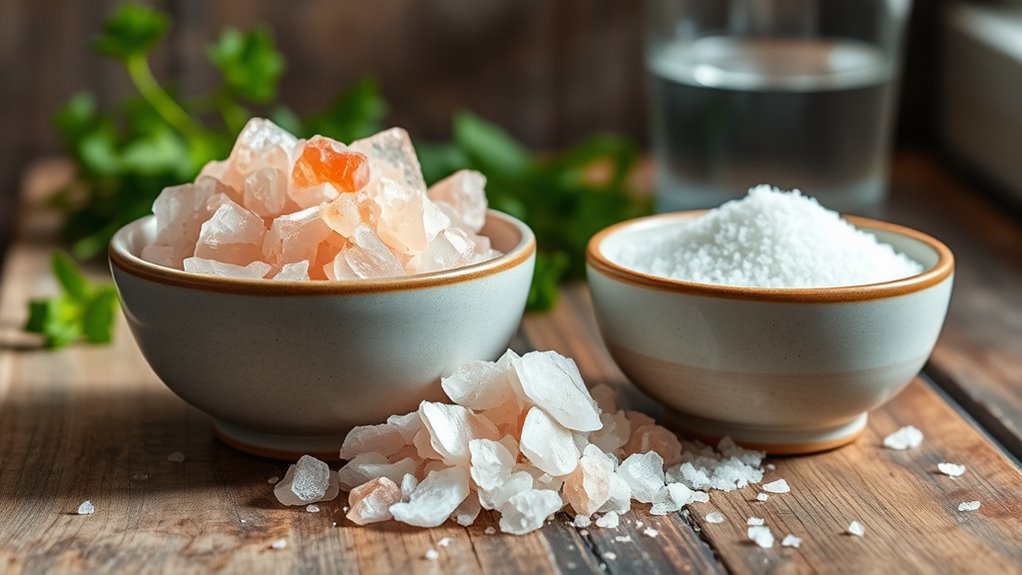
When you choose between Himalayan pink salt and sea salt, it’s important to take into account their health benefits and safety risks. Both provide similar amounts of sodium, so moderation is key to avoid cardiovascular issues.
Choosing between Himalayan pink salt and sea salt requires considering health benefits, risks, and moderating sodium intake.
Here’s what you should consider:
- Himalayan salt contains a wider range of trace minerals, potentially offering extra health benefits compared to sea salt.
- Sea salt can contain microplastics and pollutants from ocean contamination, raising concerns about long-term safety.
- While Himalayan salt is less processed and free from microplastics, its health benefits over sea salt are minimal.
- Excessive sodium intake from either salt increases safety risks like high blood pressure, so keep consumption balanced.
Processing Methods and Purity: Microplastics and Contaminants
Since you want to choose a purer salt, it helps to understand how Himalayan pink salt and sea salt are processed. Pink Himalayan salt undergoes minimal processing—it’s hand-mined and simply broken into grains. This preserves its natural purity and avoids contaminants.
In contrast, sea salt is harvested through evaporation of seawater, which exposes it to modern ocean pollution. This process often leaves microplastics and heavy metals in the salt. Because of that, its purity is reduced, raising some health concerns.
| Salt Type | Processing Method | Contaminant Risk |
|---|---|---|
| Himalayan Pink Salt | Hand-mined, minimal | Low (ancient, pollution-free) |
| Sea Salt | Evaporation of seawater | High (microplastics, heavy metals) |
| Microplastics | Absent in pink salt | Present in most sea salts |
| Heavy Metals | Minimal | Often detected |
| Purity Level | High | Lower due to pollution |
Culinary Uses and Taste Profiles of Himalayan and Sea Salt
Choosing between Himalayan pink salt and sea salt isn’t just about purity—you’ll also notice differences in how they taste and how you can use them in the kitchen. Both salts offer unique flavor profiles and culinary uses that can enhance your dishes differently.
Himalayan salt has a mildly sweet, mineral-rich taste, perfect for gourmet dishes and finishing touches.
Sea salt varies with origin, bringing earthy, smoky, or herbal notes due to its diverse mineral content.
The larger crystal size of sea salt means it’s less salty per teaspoon, which is ideal for adding texture without overpowering flavor.
Himalayan salt’s pink hue and fine crystals make it popular for salads and as a decorative element on plates.
Understanding these differences helps you choose the right salt to elevate your recipes. It’s all about balancing flavor nuances and presentation.
Environmental Impact and Sustainability of Himalayan and Sea Salt
Although both Himalayan pink salt and sea salt come from natural sources, their environmental impacts differ quite a bit based on how they’re harvested. Himalayan salt is taken out through traditional hand-mining methods in mountain deposits. This usually means a lower environmental impact and a smaller ecological footprint.
When miners use responsible practices, they help minimize habitat degradation and keep the natural environment intact. On the flip side, sea salt harvesting relies on evaporating seawater. This process can disrupt marine ecosystems if it’s not done sustainably.
Large-scale sea salt production sometimes involves chemicals and energy-intensive evaporation methods. That can lead to increased pollution and risks to habitats. To keep the environmental impact low, both salts really benefit from sustainable harvesting and responsible practices.
Which Salt Is Best for You?
Choosing the right salt depends on your health goals and how you plan to use it.
Himalayan pink salt offers more minerals and fewer contaminants, while sea salt is often more readily available. Let’s compare their benefits, mineral content, and safety to help you decide which fits your needs best.
Health Benefits Comparison
When weighing the health benefits of Himalayan pink salt versus sea salt, you’ll find that each offers unique advantages. Here’s what to take into account:
Himalayan salt contains all 84 essential trace minerals, supporting your overall mineral balance better than sea salt’s variable mineral content. Both salts have similar sodium levels, but Himalayan salt’s slightly lower amount might help you manage blood pressure more effectively.
The distinctive pink hue of Himalayan salt comes from iron oxide, which may contribute additional health benefits. Sea salt can contain microplastics and other contaminants, while Himalayan salt, sourced from ancient deposits, is typically purer and free from such pollutants.
Mineral Content Differences
Three key factors set Himalayan pink salt apart from sea salt: its trace mineral variety, consistency, and source purity. When you compare mineral content, Himalayan salt composition boasts over 80 trace minerals, including iron oxide, calcium, and magnesium. This creates a richer mineral profile.
Sea salt minerals vary widely due to geographic sources, causing high mineral variability. So, you never really know what you’re getting with sea salt.
Here’s a clear mineral comparison:
| Mineral | Himalayan Pink Salt | Sea Salt |
|---|---|---|
| Trace Minerals | 80+ (consistent) | Fewer, variable |
| Key Minerals | Iron oxide, calcium, potassium | Magnesium, calcium, potassium |
| Consistency | Stable ancient deposits | Depends on ocean water purity |
Choosing which salt suits you depends on how important consistent mineral content is in your diet. It’s all about what matters most to you.
Usage And Safety
Although both Himalayan pink salt and sea salt are safe for cooking and seasoning in moderation, you should consider their differences in purity and potential contaminants.
Himalayan salt generally has less contamination due to minimal processing. On the other hand, sea salt may contain microplastics and heavy metals from ocean pollution.
To decide which salt is best for you, keep these points in mind:
- Himalayan salt’s natural mineral content offers additional health benefits.
- Sea salt’s contamination risks could impact long-term safety.
- Processing methods affect the purity and safety of each salt.
- Individual health conditions should guide your choice to avoid adverse health impacts.
Choosing Himalayan salt might reduce exposure to additives and pollutants. So, it could be a safer option overall.
Frequently Asked Questions
Is Pink Himalayan Salt Better for You Than Regular Sea Salt?
Yes, you’ll find pink Himalayan salt offers more minerals and fewer contaminants than regular sea salt. It’s cleaner and slightly lower in sodium, making it a better choice for your health and purity concerns.
That said, the differences aren’t huge. Both salts provide essential minerals, so it really comes down to what you prefer in taste and texture. Plus, using either in moderation is key!
Do You Drink Pink Salt in the Morning or at Night?
You don’t have to pick morning or night—you can drink pink salt anytime and still feel fancy!
Whether you want hydration or better sleep, just sip when it suits you and enjoy those minerals doing their thing.
Who Should Not Use Himalayan Pink Salt?
You shouldn’t use Himalayan pink salt if you have kidney or heart issues, or if you follow a low-sodium diet.
Also, avoid it if you have mineral allergies. If you’re pregnant or breastfeeding, it’s best to get advice before using it.
And if you have mineral metabolism disorders, steer clear of it too. Always check with your doctor first.
Can I Replace Sea Salt With Pink Himalayan Salt?
Yes, you can replace sea salt with pink Himalayan salt, but adjust measurements due to crystal size differences. It offers a milder flavor and extra minerals, enhancing both cooking and finishing dishes with visual appeal.
Just keep in mind that the texture might change a bit, so it’s good to taste as you go. Pink Himalayan salt not only tastes great but also adds a nice pop of color to your plates.
Conclusion
Choosing between Himalayan pink salt and sea salt feels like deciding between a treasure chest and a secret ocean gem. Both offer unique flavors, minerals, and benefits that can transform your meals and health.
Don’t stress—either one can make you feel like a gourmet chef or a health guru overnight. So go ahead, pick your favorite, and watch your dishes and wellness soar.
Whether you choose Himalayan pink salt or sea salt, both bring something special to your kitchen and your body. With their rich mineral content and distinct tastes, these salts can elevate your cooking and support your well-being in amazing ways. Embrace the natural goodness of Himalayan pink salt or the fresh essence of sea salt to take your culinary and health journey to legendary levels you never imagined!