

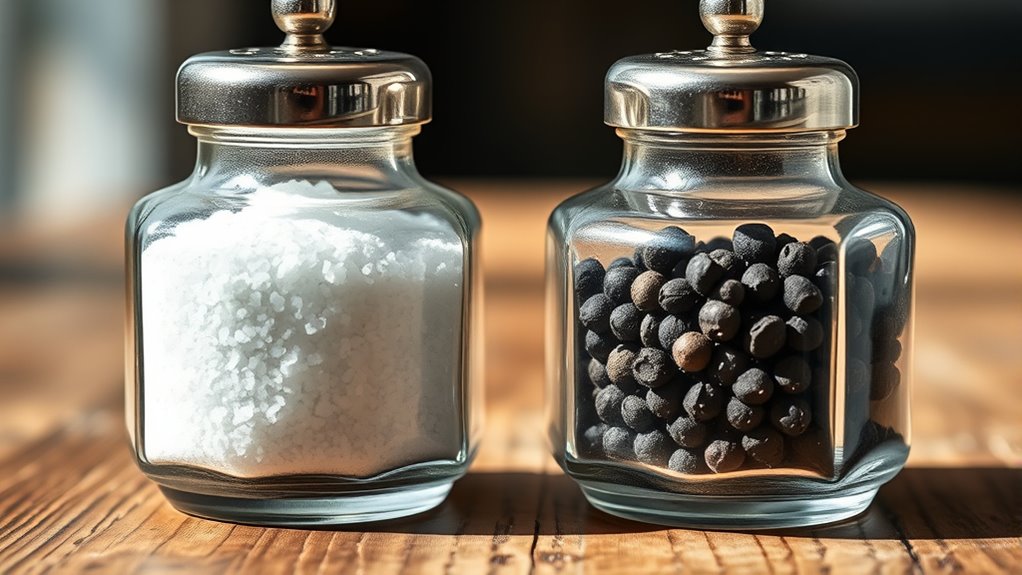
How to Identify Which Shaker Is Salt and Which Is Pepper
You can identify salt and pepper shakers by checking a few simple details. Usually, salt shakers are white or have fewer, smaller holes to control salt flow.
Pepper shakers are darker or have more and larger holes for easier seasoning. These small differences help you quickly tell which shaker is which.
Look for labels like “S” for salt and “P” for pepper, or transparent containers so you can see the contents inside.
Sometimes, unique shapes or designs can also help you figure it out.
Keep exploring and you’ll find even more easy ways to tell them apart. It’s all about paying attention to those little clues!
Key Takeaways
- Salt shakers are usually white or labeled with an “S,” while pepper shakers are black or marked with a “P.”
- Salt shakers generally have fewer or smaller holes to control salt flow, whereas pepper shakers have more or larger holes.
- Clear labels or symbols on the shaker’s top or side quickly indicate whether it contains salt or pepper.
- Transparent shakers allow you to see the contents, with salt grains typically finer and lighter than pepper.
- Decorative shapes or cultural design differences can provide additional clues to distinguish salt from pepper shakers.
So, next time you’re unsure, just take a quick look for these hints! It’s usually pretty easy to tell them apart once you know what to check for.
Which Shaker Is Salt and Which Is Pepper? Clear Identification Tips
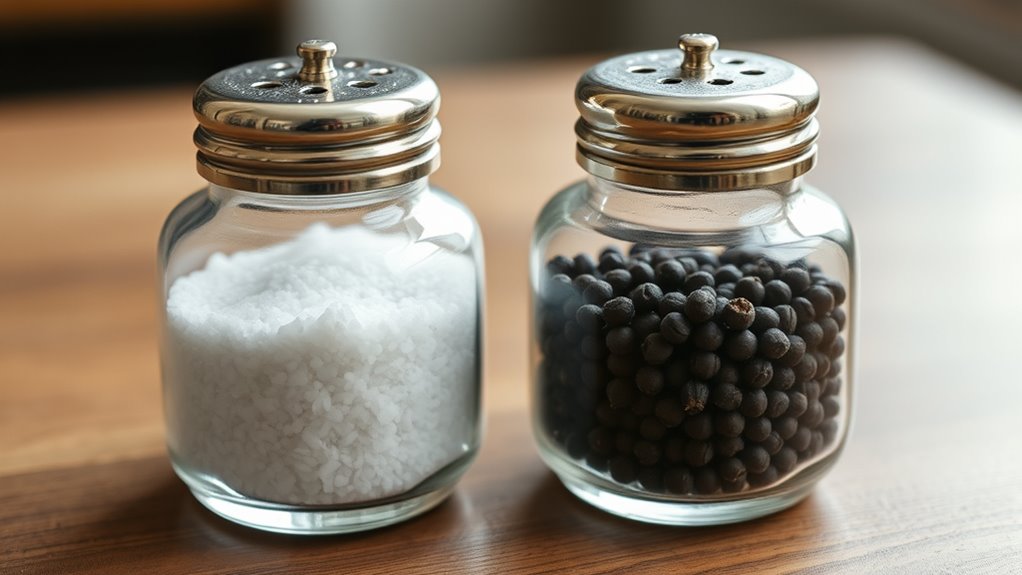
Although salt and pepper shakers often look similar, you can quickly tell them apart by a few clear markers. Salt shakers typically have fewer holes for salt, while pepper shakers feature more holes for pepper, making shaker identification easier.
In many salt and pepper sets, salt shakers are white or labeled with an “S,” and pepper shakers are black or marked with a “P,” providing simple salt and pepper labels. Transparent shakers offer an added advantage—you can see the contents and grain size, which helps with spice container identification.
Keep in mind cultural differences also play a role; some regions reverse the hole counts or use unique designs to signify salt or pepper. Decorative or figurative shapes on shakers might also aid you in distinguishing between them.
How to Tell Salt and Pepper Shakers Apart by Labels, Holes, and Use
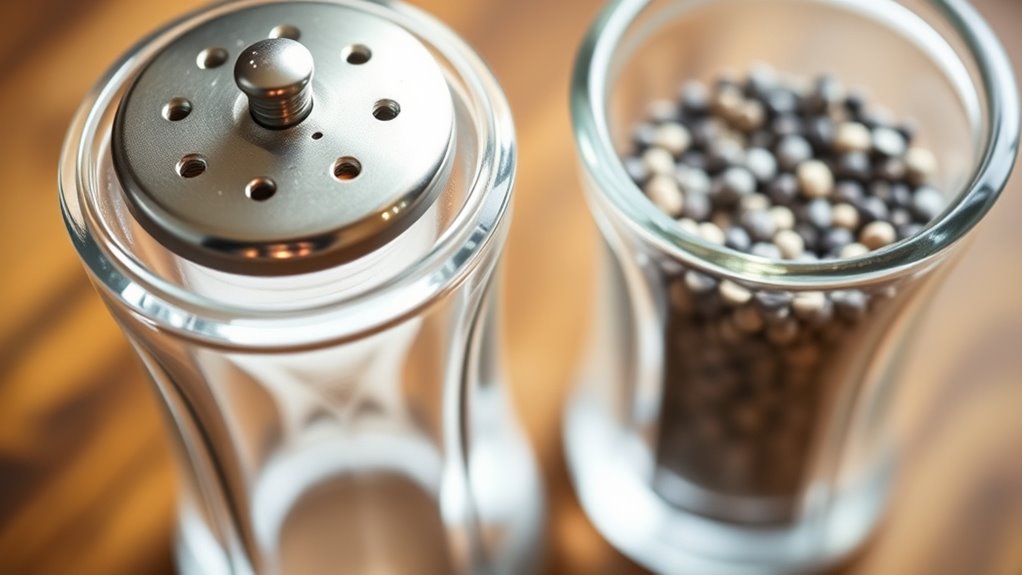
When you want to quickly tell salt and pepper shakers apart, checking their labels and hole patterns is a reliable method. Many salt and pepper shakers have clear labels like “S” and “P,” or symbols that make shaker identification simple.
To quickly distinguish salt and pepper shakers, check their labels and hole patterns for easy identification.
The number and size of holes also offer clues. Here’s how you can differentiate them easily:
- Labels: Look for “S” on the salt shaker and “P” on the pepper grinder or spice dispenser. This is the quickest way to avoid confusion.
- Number of holes: Salt shakers usually have fewer or smaller holes to control salt flow, while pepper shaker sets typically feature more or larger holes for easier seasoning.
- Transparency: Transparent shakers reveal their contents at a glance, helping you tell salt and pepper apart without relying on labels or holes.
Using these tips ensures you never mix up your salt shaker and pepper grinder again.
Frequently Asked Questions
How Can You Tell the Difference in Salt and Pepper Shakers?
You can tell salt from pepper shakers by checking the number and size of holes, looking for labels like “S” or “P.”
Also, notice color differences, or simply peek inside if they’re transparent.
It’s pretty easy once you know what to look for!
How to Identify Vintage Salt and Pepper Shakers?
Did you know over 60% of vintage shakers use hole count to distinguish contents? You’ll spot salt by fewer holes, often on the left.
Pepper has more holes and usually sits on the right in most antique sets. It’s a handy little trick when you’re trying to tell them apart!
Which One Is the Pepper Shaker?
The pepper shaker usually has more holes than the salt shaker, so look for the one with larger or more holes.
If labels aren’t clear, check color or design cues to spot the pepper shaker easily. It’s usually darker or has a distinct pattern compared to the salt shaker.
Which One Is Salt and Pepper Shaker?
You’ll spot the salt shaker with fewer holes, like a secret guarded by a handful of stars, and the pepper shaker with more holes, ready to sprinkle a pepper storm.
Trust the hole count and color cues! It’s pretty simple once you get the hang of it.
Conclusion
So, next time you face the ultimate dinner dilemma—salt or pepper?—remember, it’s not rocket science. If you can’t tell by the number of holes or a tiny label, maybe you’re just seasoning your food with suspense.
Don’t worry; you’re not alone in this culinary thriller. Just pick one, embrace the mystery, and enjoy your meal. After all, life’s too short to stress over which shaker is which!
When trying to identify which shaker is salt and which is pepper, keep it simple. Usually, salt shakers have fewer holes, while pepper shakers have more. But if that doesn’t help, a quick sniff or a tiny label can save the day.
Remember, the key is not to overthink it. Whether you’re using salt or pepper, the goal is to enhance your food’s flavor. So next time you’re unsure, just trust your instincts and savor your meal without the stress. Life’s too short to get caught up in the salt versus pepper debate!