
What Salt Is Best for a Water Softener?
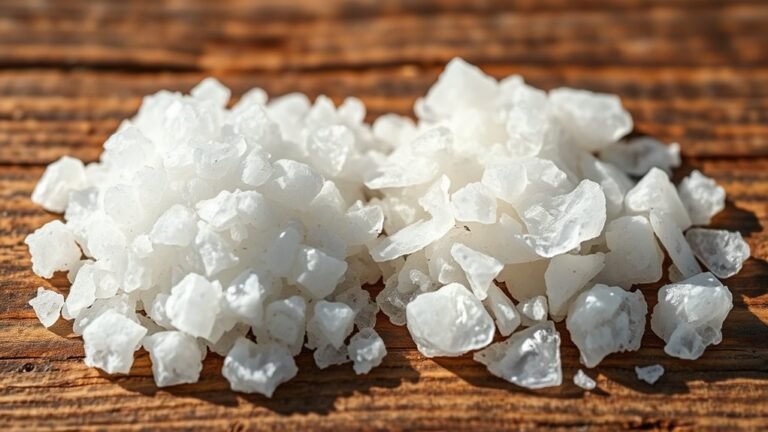
You want to use high-purity solar salt pellets for your water softener because they dissolve well and contain minimal impurities. This kind of salt helps prevent common issues like salt bridging, mushing, and buildup that can damage your system.
Avoid rock salt or salts with additives since they often cause problems down the line. Keeping salt levels properly maintained and choosing premium salt will boost your system’s efficiency and lifespan.
Stick with high-quality salt, and your water softener will work smoothly for years. Keep going, and you’ll find out how to prevent common salt problems and maintain your water softener effectively.
Key Takeaways
- High-purity solar salt pellets are best for water softeners due to their ideal solubility and minimal impurities. They dissolve easily and help keep your system running smoothly.
- Avoid rock salt and salts with additives because they can cause salt bridging and damage your system. It’s better to stick with pure options for the best results.
- Using pure solar salt consistently promotes efficient regeneration and helps your system last longer. It’s a simple way to keep everything working well.
- Potassium chloride is an alternative if you want to avoid sodium, but it’s more expensive. Plus, you might need to adjust your system to use it properly.
- Don’t forget to regularly check salt levels and clean the brine tank. Keeping up with maintenance ensures your water softener runs without a hitch.
How to Choose the Best Salt Type for Your Water Softener
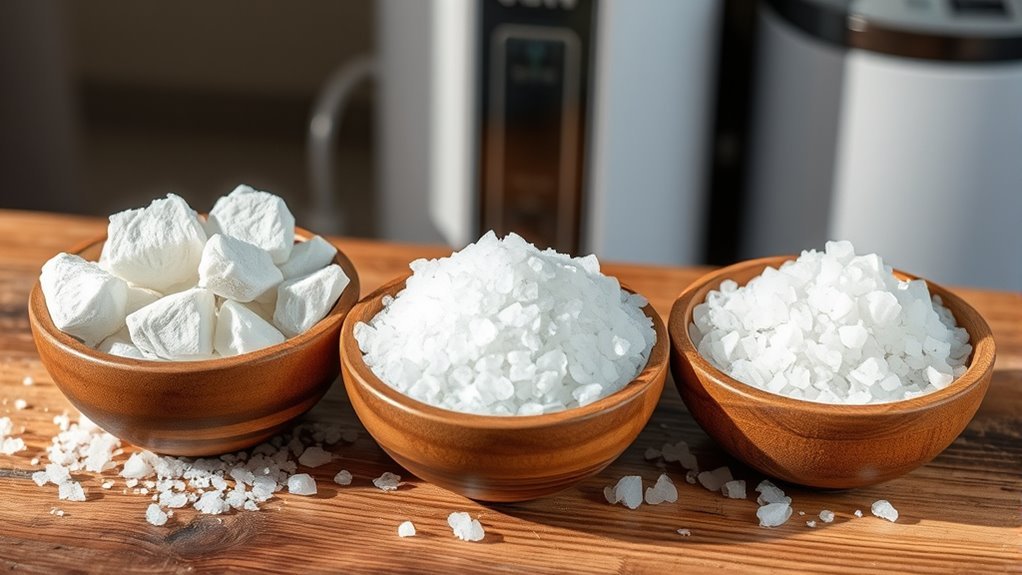
When choosing the best salt type for your water softener, you should prioritize high-purity solar salt pellets because they dissolve well and contain minimal impurities. These salt pellets, formed from salt crystals via sun evaporation, guarantee ideal salt solubility during the regeneration cycle.
Using high-purity solar salt minimizes salt impurities that can cause buildup or damage inside your brine tank and water softening system. Avoid rock salt or salts with additives, as they often lead to bridging and mushing issues, disrupting salt flow and reducing efficiency.
High-purity solar salt prevents buildup and damage, unlike rock salt and additives that cause bridging and reduce efficiency.
Consistently using the same high-quality water softener salt type promotes smooth operation and extends your system’s lifespan. While potassium chloride is an alternative, it’s pricier and may require system adjustments.
Choosing the right salt type directly impacts your water softener’s performance, ensuring consistent regeneration cycles and preventing common problems tied to inferior salts. Stick with pure solar salt pellets for reliable and efficient water softening every time.
How to Prevent Salt Problems and Maintain Your Water Softener
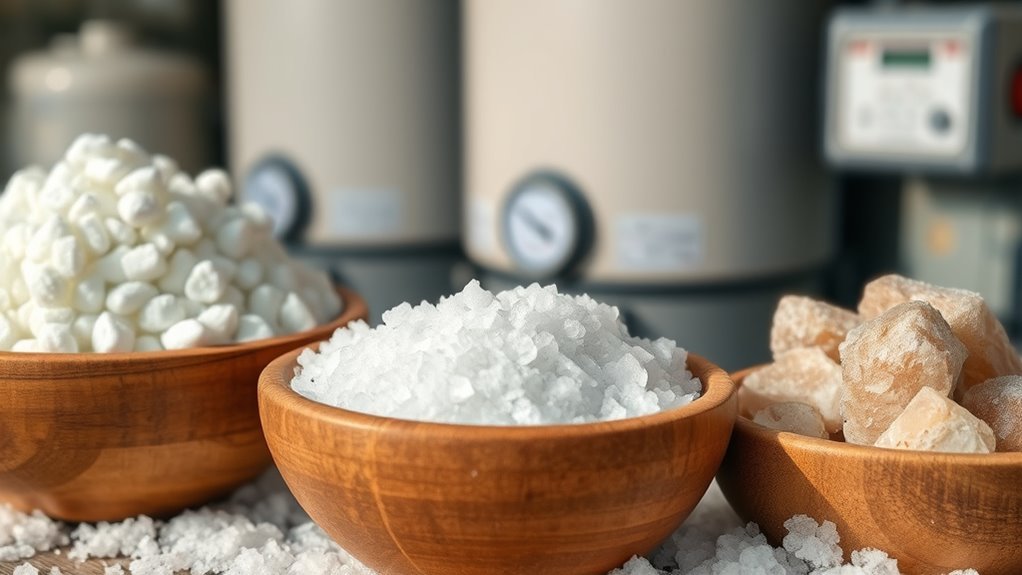
Although salt problems can disrupt your water softener’s performance, you can prevent them by regularly checking and maintaining the correct salt level. Aim to keep salt levels between 1/4 and 1/2 full in the salt tank to avoid salt bridging and mushing.
Use high-quality, pure salt—such as solar salt pellets or crystals—to minimize insoluble buildup and guarantee efficient water softening. Avoid mixing different salt types, especially those with additives or resin cleaners, since inconsistent dissolve rates can harm your water softener system.
Regular salt maintenance also includes cleaning the brine tank every few years to remove sediment, especially if you use coarse or unprocessed salts. When refilling, keep the salt level low to prevent bridging.
And, if you want to make things easier, consider installing salt monitoring devices to track salt levels continuously. These steps help maintain your water softener’s efficiency and prolong its lifespan by preventing common salt-related issues.
Frequently Asked Questions
Are Salt Crystals or Pellets Better for Water Softener?
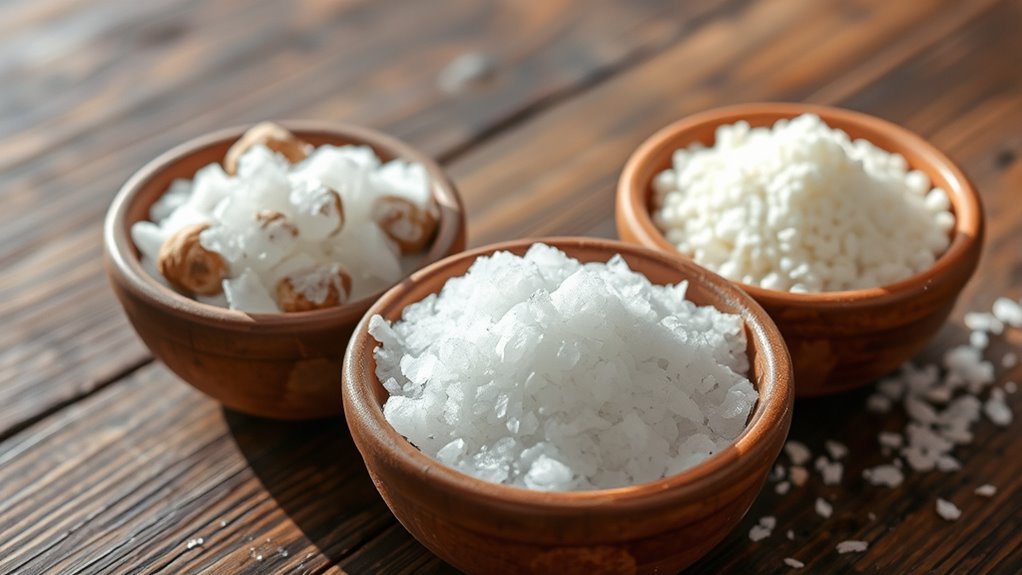
Pellets are better for your water softener because they dissolve more consistently, reduce buildup, and look cleaner.
That said, if you want something cheaper and easier to handle, salt crystals can work just fine.
Both have their perks, so it really depends on what matters most to you.
How Long Should a 40 Lb Bag of Salt Last in a Water Softener?
A 40 lb bag of salt should last you about 4 to 6 weeks, depending on your water hardness and household size.
If you have harder water or a bigger family, you might need to refill it every 2 to 4 weeks. It really just depends on how much soft water you use.
Which Is Better, Diamond Crystal or Morton Water Softener Salt?
Morton salt is better because it’s purer and reduces buildup. You might think Diamond Crystal is cheaper, but its impurities can cause issues, costing you more in maintenance.
Stick with Morton for reliable, long-lasting performance. It just works better over time, saving you headaches and extra costs.
What Kind of Salt Does a Water Right Softener Use?
You’ll want to use extra coarse solar salt pellets for your Water Right softener. They dissolve quickly, reduce impurities, and prevent bridging.
Try to avoid salts with additives to keep your system running smoothly and maintenance low. It really helps your softener work better and last longer.
Conclusion
Choosing the right salt for your water softener is key to keeping it running smoothly and efficiently. Whether you pick pellets, crystals, or solar salt, quality matters more than quantity.
Remember, “a stitch in time saves nine”—regular maintenance and preventing salt problems will save you from costly repairs down the line. Stay consistent with your salt choice and upkeep, and your water softener will deliver soft, clean water for years to come.
In the end, the best salt for a water softener depends on your system and water type. Using high-quality salt like pellets or solar salt helps prevent buildup and keeps things working efficiently. Regularly topping up with the right salt and maintaining your system ensures you get the most out of your water softener. So, stick with a reliable salt option, keep up with maintenance, and enjoy soft, clean water without any hassle.