How Does Salt Keep Ice Cold?
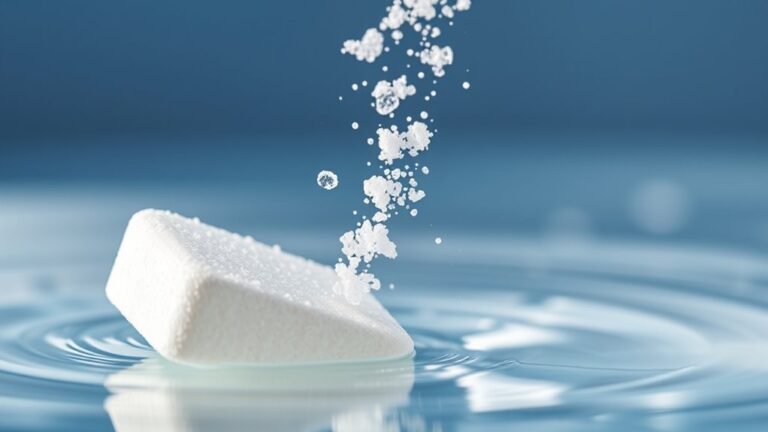
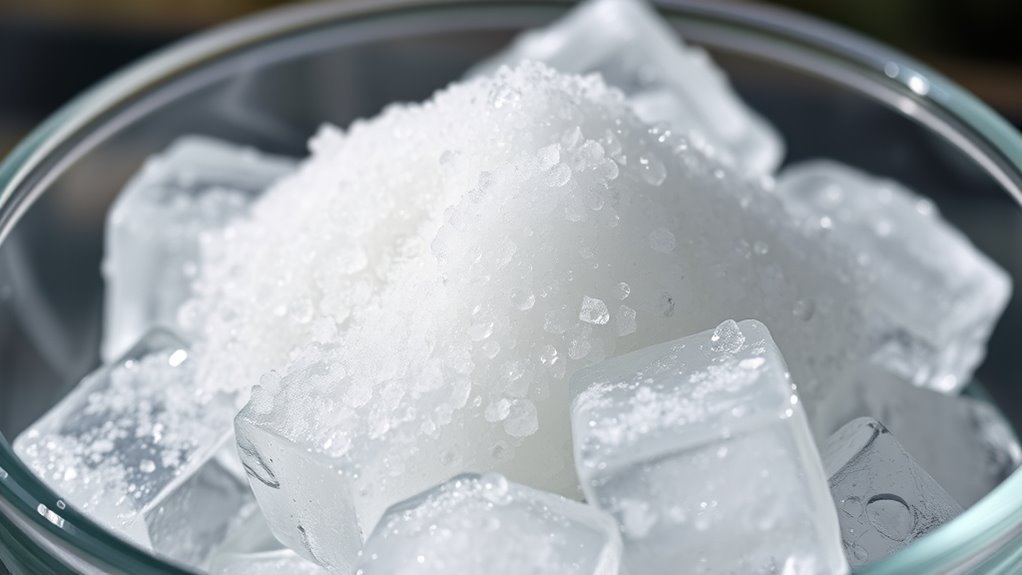
When you add salt to ice, it breaks up water’s hydrogen bonds and lowers the freezing point, so ice melts even below 0°C. This process, called freezing point depression, is why salt keeps ice cold and prevents it from melting quickly.
Pretty cool, right?
As the ice melts, it absorbs heat from its surroundings, keeping everything colder for longer. This means the environment stays chill without the ice refreezing too fast.
Saltwater mixtures can stay liquid at temperatures as low as -21°C, making salted ice perfect for keeping things chilled during hot days or long trips.
So next time you see salt on ice, remember it’s working hard to control temperature and preserve coldness by stopping ice from melting too fast. Keep exploring to understand more about this fascinating process!
Key Takeaways
- Salt disrupts water’s hydrogen bonds, lowering the freezing point and preventing ice from forming at 0°C. This means the water stays liquid even when it’s colder than usual.
- Because of this, the saltwater solution stays liquid below freezing, which slows down how fast ice forms. That helps keep things colder for longer.
- When salted ice melts, it actually absorbs heat from around it. This process helps the environment stay colder over time.
- Salt also lowers the melting temperature, so ice can melt even when it’s below 0°C. This keeps the ice in a cold state longer.
- As the salted ice keeps melting, it pulls in heat from its surroundings. That stops the ice from freezing quickly again and keeps the temperature down.
How Salt Lowers Ice’s Freezing Point and Why It Matters
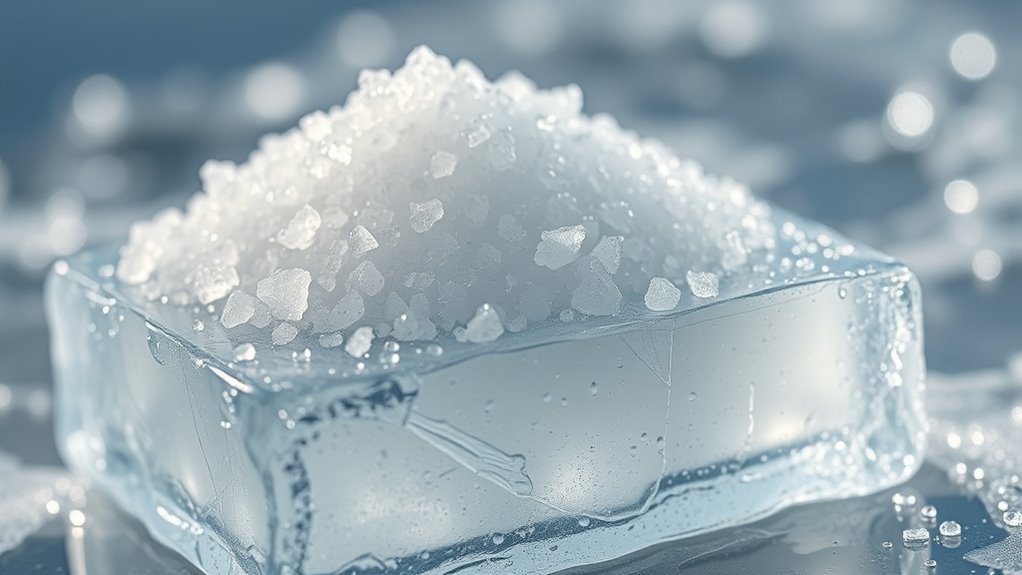
When you add salt to ice, it disrupts the hydrogen bonds between water molecules, preventing them from freezing at 0°C. This interference with the crystallization process causes freezing point depression, meaning the temperature at which water freezes drops below its normal point.
Salt ions mix with the ice to form a saltwater mixture that stays liquid at a lower freezing temperature, sometimes as low as -21°C. This is why salted ice doesn’t solidify as quickly in a cold environment.
Saltwater mixtures remain liquid at temperatures as low as -21°C, slowing ice solidification in cold conditions.
The salt ions get in the way of water molecules organizing into solid ice, making it harder for the ice to form. Because the freezing point is lowered, ice melting happens even when temperatures are below zero, absorbing energy from its surroundings.
This energy absorption helps maintain a cold environment longer. The amount and type of salt you add directly affect how much the freezing temperature drops, allowing you to control the ice’s melting behavior precisely.
How Salted Ice Absorbs Heat During Melting to Stay Colder Longer
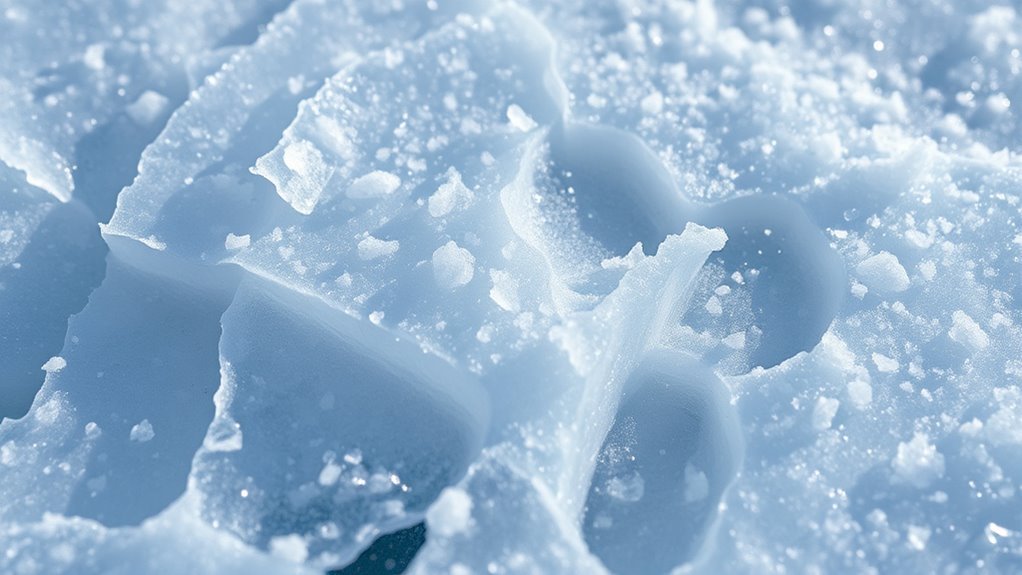
Salt doesn’t just lower ice’s freezing point—it also plays a key role in how the ice absorbs heat as it melts. When salt mixes with ice, it creates a saltwater mixture that melts at a lower temperature than pure ice. This melting is an endothermic process, meaning it absorbs heat from the surroundings, keeping the environment cold.
Here’s how salted ice stays colder longer:
- Salt lowers the freezing point, so ice melts below 0°C, continuously absorbing heat during melting.
- The saltwater mixture formed can reach temperatures as low as -21°C, enhancing heat absorption.
- Because salted ice keeps melting, it prevents quick refreezing, maintaining a lower temperature over time.
This process of melting and heat absorption means salted ice draws in heat instead of warming up, helping you keep things colder for longer.
Frequently Asked Questions
Does Putting Salt on Ice Keep It Colder?
Yes, putting salt on ice keeps it colder by lowering its freezing point, causing the ice to melt and absorb heat.
You’ll notice the temperature drops below zero, making the ice colder than it would be alone. It’s pretty cool how that works!
Is There a Downside to Using Salt on Ice?
Using salt on ice isn’t all sunshine and rainbows—you’ll damage metal, concrete, and harm plants nearby.
Plus, it loses effectiveness in extreme cold. So, you’ll want to use it carefully to avoid these downsides.
What Is the Ice Salt Trick?
The ice salt trick is when you add salt to ice, lowering its freezing point. This makes the ice colder than usual, creating a super-cold mixture.
It chills drinks or helps make ice cream quickly without a freezer. Pretty handy, right?
At What Point Does Salt No Longer Melt Ice?
You’d think salt’s a superhero, but it quits below -7°C (20°F).
Once it hits about -21°C (-6°F), salt throws in the towel—no more ice melting, just a frosty disappointment for you.
Conclusion
You might think salt and ice are opposites—one’s gritty and dry, the other cold and smooth. But when salt meets ice, they team up in a surprising way.
Salt lowers ice’s freezing point, making it melt slower and absorb heat, so it stays colder longer. This happens because salt disrupts the ice’s ability to refreeze at the usual temperature.
So, this unlikely partnership shows how a simple sprinkle of salt can transform melting ice into a cooler, longer-lasting chill. When you want to keep things cold for a while, salt and ice together are your best friends. This clever trick helps ice stay colder by slowing down melting, giving you more time to enjoy that refreshing chill when it matters most.