
5 Key Differences Between Canning Salt and Kosher Salt
You’ll notice five key differences between canning salt and kosher salt when cooking or pickling.
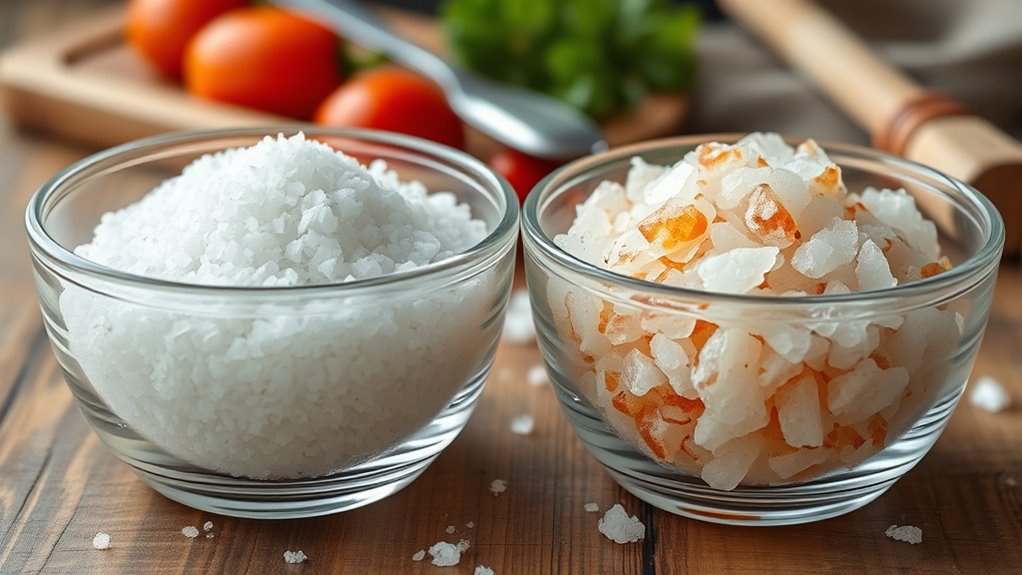
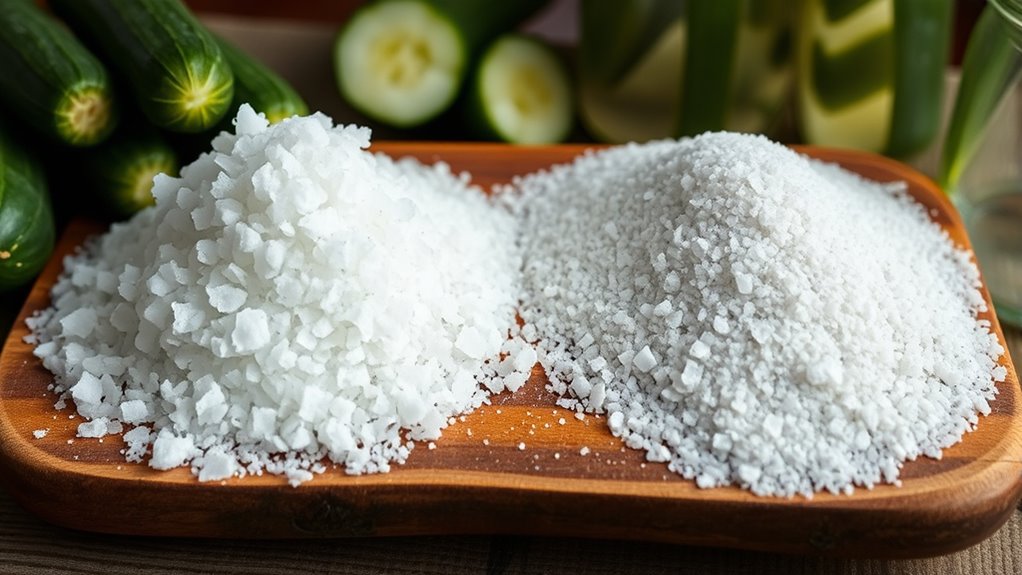
Canning salt has fine, dense grains that measure accurately and dissolve quickly, making it perfect for precise recipes.
On the other hand, kosher salt features coarse crystals that are less dense and take longer to dissolve.
Both salts are free from additives, but kosher salt’s large flakes provide a better grip for seasoning your dishes.
Meanwhile, canning salt helps keep brines clear and consistent, which is essential for successful pickling.
Also, kosher salt is less salty by volume, so you’ll need to adjust your measurements accordingly.
Keep exploring these differences, and you’ll discover how they impact your pickling and cooking results.
Understanding these traits can really help you get the best flavor and texture in your recipes.
Key Takeaways
- Canning salt has fine, dense grains, while kosher salt features large, coarse crystals.
- Both salts are additive-free, but canning salt’s purity prevents cloudiness in brines better.
- Canning salt measures accurately by volume; kosher salt requires weight adjustment due to coarse crystals.
- Canning salt dissolves quickly, ideal for smooth brines. Kosher salt dissolves slower, suited for dry curing.
- Kosher salt’s coarse texture aids seasoning control, while canning salt ensures consistent saltiness in pickling.
Differences Between Canning Salt and Kosher Salt
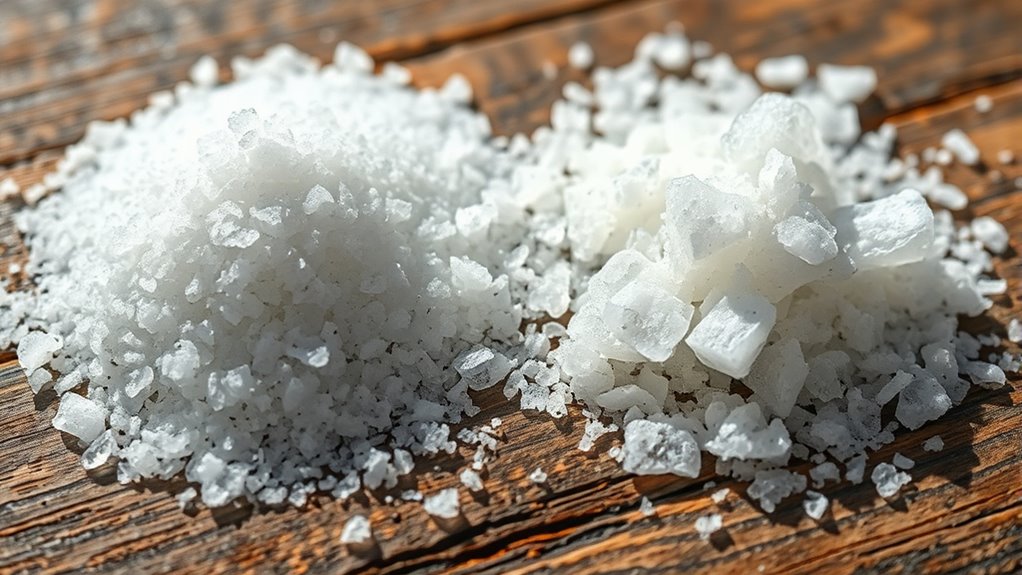
Although both canning salt and kosher salt are essential in the kitchen, they differ markedly in texture, purity, and usage. You’ll notice that canning salt has fine grains, similar in texture to granulated sugar, and it contains no anti-caking agents.
Kosher salt, on the other hand, features large, flaky crystals and also lacks additives but feels much coarser to the touch. When you use canning salt for pickling, it creates a clear brine because of its purity.
Kosher salt might cause cloudiness in your brine, which can affect the appearance of pickled foods. Since canning salt is saltier per volume, you have to be careful when measuring it, especially if you’re substituting it for kosher salt.
Its fine grains pack more densely, so weighing your salt guarantees accuracy. Overall, canning salt works best for pickling and preserving, while kosher salt suits seasoning and dry curing.
How Granule Size Affects Salt Measurement and Use
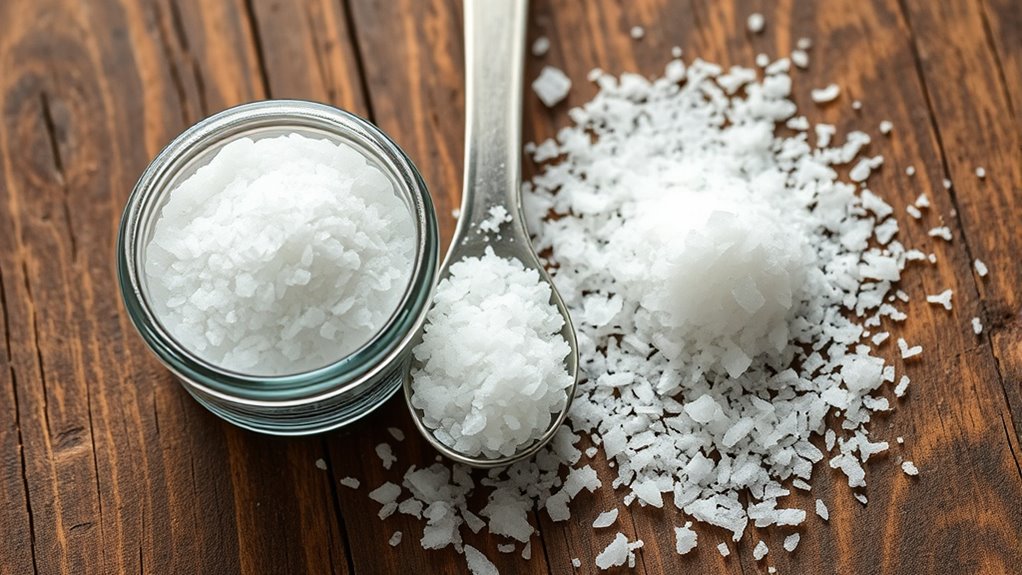
Understanding the differences in granule size between canning salt and kosher salt helps you measure and use each correctly. Canning salt’s fine granules pack densely, offering consistent measurement accuracy when using volume.
Knowing how canning salt’s fine granules differ from kosher salt ensures precise measurement and proper use.
In contrast, kosher salt’s coarse crystals are larger and less dense, so a teaspoon holds less salt by weight. This can affect your recipe’s saltiness if you rely on volume alone.
When substituting, focus on volume vs weight to maintain proper salt concentration. Fine granules in canning salt dissolve quickly, making brine preparation smooth and efficient.
Meanwhile, the larger crystal size of kosher salt means a slower dissolution rate, often requiring more stirring. But those coarse crystals give you tactile control, which is ideal for seasoning by hand or curing.
Being mindful of granule size ensures your measurements stay accurate and your dishes turn out just right every time.
Why Additives in Canning and Kosher Salt Matter for Pickling and Brining
When you’re pickling or brining, choosing salt without additives is essential to achieving clear brines and consistent fermentation. Additives like anti-caking agents and iodine, often found in regular table salt, can cause cloudiness, discoloration, and off-flavors that compromise both preservation and flavor.
Canning salt is free from these additives, ensuring the clarity of your brine and a safe, predictable pickling process. Kosher salt also lacks additives, making it another good option for pickling and brining, though its coarse crystals may affect measurement accuracy.
Comparing Flavor and Saltiness in Recipes With Canning and Kosher Salt
Because canning salt has finer grains and a higher salt concentration than kosher salt, you’ll need to adjust how much you use to get the right level of saltiness in your recipes. Since kosher salt’s coarser grains are less dense, you generally need about double the volume to match the saltiness level of canning salt.
When making a substitution, measuring by weight instead of volume guarantees you maintain the intended saltiness and flavor. Canning salt dissolves quickly and evenly, delivering a consistent salty taste, while kosher salt’s larger grains dissolve more slowly, sometimes giving a slightly different texture and flavor experience.
If you use equal volumes, your dish will taste less salty with kosher salt due to its lower salt concentration. Understanding these differences helps you control saltiness precisely, preserving the pure, straightforward flavor canning salt offers or the more tactile sensation kosher salt provides, depending on your recipe’s needs.
Best Uses of Canning Salt and Kosher Salt in Canning, Pickling, and Cooking
Although both canning salt and kosher salt can be used in pickling and canning, you’ll find that canning salt’s fine grains and purity make it the top choice for creating clear, cloud-free brines. Its lack of anti-caking agents guarantees quick dissolution and prevents cloudiness, which is essential in home canning.
Kosher salt, with its coarser grain size, excels in cooking tasks like dry curing and seasoning meats, where its larger crystals offer better grip and control.
For pickling, canning salt’s purity guarantees consistent flavor without additives altering the taste or appearance. While kosher salt can substitute in brines, its grain size may not dissolve as thoroughly, potentially affecting texture.
In cooking, kosher salt’s texture helps you measure and apply it more precisely by hand, especially for dry brining.
Frequently Asked Questions
Can I Substitute Kosher Salt for Canning Salt?
Yes, you can substitute kosher salt for canning salt, but you’ll need to weigh it carefully since kosher salt’s crystals are larger.
Adjust the amount to match the recipe’s saltiness, typically using less by volume. It’s a bit of trial and error, but you’ll get the hang of it!
Why Do Non-Jews Use Kosher Salt?
You use kosher salt because its large crystals dissolve slowly, giving you better control over seasoning. Plus, it’s free from additives, affordable, and perfect for pinching, sprinkling, and dry brining your favorite meats and veggies.
It’s pretty handy, right? That texture makes it easier to handle compared to fine salt, so you can really feel how much you’re adding. And since it’s additive-free, you know exactly what you’re getting.
What’s so Special About Canning Salt?
Canning salt’s special because it dissolves quickly and stays pure, with no additives or iodine.
You’ll get clear brines and consistent results in pickling or preserving, making your canned foods look and taste better every time.
Is Morton Kosher Salt the Same as Canning Salt?
You can’t swap Morton kosher salt for canning salt like trading puzzle pieces—they look similar but fit different recipes.
Kosher salt flakes rest like snow, while canning salt grains dissolve swiftly, perfect for clear, precise brines.
Conclusion
When choosing between canning salt and kosher salt, remember it’s like picking the right tool for a master chef. Just as a painter selects brushes for texture and detail, your salt choice shapes flavor, texture, and preservation.
Granule size, additives, and saltiness all play their part, so trust your instincts and recipe needs. With the right salt, you’ll preserve and season like a pro, turning every dish into a culinary masterpiece.
Canning salt is great for preserving because it dissolves quickly and doesn’t contain additives that can cloud your brine. Kosher salt, on the other hand, has larger crystals that are perfect for seasoning and drawing out moisture from meats.
So, whether you’re canning vegetables or seasoning a steak, knowing the difference between canning salt and kosher salt helps you get the best results. Picking the right salt ensures your dishes have the perfect flavor and texture every time—making you feel like a true kitchen pro.