

3 Reasons Sea Salt and Kosher Salt Aren’t the Same
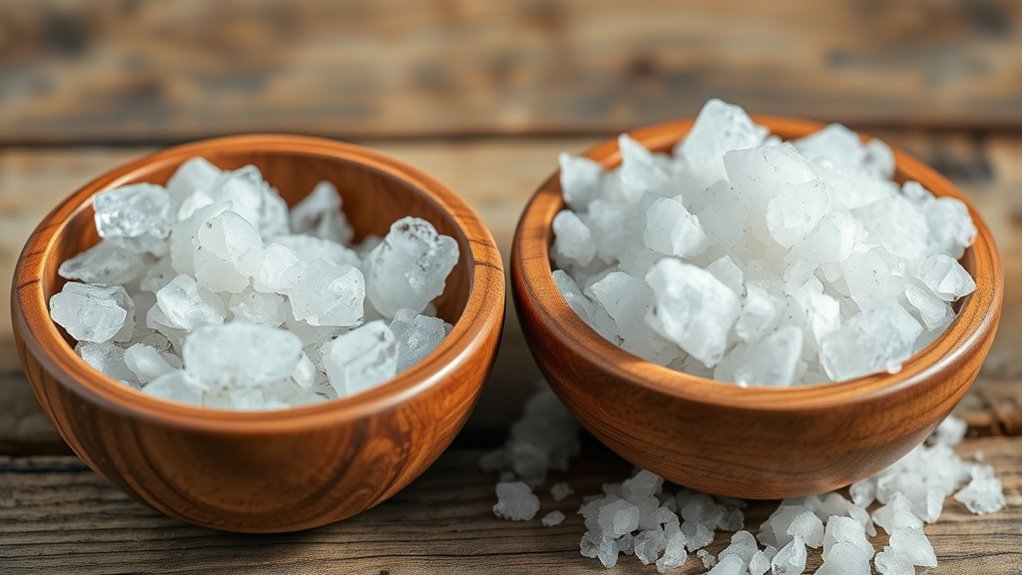
You’ll find sea salt and kosher salt differ mainly in how they’re made, their texture, and flavor. These two popular salts aren’t exactly the same, and knowing the differences can really up your cooking game.
Kosher salt is mined or evaporated, producing large, coarse crystals that dissolve slowly, perfect for cooking.
Sea salt, on the other hand, forms naturally from evaporated seawater. It often has flaky or varied crystals that add a nice crunch and visual appeal to your dishes.
Plus, sea salt contains minerals that give it a subtle, richer taste you might notice.
Keep exploring, and you’ll discover how these differences affect your seasoning. It’s fun to experiment and see how each salt can change the flavor and texture of your meals!
Key Takeaways
- Kosher salt is mined or made by solar evaporation, while sea salt is produced by natural seawater evaporation in salt ponds.
- Kosher salt has large, coarse crystals that dissolve slowly; sea salt crystals vary in size and texture based on environmental factors.
- Sea salt contains trace minerals like magnesium and calcium, giving it a subtle mineral flavor, unlike the neutral taste of refined kosher salt.
- Kosher salt is highly refined and pure sodium chloride, whereas sea salt is minimally processed, retaining its natural mineral content.
- Kosher salt is ideal for cooking due to its coarse texture, while sea salt is preferred as a finishing salt for flavor and texture enhancement.
How Kosher Salt and Sea Salt Are Produced
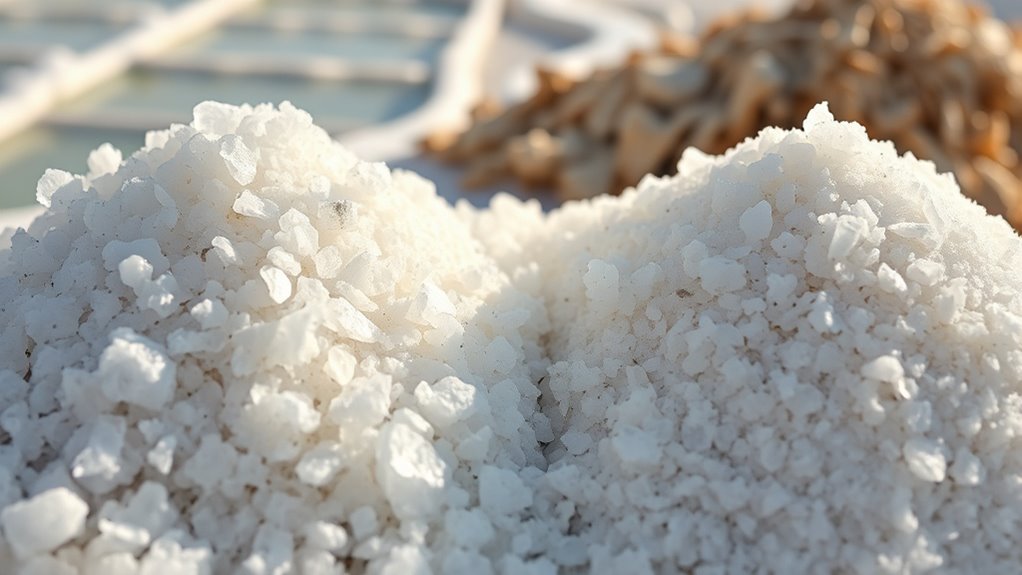
Although both kosher salt and sea salt come from saltwater sources, they’re produced in distinct ways that affect their texture and mineral content. Kosher salt production often involves mining underground salt deposits or using solar evaporation, which leads to large, coarse salt crystal sizes. These crystals form through geological processes and careful salt harvesting methods, usually without additives.
On the other hand, sea salt is created by natural evaporation of seawater in salt ponds, where salt crystallization depends on environmental conditions like temperature and humidity. This sea salt evaporation results in crystals that vary in size and texture, reflecting the specific evaporation environment.
While kosher salt’s mineral content is influenced by mining techniques and salt deposits, sea salt’s minerals come directly from the seawater and its surroundings. Both salts share a saltwater origin but differ markedly because of these distinct production methods, shaping their unique characteristics and uses.
Why Texture and Crystal Size Matter When Cooking
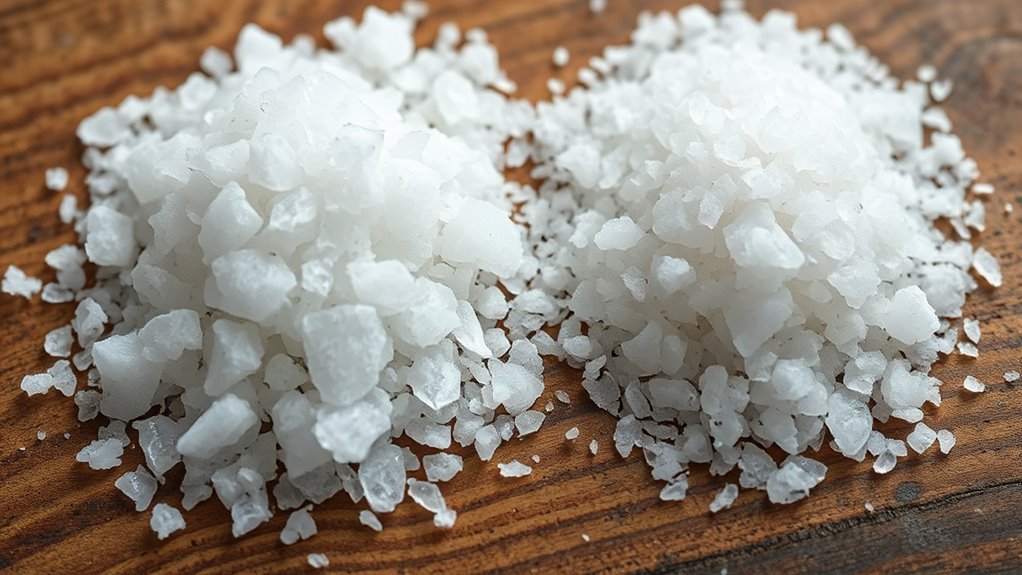
The way kosher salt and sea salt differ in texture and crystal size directly affects how they interact with your food during cooking. Understanding these differences helps you master seasoning control and improves your food preparation.
Kosher salt’s larger grain size means it dissolves slower, giving you more time to adjust seasoning. Fine sea salt dissolves quickly, which can risk over-salting if you’re not careful with salt measurement.
Kosher salt dissolves slowly, allowing seasoning adjustments, while fine sea salt’s quick dissolve can lead to over-salting.
Flaky sea salt adds a subtle crunch and visual appeal due to its delicate salt crystals. This enhances texture and flavor in finished dishes.
Because crystal size varies, volume measurements differ too. You’ll need to adjust amounts when substituting kosher salt for fine sea salt to keep your seasoning accurate.
How Sea Salt’s Flavor and Minerals Differ From Kosher Salt
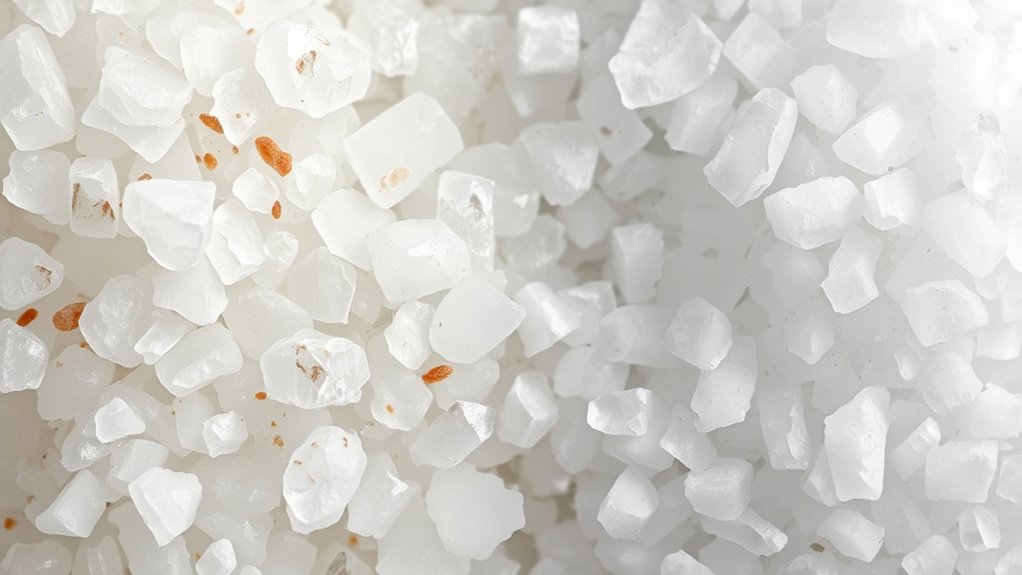
When you choose sea salt, you’re also adding trace minerals like magnesium, calcium, and iron that give it a subtle but distinct flavor. This is different from kosher salt, which mainly consists of pure sodium chloride.
Sea salt’s mineral content varies by its geographic source, so you get a unique flavor profile each time. Because it’s minimally processed, sea salt retains more natural minerals, making it mineral-rich and ideal as a finishing salt.
Kosher salt’s refined, neutral flavor makes it better suited for general seasoning. Here’s a quick comparison:
| Feature | Sea Salt | Kosher Salt |
|---|---|---|
| Mineral Content | Contains trace minerals | Mostly sodium chloride |
| Flavor Profile | Complex, mineral-rich | Neutral, mild |
| Processing | Minimally processed | Highly refined |
| Texture | Slightly varied due to minerals | Coarse, uniform |
| Best Use | Finishing salt for flavor boost | Cooking and seasoning |
Sea salt’s natural minerals truly enhance your dishes with deeper flavor and texture. It’s a simple way to add a little something extra.
Frequently Asked Questions
Is It Better to Use Sea Salt or Kosher Salt?
It’s better to use kosher salt for everyday cooking because you’ll control seasoning easily. Use sea salt when you want a finishing touch with delicate flavor and texture.
Just remember to adjust amounts since their grain sizes differ. That way, your dishes come out just right every time!
Why Do Chefs Use Kosher Salt Instead of Sea Salt?
You use kosher salt because its large, consistent crystals let you season food evenly and measure precisely. It dissolves predictably, has a clean flavor, and works great for meats, making your cooking more reliable.
Plus, it’s easier to pinch and sprinkle, so you have better control while cooking. That’s why many chefs prefer it over sea salt in the kitchen.
Can I Substitute Kosher Salt for Sea Salt?
Can you swap kosher salt for sea salt? Absolutely, you can!
Just remember to adjust quantities based on flake size and taste as you go, since their crystal structure affects saltiness and how much you’ll need.
Why Do Non-Jews Use Kosher Salt?
You use kosher salt because its coarse texture lets you easily control seasoning. It has a pure flavor without additives, which is great for cooking.
Plus, it dissolves slowly, giving you precise control while cooking and finishing dishes. Makes it easier to get just the right amount every time!
Conclusion
Now that you know kosher salt and sea salt aren’t the same, you can choose the right one with confidence. Did you know sea salt crystals can be up to three times larger than kosher salt? That means the texture and flavor they add to your dishes can be totally different.
So next time you cook, remember: picking the right salt isn’t just about taste—it’s about the whole experience on your plate. Using sea salt might give you a coarser crunch and a burst of mineral flavor, while kosher salt dissolves more quickly and seasons more evenly. Understanding these differences helps you enhance your recipes exactly how you want.
In the end, knowing the unique qualities of sea salt and kosher salt empowers you to elevate your cooking. Whether you want that flaky texture or a subtle saltiness, choosing the right salt makes all the difference in flavor, texture, and overall enjoyment of your meal.