
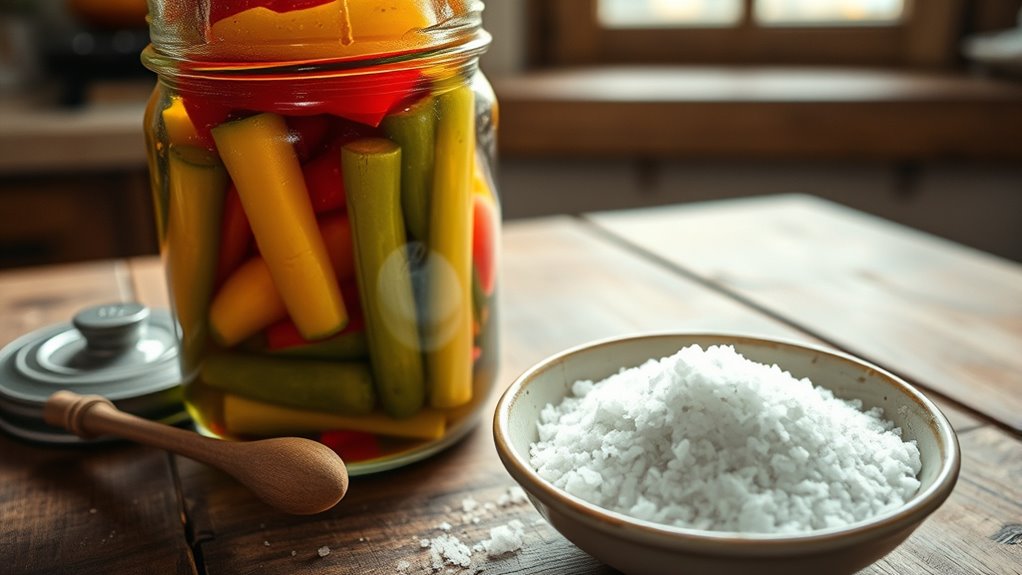
Can You Use Iodized Salt for Canning?
You shouldn’t use iodized salt for canning because it causes discoloration, such as darkening pickles and cloudiness in brine, which harms your canned foods’ appearance.
It can also introduce metallic and off-flavors that change the taste, though it doesn’t affect safety.
Instead, choose non-iodized salts like canning or pure sea salt to keep your preserves clear and flavorful.
Stick with the right salt, and you’ll improve both the look and taste of your canned goods.
There’s more to learn about salt choices and their benefits. So, when you’re ready to start canning, remember that the type of salt you use really matters.
It’s a small detail that can make a big difference in your final product!
Key Takeaways
- Iodized salt causes discoloration and darkening in canned foods, which can affect their visual appeal.
- It can also produce metallic or off-flavors, changing the taste of your preserved foods.
- That said, iodized salt doesn’t impact food safety or how well your food is preserved.
- Still, non-iodized salt is usually recommended to keep your canned goods looking clear and tasting true to their original flavor.
- Using pure, non-iodized canning salt or sea salt helps prevent cloudiness and unwanted chemical reactions during the canning process.
How Iodized Salt Affects Your Canned Foods’ Color and Flavor
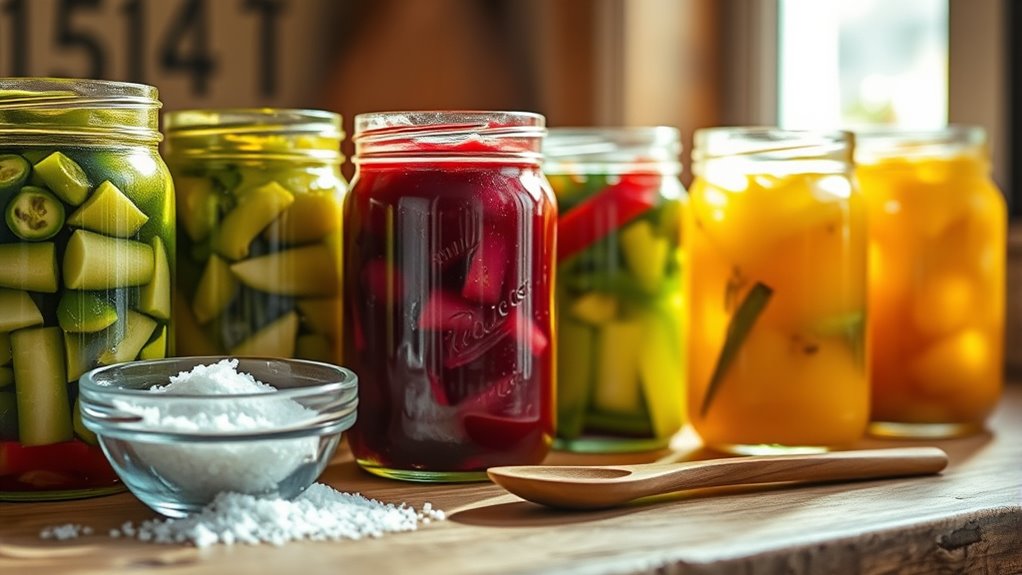
Although iodized salt is common in many kitchens, it can negatively affect your canned foods’ color and flavor. When you use iodized salt in canning, the iodine often causes discoloration, leading to darkening in pickles and cloudiness in the brine.
This discoloration doesn’t compromise preservation or safety, but it does impact the appearance, making your canned goods less visually appealing. You might also notice a metallic taste or off-flavor, which can alter the overall flavor profile you expect from your preserved foods.
To keep your canned products looking clear and tasting fresh, many recommend avoiding iodized salt in favor of non-iodized salt. Non-iodized salt won’t cause discoloration or impart unwanted flavors, helping you maintain the attractive appearance and true flavor of your pickles, brine, and other canned goods.
Choosing the right salt is key to successful canning with both quality and presentation in mind. So, it’s a simple switch that can make a big difference!
Choosing the Best Salt for Safe, Clear, and Tasty Canned Products
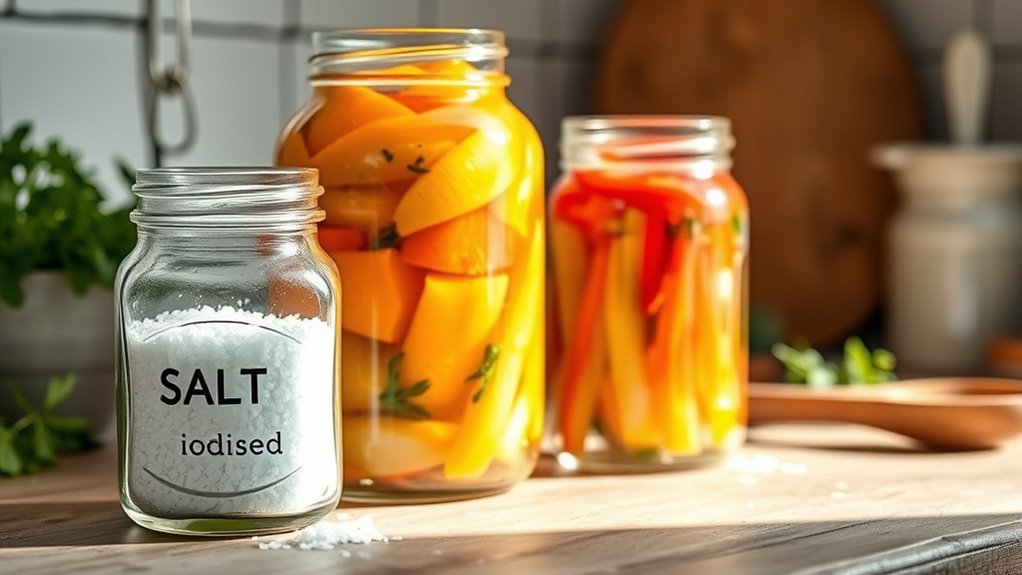
When selecting salt for canning, you want to prioritize options that keep your preserved foods both safe and visually appealing. Choosing the right salt plays a crucial role in food preservation, especially for pickling and fermented foods.
Selecting the right salt is essential for safe, attractive, and flavorful preserved foods, especially in pickling and fermenting.
Canning salt is your best bet because it’s pure, free from iodine and anti-caking agents. That means your canned products stay clear and retain their visual quality. Sea salt is another great choice, offering purity without additives.
Here’s why you should choose non-iodized salt for canning:
- It ensures safety by preventing unwanted chemical reactions during food preservation.
- It keeps your canned products clear, avoiding cloudiness caused by iodine or anti-caking agents.
- It enhances the taste and texture of pickled and fermented foods without altering their flavor.
Using the right salt guarantees both safe and tasty results in every jar you seal. It really makes a difference!
Frequently Asked Questions
Why Shouldn’t You Use Iodized Salt in Canning?
You shouldn’t use iodized salt in canning because its additives and iodine can cause cloudiness, discoloration, and staining in your preserved foods.
This can ruin their appearance, even though the salt itself is safe to consume.
What Can You Substitute for Canning Salt?
You can substitute kosher salt for canning salt, but weigh it instead of measuring by volume to match salinity.
Avoid sea salt or iodized salt, as additives can affect your canned food’s clarity and texture.
It’s a simple swap, but these little details really make a difference!
Does It Matter What Kind of Salt I Use for Canning?
It matters more than you’d think—using the wrong salt can turn your perfect pickles into a murky mess!
Stick with canning or sea salt to keep your preserves clear, tasty, and looking their absolute best. Trust me, it makes all the difference.
Can You Use Morton Iodized Salt for Canning?
You can use Morton iodized salt for canning, but it may cause cloudiness and discoloration in your jars.
For clearer, better-looking results, it’s best to choose non-iodized, additive-free salt instead.
Conclusion
When it comes to canning, using iodized salt is like adding a splash of paint that can subtly change your masterpiece’s color and flavor. While it won’t harm safety, it might cloud your canned goods or leave an off taste.
To keep your preserves clear and delicious, stick to pickling or canning salt. These salts are specifically designed for canning, ensuring no unwanted additives interfere with your recipe.
Choosing the right salt guarantees your jars stay as vibrant and tasty as you intended. So, when you’re deciding on salt for canning, remember that iodized salt isn’t the best choice. Using the proper canning salt helps your preserves shine through every time, keeping both the flavor and appearance just right.