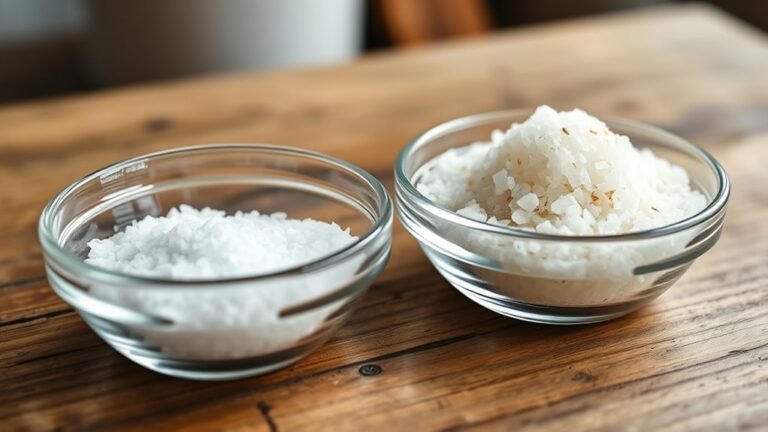

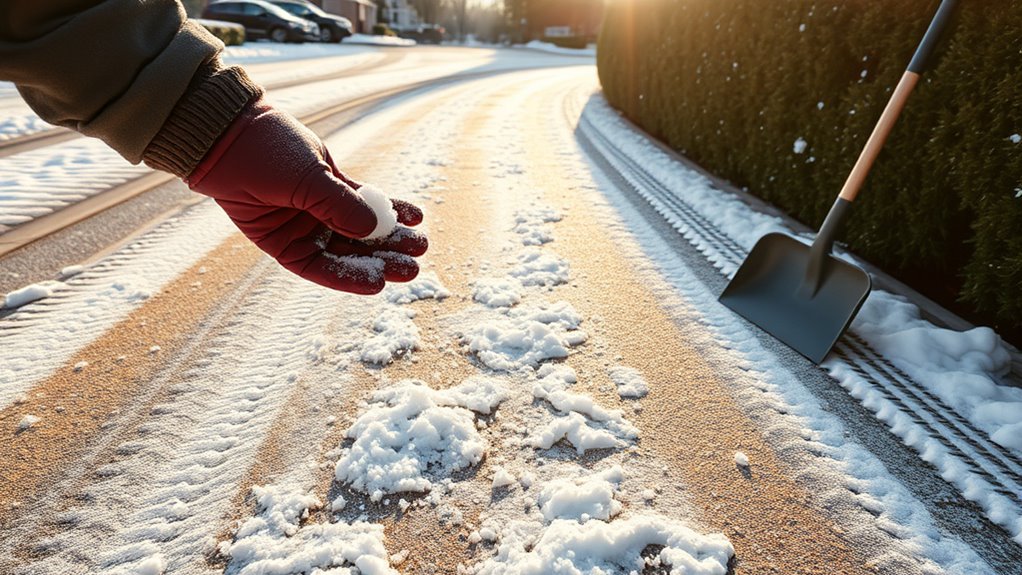
7 Tips on When to Salt Driveways for Maximum Safety
You should salt your driveway just before or right after snowfall to prevent ice buildup and make snow removal easier. Applying salt at the right time is key for maximum safety and efficiency during winter.
Make sure to apply salt evenly—about 12 ounces per 20 feet—and only after you have cleared the snow to avoid wasting it. Salt works best when temperatures are above 15°F, so keep an eye on the weather before spreading it.
If the temperature drops below 15°F, it’s better to switch to sand or alternatives like calcium chloride.
Using salt sparingly is important to protect both your driveway and the environment.
Follow these tips to keep your driveway safe and durable through winter’s worst. You can also explore how to balance safety with eco-friendly methods for the best results.
Key Takeaways
– Apply salt after snow has been cleared to avoid waste and improve melting efficiency on residual ice.
This way, you’re not just throwing salt on top of snow where it won’t do much. It really works best when the snow is gone and you’re dealing with ice.
– Pre-treat driveways just before snowfall to create a barrier that prevents ice from bonding to surfaces.
Think of it like giving your driveway a head start against the snow and ice. It makes the cleanup much easier afterward.
– Use about 12 ounces of salt per 20-foot driveway and spread it evenly for safe and effective coverage.
Don’t overdo it! Even spreading helps the salt work better and keeps things safe.
– Avoid salting when temperatures are below 15°F; switch to alternatives like sand or calcium chloride for traction.
Salt just won’t melt ice effectively when it’s that cold. Sand or calcium chloride can give you the grip you need instead.
– Sweep up leftover salt after ice melts to prevent environmental damage and protect driveway surfaces.
Cleaning up helps keep plants and pets safe, and it stops salt from eating away at your driveway over time.
When Should You Salt Your Driveway for Safety?

Although it might seem logical to salt your driveway before it snows, you should wait until after the snow has fallen and been cleared to apply salt for the best melting results. When you salt your driveway post-snow removal, the salt works directly on the ice or snow residue, speeding up melting efficiently.
Applying salt too early often leads to waste as it can get blown away or diluted by fresh snow.
For maximum safety, use about 12 ounces of salt per 20-foot driveway to avoid overuse while ensuring effective deicing. Keep in mind that salt is most effective when temperatures are above 15°F; below this, it loses its melting power, so you might need alternative solutions like sand for traction.
Why Salt Before or Right After Snowfall?
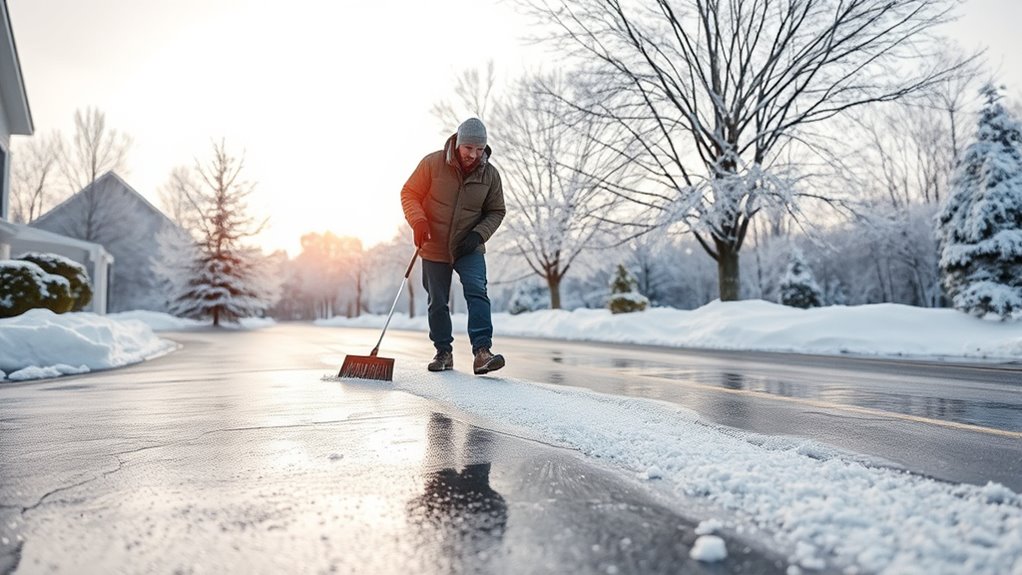
You’ll get the best results by salting your driveway just before or right after snowfall. Pre-treating creates a barrier that stops ice from sticking.
Applying salt immediately after snow helps melt ice and keep the surface safe. Timing your salt application this way reduces slipperiness and keeps your driveway clear longer.
It’s a simple trick, but it makes a big difference when it comes to safety and convenience. Give it a try next time!
Pre-Treating Surfaces Effectively
When you salt your driveway before or right after a snowfall, you make ice removal way easier and safer. Pre-treating surfaces is really important because applying salt before snow piles up stops ice from sticking tightly to the pavement.
This layer acts like a barrier, making it simpler to clear snow and ice later on. You’ll want to spread salt when temperatures are above 15°F, ideally on dry days or when it’s a bit warmer.
If you wait too long to salt, ice will grab onto your driveway much tighter, which makes things more dangerous and harder to remove. By pre-treating surfaces well, you cut down slip risks and save yourself a lot of effort.
Immediate Post-Snow Application
Because salt works best at temperatures above 15°F, applying it immediately after snow falls helps you prevent ice from bonding tightly to your driveway. When you apply salt right after snowfall, it starts melting the snow before it can turn into stubborn ice.
This early action stops thick ice layers from forming, which are much harder to remove later. You can also apply salt just before a snowstorm to create a thin barrier that limits ice buildup.
How Does Temperature Affect Salt’s Effectiveness on Driveways?
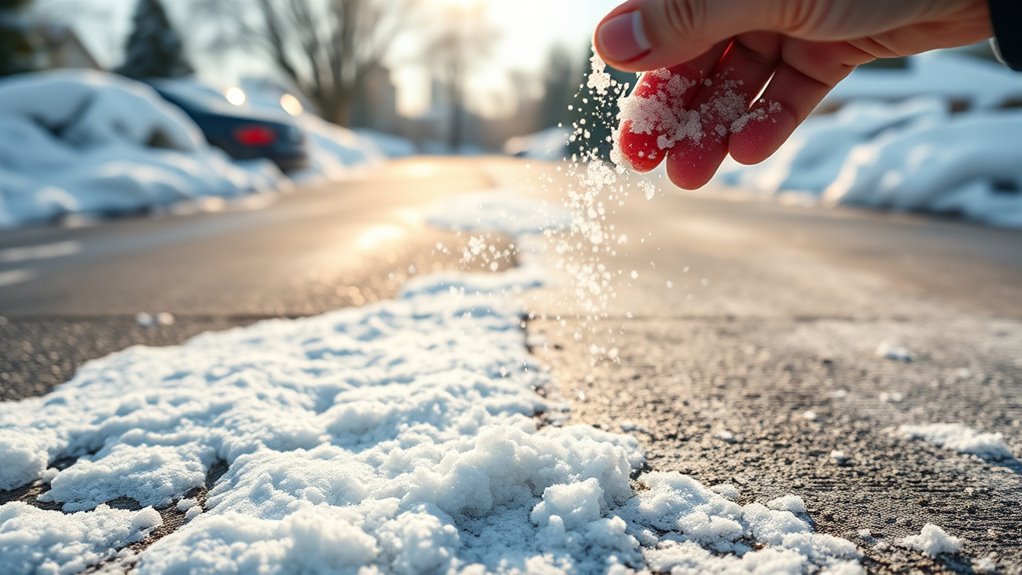
You’ll find that salt works best when temperatures stay above 15°F. Colder weather actually reduces its ability to melt ice.
When it gets colder, salt tends to clump up and loses its effectiveness. So, you might want to rely on alternatives like sand for traction instead.
Knowing this can help you pick the right approach to keep your driveway safe during freezing conditions.
Salt Effectiveness Temperature Range
Although salt works well to melt ice on driveways, its effectiveness drops considerably once temperatures fall below 15°F. Salt lowers the freezing point of water, helping ice melt faster, but when temperatures drop below this threshold, the chemical reaction slows or stops, reducing salt’s ability to clear ice.
Between 15°F and 20°F, salt can still work, especially if sunlight or friction helps the melting process. However, below 15°F, you’ll find salt much less effective, and you may need to explore alternative deicers like calcium chloride.
Keep in mind that pre-treating your driveway with salt before a storm won’t be very effective if temperatures are expected to drop well below 15°F. So, timing matters for maximum safety.
Impact of Cold Weather
Salt’s ability to melt ice on your driveway depends heavily on the temperature. When it’s above 15°F, salt works well by triggering a chemical reaction that breaks down ice. This helps you keep driveways safe and clear.
However, when temperatures drop below 15°F, salt’s effectiveness drops sharply because it becomes less soluble and can’t lower the freezing point as much. This means salt on your driveway won’t spread evenly or work efficiently in extreme cold.
To keep driveways safe during those frigid days, it’s best to apply salt before temperatures plunge. Doing this prevents ice from bonding strongly.
Once it’s very cold, relying solely on salt won’t cut it. You’ll need to think about other methods to maintain safety.
Alternatives Below Freezing
When temperatures drop below 15°F, regular salt loses much of its ice-melting power, so you’ll need to contemplate alternatives to keep your driveway safe. Calcium chloride and magnesium chloride are effective options that work well in lower temperatures than standard salt.
These alternatives lower the freezing point more efficiently, making ice removal easier during extreme cold. Remember, timing is crucial—applying salt before a cold snap might not be effective if temps plunge too low.
In these conditions, combine chemical deicers with physical methods like shoveling or spreading sand for traction.
| Deicer Type | Effective Temperature Range |
|---|---|
| Regular Salt | Above 15°F |
| Calcium Chloride | Down to -25°F |
| Magnesium Chloride | Down to 5°F |
How Much Salt Should You Use for Safe Deicing?
If you want to guarantee safe and effective deicing, using about 12 ounces of salt for a 20-foot driveway is usually enough. Applying the right amount of salt ensures you melt ice efficiently without risking damage to your driveway or the environment.
Using too much salt doesn’t speed up melting—in fact, it can harm surfaces and nearby plants.
Excess salt won’t melt ice faster and can damage surfaces and harm nearby plants.
To get the salt amount just right, keep these tips in mind:
- Measure out 12 ounces of salt for every 20 feet of driveway.
- Use a spreader or a cup to evenly distribute salt, preventing clumps and waste.
- Always apply salt after you’ve cleared snow to maximize its melting power.
Follow your salt product’s instructions carefully to maintain safety and effectiveness. By controlling the salt amount, you’ll keep your driveway safer while protecting the environment.
How to Apply Salt Evenly for Best Results
Although applying salt might seem straightforward, distributing it evenly is key to achieving effective and consistent ice melting. To spread salt evenly, use a spreader for uniform salt application across your driveway.
If you’re applying salt by hand, use a cup or bucket to pour it gradually, ensuring no spots are missed. Wearing gloves during manual application protects your skin from irritation.
Applying salt in a crisscross or overlapping pattern further guarantees full coverage.
Here’s a quick guide to even salt application:
| Tip | Reason |
|---|---|
| Use a spreader | Ensures consistent spread uniformly |
| Rinse spreader between uses | Prevents clumping and blockages |
| Apply in a crisscross pattern | Covers all areas without gaps |
| Wear gloves for manual use | Protects skin from irritation |
Following these steps helps you maintain safety by preventing icy patches through proper salt application.
When Should You Switch From Salt to Sand or Other Driveway-Friendly Alternatives?
Applying salt evenly helps keep your driveway safe, but knowing when to switch to sand or other alternatives can really improve traction and protect your pavement.
Salt loses its effectiveness below 15°F, so it’s smart to swap to traction agents like sand or calcium chloride in colder temps.
Sand doesn’t melt ice, but it boosts grip, especially after a snowstorm.
Also, avoid salt on new concrete that’s under a year old to prevent damage—opt for gentler options instead.
Here are three clear signs to switch from salt to alternatives:
- When temperatures consistently drop below 15°F, use sand or calcium/magnesium chloride for better traction.
- After a snowstorm, spread sand to improve grip on icy patches without harming your driveway.
- On new concrete or sensitive areas, choose environmentally friendly traction agents like kitty litter or sawdust.
Making these switches guarantees your driveway stays safe without compromising its surface.
How to Protect Your Driveway and the Environment When Using Salt
When you salt your driveway, timing and amount really matter to protect both your property and the environment. Apply salt only after snow has fallen and you’ve cleared it away to avoid unnecessary buildup and runoff.
Use about 12 ounces of salt for a 20-foot driveway to prevent overapplication. Too much salt can harm your driveway’s surface and nearby plants.
Avoid salting when temperatures dip below 15°F since salt loses effectiveness and may cause more environmental damage. Once the ice melts, sweep up any leftover salt to keep it from washing into soil and waterways.
To further protect the environment, consider alternatives like sand or pet-safe ice melt, especially when salt’s not ideal. By using salt responsibly, you safeguard your driveway from damage while minimizing negative effects on the environment.
This balanced approach keeps your property safe and supports a healthier ecosystem. It’s really a win-win for you and the planet!
Frequently Asked Questions
How Early Is Too Early to Salt a Driveway?
You shouldn’t salt your driveway before snow or ice appears, especially if temperatures are below 15°F. Applying salt too early wastes it and reduces effectiveness.
Can I Use Too Much Salt on My Driveway?
Don’t bite off more than you can chew with salt—you can definitely use too much. Over-salting won’t melt ice faster, but it’ll damage your driveway, harm plants, and cause harmful runoff.
Stick to recommended amounts. It’s really better for your driveway and the environment that way. Just a little goes a long way!
How Long Does It Take for Salt to Work on a Driveway?
Salt usually starts melting ice within 15 to 30 minutes, but it works faster above 15°F.
Below that, it slows down.
Applying salt evenly and pre-treating helps you get quicker, safer results on your driveway.
How Often Should I Put Salt on My Driveway?
You should salt your driveway once after clearing fresh snow, like sprinkling a white magic dust to melt ice.
Only reapply if new snow falls or icy patches stubbornly return.
Avoid overusing it to protect your pavement, okay?
Conclusion
You’ve got the power to keep your driveway safe all winter long by salting at just the right moments. Salt before or immediately after snowfall to stop ice from turning your driveway into a frozen skating rink.
Remember, temperature matters—too cold, and salt loses its magic. Use the right amount, spread it evenly, and switch to sand when needed.
With these tips, you’ll conquer winter’s worst, protecting both your driveway and the environment like a true hero! Salting driveways effectively helps prevent slips and falls, ensuring maximum safety throughout the season. By timing your salt application carefully and adjusting for temperature, you’ll maintain a clear, ice-free surface. Plus, using sand when salt isn’t effective keeps traction high without harming the environment. Stay ahead of winter hazards and keep your driveway safe and secure, all while being eco-friendly and responsible.