
How Much Salt Does Celery Have Naturally?
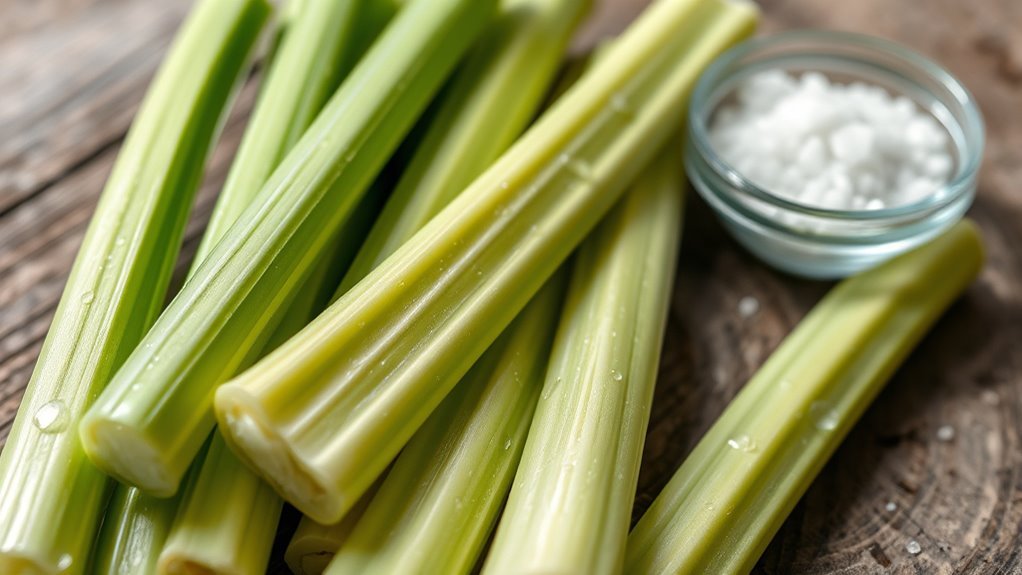
You’ll find about 32 milligrams of naturally occurring sodium in a medium stalk of celery, which means it’s a low-sodium vegetable you can enjoy without worrying about salt intake.
The sodium in celery isn’t added but naturally present, making it a great choice if you’re managing your sodium for health reasons.
Even if you eat several stalks, the total sodium stays minimal. So, celery fits perfectly into a low-sodium diet without sacrificing flavor or crunch.
Keep going to discover why celery is smart for low-sodium diets.
Key Takeaways
- A medium stalk of celery naturally contains about 32 mg of sodium, contributing minimally to salt intake. The sodium in celery is naturally occurring and not added during processing.
- Sodium levels in celery are pretty stable and don’t change much because of growing conditions. So, you can count on celery having a consistent amount of sodium.
- Celery’s natural sodium content makes it a great choice for low-sodium diets. Even if you eat several stalks, it only adds a small amount of sodium to your daily intake.
How Much Sodium Is in Celery?
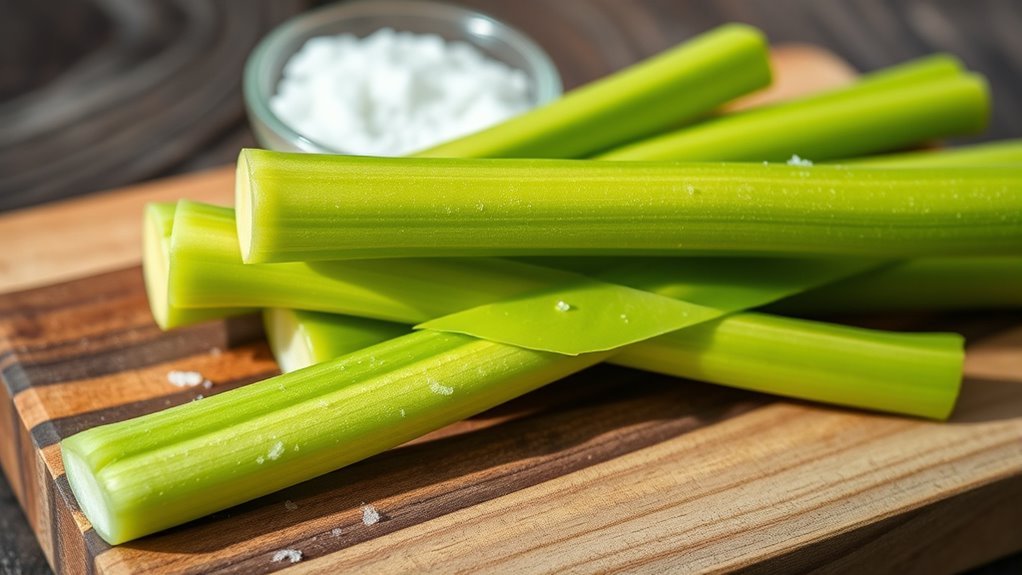
How much sodium does celery actually contain? A medium stalk of celery has about 32 milligrams of sodium, which is quite low compared to many other vegetables. This natural sodium content means celery contributes minimally to your overall sodium intake.
The sodium in celery isn’t added during processing; it’s naturally present, making it a genuine source of vegetable sodium. While sodium levels in celery can vary slightly due to growing conditions, the variation is minor, and the sodium content remains consistently low.
Even if you eat multiple stalks, the sodium in celery adds only a small amount to your daily intake. So, when you’re monitoring your sodium consumption, celery stands out as a vegetable with a naturally low sodium level.
Understanding the sodium content in celery helps you make informed choices about including it in your meals while keeping your sodium intake in check. It’s a smart way to enjoy a crunchy snack without worrying too much about sodium.
Is Celery a Good Choice for a Low-Sodium Diet?
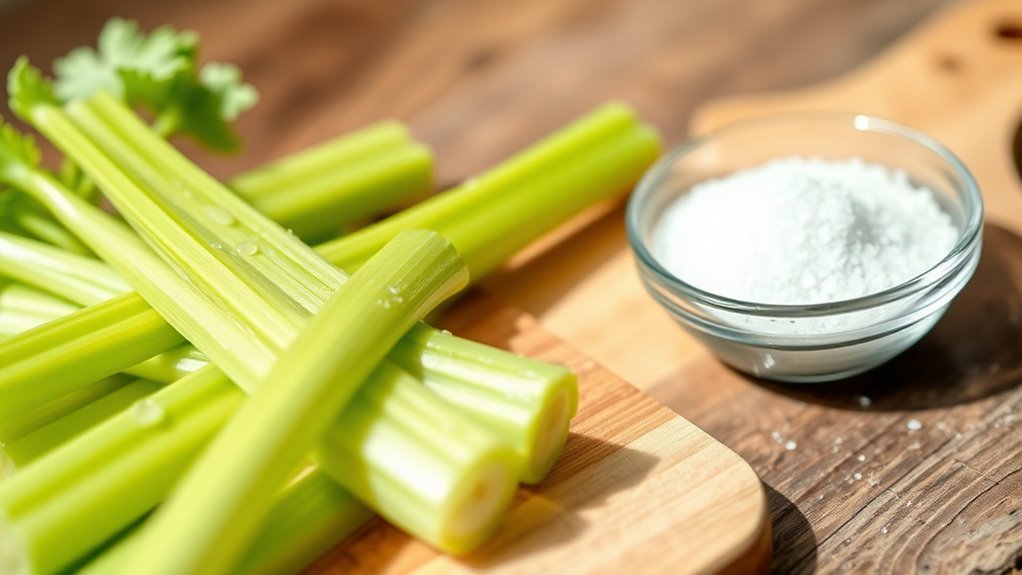
Celery makes an excellent choice for a low-sodium diet because it naturally contains only about 32 milligrams of sodium per medium stalk. If you’re watching your salt intake, fresh celery is a smart vegetable option given its low sodium content.
Celery is a smart, low-sodium vegetable with just 32 milligrams per medium stalk.
Here’s why celery fits well into a low-sodium diet:
- Its naturally low sodium levels help maintain healthy blood pressure, supporting heart health.
- You can freely add fresh celery to meals without worrying about increasing your salt intake.
- Just be cautious with processed celery products, as they often contain added salt that raises sodium levels.
Frequently Asked Questions
Is There a Downside to Eating Celery?
Yes, eating too much celery can cause nutrient gaps and digestive discomfort. You shouldn’t rely on it alone, or you might miss out on other essential nutrients your body needs for a balanced diet and overall health.
It’s all about balance, you know? Enjoy celery as part of a variety of foods to keep things nutritious and tasty.
Can You Eat Celery on a Low Sodium Diet?
Yes, you can eat celery on a low sodium diet. It has very little natural sodium, so it won’t substantially affect your intake.
Just enjoy it as a crunchy, healthy snack without worrying about salt content. It’s a great way to add some fresh crunch to your meals!
What Organ Does Celery Help?
You might be surprised, but celery helps your kidneys! Its natural sodium supports fluid balance, helping your kidneys flush out waste and maintain proper electrolyte levels.
This keeps your body functioning smoothly and your nerves firing right. Pretty cool how something so simple can do so much!
Why Is Celery so High in Sodium?
Celery’s sodium is high because it naturally absorbs minerals from soil, helping regulate water and nutrient movement inside the plant.
You’ll notice its salty taste comes from this natural sodium, even though it’s still low overall. So, while it might seem salty, it’s not actually that much sodium compared to other foods.
Conclusion
You might be surprised to learn just how much sodium celery naturally contains. While it’s often seen as a crunchy, healthy snack, those tiny amounts of salt can add up more than you expect.
If you’re watching your sodium intake closely, celery could play a bigger role in your diet than you realize. So next time you reach for that stalk, ask yourself—could celery be the hidden source of salt you didn’t see coming?
Understanding how much salt celery has naturally is important, especially if you’re managing your sodium levels. Even though celery is low in calories and packed with nutrients, its natural sodium content can contribute to your daily intake more than you might think.
So, keep in mind that while celery is a great snack, it’s not completely salt-free. If you’re monitoring sodium for health reasons, paying attention to the natural salt in celery can help you make smarter dietary choices.