
How to Maintain Salt Water Pools and Do They Need Chlorine?
To maintain your saltwater pool, it’s important to regularly test and balance the pH, salt, and chlorine levels. Aim to keep the pH between 7.2 and 7.6 for the best water quality. This helps ensure your pool stays comfortable and safe for swimming.
Cleaning the salt cell twice a year is also key. This prevents calcium buildup and keeps your chlorine production running smoothly.
Don’t forget to skim debris and brush the pool surfaces frequently. Keeping the water circulating well will help everything stay clear and inviting.
Even though your salt generator does most of the chlorine work, you’ll still need to add a bit after heavy use or storms. Just keep these basics in mind, and you’ll find plenty of ways to keep your saltwater pool sparkling and safe all season long.
Key Takeaways
- Regularly test and balance salt, chlorine, and pH levels. Keep the pH between 7.2 and 7.6 for the best water quality.
- Clean the salt cell twice a year to remove calcium buildup. This helps maintain efficient chlorine production.
- Perform routine pool maintenance by skimming debris and brushing surfaces. Make sure the water circulates properly.
- Saltwater pools generate chlorine continuously. Still, test levels regularly and add chlorine if it drops below 1-3 ppm or after storms.
- You might need to supplement chlorine during heavy use or if the water looks cloudy or green. This keeps the pool sanitary and the water clear.
How To Keep Your Saltwater Pool Clean And Balanced
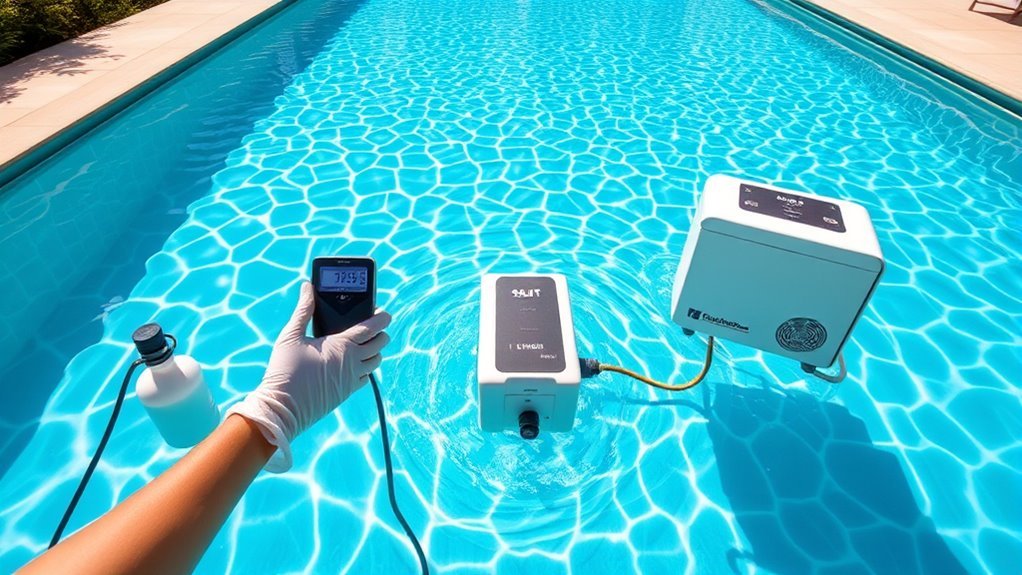
Although saltwater pools require less frequent chemical additions than traditional pools, you still need to regularly test and adjust your salt and chlorine levels to keep the water balanced and sanitary.
To maintain proper water balance in your saltwater pool, regularly perform water testing to monitor chlorine levels and pH. Saltwater systems often raise pH quickly, so pH adjustment with reducers is essential to keep it between 7.2 and 7.6.
For effective sanitation, clean your salt cell twice a year to prevent calcium buildup and guarantee ideal chlorine production. Use high-quality, pool-specific salt to avoid contaminants that can stain or damage your salt generator.
Regular pool maintenance also includes routine circulation, skimming, and brushing to remove debris and keep water clear. By staying on top of these tasks, you’ll preserve your saltwater system’s efficiency and enjoy a clean, balanced pool all season long.
When Should You Add Chlorine To Your Saltwater Pool?
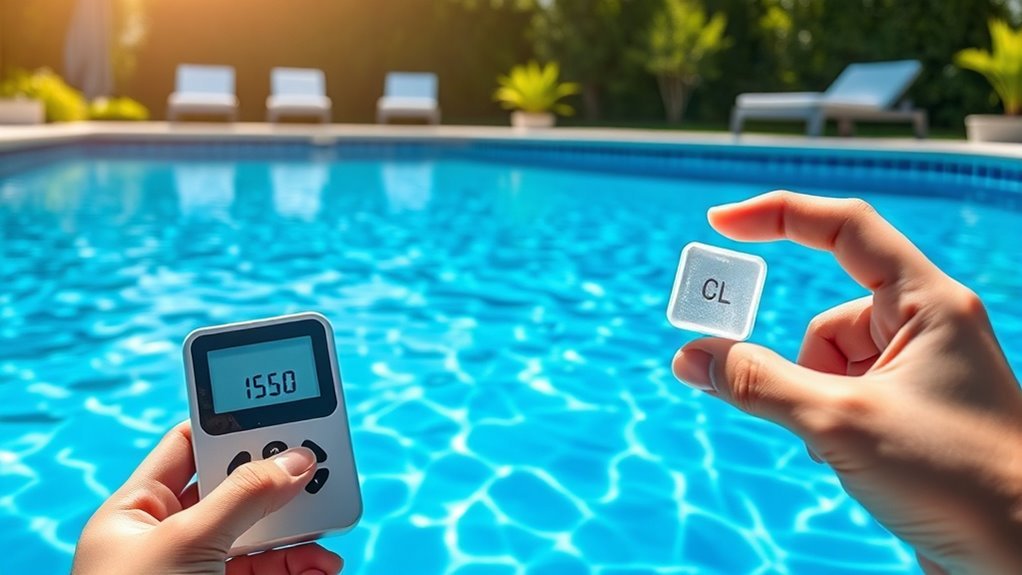
Since saltwater pools generate chlorine continuously, you might think you never need to add extra chlorine manually. However, there are times when you should supplement chlorine to keep your pool properly sanitized.
Use test strips regularly to check free chlorine levels, aiming for 1-3 ppm. If chlorine levels drop below this, especially after heavy use or storms, it’s time to add chlorine.
Also, if the water looks cloudy or green, don’t wait—add chlorine. Your salt chlorinator might not keep up during these times, so shock treatments or chlorine tablets can give your pool a boost.
Environmental factors and more swimmers can use up chlorine faster, so manual addition is sometimes necessary. For best results, add chlorine before sunset or in the evening to stop sunlight from breaking it down quickly.
Keeping an eye on these signs will help your saltwater pool stay clean, safe, and inviting for everyone.
Frequently Asked Questions
Does a Salt Water Pool Still Need Chlorine?
Yes, your saltwater pool still needs chlorine. The salt generator creates chlorine to sanitize your water, so you must keep chlorine levels balanced.
Sometimes, during heavy use or if the generator isn’t producing enough, you’ll need to add chlorine manually. It’s all about keeping your pool clean and safe.
What Is the Downside of a Salt Water Pool?
You’ll face corrosion on metal fixtures and equipment, scaling on the salt cell, and damage to natural stone or concrete.
Plus, high salt levels can harm nearby plants and landscaping if you don’t manage the balance carefully.
How Difficult Is It to Maintain a Saltwater Pool?
Maintaining a saltwater pool isn’t difficult at all. You’ll just need to regularly test water chemistry, clean the salt cell occasionally, and top off salt levels when needed.
It’s easier than handling traditional chlorine pools. Honestly, once you get the hang of it, it feels pretty straightforward!
Is It Easier to Maintain a Chlorine or Saltwater Pool?
You’ll find saltwater pools easier to maintain since the salt chlorine generator does most of the work, reducing manual chemical additions.
Chlorine pools need frequent dosing, making maintenance more time-consuming and hands-on for you. It’s a bit more effort to keep things balanced with traditional chlorine.
Conclusion
Maintaining your saltwater pool is easier than you think, but it still needs your attention to stay sparkling. Think of it like a well-tuned orchestra—every chemical, including chlorine, plays its part to keep the water balanced and safe.
Even though saltwater pools generate chlorine naturally, you might need to add a little extra sometimes. Stay consistent, test regularly, and your pool will be the perfect paradise for relaxing and fun all season long.
Saltwater pools don’t completely eliminate the need for chlorine; they just produce it differently. By regularly checking the chemical levels and keeping the salt chlorinator in good shape, you ensure your pool water stays clean and healthy. With a bit of care, your saltwater pool can be low maintenance yet crystal clear, making it an ideal spot for endless enjoyment.