
What Is the Difference Between Kosher Salt and Regular Salt?
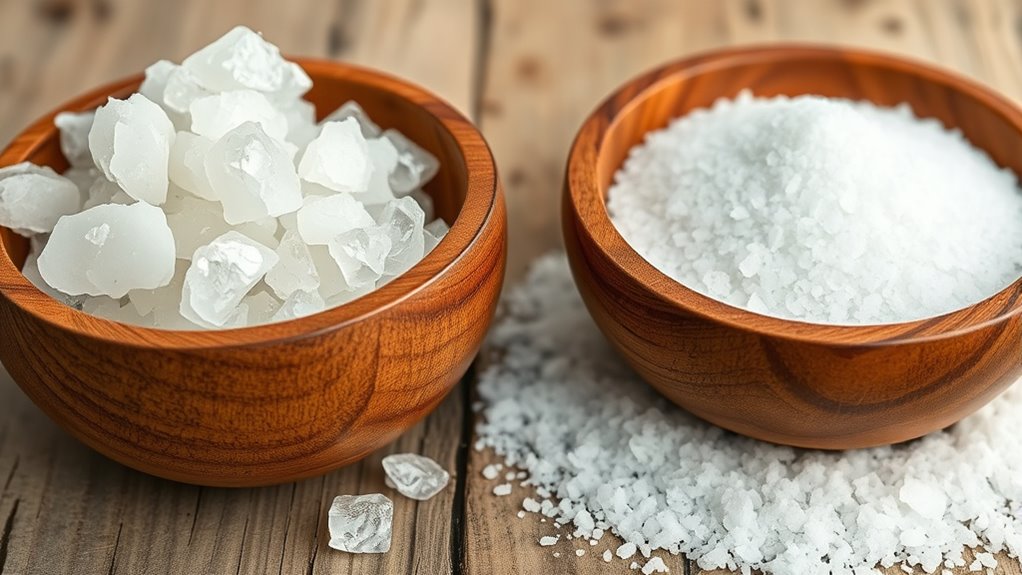
Kosher salt has larger, flakier crystals that are lightweight and easy to pinch.
While regular table salt has fine, dense, cube-shaped grains that dissolve quickly.
You’ll find kosher salt contains no additives, making it great for seasoning and curing.
Whereas table salt often includes iodine and anti-caking agents for baking and precise measurements.
Knowing these differences helps you pick the right salt for your cooking style, and there’s more to learn about when and how to use each type effectively.
Key Takeaways
- Kosher salt has larger, coarser, and flaky crystals, while regular table salt has fine, uniform, cube-shaped grains. It’s quite easy to spot the difference just by looking at them.
- Table salt contains iodine and anti-caking agents, whereas kosher salt is typically pure and additive-free. So, if you want something more natural, kosher salt is usually the way to go.
- Table salt dissolves quickly, making it ideal for baking. On the other hand, kosher salt dissolves slower, which makes it better for seasoning and curing.
- Kosher salt is less dense, so volume measurements differ. This means you’ll need to adjust the quantity when substituting one for the other.
- Kosher salt is preferred for manual seasoning and finishing dishes. Meanwhile, table salt suits recipes that require precise salt distribution.
How Is Kosher Salt Different From Table Salt?
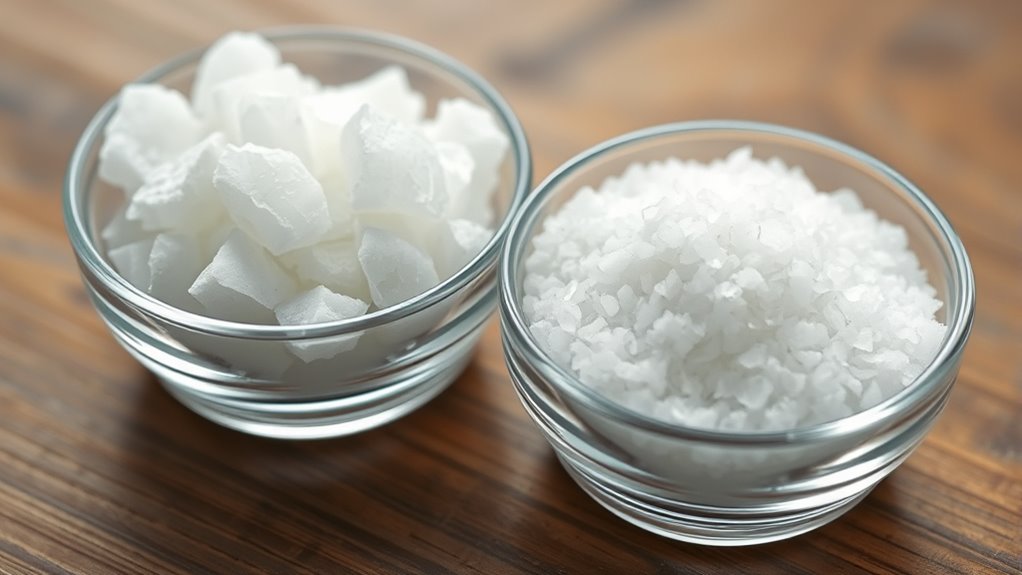
Although both kosher salt and table salt serve the same basic purpose, you’ll notice they differ considerably in texture and composition. Kosher salt features larger, coarser, and irregular crystal size with a flaky grain texture, making it lighter and easier to pinch or sprinkle by hand.
Kosher salt’s coarse, flaky crystals make it lighter and easier to sprinkle than fine-grained table salt.
In contrast, table salt has fine, uniform grains that are denser and more compact due to smaller, cube-shaped crystals. This difference in density affects how much salt you use by volume.
Kosher salt usually contains no additives, so it’s free from iodine and anti-caking agents commonly added to table salt. Because of its purity and texture, kosher salt is often favored as cooking salt for seasoning and curing.
Table salt, with its smaller crystals and added minerals, dissolves quickly, making it ideal for baking and recipes requiring rapid incorporation. Understanding these differences helps you choose the best salt for your culinary needs.
When and How Should You Choose and Use Kosher Vs. Table Salt?
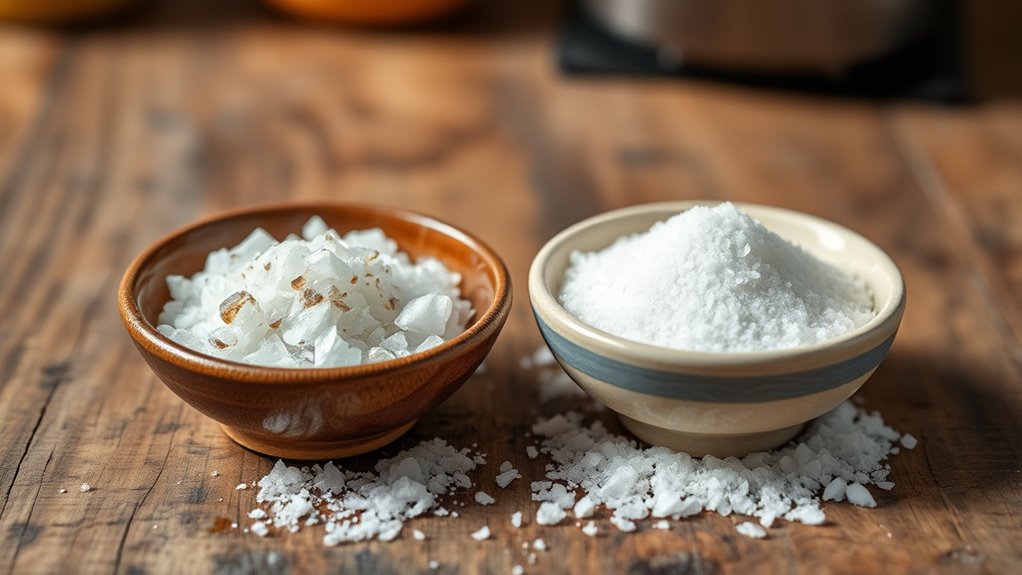
Knowing the differences between kosher and table salt helps you decide when to use each type in your cooking. Kosher salt’s larger grain size and coarse texture give you better control during seasoning and finishing.
Table salt’s fine grains dissolve quickly, making it ideal for baking and recipes requiring even salt distribution.
When choosing or substituting salts, keep these tips in mind:
- Use kosher salt for manual seasoning, dry brining, and finishing dishes to enjoy its texture.
- Choose table salt for baking or any cooking where salt must dissolve evenly.
- Adjust quantities when substituting because kosher salt is less dense than table salt by volume.
- Avoid using kosher salt in recipes needing precise salt dissolution.
- Reserve specialty salts for finishing to enhance texture and presentation.
Frequently Asked Questions
Is Kosher Salt Healthier Than Regular Salt?
Kosher salt isn’t necessarily healthier than regular salt since both affect your sodium intake. You might prefer kosher salt for fewer additives, but iodized regular salt gives you essential iodine, important for your thyroid health.
Why Use Kosher Salt Instead of Regular Salt?
You’ll find kosher salt feels like grains of sand slipping through your fingers, giving you precise control and a cleaner taste.
It lets you season confidently, avoiding over-salting while enhancing your dish’s natural flavors.
Can You Substitute Regular Salt for Kosher Salt?
Yes, you can substitute regular salt for kosher salt, but you’ll want to use less—about two-thirds the amount—since regular salt is finer and more concentrated.
Measuring by weight helps you get the seasoning just right. It’s a simple trick that makes a big difference in your cooking!
Is Pink Himalayan Salt Kosher?
Yes, pink Himalayan salt can be kosher, but you’ll need to check for reliable kosher certification.
Without it, you can’t be sure, since some varieties contain additives that might not meet kosher standards.
Conclusion
Choosing between kosher salt and table salt is like picking the right tool for a job—you want the one that fits your recipe perfectly. Kosher salt’s coarse texture makes it easy to pinch and sprinkle, giving you more control. Meanwhile, table salt dissolves quickly for even seasoning.
Knowing when to use each lets you reveal the full flavor potential of your dishes. Kosher salt is great for seasoning meats and adding texture, while regular table salt works well in baking and recipes needing precise measurements. So, trust your taste buds and salt confidently! Understanding the difference between kosher salt and regular salt helps you enhance your cooking with the right flavor and texture every time.