
Does Putting Salt on a Canker Sore Help?
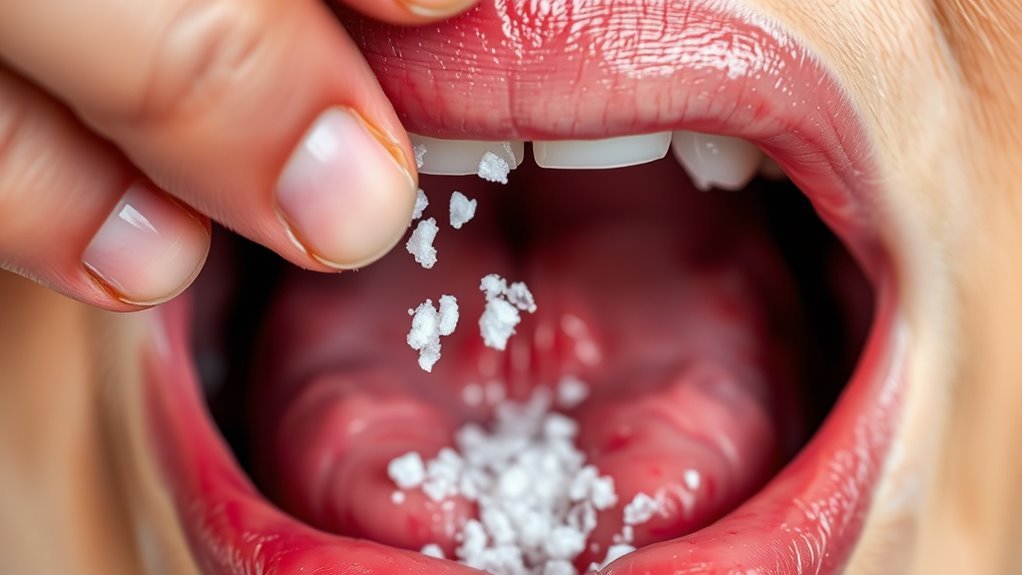
Putting salt directly on a canker sore won’t help; in fact, it causes intense burning and makes the sore worse. Salt’s abrasive crystals irritate delicate tissue, drawing water out and triggering more inflammation. This slows healing and increases pain, making the sore feel even more uncomfortable.
Instead, you can use a salt water rinse, which gently cleans and soothes the area without causing damage. It’s a much safer way to ease your discomfort and support faster recovery.
If you want to find relief from canker sores, there are better methods than putting salt right on the sore. You can try other home remedies or consult a healthcare professional for advice.
Key Takeaways
- Applying salt directly on a canker sore causes intense burning and tissue irritation. Salt crystals scrape delicate tissue, increasing pain and inflammation.
- Using salt this way can actually make the sore worse and slow down healing. The salt’s osmotic effect aggravates the ulcer and delays recovery.
- Instead of putting salt right on the sore, rinsing your mouth with salt water is a better idea. Salt water rinses help soothe pain and promote healing safely.
Why Putting Salt Directly on a Canker Sore Hurts Your Mouth

Although you might think applying salt to a canker sore will help, it actually causes intense burning because salt irritates the sore’s sensitive tissue. When you put salt directly on a canker sore, its abrasive crystals scrape the delicate tissue, increasing discomfort rather than easing it.
Salt’s osmotic properties draw water out of the cells around the sore, worsening pain and creating a sharp burning sensation that can last several minutes. This irritation triggers inflammation, which slows down your body’s healing process.
Salt draws water from sore cells, intensifying pain and inflammation, which delays healing.
Instead of soothing the sore, salt aggravates it, making the pain more intense and prolonging delayed healing. You might feel tempted to use salt as a quick fix, but it actually irritates the ulcer further.
Direct salt application turns a manageable canker sore into a more painful, inflamed wound. So, it’s best to avoid putting salt straight on your sore if you want to reduce pain and promote recovery.
How to Use Salt Water Rinses to Soothe and Heal Canker Sores Safely
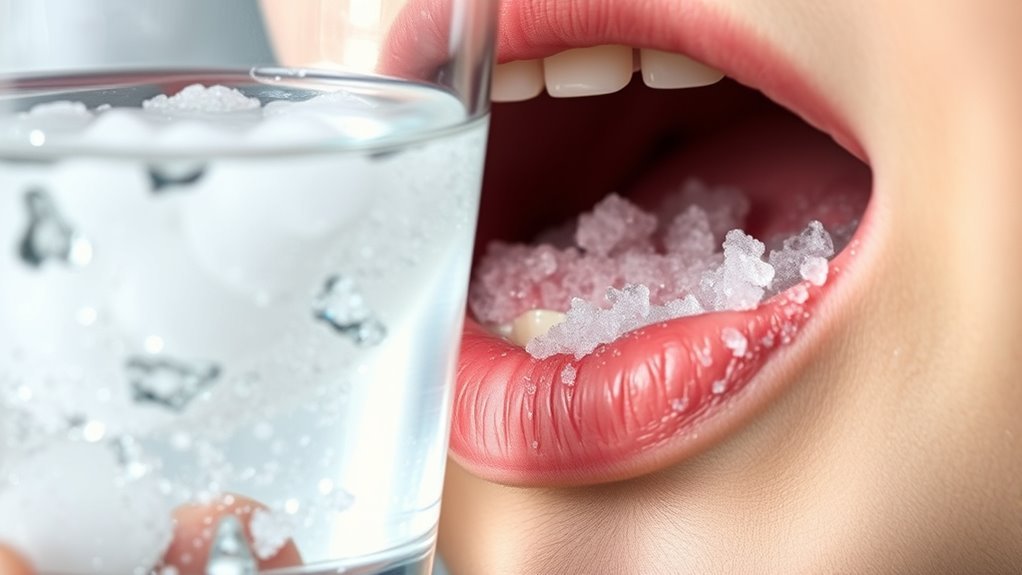
Instead of applying salt directly on a canker sore, you can use salt water rinses to soothe the pain and promote healing safely. A salt water rinse helps reduce inflammation and bacterial growth, creating an ideal environment to promote healing and support oral health.
Here’s how to use this effective home remedy: Mix 1/2 teaspoon of salt in a cup of warm water. Swish the mouth rinse gently for 15-30 seconds to soothe canker sores.
Repeat several times daily to cleanse the sore and reduce infection risk. Just be sure to avoid directly applying salt—that can cause pain and tissue irritation.
If you stick with it, consistent use offers pain relief and helps the sore heal faster. Using salt water rinses regularly is a simple, natural way to manage discomfort and encourage recovery without harsh chemicals or medications.
Frequently Asked Questions
What Gets Rid of Canker Sores Fast?
You get rid of canker sores fast by rinsing with warm salt water several times daily. This reduces bacteria and inflammation, speeding healing.
Just be sure to avoid direct salt application, it can sting a lot. Also, consider over-the-counter gels to ease pain and protect the sore.
What Worsens Canker Sores?
Think of canker sores like fragile glass—sharp foods, aggressive brushing, stress, and rough dental appliances can shatter your healing process. Avoid acidic, spicy bites, harsh mouthwashes, and trauma to keep pain from worsening and speed recovery.
It’s all about being gentle with your mouth. Don’t worry, with a bit of care, those sores will heal up faster than you think!
How to Tell if a Canker Sore Is Healing?
You’ll know your canker sore is healing when the pain lessens, redness fades, and the sore shrinks. New tissue forms around the edges, and the ulcer starts closing.
Usually, it disappears completely within one to two weeks. It’s a good sign that your mouth is on the mend! Just keep an eye on it, and things should keep improving.
What Is the Fastest Way to Heal a Mouth Ulcer?
The fastest way to heal a mouth ulcer is to rinse your mouth with warm saltwater several times daily. This helps clean the ulcer and reduce irritation.
Also, try to avoid foods that can irritate your mouth, like spicy or acidic stuff. Keeping good oral hygiene is key too.
You might want to consider over-the-counter treatments. They can help reduce pain and speed up the healing process effectively.
Conclusion
Putting salt directly on a canker sore is like pouring hot lava on a small fire—it only makes the pain worse. Instead, use salt water rinses to gently soothe and heal your mouth without causing extra sting.
By rinsing, you create a calming wave that cleans and protects, helping your sore recover faster. So, skip the harsh salt sprinkle and let the gentle rinse be your secret weapon for comfort and healing.
Using salt water rinses is a simple, effective way to ease canker sore pain and speed up healing. It’s much gentler than applying salt directly, which can irritate and worsen the sore. If you want relief and faster recovery, stick to salt water rinses as your go-to remedy for canker sore care.