
Is Canning Salt or Kosher Salt?
You’ll want canning salt for pickling because its fine, uniform grains dissolve quickly. This creates a clear, consistent brine that’s essential for food safety. Canning salt is specifically designed to avoid additives that might cloud your brine or affect flavor.
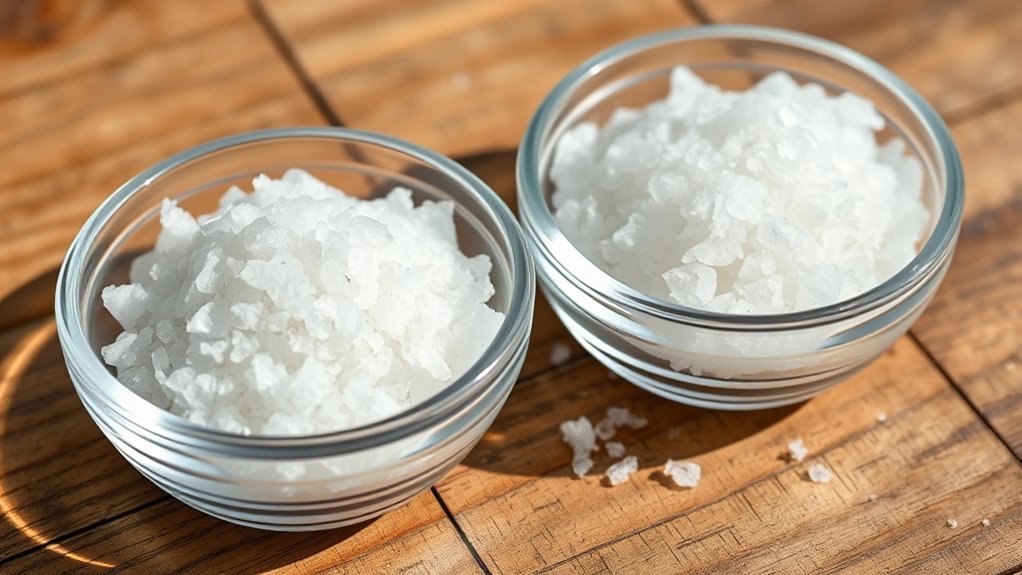
Kosher salt, on the other hand, has a coarse texture. It’s better suited for seasoning meats and vegetables because it offers more control and clumps less.
If you ever need to substitute kosher salt in pickling, just be sure to measure carefully by weight. That way, you maintain the right saltiness without risking your recipe.
Keep exploring these differences to see how they impact your cooking and preserving. Understanding when to use canning salt versus kosher salt can really elevate your kitchen skills!
Key Takeaways
- Canning salt has fine, uniform grains that are perfect for quick dissolution in brines and pickling. It really helps make sure everything dissolves evenly.
- Kosher salt, on the other hand, has coarse, variable grains. This makes it great for seasoning because you get better control when pinching it.
- One big plus for canning salt is that it creates clear, consistent brines without any cloudiness. That’s super important for safe pickling.
- Kosher salt dissolves more slowly, so sometimes you might need to crush it up to use it effectively in brines. It’s not quite as straightforward as canning salt here.
- If you’re swapping kosher salt for canning salt, measure by weight, not volume. You’ll also want to increase the amount by about 25% to get the same saltiness.
How Canning Salt and Kosher Salt Differ: Texture, Flavor, and Uses
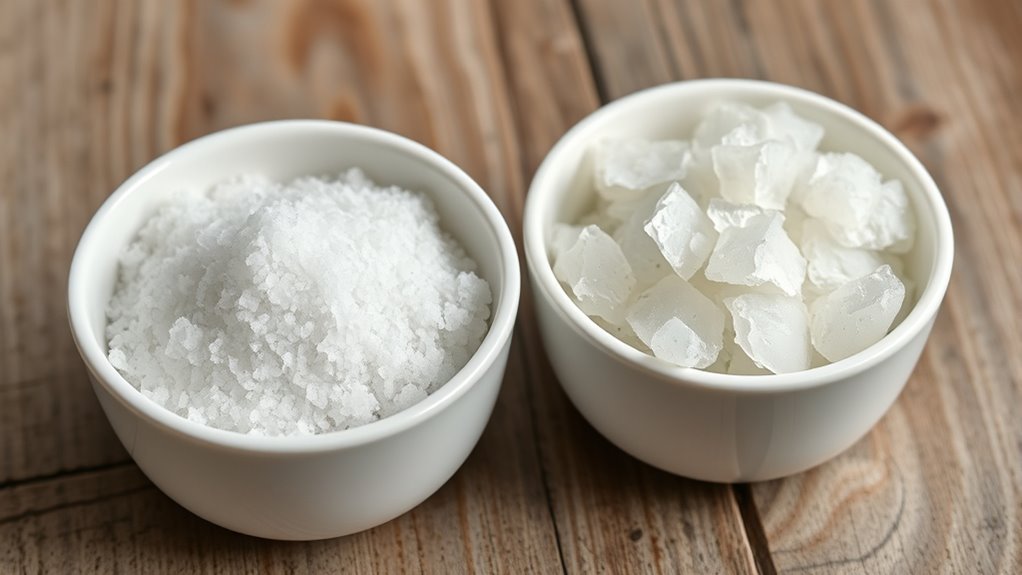
Although both canning salt and kosher salt are essential in the kitchen, they differ markedly in texture, flavor, and uses. You’ll notice canning salt has a fine salt grain size, similar to granulated sugar, which helps it dissolve quickly and evenly in brine without clumping.
Canning and kosher salts differ greatly in texture, flavor, and culinary uses.
This texture makes it ideal for pickling and brine solutions because it produces a clear brine. On the other hand, kosher salt features coarse salt grains that dissolve more slowly, giving you better control when seasoning meats and vegetables.
Because of its coarse texture, kosher salt doesn’t clump as easily, making it easier to pinch and spread. When considering substitution, remember kosher salt is less dense by volume, so you’ll need about twice as much to match the saltiness of fine canning salt.
Understanding these differences in texture and dissolution helps you choose the right salt for your cooking needs.
Tips for Safely Substituting Kosher Salt for Canning Salt in Pickling
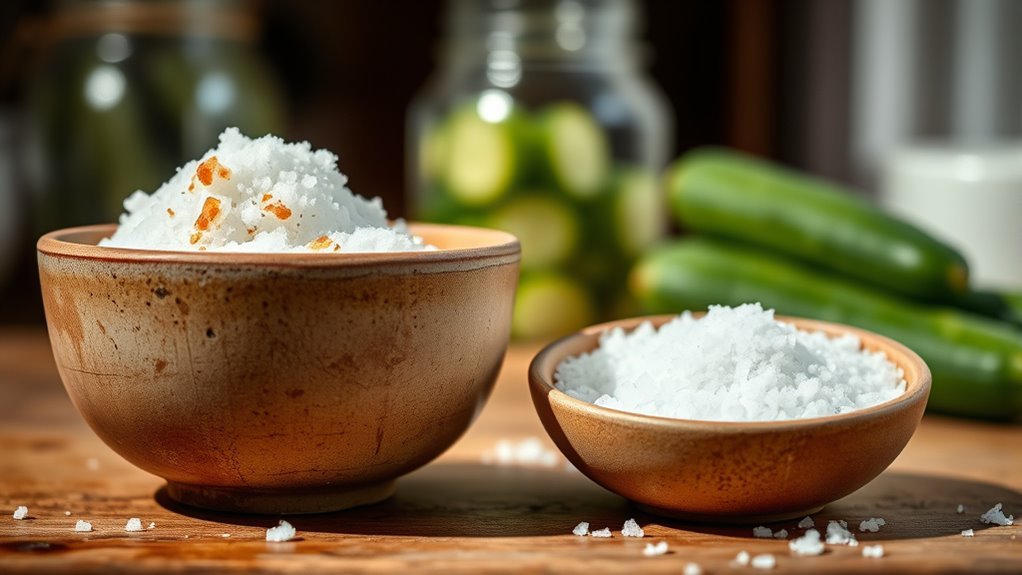
When you substitute kosher salt for canning salt in pickling, measuring by weight is essential to maintain the right saltiness. You’ll want to increase the kosher salt amount by about 25% since its coarser grains pack less densely.
Always choose kosher salt without anti-caking agents. This helps keep your brine clear and guarantees food safety.
Use a kitchen scale for precise salt measurement—volume can be misleading because of varying grain size. If your kosher salt is coarse, consider crushing it to help it dissolve fully in the brine.
Make sure to follow recipe adjustment guidelines carefully so you keep your pickling quality and flavor just right.
| Aspect | Canning Salt | Kosher Salt |
|---|---|---|
| Grain Size | Fine, uniform | Coarse, variable |
| Anti-caking Agents | None | Often present, avoid for pickling |
| Measurement | By volume or weight | Best by weight with 25% increase |
These tips help you safely substitute kosher salt without compromising your pickling success.
Frequently Asked Questions
Can I Use Kosher Salt in Place of Canning Salt?
You can use kosher salt instead of canning salt if you weigh it and increase the amount by about 25%.
Just make sure it’s additive-free, and give it extra time to dissolve fully in your recipe.
It works just fine, but a little extra patience helps!
Is Morton Kosher Salt the Same as Canning Salt?
Think of Morton Kosher Salt and canning salt as different tools in your kitchen toolbox. They’re not the same—Morton Kosher Salt has additives and larger grains, so it won’t work perfectly for canning recipes without adjustments.
You might want to stick with canning salt when you’re preserving food. It’s made specifically for that purpose, with no additives that could cloud your brine or affect flavor. Just a heads up!
Why Do Non-Jews Use Kosher Salt?
You use kosher salt because its large grains are easy to handle and measure by hand. It dissolves slowly, giving you better seasoning control.
Plus, it’s pure, additive-free, affordable, and widely available in stores. Makes it a go-to choice for lots of cooks!
What’s so Special About Canning Salt?
Canning salt’s special because it’s pure, finely ground, and free from additives. This means it dissolves quickly and keeps your brine clear.
You won’t get cloudiness or discoloration, making your preserved foods look perfect every time. It’s really the best choice for canning!
Conclusion
When you’re choosing between canning salt and kosher salt, remember they’re not quite interchangeable—like trying to fit a square peg in a round hole. Canning salt’s fine texture dissolves perfectly in brines, while kosher salt’s larger flakes may leave you with uneven seasoning.
But if you substitute kosher salt, just adjust the amount carefully to keep your pickles safe and tasty. It’s all about getting the balance right so your preserves come out delicious every time.
With these tips, you’ll preserve flavors like a pro every time! Understanding the difference between canning salt and kosher salt is key to successful pickling and canning. Use canning salt for its pure, fine texture that dissolves smoothly in brines, and be cautious when using kosher salt to maintain food safety and flavor. This way, your homemade preserves will stay safe, tasty, and perfectly seasoned.