
7 Key Differences Between Garlic Powder and Garlic Salt for Cooking
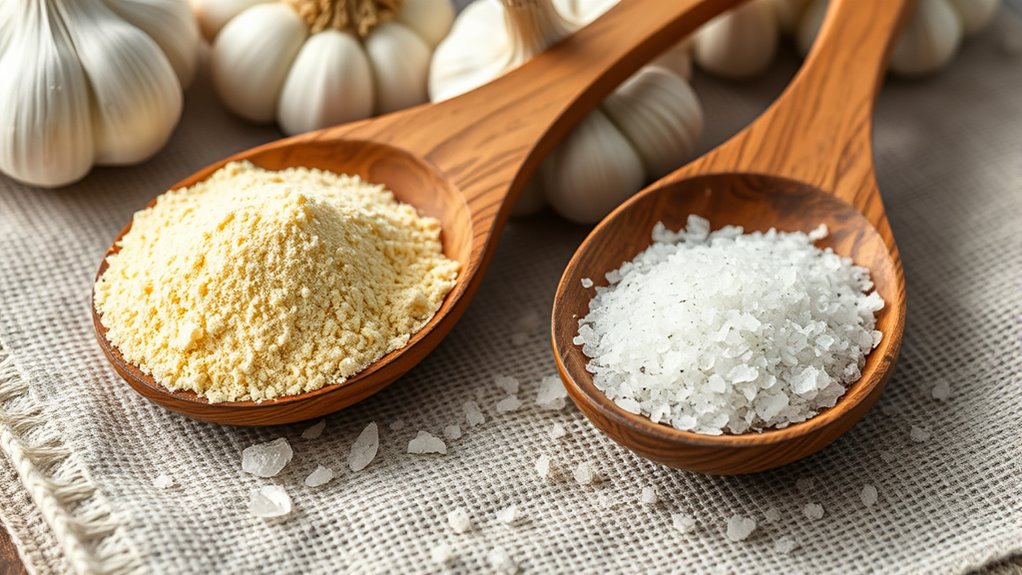
Garlic powder is pure dehydrated garlic, giving you bold, concentrated flavor without added salt. On the other hand, garlic salt blends garlic powder with salt (usually in a 3:1 ratio), which softens the garlic’s punch a bit.
Use garlic powder when you want to control sodium levels and keep that strong garlic intensity. Garlic salt is great when you’re after combined seasoning in one go.
When substituting one for the other, just remember to reduce other salt in your recipe to avoid over-salting.
Both garlic powder and garlic salt need proper storage to maintain their freshness.
Keep exploring to discover precise seasoning tips and how to get the best flavor control in your cooking!
Key Takeaways
- Garlic powder is pure dehydrated garlic, while garlic salt is a mixture of garlic powder and salt, usually in a 3:1 ratio.
- Garlic powder delivers a stronger, more concentrated garlic flavor without adding salt. Garlic salt, on the other hand, offers a milder garlic flavor along with saltiness.
- Use garlic powder when you want precise control over salt levels. Garlic salt makes seasoning simpler but can sometimes lead to over-salting your dishes.
- Garlic powder dissolves easily in sauces and marinades. Garlic salt works best for seasoning meats, vegetables, and snacks like popcorn.
- Both should be stored airtight in a cool, dry place to maintain their flavor. That said, garlic powder gives you more control over sodium in your recipes.
What Is Garlic Powder and How Is It Made?
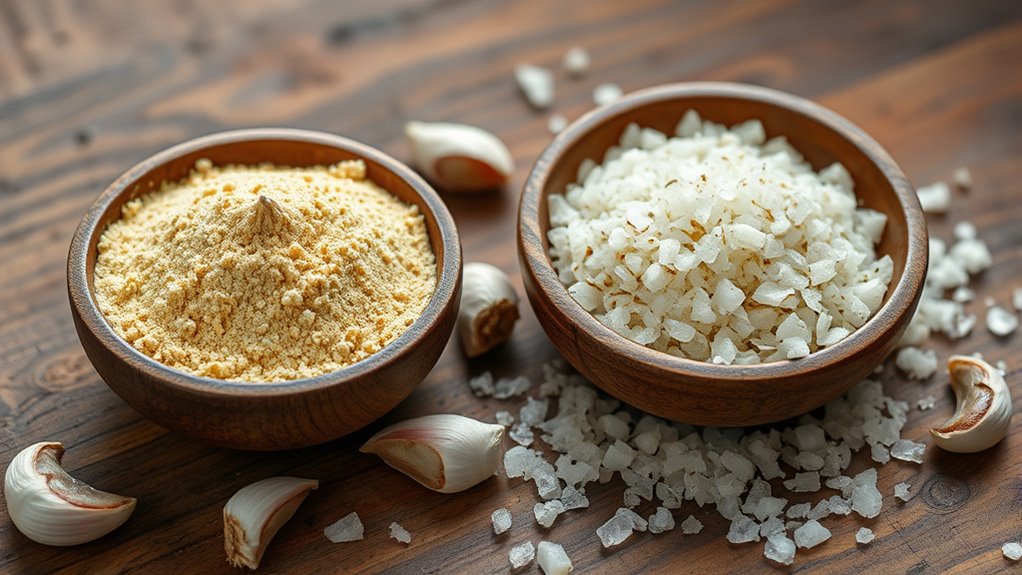
Garlic powder is made by drying fresh garlic cloves using air, oven, or freeze-drying methods, then grinding them into a fine powder. This drying process removes moisture while preserving essential oils and flavor compounds, which gives garlic powder its concentrated flavor profile.
When you use dried garlic in powder form, you get sweet, pungent, and sometimes slightly bitter notes that fresh garlic doesn’t always provide. Because the moisture is removed, garlic powder has an impressive shelf life of up to two years, making it a convenient pantry staple.
The fine texture of garlic powder allows it to dissolve easily into your dishes, enhancing flavor without the texture of fresh garlic. To get the best flavor, look for garlic powder made from organic, pesticide-free garlic.
How Is Garlic Salt Different From Garlic Powder?
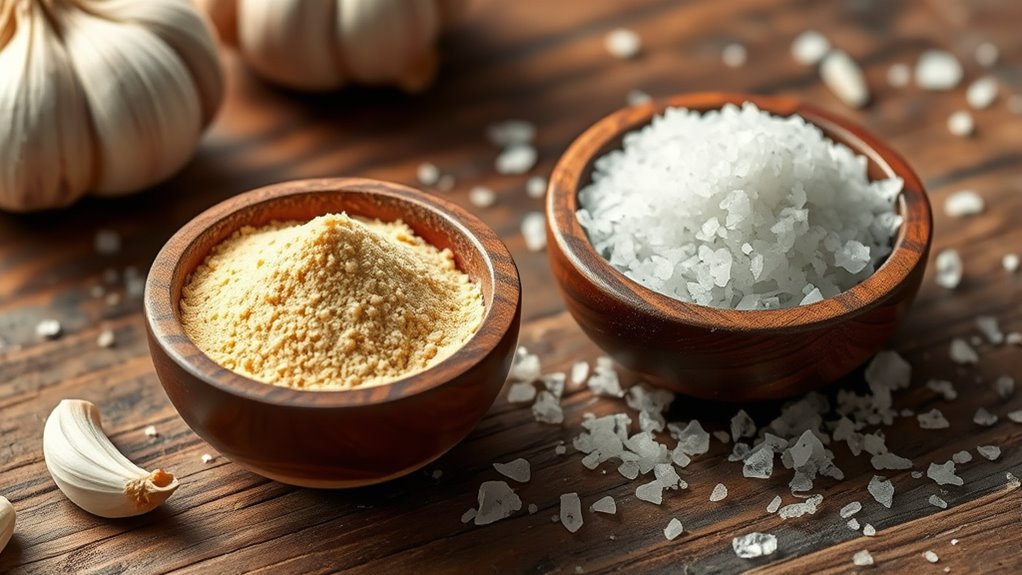
How exactly does garlic salt differ from garlic powder? The key lies in their ingredients. Garlic powder is pure dehydrated garlic, offering a concentrated, pungent garlic flavor without any salt.
Garlic salt, on the other hand, is a blend of garlic powder and salt, usually in a 3:1 ratio. This combination gives garlic salt a milder garlic flavor paired with added saltiness, making it a seasoning that impacts both taste and texture.
Garlic salt is slightly coarser due to the salt content, while garlic powder remains fine and smooth. Because of the salt, garlic salt is best when you want a seasoning that delivers both garlic flavor and saltiness in one step.
In contrast, garlic powder lets you control the salt level separately, making it more versatile if you want pure garlic flavor without altering salt content in your dish. Both have their place, but their differences center on the inclusion of salt and how it affects flavor and texture.
When Should You Use Garlic Powder or Garlic Salt?
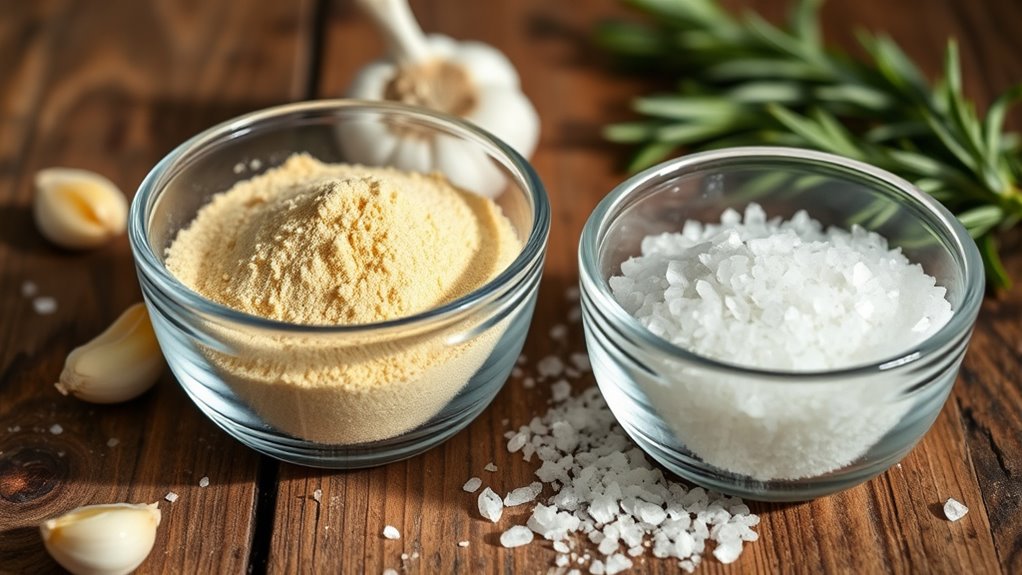
Although both garlic powder and garlic salt add flavor, you’ll want to choose based on the role they play in your dish. Use garlic powder when you need pure garlic flavor without increasing salt content. This gives you better flavor control.
It dissolves easily in sauces, marinades, and dips, making it ideal for recipes requiring even seasoning. Garlic powder is perfect when you want to add garlic without affecting the overall saltiness.
On the other hand, garlic salt works well when you want to combine garlic flavor with saltiness in one seasoning. It’s great for seasoning meats, vegetables, or popcorn.
But you need to adjust other salt in the recipe to avoid over-salting. Use garlic salt sparingly, especially in dishes already containing salt.
How to Substitute Garlic Salt for Garlic Powder Without Over-Salting
If you want to swap garlic salt for garlic powder, you’ll need to modify the quantities carefully to avoid making your dish too salty. When substituting, use about 1/4 teaspoon of garlic salt for every 1/2 teaspoon of garlic powder to keep the garlic flavor balanced.
Since garlic salt contains salt, reduce or eliminate added salt in your recipe to prevent over-salting. Make seasoning adjustments gradually—start with less garlic salt and taste as you go, especially if your dish already includes salty ingredients.
This approach ensures you control the saltiness without sacrificing flavor. Remember, garlic powder is pure garlic flavor, while garlic salt adds sodium, so always account for this when substituting.
How Garlic Powder Flavor and Salt Content Affect Your Cooking
When you choose between garlic powder and garlic salt, you’ll notice that garlic powder delivers a strong, concentrated garlic flavor without adding any salt. Garlic salt, on the other hand, blends that garlic flavor with salt, which softens the garlic’s intensity.
This difference in flavor and salt content really changes how your cooking turns out. Garlic powder is perfect when you want a bold, pure garlic taste without bumping up the sodium. It lets you control the saltiness more precisely.
Garlic salt adds both garlic flavor and salt, which can make seasoning simpler. But you have to be careful not to overdo it, or your dish might end up too salty.
Since garlic salt contains salt, you’ll need to tweak other salty ingredients in your recipe to keep things balanced. Using garlic salt can mellow the garlic’s punch, giving you a more rounded flavor.
Knowing how garlic powder and garlic salt affect both flavor and salt content helps you season your dishes better. That way, you get the taste you want every time.
Why Garlic Quality and Salt Type Matter for Taste
Because the quality of garlic and the type of salt used can dramatically alter flavor, paying attention to these details is key for getting the best taste from garlic powder or garlic salt. When you choose garlic powder, opting for high garlic quality—ideally made from fresh garlic—ensures a more vibrant, spicy seasoning that really stands out.
Similarly, the salt type in garlic salt matters a lot; pure sea salt adds brightness and mineral richness that processed table salt can’t match. These differences affect the seasoning’s aroma, pungency, and overall depth.
Using premium ingredients gives your dishes a balanced, full-bodied flavor profile, while lower-quality garlic or salt often results in a flat, dull taste. So, to elevate your cooking, always consider the source of your garlic and salt.
The freshness and purity directly impact the punch and complexity of your seasoning, transforming simple dishes into flavorful delights.
How to Store and Use Garlic Powder and Garlic Salt
You’ll want to store garlic powder and garlic salt in airtight containers away from heat and moisture to keep their flavors fresh.
Be careful when measuring, since both are potent and can easily overpower your dish.
Using them within two years guarantees you get the best taste every time.
Proper Storage Tips
Storing garlic powder and garlic salt properly can extend their freshness and flavor for up to two years. To guarantee flavor preservation, keep both seasonings in airtight containers. This prevents moisture absorption and protects them from clumping.
Always store these containers in a cool, dry, dark place away from heat sources and direct sunlight. Heat and light can really degrade their flavor over time. Also, avoid placing garlic seasonings near strong spices or aromatic products to prevent flavor cross-contamination.
When using garlic powder or garlic salt, always use clean, dry utensils. This helps avoid introducing moisture or contaminants that could lead to spoilage. And don’t forget to regularly check for stale or off odors before you use them.
Following these proper storage tips will help you maintain the best quality and taste in your cooking. It’s a simple way to keep your seasonings fresh and flavorful for as long as possible.
Usage Recommendations
While garlic powder and garlic salt are staples in many kitchens, using and storing them correctly guarantees you get the best flavor every time. For proper storage, keep both garlic powder and garlic salt in cool, dry, airtight containers away from direct sunlight and moisture.
Store them at room temperature to prevent clumping and flavor loss. When using garlic powder, check for aroma and texture before adding it to dishes, and try to use it within two years for peak freshness.
With garlic salt, adjust the amount carefully since it contains salt to avoid over-seasoning. Always reseal containers tightly after use to maintain the seasoning’s potency.
Following these usage recommendations guarantees your garlic powder and garlic salt stay flavorful and effective in all your cooking.
Frequently Asked Questions
Is It Better to Cook With Garlic Powder or Garlic Salt?
It’s better to cook with garlic powder when you want full control over salt levels and consistent garlic flavor.
Use garlic salt only if you want to add salt and garlic simultaneously, but watch your seasoning carefully.
That way, you won’t accidentally overdo the salt. Just a little heads-up!
What Happens if I Use Garlic Powder Instead of Garlic Salt?
If you use garlic powder instead of garlic salt, your dish might lack saltiness since garlic salt is typically 3:1 salt to garlic.
You’ll need to add extra salt to keep flavors balanced and tasty.
It’s pretty easy to fix though—just sprinkle in a bit more salt until it tastes right.
How Much Garlic Powder Equals 1 Tsp Garlic Salt?
You’ll need about 1/3 teaspoon of garlic powder to equal 1 teaspoon of garlic salt.
Remember to reduce other salt in your recipe since garlic salt contains salt itself. Always taste and adjust seasoning as you cook.
It’s all about finding that perfect balance, so don’t be afraid to tweak it as you go!
Is Garlic Salt Healthier Than Garlic Powder?
No, garlic salt isn’t healthier than garlic powder. You’ll get extra sodium from garlic salt, which can raise blood pressure.
If you’re watching your salt intake, stick with garlic powder for flavor without the added salt. It’s a smarter choice for keeping things tasty and healthy.
Conclusion
Think of garlic powder and garlic salt as two tools in your kitchen toolbox—each has its unique purpose. Garlic powder brings pure, punchy flavor, while garlic salt adds seasoning with a salty twist.
Knowing when and how to use them helps you avoid over-salting and enhances your dishes. Keep them fresh and stored properly, and you’ll always have the perfect seasoning duo ready to elevate your cooking game.
Both garlic powder and garlic salt are essential for adding depth and flavor to your meals. Just remember, garlic powder offers concentrated garlic taste without the extra salt, making it great for controlling sodium levels. Garlic salt, on the other hand, combines garlic flavor with salt, perfect when you want to season and flavor at the same time.
By understanding the key differences between garlic powder and garlic salt, you can use each seasoning wisely to boost your recipes. With proper storage and the right choice, these garlic seasonings will become your kitchen staples, helping you create delicious meals every time!