
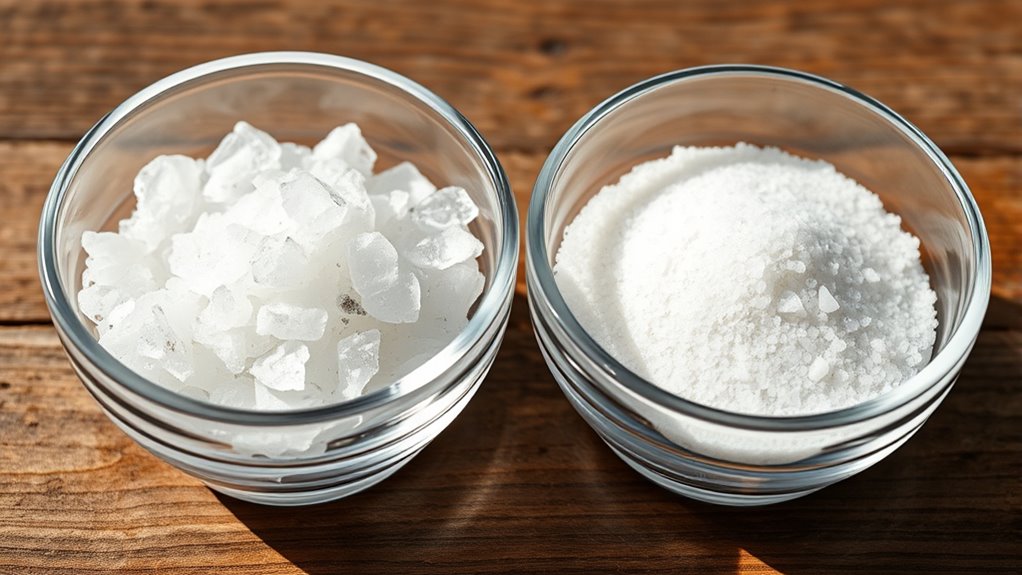
7 Key Differences: Is Kosher Salt the Same as Canning Salt?
Kosher salt and canning salt aren’t the same, especially when it comes to preserving foods. You should always use canning salt for canning because it’s pure and finely textured.
This means it dissolves quickly and doesn’t have any additives, so your brines stay clear and your measurements stay accurate.
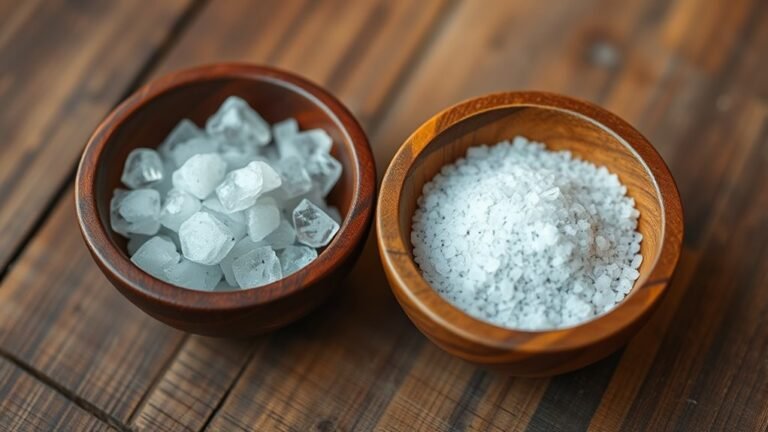
Kosher salt, on the other hand, has larger, irregular crystals. It may also contain anti-caking agents that can make your brine cloudy and even affect the flavor of your preserved foods.
If you ever need to substitute one for the other, be sure to measure by weight carefully to avoid any problems.
Choosing the right salt really matters when you want safe and consistent canning results.
Keep reading to learn more about why this simple swap can make a big difference in your food preservation.
Key Takeaways
- Canning salt is pure sodium chloride without any additives, while kosher salt often contains anti-caking agents and sometimes iodine.
- Canning salt has fine, uniform crystals that dissolve quickly. On the other hand, kosher salt has larger, irregular crystals that take longer to dissolve.
- Because of its quick dissolution and clarity, canning salt is ideal for pickling and preserving. Kosher salt, meanwhile, works better for seasoning and dry curing.
- When substituting kosher salt for canning salt, it’s important to measure by weight. This helps keep the recipe balanced and ensures safety.
- Table salt and kosher salt usually contain additives and are less refined. Canning salt is different because it produces clear, high-quality brines.
Canning Salt vs. Kosher Salt: Key Differences Explained
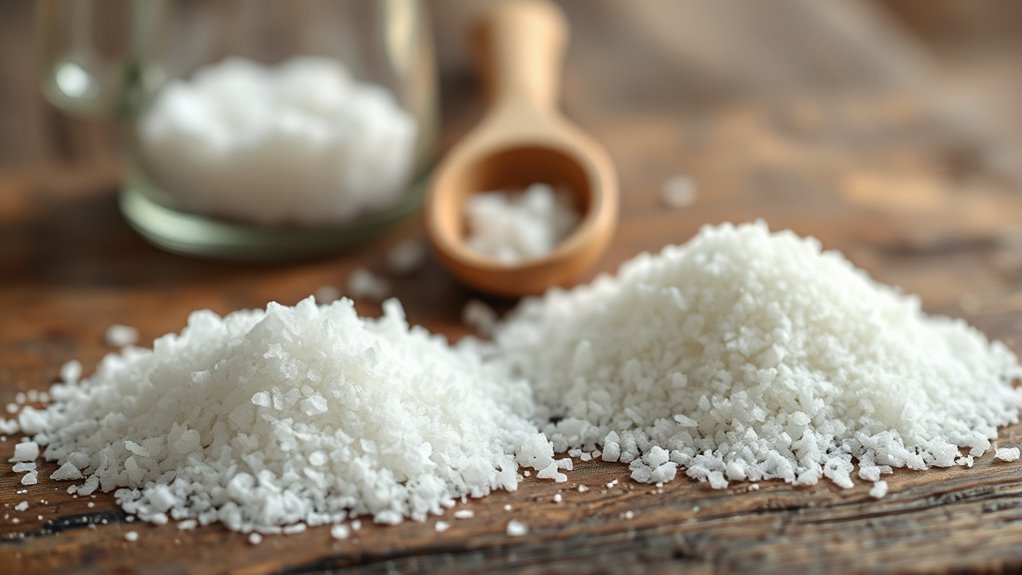
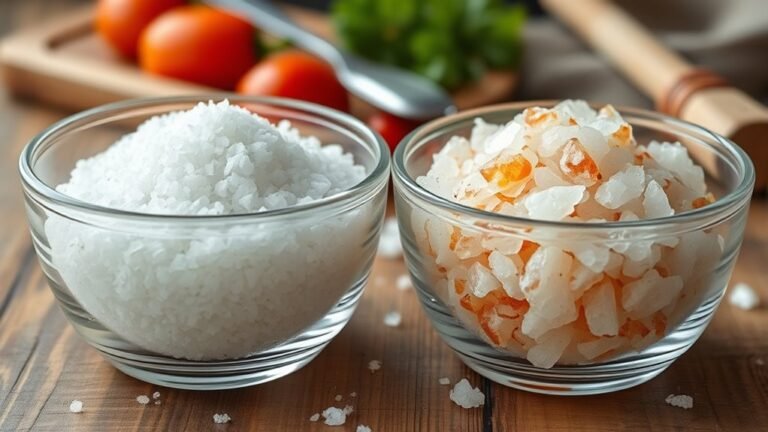
Although both kosher salt and canning salt serve as essential kitchen staples, they differ markedly in texture, usage, and measurement. You’ll notice that canning salt has fine, uniform granules and is typically free of additives, making it perfect for pickling and preserving.
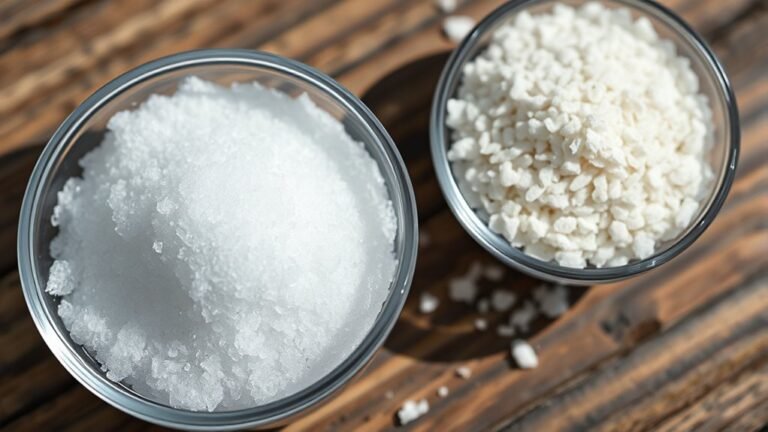
On the other hand, kosher salt features larger, irregular crystals and often contains anti-caking agents to keep it free-flowing. Because canning salt’s granules are smaller and more concentrated in sodium by volume, you need less if you’re substituting it for kosher salt.
Kosher salt has larger crystals and additives, while canning salt’s finer grains pack more sodium by volume.
Both salts dissolve during cooking, but kosher salt’s larger crystals take longer to break down. When measuring, a teaspoon of canning salt weighs about 3/4 ounce, while kosher salt weighs around 5/8 ounce.
These differences mean you can’t always swap them one-to-one without adjusting quantities, especially since additives in kosher salt might affect certain recipes where pure sodium content is critical.
How Salt Texture and Grain Size Affect Use and Measurement
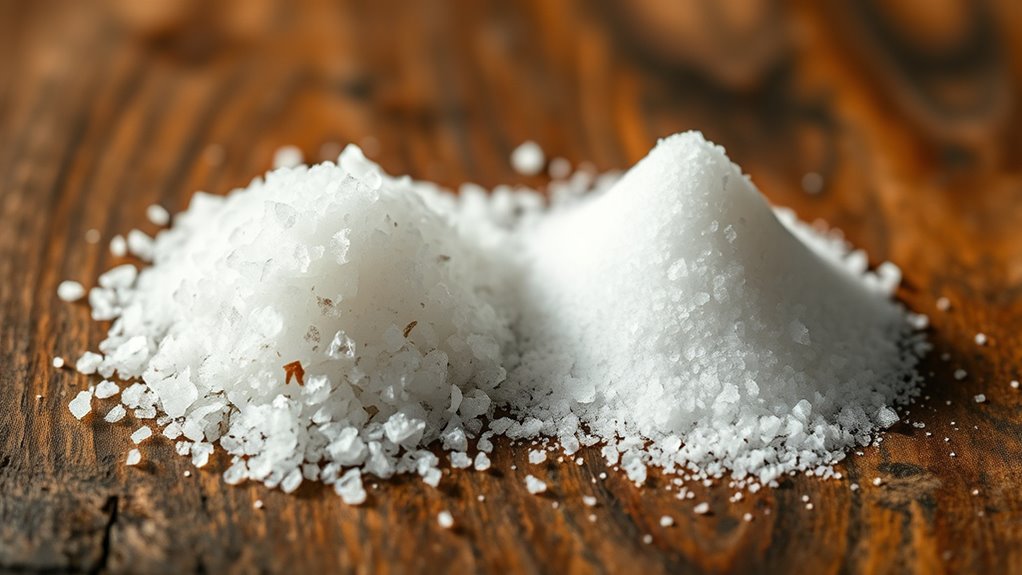
Because salt texture and grain size vary so much, they play a crucial role in how you use and measure different salts in cooking. Fine-grained canning salt dissolves quickly, making it perfect for recipes where precise measurement matters.
Kosher salt, with its coarse salt crystals, dissolves slower and offers a different handling experience.
Here’s how texture and grain size affect your cooking:
- Fine salt packs densely, so measuring by volume can lead to over-salting.
- Coarse salt’s irregular crystals make teaspoon measurements less accurate.
- The dissolving rate influences how salt seasons your dish during cooking or curing.
- For accuracy, weighing kosher salt is better than relying on volume measurement.
Understanding these differences helps you adjust your salt use to achieve the right flavor and texture every time. It’s all about knowing what kind of salt you’re working with and adapting accordingly.
How Additives Influence Canning and Kosher Salt Flavor
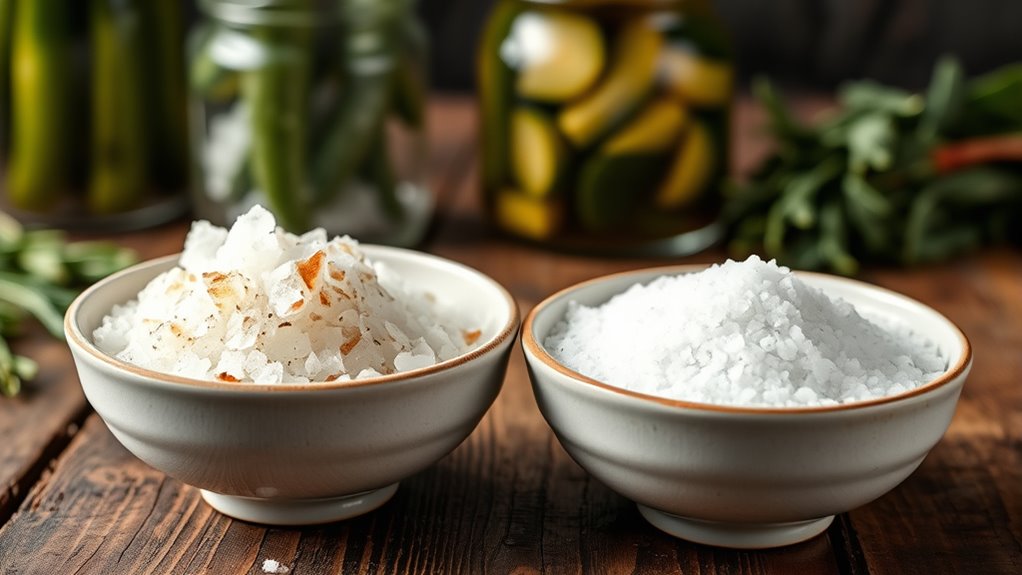
Grain size and texture aren’t the only factors that affect how salts perform in your recipes; additives play a significant role too. Additives like anti-caking agents found in kosher salt can impact the clarity and flavor of your preserved foods.
These agents, such as sodium ferrocyanide, sometimes cause cloudiness or discoloration in pickling solutions, which might alter the final appearance. Additionally, iodine, another common additive, can leave a metallic or bitter taste, changing the flavor profile of canned goods.
In contrast, canning salt is typically free of additives, ensuring a clear brine and preserving the true flavor and look of your preserved foods. If you want your home-canned products to taste clean and look crisp, choosing an additive-free salt like pure canning salt is essential.
This helps maintain both the clarity and flavor you expect from your carefully prepared preserved foods.
When to Use Canning Salt or Kosher Salt in Recipes
You’ll want to use canning salt when making clear brines for pickling or preserving because it dissolves quickly and contains no additives.
Kosher salt works best for seasoning and dry curing due to its larger crystals and texture. Just remember to adjust measurements by weight when swapping one for the other to keep your recipe balanced.
Best Uses for Canning
When should you choose canning salt over kosher salt in your recipes? Opt for canning salt when precise recipe measurements are essential, especially in pickling and canning. Its fine granules dissolve quickly, making it ideal for clear brine solutions and consistent salt distribution.
Use canning salt for:
- Making salt for canning to guarantee even preservation
- Preparing brine where clarity matters
- Pickling recipes requiring exact salt-to-liquid ratios
- Fermented foods where additives in other salts may affect texture
Since kosher salt crystals are larger and irregular, they can throw off volume measurements and cloud your brine. So, sticking to canning salt in these cases guarantees safer, tastier results every time.
When To Choose Kosher
Knowing when to choose kosher salt instead of canning salt can make a big difference in your cooking results. You’ll want to use kosher salt when seasoning or dry curing because its coarse grains give you better tactile control. It’s perfect for recipes where you need to feel the salt as you work, like in curing salt blends or dry brines.
On the other hand, avoid kosher salt for pickling since the larger crystals dissolve slowly. This can affect your brine’s clarity and consistency. For pickling or canning, it’s best to stick to canning salt because it dissolves quickly and doesn’t have additives that cloud the brine.
When substituting between salts, always measure by weight. This way, you keep the right salt concentration in your recipes and avoid any surprises.
How to Safely Substitute Kosher Salt for Canning Salt
Although kosher salt can replace canning salt, you need to measure it by weight rather than volume to maintain the correct salt concentration. Volume measurements can vary because kosher salt crystals are larger and coarser.
To safely substitute, follow these tips:
- Use a kitchen scale to weigh kosher salt, aiming for about 5/8 oz per teaspoon of canning salt.
- You can crush or pulse kosher salt in a food processor to get a finer texture that’s closer to canning salt.
- Also, check the kosher salt label to make sure it doesn’t contain anti-caking agents. Those might affect your preserved foods.
- Always match the weight of kosher salt to the recipe’s canning salt amount for consistent, safe results.
Common Salt Mistakes to Avoid in Pickling and Canning
Substituting kosher salt for canning salt requires careful attention to weight and texture, but that’s just one aspect of working with salt in pickling and canning.
A common mistake is using iodized salt or salts with anti-caking agents. These often cause cloudiness and discoloration in your brine, which can really impact the final product’s appearance.
Another frequent error is measuring salt by volume rather than weight. Since kosher salt has larger crystals, using a volume measure can lead to inaccurate salinity. That puts preservation and safety at risk.
Also, failing to dissolve coarse salts like kosher salt thoroughly can create cloudiness and uneven flavor in your canned goods.
To avoid these pitfalls, always follow the recipe’s recommended salt type—usually canning salt—and measure salt precisely by weight. This way, your pickled and canned foods stay safe, tasty, and visually appealing every time.
Understanding Canning Salt: What It Is and How It’s Made
When you choose canning salt, you’re getting pure, fine-grained salt without additives or anti-caking agents. It’s made by refining natural salt deposits to remove impurities and keep it clean and clear.
This simple composition guarantees your pickling and canning results stay crisp and bright. So, if you want the best outcome, canning salt is the way to go!
Pure Salt Composition
If you want a salt that dissolves quickly and keeps your brines crystal clear, canning salt fits the bill perfectly. Its pure salt composition centers on finely refined sodium chloride crystals, free from any additives that might interfere with preservation.
This guarantees your pickling liquid stays transparent and your food looks its best. Key points about canning salt’s pure composition include:
- Made of pure sodium chloride with no additives like iodine or anti-caking agents
- Fine, uniform crystals that speed up crystallization and dissolve quickly
- Highly refined to guarantee consistency in every batch
- Designed specifically to avoid cloudiness or residue in brines
This pure, additive-free nature makes canning salt ideal for home food preservation and pickling. It’s really the go-to choice when you want reliable results without any fuss.
Production And Refinement
Understanding the pure composition of canning salt helps explain how it’s produced and refined. Canning salt undergoes a thorough refinement process to remove impurities, resulting in a highly pure sodium chloride with no additives like iodine or anti-caking agents.
This absence guarantees your canned foods won’t develop cloudy brine. Unlike kosher salt, which has larger, irregular crystal size and is less refined, canning salt is fine-grained, making it dissolve quickly and evenly.
While table salt also goes through refinement, it usually contains iodine and anti-caking agents, which can affect the clarity and flavor of preserved foods. You’ll find that canning salt’s strict production standards prioritize purity and crystal uniformity.
That makes it ideal for pickling and preserving without compromising quality.
Frequently Asked Questions
Can I Substitute Kosher Salt for Canning Salt?
You can substitute kosher salt for canning salt, but you should weigh it to match the salt amount precisely. Using equal volume can reduce saltiness because kosher salt’s crystals are larger and less dense than canning salt.
Why Do Chefs Use Kosher Salt Instead of Sea Salt?
You use kosher salt because its coarse crystals give you better control when seasoning, letting you pinch and sprinkle evenly. It dissolves slowly, has no additives, and enhances flavor and texture in your cooking.
Plus, it’s easier to handle compared to finer salts. Chefs love that they can feel the amount they’re adding without overdoing it. It just makes cooking feel more intuitive and precise.
How Much Canning Salt Is Equivalent to 1 Cup of Kosher Salt?
You’ll need about 0.8 cups of canning salt to match 1 cup of kosher salt since canning salt is denser—around 6 ounces per cup compared to kosher salt’s 5 ounces.
When Not to Use Kosher Salt?
You shouldn’t use kosher salt when precise salt measurements matter, like in canning, pickling, or fermenting. Its coarse grains and additives can cause safety issues or affect flavor, texture, and appearance in those delicate processes.
It’s best to stick with finer salts that dissolve evenly and provide consistent results. That way, you keep your recipes safe and tasting just right!
Conclusion
So, you’re standing in the salt aisle, juggling kosher and canning salt like a confused chef on a cooking show. Remember, kosher salt’s flaky charm isn’t the same as the fine, additive-free grit canning salt boasts.
Using the wrong one? It’s like trying to hatch pickles with beach sand—messy and disappointing. Stick to the right salt, or risk your jars turning into science experiments instead of tasty treasures.
Salt smart, pickle proud! When it comes to canning, using kosher salt instead of canning salt can affect the texture and safety of your preserved foods. Canning salt dissolves evenly and contains no additives, making it perfect for pickling and preserving. So, always choose canning salt for your pickles and preserves to ensure the best results and avoid any unwanted surprises.