
How to Tell If Himalayan Pink Salt Is Sea Salt
You can tell if Himalayan pink salt is actually sea salt by checking its color and texture.
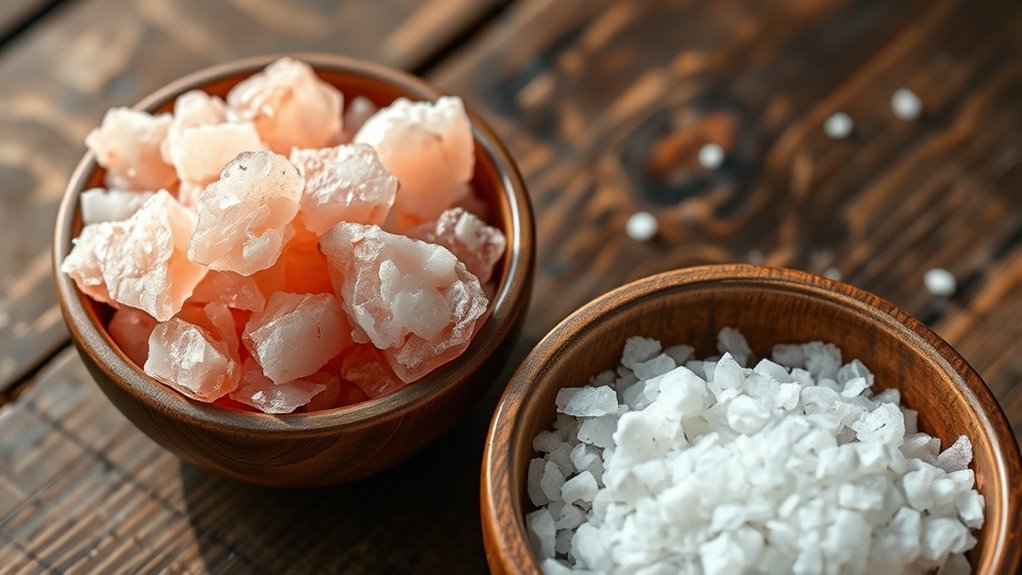
Genuine Himalayan salt has a consistent pink to reddish hue, thanks to minerals like iron oxide. On the other hand, sea salt is usually more translucent or unevenly colored.
Feel the grains—they should be coarse and rough, not fine or flaky.
Try dissolving it in water; real Himalayan salt dissolves quickly and leaves the water clear without any residue.
Keep exploring to uncover more ways to spot the difference. It’s pretty interesting once you know what to look for!
Key Takeaways
- Genuine Himalayan pink salt has a consistent pink to reddish color due to iron oxide, unlike more translucent sea salt.
- Himalayan salt grains are coarse, rough, and uneven, whereas sea salt is typically finer, smoother, or flaky.
- Authentic Himalayan salt dissolves quickly and completely, leaving clear water without sediment or residues.
- Cloudy water, slow dissolution, or visible specks after dissolving indicate the salt may be sea salt or adulterated.
- Simple water dissolution tests without special tools can help verify if the salt is genuine Himalayan pink salt.
You don’t need anything fancy to check it out. Just a little water and some patience will do the trick!
How to Identify Genuine Himalayan Pink Salt by Color and Texture
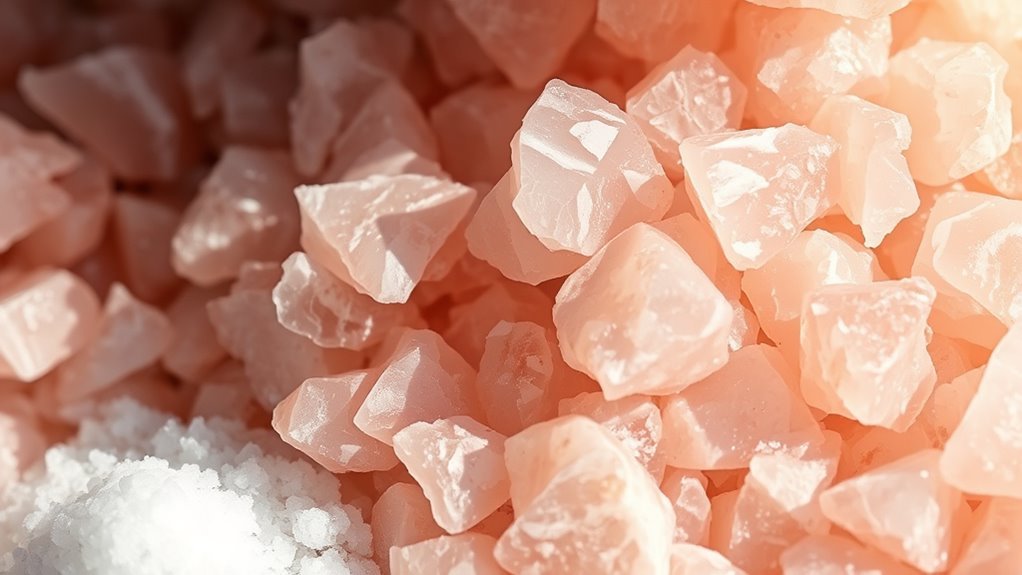
Although Himalayan pink salt and sea salt might look similar at first glance, you can tell them apart by closely examining their color and texture. Genuine Himalayan pink salt has a consistent pink to reddish color due to minerals like iron oxide, giving it a distinctive hue.
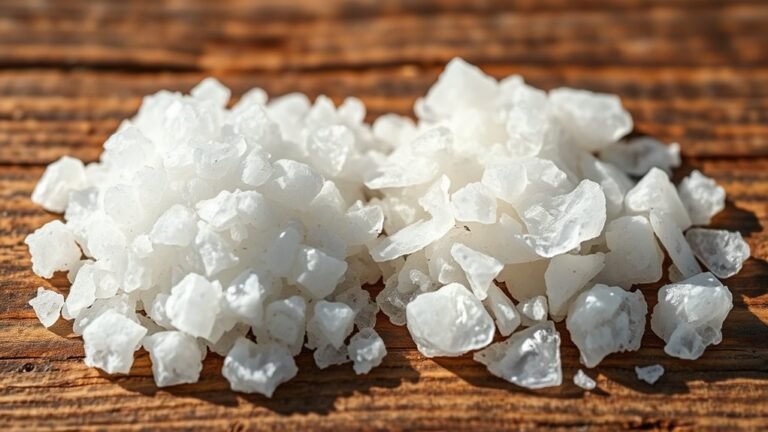
Its color is usually uniform with natural variations, while sea salt tends to be more translucent or have a different tone. When you feel the texture, authentic Himalayan salt feels coarse and granular, with rough, crystalline grains.
In contrast, sea salt often has finer, smoother grains that feel softer or flaky. If you notice visible impurities or inconsistent coloring, it’s likely not genuine Himalayan salt.
How Salt Dissolves Can Help You Spot Fake Himalayan Pink Salt
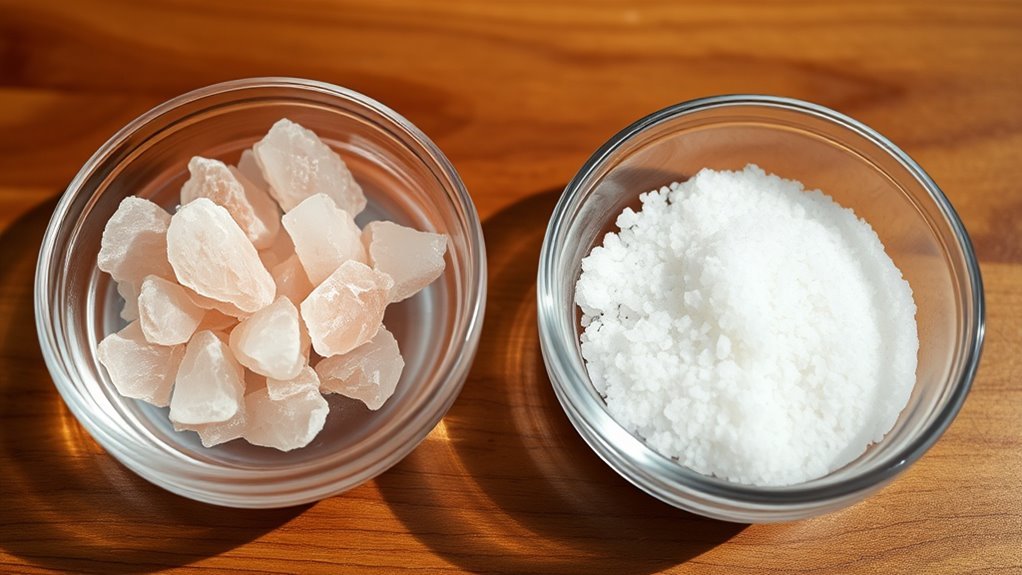
How can you tell if Himalayan pink salt is genuine just by watching it dissolve? Start by adding a consistent amount of salt to clear water and observe how it behaves.
Genuine Himalayan pink salt dissolves quickly and completely, leaving the water clear without any sediment. If you see the salt taking a long time to dissolve or notice cloudy water, that’s a red flag.
Fake or contaminated salt often leaves behind paint-like specks or foundation-like residues in the sediment, which means it’s been adulterated or isn’t pure. Paying close attention to the clarity of the water after you dissolve the salt helps you distinguish authentic Himalayan salt from imposters.
This simple test requires no fancy tools—just the right amount of salt and water. By knowing how to dissolve the salt properly and examining the result, you can easily spot fake Himalayan pink salt and ensure you’re getting the real deal.
Frequently Asked Questions
How Do I Know if My Pink Himalayan Salt Is Real?
You can tell your pink Himalayan salt is real if it dissolves slowly and leaves a pink tint. It should feel coarse when you touch it.
Also, make sure it doesn’t have any paint-like specks. And always buy from a reputable source with proper certifications to confirm its authenticity.
Is Himalayan Pink Salt the Same as Himalayan Sea Salt?
You wouldn’t confuse Himalayan pink salt with sea salt, like a knight distinguishing armor styles—pink salt comes from ancient mountain deposits, while sea salt’s evaporated seawater.
Each has unique minerals, texture, and flavor you can easily notice. It’s pretty cool how different they are, right?
Is Costco’s Pink Salt Actually Himalayan Salt?
Costco’s pink salt isn’t always genuine Himalayan salt. You’ll want to check if it dissolves slowly and leaves sediment—signs of authenticity.
Otherwise, it might be lower-quality salt mixed with additives or sea salt variants. So, it’s a good idea to take a closer look before you buy.
Is Dollar Store Himalayan Pink Salt Real?
You might think dollar store Himalayan pink salt is real, but it often isn’t. It can dissolve slowly or leave residue, hinting at impurities.
Trusting reputable sources guarantees you get genuine, pure salt without surprises. It’s better to be safe than sorry when it comes to what you’re putting in your food.
Conclusion
Now that you know how to spot genuine Himalayan pink salt, you’re better equipped to avoid fakes. Remember, real Himalayan salt’s unique pink hue comes from its mineral content, and its texture is often coarser than regular sea salt.
Remarkably, about 85% of Himalayan salt’s composition is pure sodium chloride, similar to sea salt. But those trace minerals give it that signature color and flavor.
Trust your senses—they’ll guide you to the real deal every time. When trying to tell if Himalayan pink salt is sea salt, look closely at the color, texture, and source. Genuine Himalayan pink salt stands out because of its distinct minerals, unlike typical sea salt. So next time you’re shopping or seasoning your food, keep these tips in mind to confidently choose authentic Himalayan pink salt over sea salt.