
5 Key Differences Between Kosher Salt and Iodized Salt
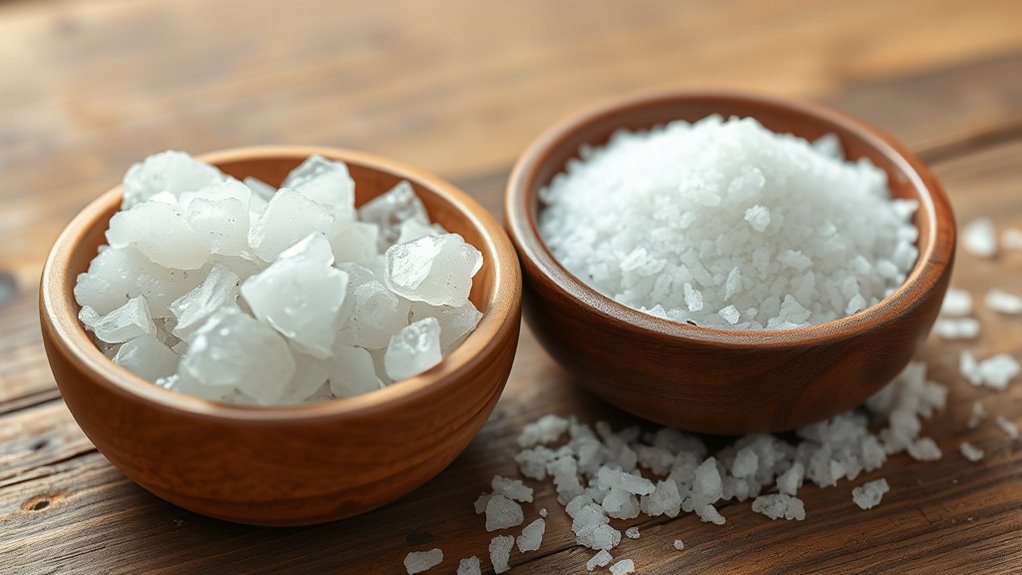
You’ll notice five key differences between kosher salt and iodized salt that can really change how you cook. Kosher salt has larger, coarser crystals, making it easier to pinch and control, which is great for seasoning by hand.
On the other hand, iodized salt has fine, uniform grains that dissolve quickly, perfect for baking and recipes where you want salt to blend in smoothly.
Kosher salt doesn’t have additives like iodine or anti-caking agents, so it offers a purer, cleaner taste. Iodized salt often includes iodine, which is good for health, but it can sometimes leave a slight metallic aftertaste.
Plus, the different crystal sizes mean you need to be careful when measuring, because they don’t always substitute evenly. Knowing when and how to use each salt type will really help you master your cooking. Keep exploring!
Key Takeaways
- Kosher salt has large, coarse crystals, while iodized salt has small, fine, uniform crystals.
- Iodized salt contains added iodine and anti-caking agents; kosher salt is additive-free.
- Kosher salt offers a clean, pure flavor; iodized salt may have a slight metallic aftertaste.
- Volume measurements differ because kosher salt crystals weigh less per teaspoon than iodized salt.
- Kosher salt is ideal for seasoning and brining; iodized salt dissolves quickly, suited for baking and liquids.
Kosher Salt Vs Iodized Salt: Key Differences Explained
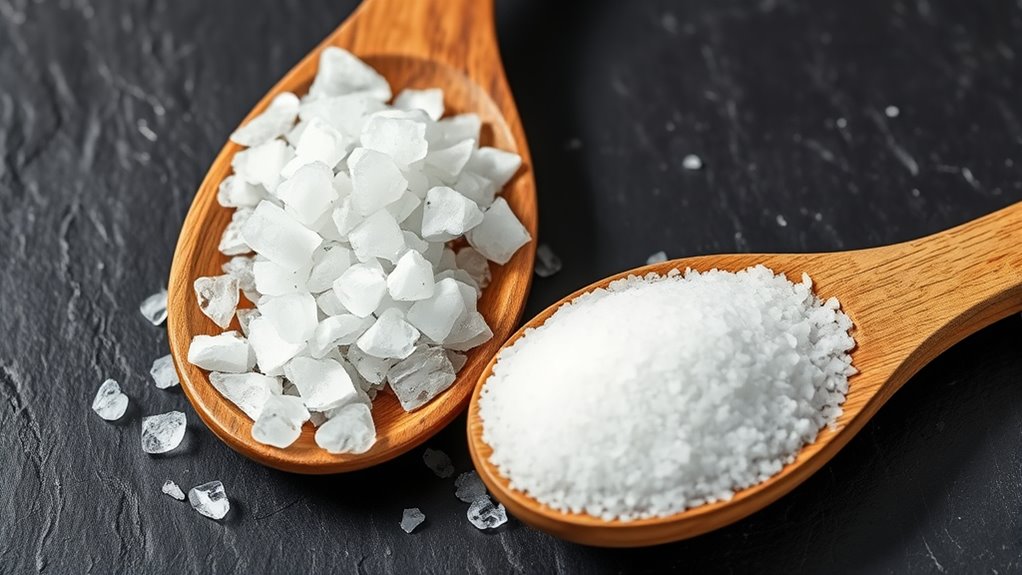
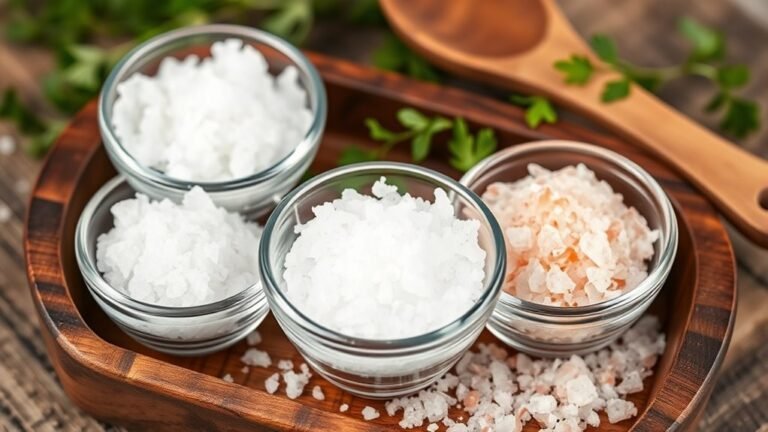
Although both kosher salt and iodized salt are staples in many kitchens, they differ markedly in texture, additives, and taste. Kosher salt features larger, coarser crystal size and lacks iodine and anti-caking agents, unlike iodized salt, which contains finer grain size and added iodine to prevent iodine deficiency.
Kosher salt and iodized salt differ in crystal size, additives, and taste, impacting their culinary uses.
Both primarily consist of sodium chloride, but these differences affect their culinary use. When you substitute kosher salt with iodized salt in a recipe, you need to adjust amounts because iodized salt’s finer crystals weigh more per teaspoon.
Taste-wise, kosher salt offers a cleaner, briny flavor, whereas iodized salt sometimes delivers a slight metallic or bitter aftertaste due to iodine. The absence of additives like anti-caking agents in kosher salt also means it behaves differently in seasoning and cooking.
Understanding these contrasts helps you choose the right salt for your dishes and avoid unintended flavor or texture changes. So, knowing when and how to use each type can really make a difference in your cooking.
What’s Kosher Salt And How Is It Made?
You’ve seen how kosher salt differs from iodized salt in texture and taste, but what exactly is kosher salt and how does it come to have those unique qualities?
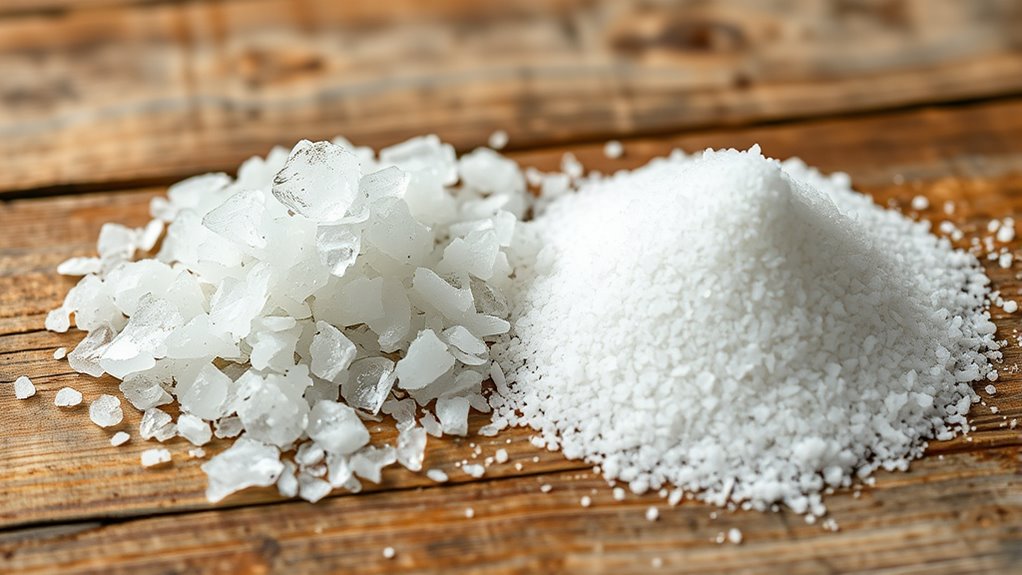
Kosher salt is a natural salt primarily made of sodium chloride. It’s produced through minimal processing, either by evaporating seawater or mining underground salt deposits.
This process creates large crystals that are coarse and irregular. These large crystals are key to its role in the koshering process, where it helps draw blood from meat.
Unlike table salt, kosher salt usually lacks additives like iodine or anti-caking agents. That means it has a pure, briny flavor.
Its crystals are lighter and larger, making it easier for you to pinch and control seasoning while cooking.
What Makes Iodized Salt Different?
When you choose iodized salt, you’re getting table salt that contains added potassium iodide or potassium iodate to help prevent iodine deficiency, a condition that can cause thyroid problems. This additive makes iodized salt a reliable dietary source of iodine, essential for maintaining thyroid health and hormone production.
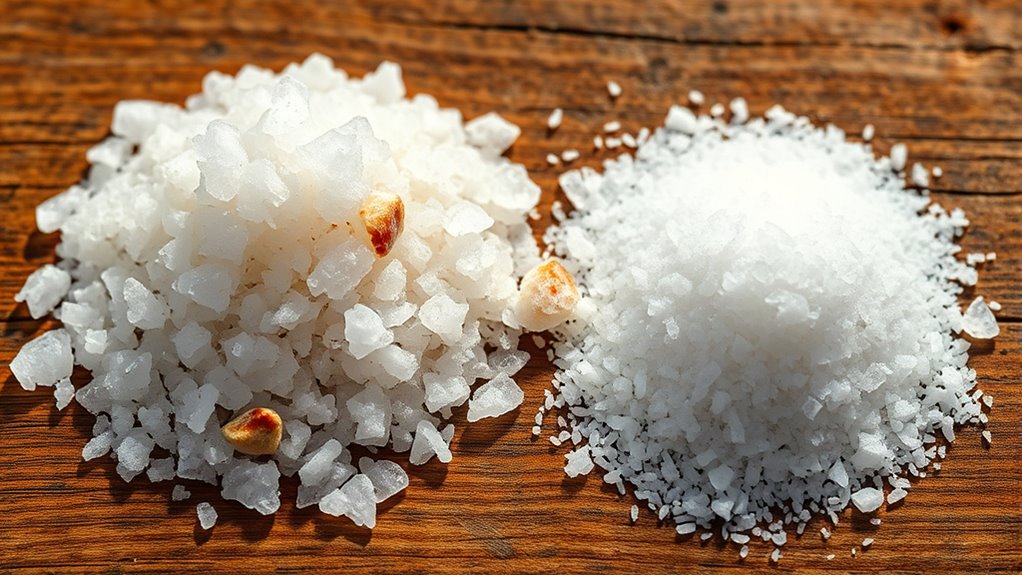
Unlike kosher salt, iodized salt is typically refined, featuring small crystals that dissolve quickly in your recipes. The addition of iodine slightly alters its chemical composition and taste, giving it a subtle difference compared to non-iodized salts.
It’s important to note that not all iodized salts are created equal—some may contain other additives or might not be certified kosher, so you should check labels carefully. Overall, iodized salt offers a practical way to support your thyroid health through everyday cooking, combining refined texture with the crucial nutrient potassium iodide.
How Salt Texture Affects Measurement And Recipes
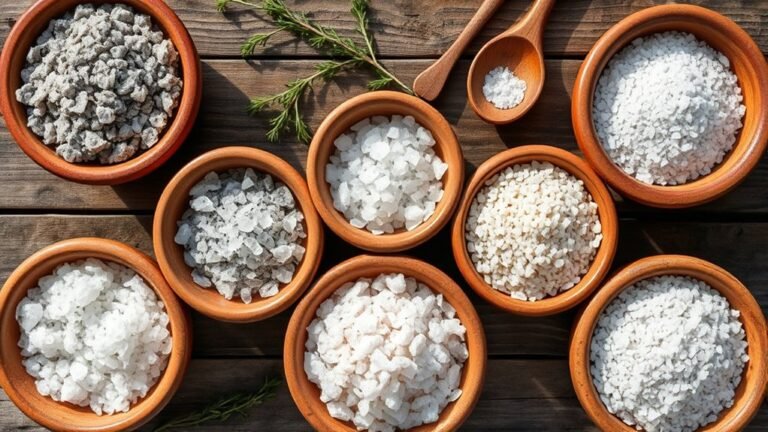
Because kosher salt crystals are larger and more irregular than those of iodized salt, they take up more space and weigh less per given volume. This difference in salt texture directly impacts your culinary measurement and recipe accuracy.
When you measure salt by volume rather than weight, the grain size and crystal shape cause notable variation.
Here’s what you should keep in mind:
- Kosher salt’s larger crystal size means a teaspoon holds less sodium by weight than the same volume of iodized salt.
- Measuring kosher salt by volume often leads to using more salt than recipes intend, risking over-salting.
- The slower dissolution rate of kosher salt changes how it seasons food compared to the finer iodized salt.
- Understanding volume vs weight differences is vital for precise seasoning and consistent results in cooking and baking.
Being aware of these factors helps you adapt recipes and guarantees your dishes turn out perfectly every time.
Which Salt Should You Use When Cooking Or Baking?
Although both kosher and iodized salts serve as essential seasoning agents, choosing the right one depends on your cooking or baking needs and how precise you want your salt measurements to be.
Kosher salt, with its larger crystal size, gives you better control for seasoning and dry brining, making it ideal for cooking, especially meat preparation. However, because its crystals are coarser, you’ll need to adjust salt measurement since it contains less sodium content per teaspoon compared to iodized salt.
Iodized salt, on the other hand, dissolves quickly and evenly, which is perfect for baking and seasoning liquids. It also provides iodine, beneficial for thyroid health, though it may impart a slight metallic aftertaste.
When comparing these salt types, keep in mind that for precise salt measurement, weighing your salt is more reliable than measuring by volume. Understanding these differences helps you select the best salt for your recipe and seasoning preferences.
Frequently Asked Questions
Which Is Better for You, Iodized Salt or Kosher Salt?
Iodized salt is better for you if you need iodine to support thyroid health.
But if you want pure salt without additives, kosher salt’s a great choice. It depends on your nutritional needs and preferences.
Why Do Chefs Use Kosher Salt Instead of Sea Salt?
You’ll notice chefs prefer kosher salt because its large crystals, about ten times bigger than sea salt grains, give you better control and an even sprinkle.
This helps you season precisely without overdoing it. It’s all about getting that perfect balance in your dish.
Can I Substitute Regular Iodized Salt for Kosher Salt?
Yes, you can substitute iodized salt for kosher salt, but you’ll want to use about half as much iodized salt by volume because it’s finer and denser.
Always taste and adjust seasoning as you cook. It’s all about finding the right balance for your dish.
Why Are People Avoiding Iodized Salt?
Back in the days of knights, you’d avoid iodized salt because you might react to iodine or dislike its metallic taste.
You’ll also skip it if you prefer natural, additive-free salts for health or cultural reasons.
Conclusion
When choosing between kosher salt and iodized salt, remember that kosher salt’s coarse texture makes it perfect for seasoning. Iodized salt’s fine grains dissolve quickly, making it ideal for baking.
Notably, nearly 70% of households in the U.S. use iodized salt to prevent iodine deficiency. So, depending on your cooking needs, you’ll want to pick the salt that works best—whether it’s for flavor, health, or precision in your recipes.
In the end, the choice between kosher salt and iodized salt comes down to how you plan to use it. Kosher salt is great for adding texture and flavor to dishes, while iodized salt is important for ensuring you get enough iodine in your diet. Whether you’re seasoning a steak or baking a cake, picking the right salt will make a big difference in taste and health benefits. So, keep these differences in mind when shopping or cooking—it’s all about finding the salt that fits your needs perfectly!