
10 Facts About Using Kosher Salt for Pickling Salt
You can use kosher salt for pickling, but there are some important things to keep in mind. Kosher salt has a larger grain size compared to table salt, which can affect how it dissolves in your brine.
Also, many kosher salts contain additives like anti-caking agents that can make your brine cloudy. To get the best results, measure kosher salt by weight rather than volume.
If you want your salt to dissolve faster and create a clearer brine, consider grinding it finer before use. And be sure to avoid kosher salts with additives — these can dull the color and flavor of your pickles.
Getting familiar with these little details will help you make safe, tasty pickles every time.
Plus, it’ll make your pickling process smoother and more predictable.
Key Takeaways
- Kosher salt has larger crystals and may contain anti-caking agents, unlike pure, fine-textured pickling salt.
- It’s best to measure kosher salt by weight, increasing the amount by about 25% over pickling salt for accurate salinity.
- Grinding kosher salt finer helps it dissolve faster and keeps the brine clear, making it perform more like pickling salt.
- Just be aware that some kosher salts have anti-caking agents, which can cause cloudy brine and affect how your pickles look.
- For the best results, use additive-free kosher salt and measure carefully by weight to ensure your pickles stay safe, tasty, and crystal clear.
What Is Kosher Salt vs. Pickling Salt
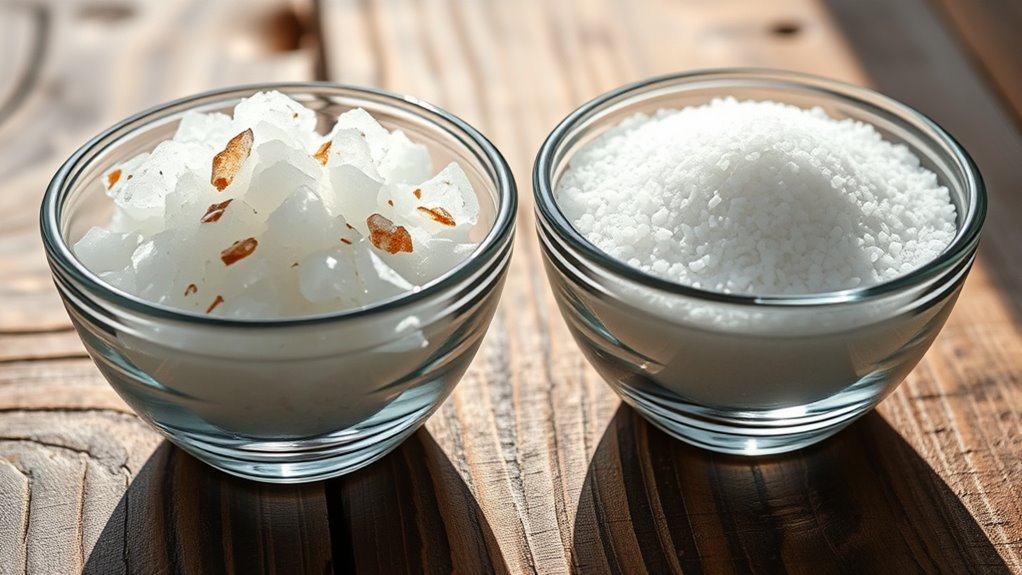
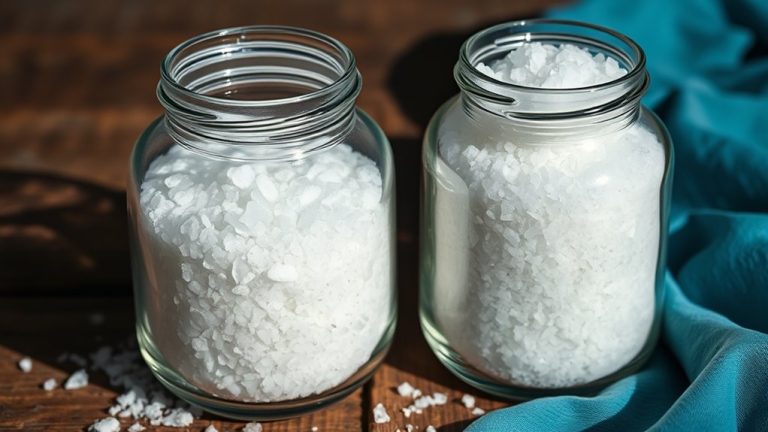
Although both kosher salt and pickling salt are primarily sodium chloride, they serve different purposes and have distinct characteristics. Kosher salt has a coarse crystal size and is traditionally used in the koshering process to draw blood from meat.
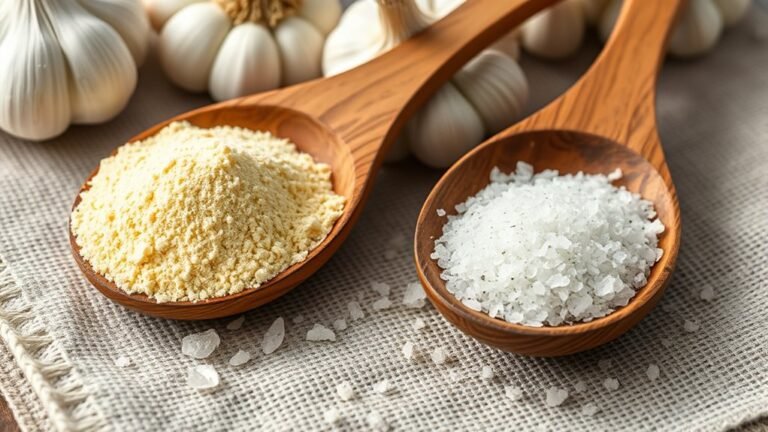
Its larger crystals often contain anti-caking agents, which can affect how it dissolves. Pickling salt, on the other hand, features a much finer crystal size and is pure sodium chloride without additives.
This fine texture allows pickling salt to dissolve quickly and creates a clear, non-cloudy brine, which is essential for successful canning and pickling. When you’re choosing between the two, remember that their difference in crystal size influences how much salt you actually get per volume.
While kosher salt can substitute for pickling salt in recipes, you need to take into account the crystal size to adjust your measurements properly. Understanding these differences ensures your pickling process turns out just right.
Why Measure Kosher Salt by Weight, Not Volume
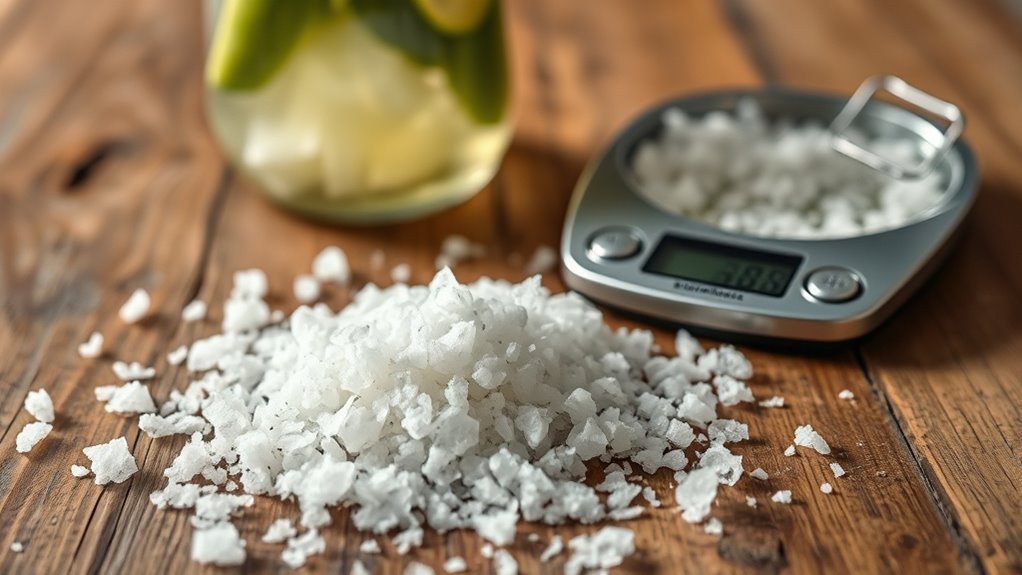
You can’t rely on volume measurements because kosher salt’s grain size and density vary widely. This inconsistency affects how much salt you actually use, which can throw off your pickling results.
Measuring by weight gives you the accuracy you need to keep your pickles safe and flavorful. It’s a simple step that makes a big difference in your final product.
Grain Size Variations
How does grain size impact your measurements when using kosher salt for pickling? Kosher salt’s larger, coarser salt crystals vary widely in grain size, which affects measurement accuracy when you use volume.
Because the grains don’t pack evenly, a cup of kosher salt might weigh less or more depending on crystal size. This leads to inconsistent salt concentrations in your pickling brine.
When you measure by weight instead, you account for these grain size variations precisely. That way, you get consistent salt levels every time.
This accuracy is essential for pickling, where over- or under-salting can compromise flavor and safety. So, to get reliable results and preserve your foods properly, always weigh your kosher salt rather than rely on volume measurements.
Density Differences Impact
Since kosher salt crystals are larger and coarser than pickling salt, their volume is less dense and less consistent for accurate measurement. When you measure kosher salt by volume, you’re not getting a reliable amount of salt because the bigger grains pack loosely, resulting in less salt per cup compared to pickling salt.
This density difference means volume measurement can cause inaccuracies that affect your recipe’s outcome. To avoid this, you should measure kosher salt by weight instead.
Weight measurement guarantees you use the exact amount of salt needed, regardless of crystal size or moisture content. By relying on weight rather than volume, you eliminate guesswork and ensure consistent salt concentration, which is essential for proper pickling and preservation.
Accuracy In Pickling
Although kosher salt’s coarse crystals give pickling a distinctive texture, relying on volume measurements can lead to inconsistent salt levels in your brine. The irregular size of kosher salt crystals means that a tablespoon can weigh less than the same volume of pickling salt, causing inaccuracies in your salt-to-brine ratio.
To guarantee accuracy, you should measure kosher salt by weight, not volume. Using a kitchen scale helps you maintain consistent salt concentration, which is vital for safe and effective preservation.
This precise measurement prevents over- or under-salting that can compromise your pickles’ quality and safety. By weighing kosher salt, you guarantee the right balance every time, making your pickling results reliable and delicious.
Adjusting Kosher Salt When Substituting Pickling Salt
When substituting kosher salt for pickling salt, you’ll want to measure by weight to keep the saltiness consistent. Because kosher salt crystals vary in size, adjusting the quantity by about 25% more than pickling salt usually does the trick.
Keep in mind, finer kosher salts need less adjustment. So, knowing your salt’s grain size helps you get the balance just right.
Weight-Based Measurement
To substitute kosher salt for pickling salt accurately, you’ll want to measure by weight rather than volume because kosher salt’s larger grains take up more space. Using a kitchen scale for your measurement ensures you maintain the correct salt concentration in your recipe.
Generally, 3/4 ounce of pickling salt equals about 5/8 ounce of kosher salt by weight. Since kosher salt is less dense, increasing the weight slightly—around 25% less than pickling salt—helps balance the saltiness.
Always check that your kosher salt doesn’t contain anti-caking agents, as these can affect both weight accuracy and brine clarity. By focusing on weight-based measurement, you’ll achieve consistent and reliable results whenever you substitute kosher salt for pickling salt.
Grain Size Differences
Since kosher salt has larger, coarser grains than pickling salt, you need to adjust your measurements carefully when substituting. The difference in grain size influences how the salt dissolves and how much fits in a given volume.
Pickling salt’s fine grains dissolve quickly, while kosher salt’s coarse crystals take longer to dissolve, which can affect your recipe’s outcome. To help it dissolve better, you might want to pulse kosher salt in a food processor or grind it into smaller particles before using it.
Also, it’s best to measure salt by weight rather than volume. Because of the grain size and density differences, volume measurements can be misleading. Understanding these grain size differences helps you get the right saltiness and proper dissolution in your pickling process.
Quantity Adjustment Guidelines
Although kosher salt and pickling salt may look similar, you’ll need to increase the amount of kosher salt by about 25% by weight to match the saltiness of pickling salt. Because kosher salt crystals are larger and less dense, measuring by volume can lead to inaccurate quantity and salt concentration in your brine.
To guarantee proper salt adjustment, use a kitchen scale for precise measurement. This way, you’ll maintain the correct flavor and safety balance during pickling.
Also, verify that your kosher salt is free from anti-caking agents, as these can cause cloudiness or discoloration. Careful quantity adjustment based on weight is key when substituting kosher salt for pickling salt.
How Kosher Salt’s Grain Size Affects Pickling Brine
When you use kosher salt for pickling, its larger crystals dissolve more slowly than finer salts, which can affect the clarity and consistency of your brine. Because of the coarse grain size, kosher salt may not fully dissolve in shorter pickling processes, leading to uneven salt distribution.
Kosher salt’s large crystals dissolve slowly, potentially causing uneven brine clarity and inconsistent pickling results.
This can result in a brine that’s less uniform, impacting the flavor of your pickles. To counter this, many picklers dissolve kosher salt in hot water before adding it to the brine, ensuring it fully dissolves and blends evenly.
You might also consider grinding or pulsing kosher salt in a food processor to achieve a finer texture better suited for pickling. Keep in mind that using kosher salt’s coarse grains directly can cause measurement inaccuracies unless you weigh it precisely.
Paying attention to the grain size and dissolving method will help you create a clear, consistent brine, resulting in perfectly seasoned pickles every time.
Why Use Additive-Free Kosher Salt for Pickling
You want your pickling brine to stay clear and free from cloudiness, which is why choosing additive-free kosher salt matters.
Additives like anti-caking agents can cause unwanted haze and affect the flavor of your pickles. Using pure kosher salt helps you maintain both the quality and appearance of your preserved foods.
Importance Of Additive-Free
Because additives in salt can cause cloudiness and off-flavors, using additive-free kosher salt is essential for pickling. When you choose pure, additive-free kosher salt, you guarantee your brine stays clear and your pickled foods maintain their true flavor without unwanted chemical tastes.
Additives like sodium ferrocyanide can discolor your canned goods and impact their visual appeal. Plus, additive-free kosher salt dissolves consistently, making your pickling process more reliable and predictable.
Avoiding Brine Cloudiness
Although it might seem minor, choosing additive-free kosher salt plays an essential role in preventing cloudiness in your pickling brine. When you use kosher salt with anti-caking agents like sodium ferrocyanide, these additives can cause brine cloudiness and discoloration, affecting your pickles’ appearance.
By selecting pure, additive-free kosher salt, you guarantee the salt dissolves completely and quickly. This reduces the risk of undissolved particles that make the brine look murky.
Always check labels carefully to avoid salts with anti-caking agents. Using fine-grained, additive-free kosher salt assures a clear, visually appealing brine that doesn’t compromise the quality or taste of your pickled goods.
This simple choice keeps your pickling process clean and your results crisp. It really makes a difference!
Why Anti-Caking Agents Cloud Your Pickles
When anti-caking agents like sodium ferrocyanide are present in kosher salt, they interact with the acidic brine and cause your pickles to turn cloudy. This cloudiness in the pickling brine isn’t just a visual issue—it can make your pickles look less fresh or even spoiled.
These additives react chemically with the acid, leading to discoloration and an off appearance in your preserved vegetables. To keep your pickling brine clear and your pickles visually appealing, it’s essential to avoid salts with these agents.
Here’s why anti-caking agents cloud your pickles:
- They chemically react with the acidic environment, causing haziness.
- Cloudiness from these agents can be mistaken for spoilage.
- They compromise the clarity and quality perception of your pickled goods.
For the best results, use pure kosher or pickling salt without anti-caking agents to maintain that crisp, clear brine you want.
Can Kosher Salt Change Pickle Flavor or Texture?
If you choose kosher salt for pickling, you might notice subtle differences in your pickles’ texture and flavor. Kosher salt’s larger crystals can create a slightly crisper or coarser texture compared to the fine grains of traditional pickling salt. This change in texture might appeal to you if you prefer a crunchier bite.
Regarding pickle flavor, kosher salt tends to have a more pronounced salty taste because of its grain size, which can subtly influence the overall flavor of your pickles. However, when you substitute kosher salt properly by weight, it usually won’t markedly alter the final flavor or texture.
Keep in mind that kosher salt takes longer to dissolve, which may affect how evenly the salt distributes during the pickling process. Overall, using kosher salt can gently shift your pickles’ texture and flavor, but the differences are generally mild and manageable if you adjust measurements carefully.
When Not to Use Kosher Salt for Pickling
Since kosher salt sometimes contains additives like anti-caking agents, you should avoid using it for pickling unless the label confirms it’s pure and additive-free. Using kosher salt with anti-caking agents can cause cloudiness in your pickling brine, which affects both appearance and preservation quality.
Also, the coarse texture of many kosher salts means it may not dissolve evenly, potentially compromising the safety of your pickles.
Here’s when not to use kosher salt for pickling:
- If the salt contains anti-caking agents that cause discoloration or cloudiness
- When you need a clear, clean brine for maximum preservation
- If the coarse grains won’t dissolve fully, risking uneven salt concentration
Choosing kosher salt without additives is essential to maintaining proper preservation and avoiding unwanted cloudiness. Always check the label carefully to protect your pickles and achieve the best results.
Tips for Grinding Kosher Salt for Better Pickling
Although kosher salt’s coarse texture can pose challenges for pickling, grinding it to a finer consistency helps it dissolve faster and more evenly in your brine. You can pulse kosher salt in a food processor for 10-15 seconds to achieve this finer texture quickly.
Alternatively, use a mortar and pestle for more control over grind size. This guarantees a uniform texture, mimicking pickling salt’s dissolving properties and preventing cloudy brines.
Remember, always measure ground kosher salt by weight, not volume, to maintain accurate salt concentration in your recipes.
| Method | Time/Control | Result |
|---|---|---|
| Food Processor | 10-15 seconds | Quick, fine consistency |
| Mortar & Pestle | Manual control | Uniform texture |
| Coarse Kosher Salt | No grinding | Slower dissolving, cloudy |
| Finer Kosher Salt | After grinding | Clear, crisp brine |
| Measurement | By weight | Accurate salt concentration |
How to Ensure Safety and Consistency Using Kosher Salt
To guarantee safety and consistency when using kosher salt for pickling, you need to verify that it contains no anti-caking agents. These can cloud your brine and affect the final product. Ensuring your salt is pure helps maintain the safety and clarity of your pickles.
Since kosher salt has larger crystals, relying on volume measurements can lead to inconsistent salinity levels. So, accurate measurement by weight is essential for consistent results.
Keep these tips in mind:
- Use a precise kitchen scale to weigh kosher salt. Adjust the amounts upward by about 25-33% compared to pickling salt recipes.
- Confirm the kosher salt is free from anti-caking agents to prevent cloudiness and keep your food safe.
- Consider grinding the salt for quicker dissolution and even distribution in your brine.
Frequently Asked Questions
Is Kosher Salt Better for Pickling?
Yes, kosher salt works well for pickling if you choose a pure, additive-free brand. You’ll want to weigh it carefully since its larger grains need about 25% more volume than pickling salt for the right brine.
How Much Pickling Salt Is Equal to 1 Cup of Kosher Salt?
You need about ¾ cup of pickling salt to match 1 cup of kosher salt.
You’ll want to weigh it carefully, because volume varies. But this swap keeps your pickling brine balanced and flavorful every time.
When Not to Use Kosher Salt?
You shouldn’t use kosher salt when you need clear brines or quick dissolution, like in pickling. Its coarse grains dissolve slowly, and additives can cloud your brine, ruining your pickled food’s appearance and texture.
How Much Kosher Salt to Replace Pickling Salt?
If you’re aiming to swap pickling salt, grab about 1.25 tablespoons of kosher salt for every tablespoon needed.
Just remember, measuring it guarantees you don’t accidentally overdo the saltiness in your brine. It’s a simple step that makes a big difference!
Conclusion
When pickling, using kosher salt can work—if you measure by weight, not volume, and choose an additive-free variety. For example, Sarah swapped pickling salt with kosher salt in her cucumber brine but noticed a slight texture change due to grain size.
By grinding the salt finer and adjusting the amount, she got perfect, crisp pickles every time. It’s all about knowing the right techniques to get the best results.
Remember, using kosher salt for pickling means paying attention to grain size and additives. By following these tips, you can ensure your pickles turn out safe, tasty, and consistent every batch. So, whether you’re a beginner or a pro, choosing the right kosher salt and measuring carefully will guarantee your pickles are delicious and perfectly preserved.