
Should You Put Salt on a Canker Sore?
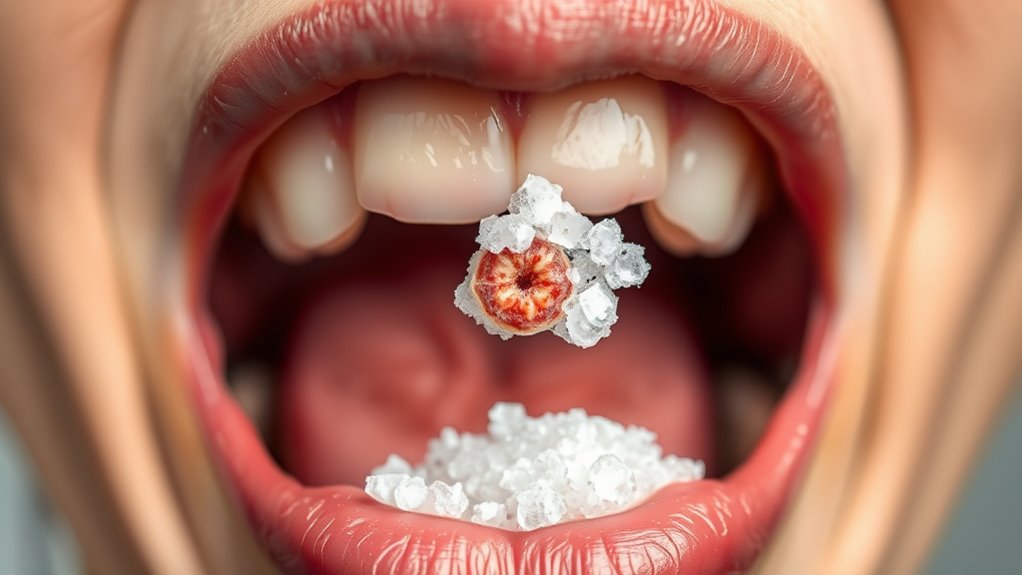
You shouldn’t put plain salt directly on a canker sore because it causes intense pain, damages delicate tissues, and actually delays healing. Applying salt straight onto the sore can be really uncomfortable and might make things worse instead of better.
Instead, you can use a saltwater rinse, which soothes discomfort, reduces inflammation, and speeds recovery by creating a cleaner, healthier environment for the sore.
Saltwater rinses are a safe, natural, and cost-effective way to promote healing without causing harm.
If you want to understand why saltwater works and direct salt doesn’t, keep exploring these insights. It’s all about how the salt is delivered and how it interacts with your mouth’s delicate tissues.
Key Takeaways
- Do not apply plain salt directly to canker sores as it causes intense pain and tissue damage.
- Saltwater rinses reduce inflammation and bacterial growth, promoting faster healing of canker sores.
- Saltwater rinses neutralize acids that irritate sores, providing natural pain relief and soothing discomfort.
- Applying plain salt can dehydrate the sore area, worsening pain and delaying recovery.
- Saltwater rinses are a safe, cost-effective, and scientifically supported home remedy for canker sore care.
How Saltwater Rinses Can Help Canker Sores
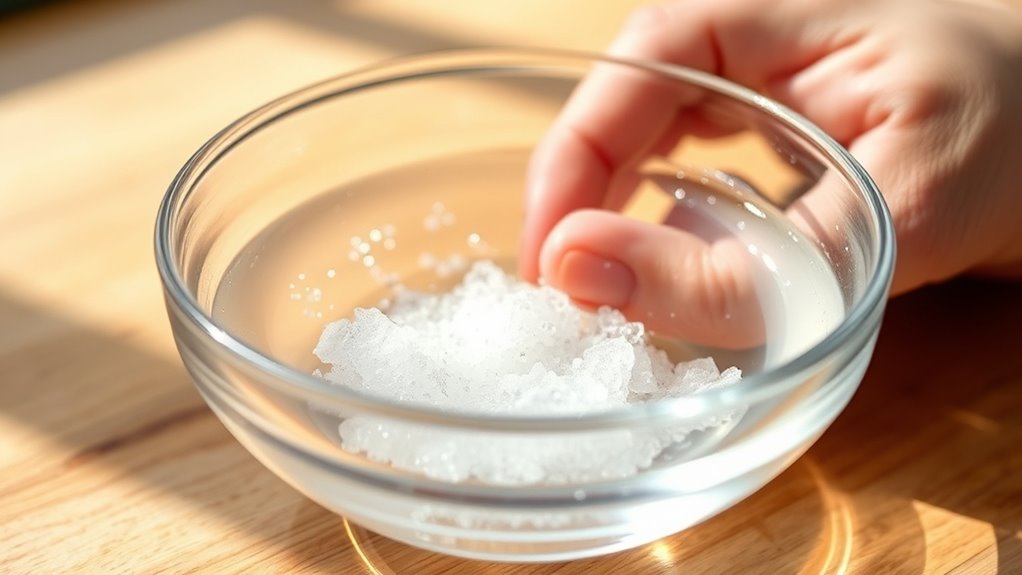
Although canker sores can be painful and stubborn, rinsing your mouth with saltwater can considerably ease discomfort and speed up healing. Saltwater rinses work by reducing inflammation and bacterial growth around mouth ulcers, creating a cleaner environment that promotes healing.
You can prepare a simple saltwater solution by dissolving 1/2 teaspoon of salt in a cup of warm water, which acts as an effective antiseptic rinse. Using this home remedy several times a day can soothe canker sores and provide noticeable pain relief.
The saltwater helps neutralize acids in your mouth that might otherwise irritate the sore and delay recovery. This natural approach is both inexpensive and backed by scientific evidence, making it a reliable option for managing discomfort.
Why You Shouldn’t Put Plain Salt on Canker Sores
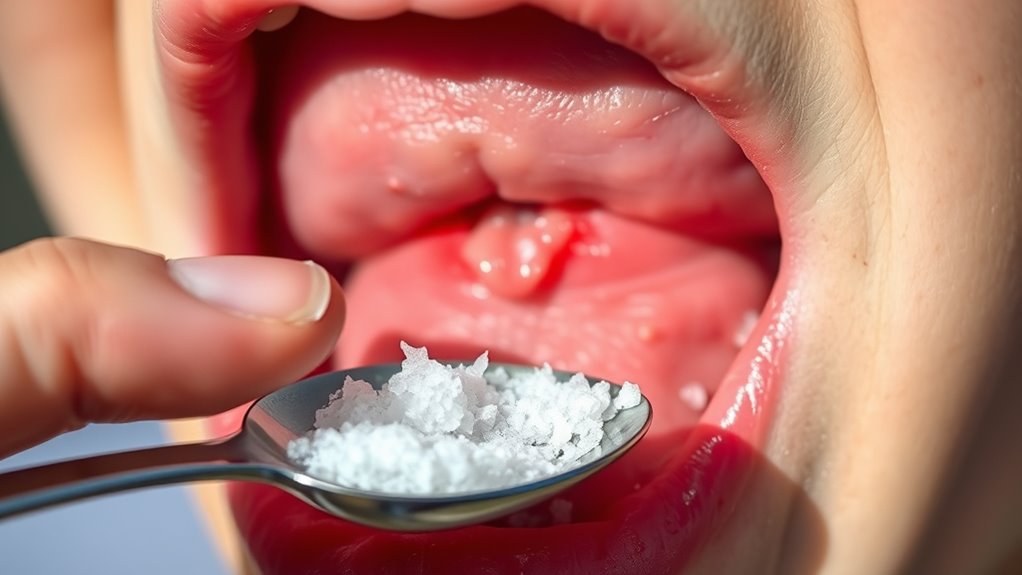
While saltwater rinses can soothe canker sores, putting plain salt directly on the sore can actually do more harm than good. When you apply plain salt, it causes intense pain and irritation because of its high alkalinity.
This salt application damages the delicate oral tissues, leading to tissue damage and increased inflammation. The dehydrating effect of salt worsens discomfort, causing a healing delay rather than promoting recovery.
Here’s a quick comparison of the effects of plain salt on canker sores:
| Effect | Result | Impact on Healing |
|---|---|---|
| Irritation | Intense pain | Slows healing |
| Tissue Damage | Damaged oral tissues | Prolongs sore duration |
| Inflammation | Increased swelling | Causes more discomfort |
| Dehydration | Drying of sore | Delays recovery |
Frequently Asked Questions
What Heals a Canker Sore the Fastest?
You heal canker sores fastest by rinsing with salt water several times daily, keeping the area clean, and using soothing gels or honey.
Avoid direct salt application to prevent irritation and speed up your recovery effectively.
What Is the White Part of a Canker Sore?
About 20% of people get canker sores, and the white part you see is dead tissue called fibrin. It forms a protective layer while your body repairs the sore.
This white layer is surrounded by inflamed red tissue, which signals that healing is underway. So, even though it looks a bit rough, it’s actually your body doing its job.
What Worsens Canker Sores?
You worsen canker sores by eating acidic or spicy foods, using harsh mouthwashes, brushing roughly, biting the area, or exposing it to irritants like cigarette smoke.
These actions increase pain and delay healing.
How Do You Know if a Canker Sore Is Healing?
You’ll know your canker sore is healing when it shrinks, pain eases, and the color shifts from white or yellow to pinkish.
The surrounding tissue will look less swollen, and discomfort will decrease noticeably. It’s kind of a relief when you start noticing these changes, right?
Conclusion
When dealing with canker sores, remember that saltwater rinses can soothe and speed healing by gently cleansing the area. However, putting plain salt directly on the sore can cause unnecessary pain and irritation.
It’s like trying to put out a fire with gasoline—it only makes things worse. So, stick to rinsing with saltwater instead of applying salt, and you’ll help your mouth heal without added discomfort.
Taking care of your canker sore with saltwater rinses is a simple and effective way to promote healing. Avoiding direct salt application prevents extra pain and irritation, making your recovery smoother. By gently cleansing the sore with saltwater, you support your mouth’s natural healing process without causing further discomfort. So, if you want to soothe your canker sore and speed up recovery, skip the salt crystals and opt for a saltwater rinse instead. Your mouth will thank you, and your sore will improve in no time!