
7 Best Salts for Cooking You Need to Know
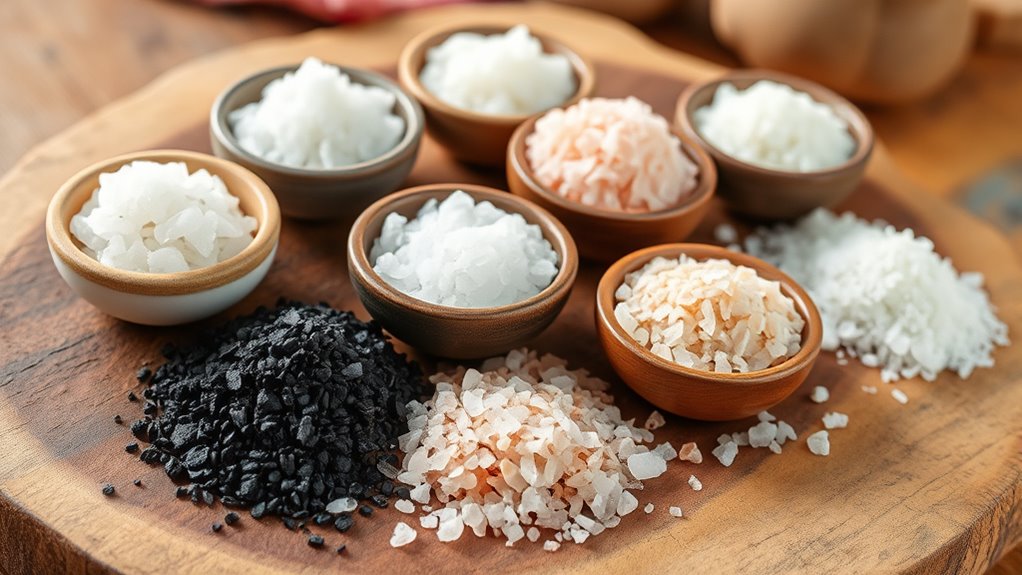
You’ll want to keep seven essential salts in your kitchen to boost every dish and elevate your cooking game. These best salts for cooking each bring something special to the table, whether it’s flavor, texture, or visual appeal. Knowing how to use them can really transform your meals and make seasoning a breeze.
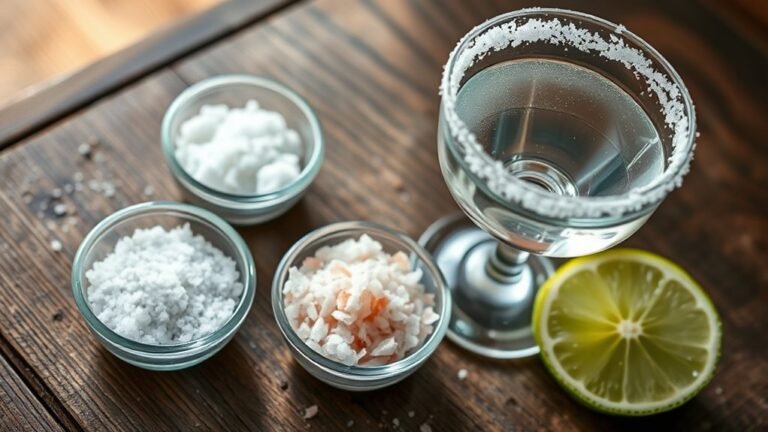
Table salt is perfect for everyday use with its even seasoning. Kosher salt’s coarse texture lets you control flavor easily. Sea salt adds minerals and crunch.
Finishing salts like Fleur de Sel bring delicate texture, while Himalayan pink salt offers color and depth. Black salt delivers bold, exotic notes. Specialty flavored salts add unique twists.
Explore how each can transform your cooking.
Key Takeaways
- Table salt is versatile, affordable, and iodized. It dissolves quickly, making it great for consistent everyday seasoning and baking.
- Kosher salt has large crystals that give you precise control. It offers a clean taste, perfect for seasoning meats and vegetables.
- Sea salt contains trace minerals and comes in varied textures. It’s ideal as a finishing salt to boost flavor and presentation.
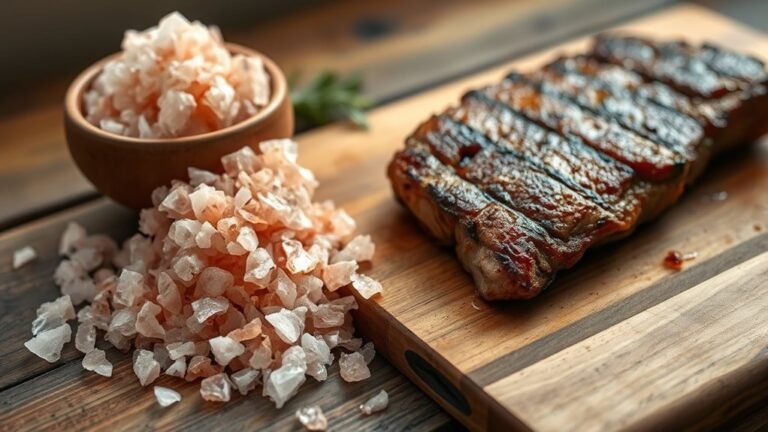
- Himalayan pink salt adds a nice visual appeal and an earthy flavor. It dissolves slowly, which helps enrich marinades and grilled dishes.
- Black salt brings bold, sulfurous notes to the table. Use it sparingly for a unique flavor, especially in vegan and Indian cuisine.
Why Table Salt Is Essential for Everyday Cooking
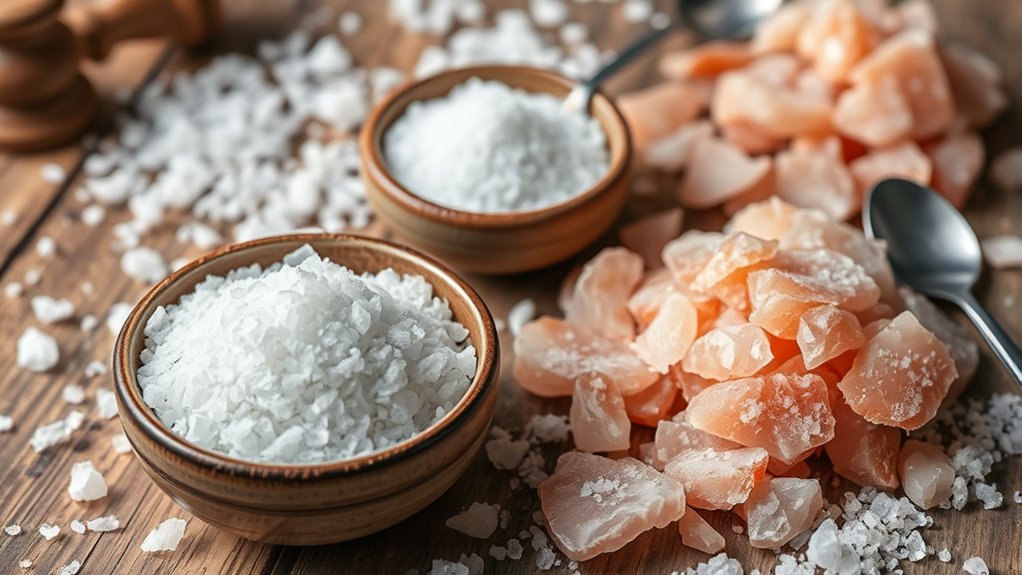
When you reach for salt in your kitchen, table salt is likely your go-to because it dissolves quickly and seasons evenly. This finely ground salt, made primarily of sodium chloride, is iodized to help prevent iodine deficiency, adding a health benefit to its practical use.
Its uniform texture ensures that you get consistent seasoning with every sprinkle, making it perfect for everyday cooking. Thanks to its quick dissolving nature, table salt blends seamlessly in wet ingredients like sauces and soups, allowing you to control flavor precisely.
Uniform texture and quick dissolving make table salt ideal for consistent seasoning in everyday cooking.
You’ll also appreciate the anti-caking agents mixed in, which keep the salt free-flowing and easy to measure without clumps. Table salt’s affordability and wide availability make it a staple in most kitchens, ideal for all your basic cooking and baking needs.
When you want reliable seasoning that integrates effortlessly, table salt is the vital choice you can count on.
Why Kosher Salt Is a Favorite Cooking Salt Among Chefs
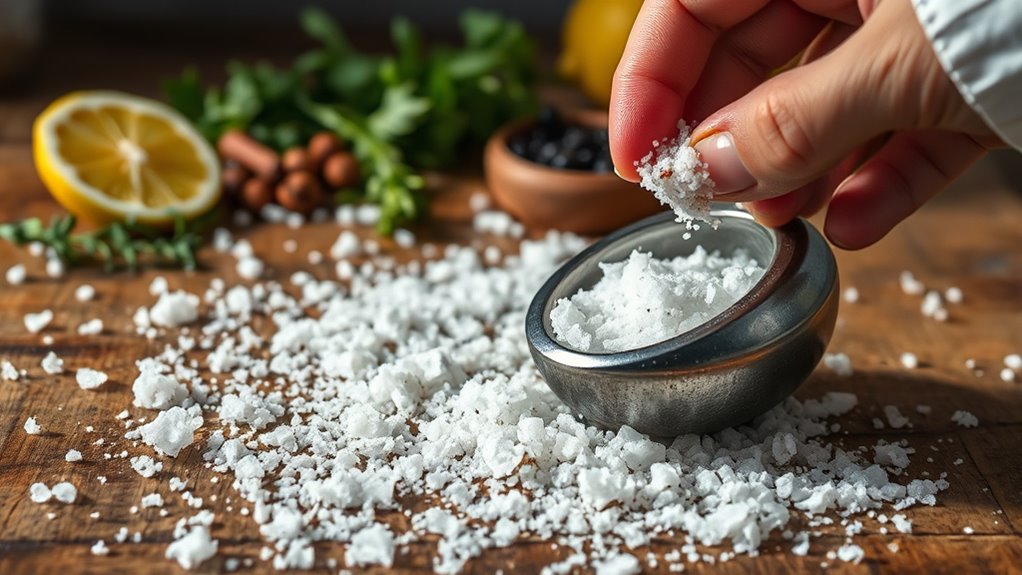
Why do so many chefs prefer kosher salt in their kitchens? Kosher salt’s large crystals and coarse salt texture make it easy to pinch and sprinkle, giving you excellent flavor control.
Unlike finer salts, kosher salt dissolves quickly, evenly seasoning meats, vegetables, and brines without overpowering your dish. Its pure, clean taste comes from the absence of iodine and anti-caking agents, which professional cooks appreciate for culinary use.
Here’s a quick comparison showing why kosher salt stands out:
| Feature | Benefit for You |
|---|---|
| Large Crystals | Easy to grab and sprinkle |
| Coarse Salt Texture | Visible amount for precise seasoning |
| Dissolves Quickly | Even flavor distribution |
| No Additives | Cleaner taste, better flavor control |
With kosher salt, you get a reliable seasoning salt that enhances your cooking without the risk of over-salting. It’s no wonder it’s a favorite in professional kitchens.
How Sea Salt Enhances Cooking With Mineral Flavor and Texture
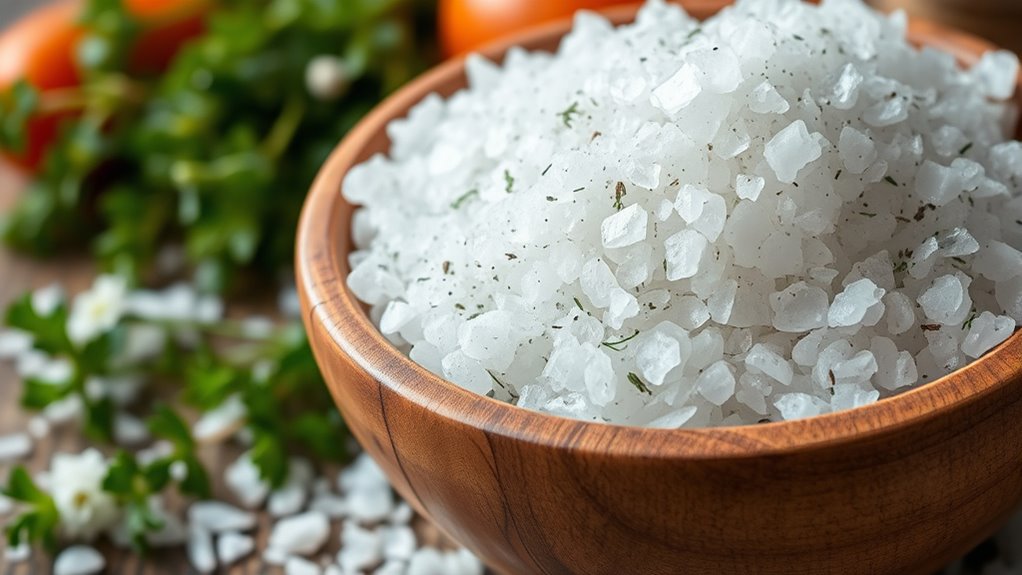
You’ll notice sea salt’s natural minerals boost your dishes with a richer, more complex flavor than regular salt. Whether you use fine sea salt for even seasoning or coarse flakes for a satisfying crunch, it adds both taste and texture.
Its versatility makes sea salt a great choice for enhancing everything from cooked meals to finishing touches. Plus, it’s super easy to use, no matter what you’re cooking!
Mineral Content Benefits
Although sea salt might seem simple, its rich mineral content considerably boosts your dishes’ flavor and texture. With up to 60 trace minerals, unrefined sea salt offers a complexity that enhances both cooked meals and finishing touches.
Using mineral-rich salts, especially as finishing salts, brings subtle mineral flavors and visual appeal to your culinary creations. It’s a small detail that makes a big difference.
Here’s why mineral content matters:
- Trace minerals like magnesium and calcium add depth and enhance flavor balance.
- Mineral content improves flavor enhancement by balancing acidity and sweetness.
- Gourmet salts with mineral-rich profiles elevate dishes with unique mineral flavors.
- Finishing salts provide a refined touch, enriching flavor and mouthfeel.
Texture Impact in Dishes
Beyond mineral content, the texture of sea salt plays a key role in how it enhances your dishes. Coarse sea salt and flaky salt, with their varied grain sizes, add a satisfying crunch and boost visual appeal when sprinkled just before serving.
The larger surface area of these crystals slows dissolution, allowing gradual flavor release and a pleasing contrast in mouthfeel. This crunch not only enriches the texture but also highlights the mineral content, imparting subtle briny notes that elevate complexity.
Using fine sea salt during cooking guarantees quick dissolution, evenly spreading mineral flavors throughout. By choosing sea salts with different textures and grain sizes, you control both the sensory experience and presentation.
This makes your dishes more dynamic and flavorful.
Versatile Culinary Applications
How can sea salt transform your cooking beyond basic seasoning? Its mineral content adds subtle flavor enhancement, making dishes more complex and interesting.
Sea salt’s versatile nature lets you use it throughout your cooking process.
- Use coarse grain sea salt as a finishing salt for a satisfying crunch and visual appeal.
- Sprinkle flaky salt at the end to preserve its delicate texture and unique mineral flavors.
- Add fine sea salt early in cooking; it dissolves quickly for even seasoning.
- Choose mineral-rich varieties to introduce a subtle briny depth that refined salts lack.
When and How to Use Finishing Salts Like Fleur De Sel and Sel Gris
You’ll want to sprinkle finishing salts like Fleur de Sel and Sel Gris right at the end to keep their unique texture and flavor intact. Their delicate crystals add a satisfying crunch and a burst of briny, mineral-rich taste that cooking heat would dull.
Using them sparingly as a final touch can really elevate both the look and flavor of your dishes. It’s a simple step that makes a big difference!
Best Finishing Salt Uses
When you finish cooking, sprinkling finishing salts like Fleur de Sel and Sel Gris can instantly elevate your dish by adding a delicate crunch and enhanced flavor. Use these salts sparingly as a garnish to enhance both texture and flavor without dissolving their delicate flakes.
Here’s how to make the most of finishing salts:
- Sprinkle Fleur de Sel over salads or desserts just before serving to add a subtle briny crunch.
- Use Sel Gris on hot dishes like steaks or roasted vegetables to impart a rich, mineral flavor.
- Add finishing salts in small amounts to avoid overpowering your dish.
- Taste as you sprinkle to balance the flavor and texture perfectly.
Texture And Flavor Impact
Finishing salts like Fleur de Sel and Sel Gris don’t just add flavor—they bring a distinctive texture that can transform your dish. Their flaky crystals and mineral-rich profiles create a subtle briny flavor and a delightful crunch.
Use Fleur de Sel’s delicate flakes to garnish salads, vegetables, or desserts. It adds a light, crunchy texture that really elevates your dish.
Sel Gris, with its moist crystals, is great for hot meats and roasted vegetables. It lends both texture and a mild briny punch that complements savory flavors perfectly.
Remember, finishing salts work best sprinkled on at the end. This way, you preserve their texture and flavor without them dissolving.
| Salt Type | Texture | Flavor Profile | Best Use |
|---|---|---|---|
| Fleur de Sel | Delicate, flaky | Subtle, briny | Garnishing salads, desserts |
| Sel Gris | Moist, crunchy | Mineral-rich | Hot meats, roasted veggies |
| Both | Crunch | Briny | Finishing touch for texture |
How Himalayan Pink Salt Adds Color and Unique Taste to Recipes
Himalayan Pink Salt offers more than just a touch of saltiness—it brings a vibrant pink hue and a complex flavor that can elevate your dishes. This unrefined salt contains up to 84 minerals, giving it a unique mineral content that imparts subtle earthy flavor and mineral notes.
Its vibrant color adds significant visual appeal, making your recipes stand out.
Here’s how Himalayan pink salt enhances your cooking:
- Acts as a finishing salt, adding eye-catching color and texture at the table.
- Provides a nuanced seasoning with a balanced salty taste and earthy undertones.
- Its slow dissolution makes it perfect for marinades, releasing flavor gradually.
- Enhances both the look and taste of dishes, from salads to grilled meats.
Using Himalayan pink salt lets you combine seasoning with presentation, bringing both flavor depth and visual appeal to every meal. It’s an easy way to make your dishes pop, both in taste and appearance.
What Black Salt (Kala Namak) Adds to Bold, Exotic Flavors
Although its pungent aroma might surprise you at first, Black Salt (Kala Namak) brings bold, exotic flavors that can transform your dishes. Its sulfurous aroma and unique flavor profile set it apart from regular salts, offering a savory taste reminiscent of eggs.
When you sprinkle Kala Namak, you introduce an umami-rich depth thanks to its mineral content, including iron, magnesium, and sulfur. This makes it perfect for enhancing grilled vegetables, salads, and even fruit with a complex, exotic flavor.
Black salt’s pungent aroma means a little goes a long way, so use it sparingly to infuse your recipes with its signature boldness without overpowering other ingredients. It’s really popular in vegan and Indian cuisine, where it shines in chaat, chutneys, and spice blends.
Specialty and Flavored Salts That Elevate Your Cooking
When you want to add a final touch that brings both texture and flavor, specialty and flavored salts are your best allies. These finishing salts elevate dishes by introducing unique flavor profiles and appealing textures.
Here are some top choices to contemplate:
- Fleur de Sel and flaky salts – Hand-harvested for their delicate crunch and visual appeal. They’re perfect for sprinkling on salads or desserts.
- Flavored salts – These are infused with herbs, spices, or smoked elements. They add natural seasoning without any artificial additives.
- Smoked salts – They impart a rich, smoky flavor from real wood smoke. Ideal for grilling and roasting, they really bring out the best in your dishes.
- Regional salts like Himalayan pink salt – Packed with trace minerals, these salts offer vibrant colors and distinctive tastes. They’re a great way to add some flair to your cooking.
Frequently Asked Questions
Which Salt Is the Healthiest to Cook With?
You’ll find unrefined salts like Himalayan pink or Celtic sea salt healthiest to cook with since they retain natural minerals. They provide better nutrition than processed salts, but you should still consider your iodine needs.
Which Salt Is Best to Use in Cooking?
When cooking, kosher salt’s your trusty sidekick—it seasons evenly and dissolves quickly, giving your dishes just the right touch.
You’ll find it easy to control, making your flavors sing without overpowering the dish.
Which Salt to Avoid?
You should avoid overly processed table salts with additives and unrefined sea salts from questionable sources. These can contain unwanted chemicals or impurities that you don’t want in your food.
Also, stay away from flavored salts that have artificial ingredients. They might taste good, but the additives aren’t always the best choice.
Coarse salts that don’t dissolve well can be frustrating to use. And if you don’t like the taste or effects of iodine, you might want to skip iodized salts altogether.
What Are the 4 Types of Salt?
You’ll find four main types of salt: table salt, kosher salt, sea salt, and specialty salts like Himalayan. Each offers different textures and flavors.
Conclusion
Now that you’ve tasted the rainbow of salts—from the humble sparkle of table salt to the bold punch of black salt—your dishes will dance with flavor. Imagine each pinch as a brushstroke, painting your meals with texture, color, and magic.
Whether you’re finishing with fleur de sel or seasoning with Himalayan pink salt, you hold the power to transform everyday cooking into a symphony of taste that sings on every tongue. Sprinkle boldly and savor the adventure!
Using the best salts for cooking can truly elevate your dishes. From enhancing flavors to adding unique textures, these salts bring something special to the table. So go ahead, explore those salts, and turn your meals into unforgettable culinary experiences!