
7 Best Salts to Use for Cooking
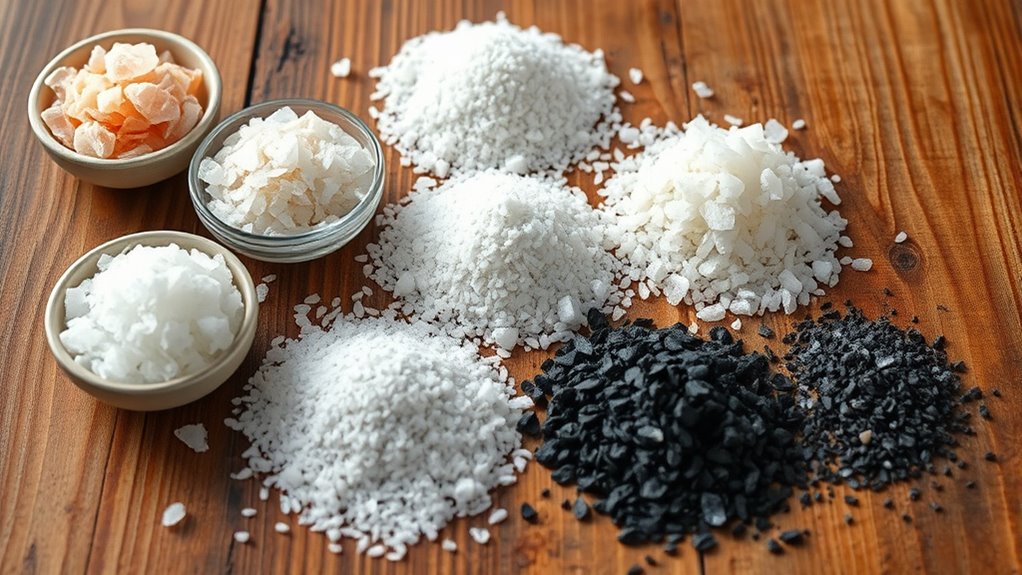
You’ll want seven key salts in your kitchen to boost flavor and texture in your cooking. Table salt offers consistent seasoning, perfect for everyday use. Meanwhile, kosher salt’s large flakes give you more control during cooking, making it easier to pinch and spread evenly.
Sea salt adds natural minerals and a satisfying crunch to your dishes. Himalayan pink salt brings a subtle, mineral-rich taste that can elevate simple recipes. Black salt is a game-changer for vegan and Indian dishes with its unique sulfur notes.
Finishing salts like Fleur de Sel provide a delicate texture and a burst of flavor right at the end. Non-iodized salts are your go-to for baking and pickling since they don’t interfere with the process.
Keep exploring to discover each salt’s special role and how they can transform your meals!
Key Takeaways
- Table salt offers consistent, fine grains ideal for precise seasoning and baking due to its quick, even dissolution. It’s a kitchen staple that works well when you need accuracy in your measurements.
- Kosher salt’s large, flaky crystals provide excellent control and texture for cooking and finishing dishes. Many chefs love it because it’s easy to pinch and sprinkle just the right amount.
- Sea salt varieties, like Fleur de Sel and Maldon, enhance flavor and presentation with natural minerals and delicate flakes. They add a little something special, both in taste and look, to your meals.
- Himalayan pink salt adds complex mineral-rich flavor and visual appeal with its unique trace minerals and pink hue. It’s not just about seasoning; it’s also a beautiful salt to have on your table.
- Black salt imparts a distinctive sulfurous, egg-like flavor perfect for vegan and Indian cuisine finishing touches. If you want to add that unique twist, black salt is your go-to.
What Makes Table Salt a Kitchen Staple
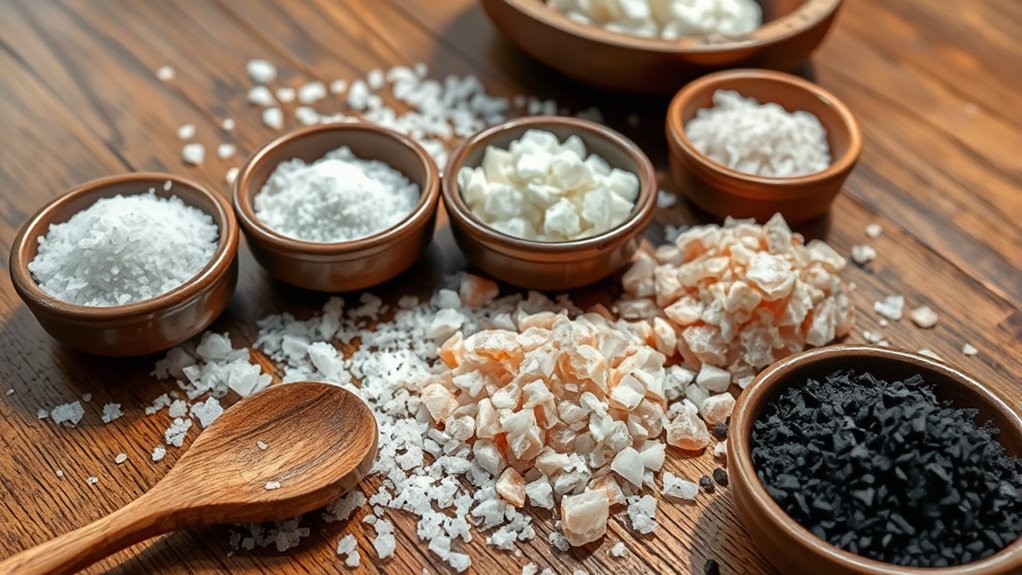
Although you might overlook it, table salt is a kitchen staple because it dissolves quickly and evenly, thanks to its fine, highly refined grains. When you use table salt, you’re relying on a refined salt that offers consistent crystal size, making it perfect for precise seasoning and baking measurements.
Its purity ensures you get pure salt without impurities that could alter your dish’s flavor. Most table salt is iodized, which means it adds essential iodine to your diet, helping prevent deficiency diseases.
You’ll also notice that table salt often contains anti-caking agents, so it flows smoothly and won’t clump in your shaker or container. While finishing salt adds texture and visual appeal, table salt’s fine grains make it ideal for everyday cooking where quick dissolution and even seasoning matter most.
Its affordability and wide availability make table salt the go-to choice for most home cooks looking for a reliable salt option.
Why Chefs Prefer Kosher Salt for Cooking
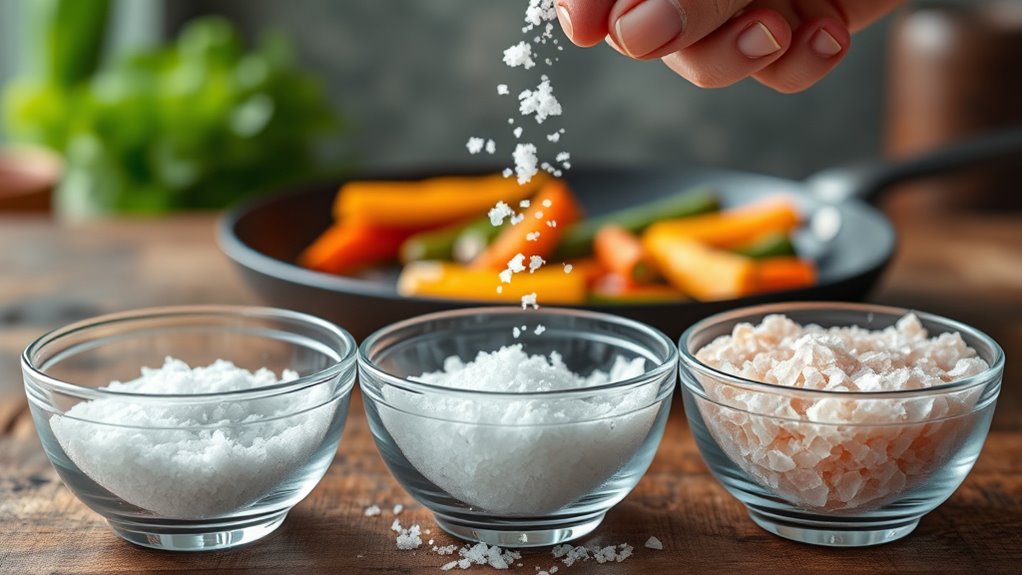
You’ll notice kosher salt’s large, flaky crystals make it easy to pinch and sprinkle just the right amount. Its coarse texture gives you better control over flavor intensity as you cook.
Plus, different brands can vary in crystal size and saltiness, so choosing the right one really matters. It’s all about finding what works best for your taste and dishes.
Texture And Crystal Size
Why do chefs consistently reach for kosher salt when seasoning their dishes? It all comes down to its texture and crystal size. Kosher salt features large crystals with a coarse salt grain size, making it easy to pinch and sprinkle evenly.
Its flaky salt structure not only provides a satisfying crunch when used as finishing salts but also dissolves quickly in wet ingredients. This balance allows you to control seasoning precisely without clumping, unlike finer salts.
The texture of kosher salt lets you see exactly where it lands on your food, ensuring even coverage. Whether seasoning meats, vegetables, or brines, its unique crystal size and shape make kosher salt a versatile and reliable choice in your kitchen.
Flavor Intensity Control
How can you achieve perfect seasoning without the risk of over-salting? Kosher salt is your answer. Its coarse salt flakes give you unmatched flavor control, letting you add seasoning gradually with culinary precision.
Because kosher salt has a lower density than finer salts, the volume you pinch contains less salt by weight, reducing the chance of over-seasoning. The flaky texture also dissolves more slowly, allowing you to taste and adjust as you cook.
This slower dissolving rate means you can fine-tune flavors in real time, something harder to do with denser salts. Plus, kosher salt’s ease of handling and pinchability makes quick, precise seasoning effortless.
Using kosher salt, you’ll master flavor intensity control every time you cook.
Brand Variations Matter
Two of the most popular kosher salt brands, Diamond Crystal and Morton’s, highlight why chefs pay close attention to brand variations. Their differing crystal structure and density affect seasoning precision and culinary results.
Diamond Crystal’s lighter, flakier crystals mean you use less by volume, while Morton’s denser grains pack more salt per pinch. Knowing these differences helps you control flavor intensity and avoid over-salting.
| Brand | Crystal Structure | Density |
|---|---|---|
| Diamond Crystal | Large, flaky | Light, less dense |
| Morton’s | Coarse, compact | Heavier, dense |
When cooking, choosing the right kosher salt brand is key to achieving consistent, balanced flavor every time. It really makes a difference in your dishes!
How Sea Salt Varieties Enhance Flavor and Texture
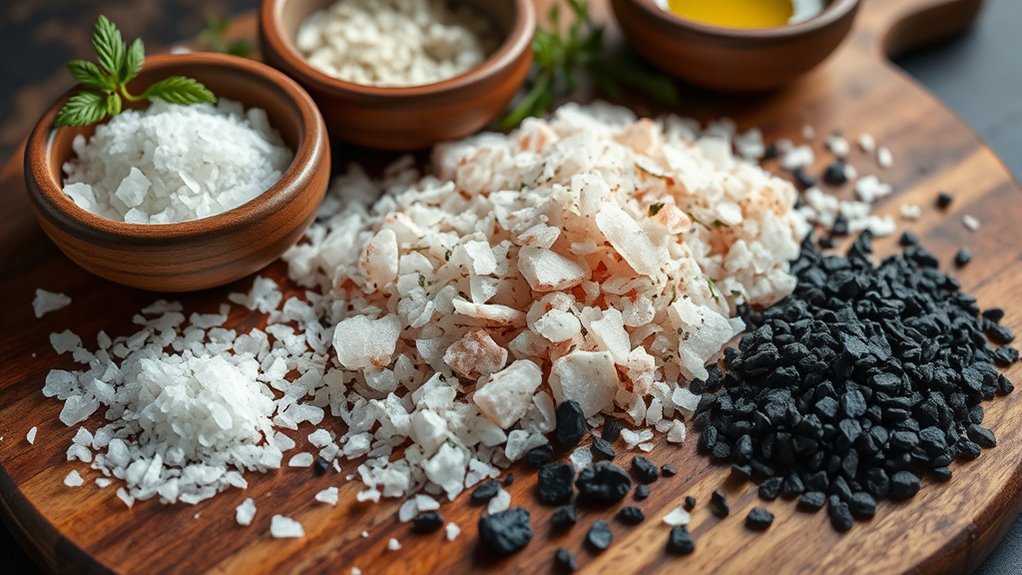
Although sea salts come in many varieties, each type can markedly enhance your dishes by adding distinct flavors and textures. Fine grain salt dissolves quickly, making it perfect for seasoning sauces and dressings without leaving grit.
In contrast, coarse sea salt adds a satisfying crunch and is excellent for finishing dishes or creating salt crusts, bringing both texture and a burst of flavor. Salt varieties like French Fleur de Sel or Maldon flaky salt offer unique, crisp textures that elevate the mouthfeel and visual appeal of your meals.
The natural minerals in sea salt, such as magnesium and calcium, contribute subtle briny notes and complexity that table salt lacks. When you choose the right sea salt—whether fine grain salt for cooking or flaky salt for finishing—you’re not just seasoning; you’re enhancing flavor and texture in a way that transforms your culinary creations.
What Makes Himalayan Pink Salt Special
You’ll notice Himalayan Pink Salt stands out because of its rich mineral content, which can subtly boost your dishes. Its unique, milder flavor makes it perfect for finishing touches without overpowering your food.
Plus, its versatility lets you use it in everything from cooking to garnishing. It’s pretty handy to have around for all kinds of recipes!
Mineral Content Benefits
What sets Himalayan pink salt apart from regular table salt is its rich mineral content. This salt contains up to 84 trace minerals like magnesium, calcium, and potassium, which enhance its unique mineral profile.
These mineral-rich salts add subtle mineral notes to your dishes and support electrolyte balance. Using Himalayan salt can help improve your overall mineral intake, offering benefits often missing in processed foods.
| Mineral | Benefit |
|---|---|
| Magnesium | Supports muscle function |
| Calcium | Strengthens bones |
| Potassium | Maintains electrolyte balance |
| Trace minerals | Provide essential nutrients |
Unique Flavor Profile
Because Himalayan Pink Salt contains up to 84 trace minerals, it delivers a distinctive mineral-rich flavor that sets it apart from regular salts. This unrefined sea salt offers a unique flavor profile that enhances dishes with subtle mineral notes without overwhelming them.
Here’s what makes it special:
- Its trace minerals like calcium, magnesium, and potassium bring complexity and depth to your food’s taste.
- The iron oxide gives Himalayan Pink Salt its distinctive coloration and a slightly earthy undertone.
- Often used as a finishing salt, it adds both visual appeal and a refined mineral-rich flavor at the final stage of cooking.
When you use Himalayan Pink Salt, you’re adding more than seasoning—you’re elevating your dishes with nature’s own mineral blend. It’s a simple way to make your meals a bit more special.
Versatile Culinary Uses
Although Himalayan Pink Salt stands out for its unique mineral content, its true value lies in how versatile it is in the kitchen. You can use this versatile salt as a finishing salt, where its coarse grain and attractive salt flakes add both texture and visual appeal to your dishes.
Its subtle mineral flavor enhances meats, vegetables, and sauces without overpowering them, making it perfect for seasoning and marinating. Thanks to its lower sodium content, it’s a health-conscious choice that fits well in various culinary applications.
Whether you’re sprinkling it over a salad or rubbing it onto a roast, Himalayan Pink Salt elevates your cooking with its pure, clean taste and multi-purpose functionality. It really adds that special touch to your meals, no matter how you use it.
How Black Salt’s Flavor Enhances Vegan and Indian Dishes
When you add black salt, or Kala Namak, to your vegan or Indian dishes, you reveal a unique sulfurous flavor that closely mimics eggs. It’s perfect for plant-based recipes.
This mineral-rich salt adds depth with its savory, sulfurous aroma, enhancing both vegan dishes and traditional Indian cuisine. Here’s why black salt is a must-have seasoning:
- Egg-like flavor: Its distinctive sulfurous taste brings an authentic egg flavor to tofu scrambles and vegan snacks.
- Flavor enhancer: Black salt balances spicy and tangy notes in Indian dishes, enriching chutneys, chaat, and spice blends.
- Nutrient boost: Packed with iron and magnesium, it adds subtle mineral complexity, elevating your meals naturally.
Using black salt lets you transform simple vegan and Indian recipes into flavorful, savory experiences without relying on animal products. It’s definitely an essential addition to your spice rack.
When to Use Fleur De Sel and Other Finishing Salts
If you want to add a delicate crunch and subtle flavor to your dishes, finishing salts like Fleur de Sel are your best choice. These salts have delicate flakes that preserve their texture and flavor only when you add them at the end. Using them during cooking or boiling can diminish their crunchy texture and subtle flavor.
Fleur de Sel, harvested manually in Brittany, France, is a premium finishing salt that enhances culinary presentation with its fine, flaky crystals. You’ll want to sprinkle finishing salts sparingly on salads, roasted vegetables, grilled meats, and even desserts to elevate taste and appearance.
| Salt Type | Best Use | Key Benefit |
|---|---|---|
| Fleur de Sel | Add at end, raw dishes | Delicate flakes, subtle flavor |
| Flaky Salts | Final garnish | Crunchy texture |
| Other Finishing Salts | Salads, meats, desserts | Culinary presentation |
Choosing the Best Salt for Baking and Pickling
Finishing salts like Fleur de Sel add a final touch of texture and flavor, but baking and pickling call for different types of salt to achieve the best results.
When baking, you want fine-grain table salt or fine sea salt for quick dissolving and even seasoning. It helps your batter or dough come together just right.
For pickling, avoid iodized salt—it can interfere with fermentation because of iodine and anti-caking agents. Instead, use non-iodized salts like pickling salt or coarse kosher salt to keep brines clear and flavors pure.
Here’s what to keep in mind:
- Use fine-grain table salt or unrefined fine sea salt for consistent flavor in baking. It blends in smoothly and evenly.
- Choose coarse salt or kosher salt, especially Diamond Crystal, for control and texture. It’s great when you want a bit of crunch or a more hands-on approach.
- Always pick non-iodized pickling salt for preserving to avoid unwanted chemical reactions. That way, your pickles stay crisp and tasty.
Selecting the right salt grains and type ensures your baked goods rise perfectly and your pickles stay crisp and flavorful. It really makes a difference!
Frequently Asked Questions
Which Salt Do Most Chefs Use?
Most chefs use kosher salt because it’s easy to handle and control during cooking. You’ll find Diamond Crystal favored for its light texture, while Morton’s denser crystals need adjustments.
You’ll appreciate its versatility in seasoning. It works great whether you’re sprinkling it on meat or mixing it into a sauce.
What Type of Salt Is Best for Cooking in the Kitchen?
Salt is the silent conductor in your kitchen symphony. You’ll find kosher salt best for seasoning meats, while fine sea salt dissolves swiftly in sauces.
Choose based on texture and purpose for perfect flavor harmony every time. It’s all about what works best for the dish you’re making!
What Salt Do Professional Bakers Use?
Professional bakers use fine-grained, uniodized sea salt or regular iodized table salt for even seasoning and fast dissolving.
You’ll also find them using kosher or flaky salts for finishing, but fine salt works best during mixing.
It just blends in better and gives you that perfect texture.
Is It Better to Cook With Sea Salt or Himalayan Salt?
Imagine you’re seasoning pasta water; sea salt’s clean flavor dissolves quickly, making it better for cooking. You’ll get precise saltiness.
On the other hand, Himalayan salt suits finishing dishes with its unique mineral crunch and color. It adds a nice touch right before you serve.
Conclusion
By balancing boldness and subtlety, you’ll bring brilliance to your bites. Whether you’re sprinkling savory kosher salt or finishing with flaky fleur de sel, selecting the salt that suits your style sharpens your skills.
From the pink punch of Himalayan salt to the smoky splash of black salt, each choice crafts a unique culinary charm. So, savor the salt spectrum and spice up your cooking with confidence and creativity!
Remember, the best salts to use for cooking aren’t just about flavor—they’re about enhancing every dish you make. Experiment with different types like sea salt, fleur de sel, kosher salt, and flavored salts to find your perfect match. With the right salt, you’ll elevate your meals from ordinary to extraordinary, making every bite a delicious experience.