

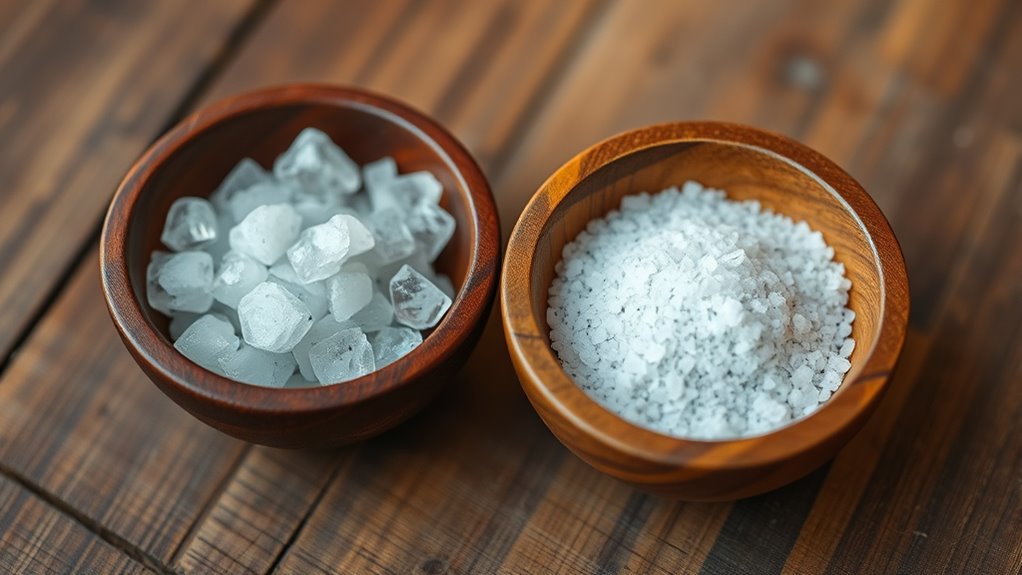
What Is the Difference Between Kosher Salt and Regular Salt?
You’ll notice kosher salt has larger, coarser crystals and no additives, while table salt features fine, uniform grains with iodine and anti-caking agents.
Kosher salt’s texture makes it easier to pinch and sprinkle, but it’s less dense, so you need less when substituting for table salt.
Table salt dissolves quickly, perfect for baking and even seasoning.
Understanding these differences helps you season food better—keep going to discover how to choose and use each type for the best results.
Key Takeaways
- Kosher salt has larger, coarser crystals, while regular table salt has fine, uniform grains.
- Table salt contains iodine and anti-caking agents; kosher salt typically has no additives.
- A teaspoon of kosher salt contains less sodium than the same volume of table salt due to lower density.
- Kosher salt is preferred for seasoning meats by feel, whereas table salt is ideal for baking and even salt distribution.
- When substituting, reduce kosher salt by about 25% to match the saltiness of table salt.
What Are the Key Differences Between Kosher Salt and Table Salt?
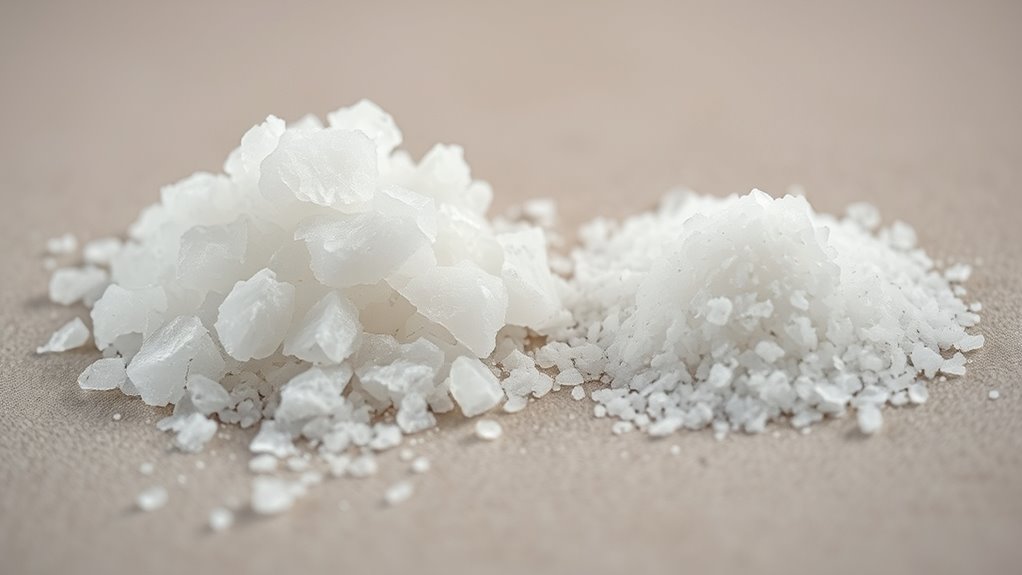
Although both kosher salt and table salt serve the same basic purpose, they differ considerably in texture, additives, and density. Kosher salt features larger, coarser crystal size and an irregular grain texture, making it easier for you to pinch and sprinkle during culinary use.
Kosher and table salt differ in texture, additives, and density, affecting how you use them in cooking.
In contrast, table salt has fine, uniform grains resulting from more intensive processing, which provides a consistent grain texture. Table salt also contains anti-caking agents and iodine, additives absent in kosher salt.
Because kosher salt crystals are less dense, a teaspoon holds less sodium content than the same volume of table salt. This difference affects salt substitution, so you’ll need to adjust amounts when replacing one with the other in recipes.
Understanding these distinctions helps you choose the right salt for seasoning and enhances your control in cooking without over- or under-salting dishes. It’s a simple tip that can really make a difference in your kitchen!
How to Choose and Use Kosher Salt and Table Salt in Your Cooking
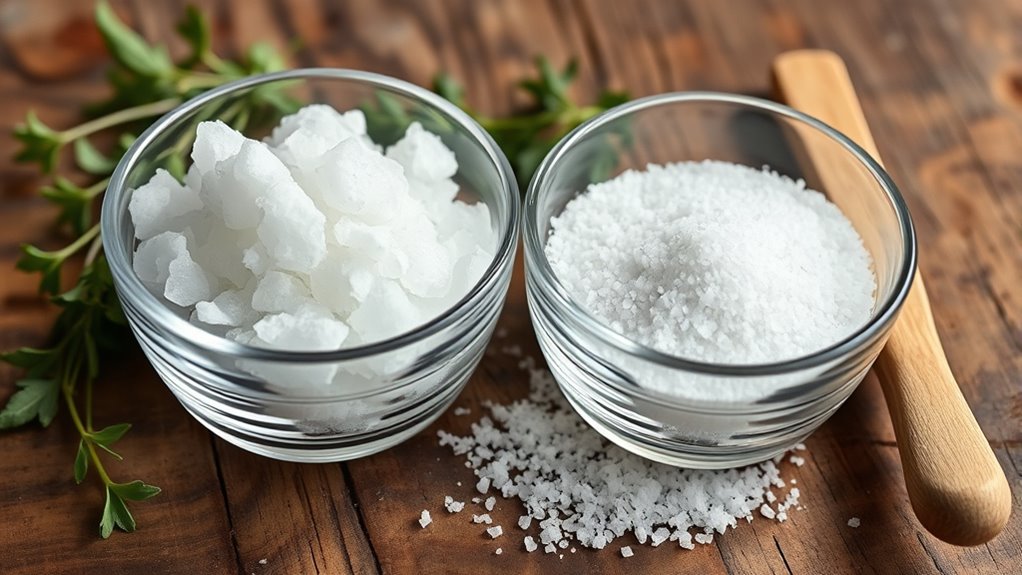
When you choose between kosher salt and table salt, think about the texture and what you’re using it for in your cooking. Kosher salt has bigger, coarser crystals, which gives you better control by feel. That’s why it’s great for seasoning meats and finishing off dishes.
Table salt, on the other hand, has fine, uniform grains that dissolve really quickly. This makes it perfect for baking and recipes where you want the salt evenly distributed.
Since salt density is different, a teaspoon of kosher salt actually has less sodium than the same amount of table salt. So, if you’re swapping one for the other, you’ll want to adjust the amounts. Usually, you can reduce kosher salt by about 25% when replacing table salt.
If you want to be more precise, try measuring salt by weight instead of volume. It’s more accurate that way.
Go for kosher salt when you need to season by hand or do dry brining. Use table salt when you need it to dissolve exactly, like in baking.
Knowing these differences helps you get the best flavor and texture in your cooking.
Frequently Asked Questions
Is Kosher Salt Healthier Than Regular Salt?
Kosher salt isn’t necessarily healthier than regular salt, but it’s less processed and additive-free. You’ll get similar sodium levels, so focus on limiting overall salt intake rather than switching types for health reasons.
It’s really about how much salt you use, not just the kind. So, try to keep an eye on your total salt consumption instead of stressing over which salt to pick.
Why Use Kosher Salt Instead of Regular Salt?
You use kosher salt because its larger grains give you better control when seasoning. It dissolves slowly for even flavor, and it lacks additives.
This means your food tastes cleaner and more natural compared to regular salt. Pretty neat, right?
Can You Substitute Regular Salt for Kosher Salt?
Yes, you can substitute regular salt for kosher salt, but you’ll need less regular salt because it’s finer and denser.
Measure carefully to avoid over-salting, especially in baking or delicate recipes. It’s always better to start with a little and add more if needed.
Is Pink Himalayan Salt Kosher?
Picture pink crystals sparkling under light—yes, pink Himalayan salt can be kosher if it’s pure and certified.
You’ll want to check for a trusted kosher symbol on the package before adding it to your kitchen.
Conclusion
Now that you know the key differences between kosher salt and table salt, you might wonder which one truly belongs in your kitchen. Choosing the right salt can change everything—from texture to flavor.
But here’s the twist: it’s not just about the salt itself, but how you use it. The grain size and purity of kosher salt often make it easier to pinch and control, which can impact your cooking process.
So next time you reach for that shaker, remember—your dish’s magic might just hinge on this simple choice. Using kosher salt instead of regular salt can enhance seasoning and bring out the best in your meals. Ready to taste the difference?