
10 Key Differences Between Kosher Salt and Table Salt
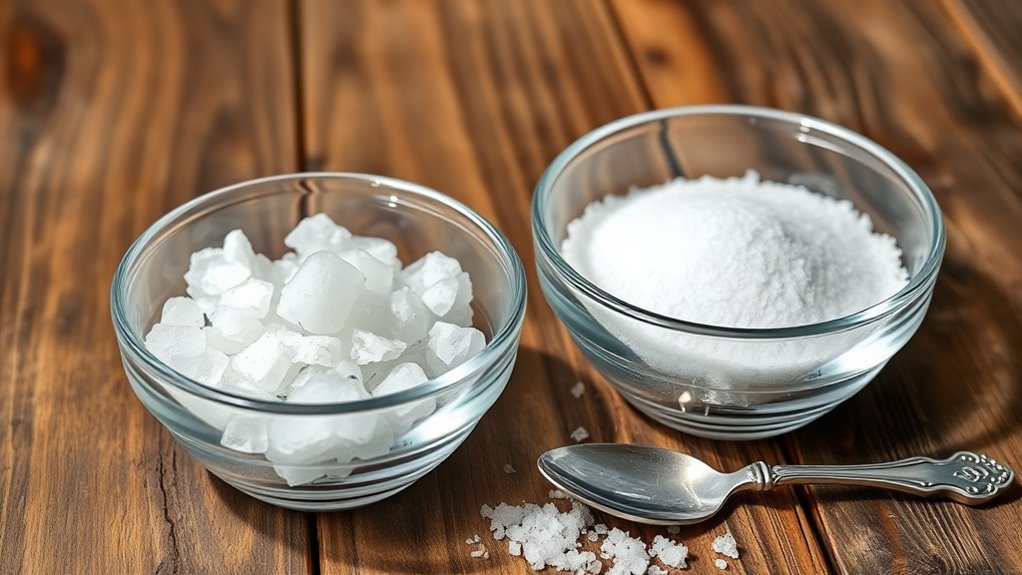
You’ll notice kosher salt has larger, flaky crystals and fewer additives, giving it a cleaner taste and lighter texture.
Table salt, on the other hand, has fine, uniform grains often with iodine and anti-caking agents that can affect flavor.
Kosher salt dissolves slower, which makes it perfect for seasoning meats.
Table salt dissolves quickly, so it’s great for baking.
Measuring is different too—kosher salt is less dense, so you’ll want to use less volume of table salt when substituting.
Keep exploring to master which salt fits your cooking needs best.
Key Takeaways
- Kosher salt has larger, flaky crystals, while table salt features small, uniform cubic grains.
- Table salt contains additives like iodine and anti-caking agents; kosher salt generally lacks additives.
- Kosher salt dissolves slower, ideal for seasoning meat; table salt dissolves quickly, suited for baking and liquids.
- Volume measurements differ: 1 teaspoon kosher salt equals about 0.6 teaspoon table salt due to crystal density.
- Brand differences affect crystal size and density, influencing how much salt to use for accurate seasoning.
So, it’s good to keep these differences in mind when cooking. It can really change how your dish turns out!
Kosher Salt vs. Table Salt: Key Differences
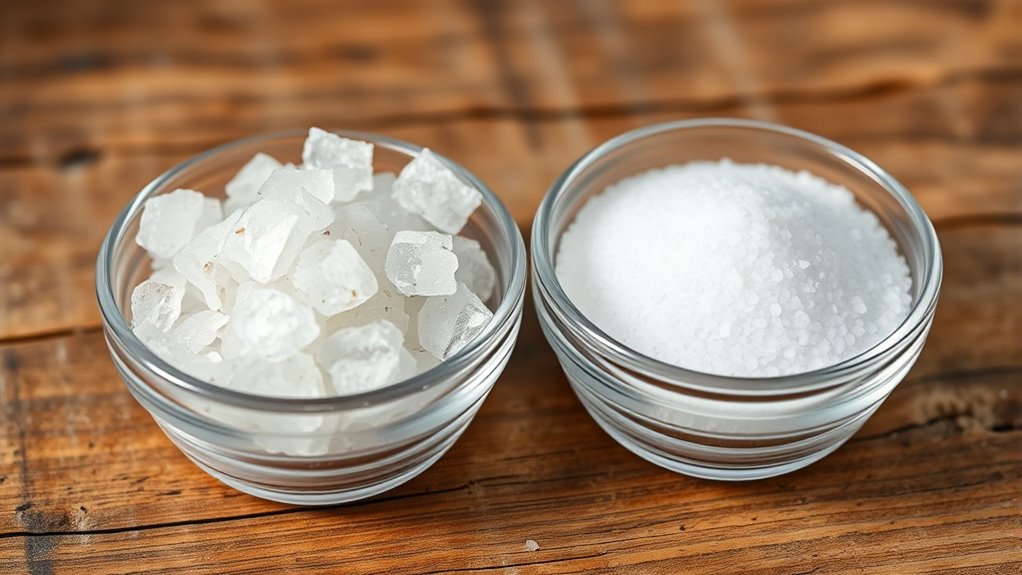
Although both kosher salt and table salt serve the same basic purpose, you’ll notice key differences in their crystal size, texture, and composition. Kosher salt features larger, coarser crystals, making it less dense and less salty per teaspoon compared to table salt’s fine, uniformly shaped grains.
This difference in crystal size affects how each salt packs and measures, so when you’re doing a salt comparison, you’ll find that about 1.5 teaspoons of table salt equal 1 teaspoon of kosher salt by volume. Kosher salt’s coarse texture dissolves more slowly, giving you better control when seasoning your food, especially for dry brining or finishing dishes.
Table salt, on the other hand, often contains additives like iodine and anti-caking agents, which kosher salt typically lacks. Understanding these distinctions helps you choose the right salt and measure it accurately for your cooking needs.
What Kosher Salt and Table Salt Are Made Of
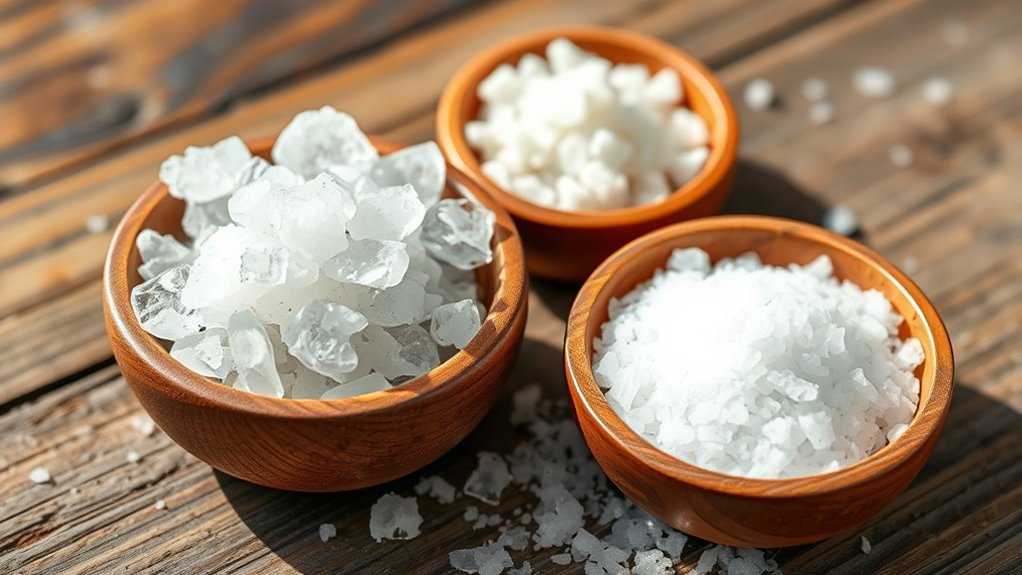
When you look closely at kosher salt and table salt, you’ll see their differences go beyond just texture and size—they stem from how each salt is made. Both are primarily composed of sodium chloride, but their crystal structure and refining process set them apart.
Kosher salt comes from natural sources like underground mines or evaporated seawater, which means its mineral content often includes trace minerals and impurities. It features coarse, irregularly shaped crystals.
On the other hand, table salt undergoes a rigorous refining process that removes most minerals, resulting in small, uniform cubic crystals. This refining also allows for the addition of iodine and anti-caking agents.
Texture Differences Between Kosher and Table Salt
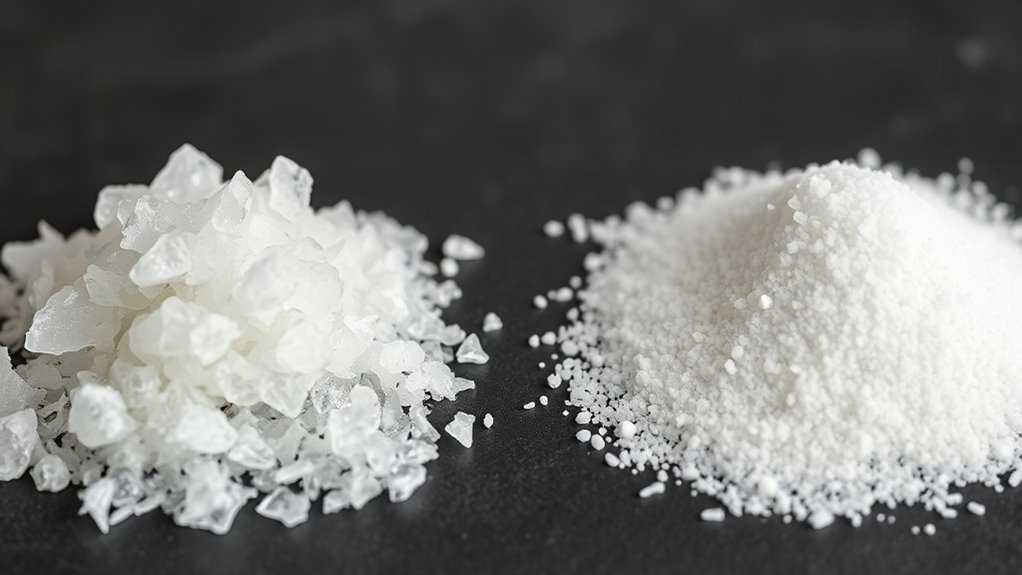
You’ll notice kosher salt has large, flaky crystals that feel light and easy to pinch, while table salt’s grains are small, dense, and uniformly shaped. This difference in crystal size and shape affects how each salt interacts with your food and how quickly it dissolves.
Knowing these texture differences can really help you pick the right salt for your cooking needs. It’s all about what works best for the dish you’re making and how you like to season.
Crystal Size Comparison
Two distinct crystal sizes set kosher salt and table salt apart, shaping their texture and how they interact with food. You’ll notice that kosher salt has larger, irregular crystals, while table salt features tiny, uniform grains.
This difference in crystal size affects texture, ease of use, and how quickly each salt dissolves.
- Kosher salt crystals are coarse salt, measuring about 1-3 millimeters.
- Table salt consists of fine salt crystals, roughly 0.3 millimeters.
- The irregular crystal shape of kosher salt makes it easier to pinch and sprinkle.
- Fine salt dissolves faster due to its smaller, denser crystal structure.
- Coarser crystals create more air space, giving kosher salt a rougher texture.
Understanding crystal size helps you choose the right salt for your cooking needs. It’s a simple detail but makes a big difference in your kitchen!
Grain Shape Impact
The unique shapes of kosher and table salt grains create distinct textures that affect how you use them in cooking. Kosher salt’s large, flaky crystal shape gives it a coarse texture, while table salt’s small, uniform cube-shaped grains feel fine and smooth.
Because of the grain size and irregular shape, kosher salt traps more air, making it less dense and easier to pinch or sprinkle with control. This texture also means kosher salt dissolves more slowly, making it ideal for dry seasoning and finishing dishes.
In contrast, table salt’s tight grain size and smooth texture lead to a faster dissolution rate, perfect for baking and seasoning liquids. Understanding these differences helps you choose the right salt for your seasoning needs.
How Salt Additives Affect Flavor and Appearance
When you choose table salt, additives like iodine and anti-caking agents can add a slightly bitter or metallic taste that changes the flavor. These additives also affect how the salt looks, sometimes making crystals less clear or whiter.
On the other hand, kosher salt usually stays pure. It gives your food a cleaner taste and a more natural appearance.
Additives Impact On Flavor
Although both kosher and table salt serve as essential seasonings, additives in table salt can change how your dishes taste and look. Table salt often contains anti-caking agents and iodine, which may cause flavor interference, giving your food a metallic or bitter aftertaste.
In contrast, kosher salt usually has no additives, providing a cleaner taste that highlights your ingredients’ natural flavors. When seasoning, consider these points:
- Anti-caking agents prevent clumping but can alter texture subtly
- Iodine may introduce a slight off-flavor, especially to sensitive palates
- Additives in table salt can mask or compete with delicate flavors
- Kosher salt’s lack of additives ensures purer, brighter saltiness
- Choosing kosher salt helps avoid unwanted flavor interference
Understanding these differences helps you pick the best salt for your culinary needs. It’s a simple switch that can really make a difference!
Visual Effects Of Additives
Additives don’t just influence flavor—they also change how salt looks and behaves in your kitchen. When you use table salt with additives like anti-caking agents and iodine, you might notice a darker color or cloudy crystal appearance.
These additives can affect the texture, sometimes causing clumping or caking, which impacts how easily you can sprinkle or measure salt. Finely ground salts with additives dissolve faster, improving visual uniformity in your dishes, but they may also carry a slight bitterness.
In contrast, natural salts such as kosher salt have a flaky, translucent crystal appearance that adds visual appeal without clumping. Understanding these visual effects of additives helps you choose the right salt for both flavor and presentation.
How Salt Crystal Size Impacts Dissolving Speed
Since salt crystal size directly affects how quickly it dissolves, understanding this difference helps you choose the right salt for your cooking needs. Kosher salt, with its larger, coarse salt crystals, dissolves more slowly than the fine salt crystals found in table salt.
This slower dissolving speed gives you more control over seasoning but requires patience during cooking. On the other hand, the smaller crystal size of table salt means it dissolves almost instantly, making it perfect when you need quick, even salt integration.
Here’s how crystal size impacts dissolving speed:
- Coarse salt crystals like kosher salt take longer to dissolve due to their larger size and air gaps.
- Fine salt crystals in table salt dissolve rapidly, speeding up seasoning.
- Larger crystals provide gradual seasoning control.
- Smaller crystals risk over-salting if not measured carefully.
- Crystal size also affects volume measurement accuracy in recipes.
Knowing these points guarantees you pick the right salt for your culinary needs.
When to Use Kosher Salt vs. Table Salt
Understanding how salt dissolves helps you decide when to use kosher salt versus table salt in your cooking. Kosher salt’s large crystal size makes it perfect for manual seasoning and dry brining, giving you tactile control and even distribution. This is especially great on large cuts of meat.
Its coarse grains let you pinch and sprinkle salt precisely, enhancing flavor without overdoing it.
On the other hand, table salt’s fine, uniform crystals dissolve quickly, making it ideal for baking, brines, and recipes needing evenly dispersed salt. Because of its crystal size, table salt integrates smoothly into liquids and batters.
When seasoning, remember that measurement matters—kosher salt takes up more volume than table salt, so you’ll need less by volume to achieve the same saltiness. Choosing between kosher salt and table salt depends on your recipe’s needs for texture, dissolving speed, and seasoning control.
How to Measure Kosher Salt and Table Salt Accurately
You’ll notice that a teaspoon of kosher salt doesn’t equal a teaspoon of table salt because their crystal sizes affect volume and density.
To measure accurately, it’s best to weigh your salt instead of relying on volume.
Using a kitchen scale helps you get consistent seasoning every time, no matter which salt you use.
Measuring By Weight
Two teaspoons of kosher salt won’t weigh the same as two teaspoons of table salt because kosher salt’s larger, less dense crystals make it lighter by volume.
When you measure by weight, you get accurate seasoning no matter the crystal size. Here’s how to measure kosher salt and table salt precisely:
- Use a kitchen scale for consistent results.
- Weigh salt instead of relying on volume measurements.
- Adjust quantity when substituting kosher salt for table salt.
- Remember kosher salt’s crystals are larger and less dense.
- Apply recipes’ weight measurements to avoid over- or under-salting.
Volume Vs Density
Measuring salt accurately comes down to knowing how volume and density differ between kosher salt and table salt. Kosher salt has larger, flakier crystals with lower density, while table salt’s fine, tightly packed crystals make it denser.
Because of this difference in crystal size, volume measurement can be misleading. For example, a teaspoon of kosher salt weighs less and contains less sodium than the same volume of table salt.
To measure salt precisely, rely on weight rather than volume. If you prefer volume measurement, use salt conversion guidelines—about 1 teaspoon of Diamond Crystal kosher salt equals 0.6 teaspoons of table salt by volume.
Understanding these differences ensures your recipes come out just right every time.
Substituting Table Salt for Kosher Salt
Although kosher salt and table salt look similar, you should use less table salt when substituting because its smaller, denser crystals pack more salt per volume. The difference in crystal size means that if you measure both by volume, table salt ends up saltier.
Because table salt crystals are smaller and denser, use less when substituting for kosher salt.
To get the seasoning right, consider these tips when you substitute:
- Use about half the amount of table salt compared to kosher salt for the same saltiness.
- Measure by weight instead of volume for more accuracy.
- For example, 1 teaspoon of kosher salt equals roughly ½ teaspoon of table salt.
- Adjust seasoning gradually as you cook to avoid over-salting.
- Remember that crystal size impacts how salt dissolves and tastes in your dish.
Why Brand and Quality Matter for Kosher and Table Salt
Because different brands produce kosher and table salt with varying crystal sizes, densities, and additives, the brand and quality you choose directly impact the saltiness and texture of your dishes.
For example, Diamond Crystal and Morton kosher salts differ in crystal size and density, which affects how much salt you need for accurate measurement. If you switch brands without adjusting quantities, your dish could end up too salty or bland.
With table salt, purity matters too. Some brands add iodine or anti-caking agents that can alter flavor and texture.
High-quality kosher salts usually have fewer additives, delivering a cleaner taste ideal for seasoning. Sticking to one brand and understanding its crystal size and additives ensures consistency in your cooking.
Tips for Choosing the Right Salt for Cooking and Baking
Knowing how brand and quality affect salt can help you pick the right one for your cooking needs. When choosing between kosher salt and table salt, consider how their salt crystals differ and how that impacts measurement and flavor in your dishes.
Kosher salt’s large, flaky crystals make it ideal for dry seasoning and give you better control while cooking. On the other hand, table salt’s fine crystals dissolve quickly, making it perfect for baking and recipes requiring even salt distribution.
Keep these tips in mind for cooking and baking:
- Use kosher salt for seasoning meat and vegetables to enhance texture.
- Opt for table salt in baked goods for precise, uniform saltiness.
- Adjust amounts when substituting salts due to crystal size differences.
- Check for additives like iodine or anti-caking agents that may affect flavor.
- Experiment with both to find what suits your recipes best.
Choosing the right salt helps you balance flavor, texture, and ease of measurement in every dish. Give it a try and see what works best for you!
Frequently Asked Questions
Is It Better to Use Kosher Salt or Table Salt?
It depends on your cooking needs. You’ll prefer kosher salt for seasoning and texture control, while table salt works better for baking and recipes requiring quick dissolving.
Choose based on flavor, convenience, and the dish you’re making. It really comes down to what feels right for your recipe and how you like to cook.
Why Do Chefs Use Kosher Salt Instead of Table Salt?
When you’re seasoning a steak, you use kosher salt because its coarse crystals let you control the amount better.
You’ll find it easier to pinch and sprinkle evenly, giving your dish a perfectly balanced flavor every time.
Can I Substitute Regular Table Salt for Kosher Salt?
Yes, you can substitute table salt for kosher salt, but use about half the amount by volume. Since table salt is denser, measuring by weight or adjusting taste as you cook helps keep your seasoning balanced.
It’s a simple swap, really. Just remember, a little goes a long way with table salt!
Is Pink Himalayan Salt Kosher?
Pink Himalayan salt can be kosher, but only if it’s certified by a reliable kosher agency. You’ll need to check its certification since natural minerals don’t guarantee kosher status.
Proper processing and packaging matter most when it comes to kosher certification. So, don’t just assume it’s kosher without the right approval.
Conclusion
Choosing between kosher salt and table salt is like picking the perfect brush for your culinary canvas. Each has its unique texture, taste, and sparkle that can transform your dishes in surprising ways.
By understanding their differences, you’ll wield your salt shaker with confidence, seasoning your creations like a true kitchen artist. So go ahead—sprinkle wisely, taste boldly, and let your meals sing with the perfect pinch every time.
Remember, kosher salt’s coarse texture makes it ideal for seasoning meat and adding crunch, while table salt’s fine grains dissolve quickly, perfect for baking and everyday cooking. Knowing when to use kosher salt versus table salt can truly elevate your dishes.
So next time you reach for salt, think about these key differences and choose the right one to bring out the best flavors in your food. Sprinkle smart, and enjoy the magic of both kosher salt and table salt in your kitchen!