
7 Types of Salt – Which Is Best for Cooking?
You’ll find different salts suit different cooking needs, and knowing which type to use can really elevate your dishes. Table salt dissolves quickly, giving you even seasoning every time.
On the other hand, kosher salt’s large flakes offer more control and a cleaner taste that many cooks prefer.
Sea salt adds subtle mineral flavors and a nice crunch, making it perfect for finishing touches.
Himalayan pink and Celtic sea salts don’t just boost flavor—they also enhance your dishes visually with their unique colors and mineral notes.
Each salt’s texture and flavor bring something special to the table.
Keep exploring the world of salts to discover which one matches your culinary style best. It’s fun to experiment and find out how each salt can transform your cooking!
Key Takeaways
– Table salt dissolves quickly and is ideal for consistent seasoning and baking due to its fine, uniform grains.
It’s a go-to for everyday cooking when you want even flavor throughout your dish.
– Kosher salt’s large crystals provide precise control and a clean taste, favored by chefs for cooking and finishing.
You’ll often see it sprinkled on meats before roasting or used to season dishes just right.
– Sea salt adds subtle mineral flavors and texture, perfect as a finishing salt for salads and roasted dishes.
It’s great when you want a little extra crunch and a mild salty kick right at the end.
– Himalayan pink salt enhances presentation and adds mineral notes, best used as a finishing garnish or in sauces.
Its beautiful color makes your dish look stunning, plus it brings a hint of earthy flavor.
– Celtic sea salt retains moisture and flavor in hot meats and seafood, offering nutritional benefits and complex taste.
It’s especially good when you want to keep your proteins juicy and packed with flavor.
Why Table Salt Is a Kitchen Essential
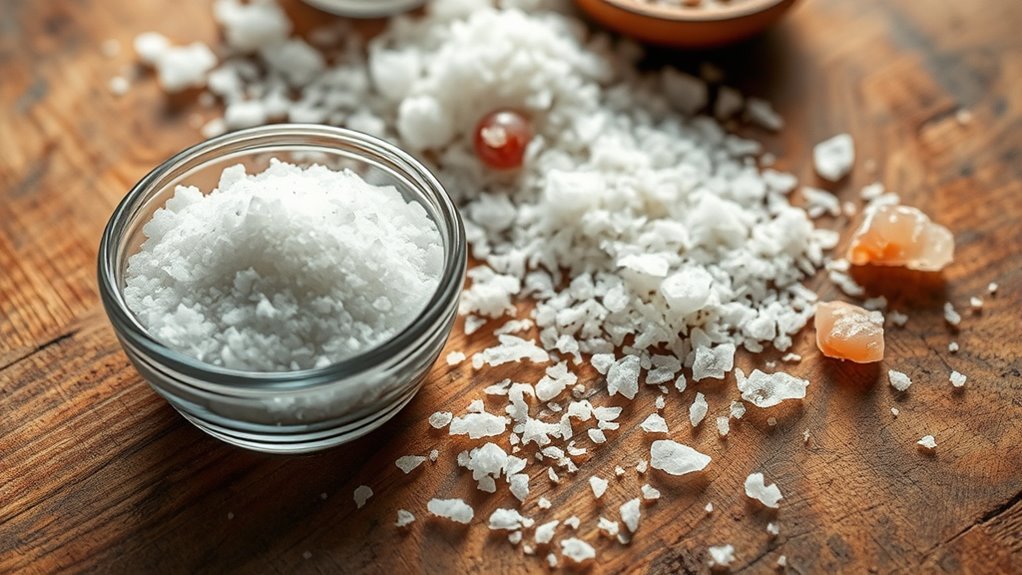
One reason table salt is a kitchen essential is its fine, consistent grain that dissolves quickly, making it perfect for everyday cooking and baking. Table salt’s finely ground crystals ensure even seasoning and quick flavor absorption in your dishes.
Thanks to thorough processing, impurities are eliminated, resulting in a pure product with standardized salinity and reliable sodium content. This means you can measure it precisely, which is especially important in baking where exact salt levels impact texture and taste.
Many varieties of table salt are iodized salt, helping you prevent iodine deficiency and support thyroid health. Its affordability and widespread availability make it a staple in most kitchens, so you always have the right salt on hand.
Whether you’re seasoning a simple salad or preparing a complex recipe, table salt’s consistency and iodine enrichment make it an indispensable ingredient for enhancing flavor and maintaining nutritional balance in your cooking.
Why Chefs Prefer Kosher Salt for Cooking
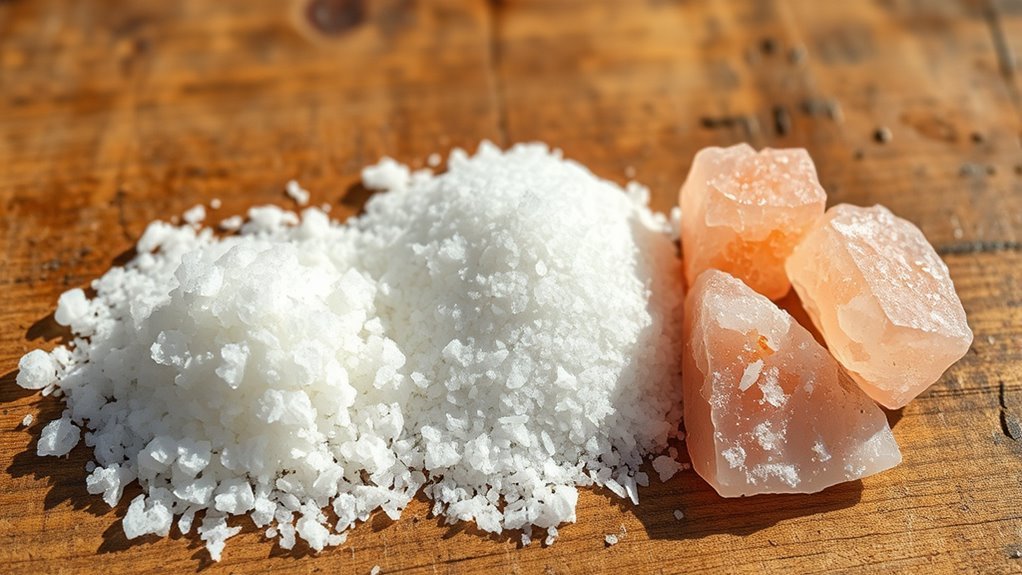
Why do so many chefs reach for kosher salt when seasoning their dishes? Kosher salt’s large crystals make it easy to pinch and sprinkle, giving you excellent control while cooking.
Chefs love kosher salt for its large crystals, perfect for easy pinching and precise seasoning control.
Its flaky texture lets it dissolve quickly and distribute evenly, ensuring your meat, vegetables, or any ingredient gets perfectly seasoned. Plus, kosher salt boasts purity without anti-caking agents, so you get a cleaner, fresher taste compared to processed table salt.
As a professional cook, you’ll appreciate these advantages:
- The tactile feedback from large crystals helps you measure salt by feel, so you don’t overdo it.
- Its versatility lets you use it both as a seasoning during cooking and as a finishing salt to enhance texture.
- The absence of additives maintains the salt’s pure flavor, keeping your dishes authentic.
Choosing kosher salt means better seasoning, texture, and control in your kitchen every time.
How Sea Salt Enhances Flavor and Texture
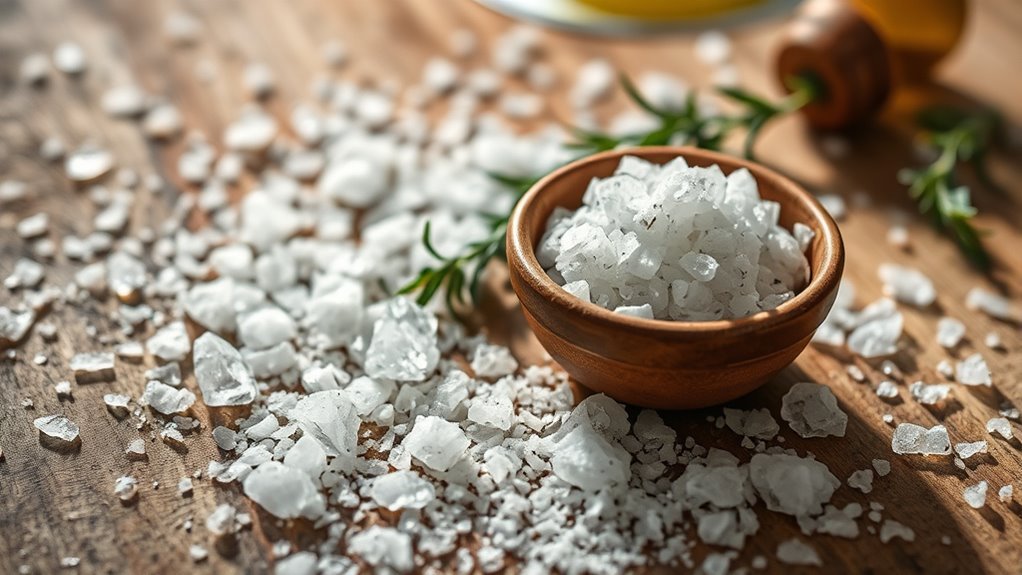
While kosher salt offers excellent control and purity during cooking, sea salt brings a unique dimension to your dishes through its natural mineral content and texture. Sea salt contains trace minerals like magnesium, calcium, and potassium that contribute to subtle flavor enhancement, adding complexity beyond simple saltiness.
Its coarse texture makes it ideal as a finishing salt, providing a satisfying crunch and visual appeal. Because sea salt is less refined, it retains natural impurities that deepen its taste profile with a mild briny flavor.
This complexity enhances your culinary use by elevating both flavor and mouthfeel. Additionally, sea salt dissolves slowly, giving you better seasoning control and allowing the salt to linger on the palate.
Whether you’re seasoning a salad or finishing roasted vegetables, its unique texture and mineral richness make sea salt a versatile choice that enhances both flavor and texture in your cooking.
When to Use Himalayan Pink and Celtic Sea Salt
Although Himalayan pink salt and Celtic sea salt share a rich mineral content, you’ll find they each bring distinct qualities to your dishes.
Himalayan pink salt works best as a finishing salt when you want to add visual appeal and subtle mineral notes. Sprinkle it on sauces, marinades, or use it as a delicate pink garnish to elevate your presentation.
On the other hand, Celtic sea salt’s briny flavor and natural moisture retention make it perfect for finishing hot meats, vegetables, and seafood just before serving. This preserves its unique texture and enhances the dish’s mineral flavor.
Consider these cooking uses to maximize their impact:
- Use Himalayan pink salt to highlight subtle mineral notes and add color contrast.
- Sprinkle Celtic sea salt on warm dishes for moisture retention and a briny finish.
- Both salts enrich the nutritional profile and complexity of flavors in your meals.
What Finishing Salts Add: Texture and Flavor
When you sprinkle finishing salts like Fleur de Sel or flaky sea salt on your dishes just before serving, you instantly add a delicate crunch and subtle briny flavor that transforms the eating experience. These finishing salts feature larger crystals with a delicate structure, which dissolve slowly, releasing bursts of flavor that complement your food’s natural taste.
Flaky salts provide a unique texture, contrasting the softness of cooked ingredients and elevating every bite. Beyond taste, finishing salts enhance your dish’s visual appeal, adding a gourmet touch that signals care and quality.
The subtle flavor and mineral content in these salts subtly enrich your meal without overpowering it, making them perfect for final seasoning. By using finishing salts, you not only boost flavor complexity but also create a more engaging sensory experience with both texture and appearance.
It’s a simple way to elevate everyday cooking into something special.
How Specialty Salts Bring Unique Flavors and Aromas
How do specialty salts transform your cooking beyond basic seasoning? They bring unique flavors and aromas that elevate your dishes in ways regular salt can’t.
Specialty salts like flaky salts add a delicate crunch and texture, making finishing dishes visually and sensorially exciting. Flavored salts, including herb-infused ones, introduce nuanced aromas and tastes through carefully blended herbs and spices. Smoked salts impart a rich smoky aroma that deepens grilled or roasted flavors.
Consider these benefits of specialty salts:
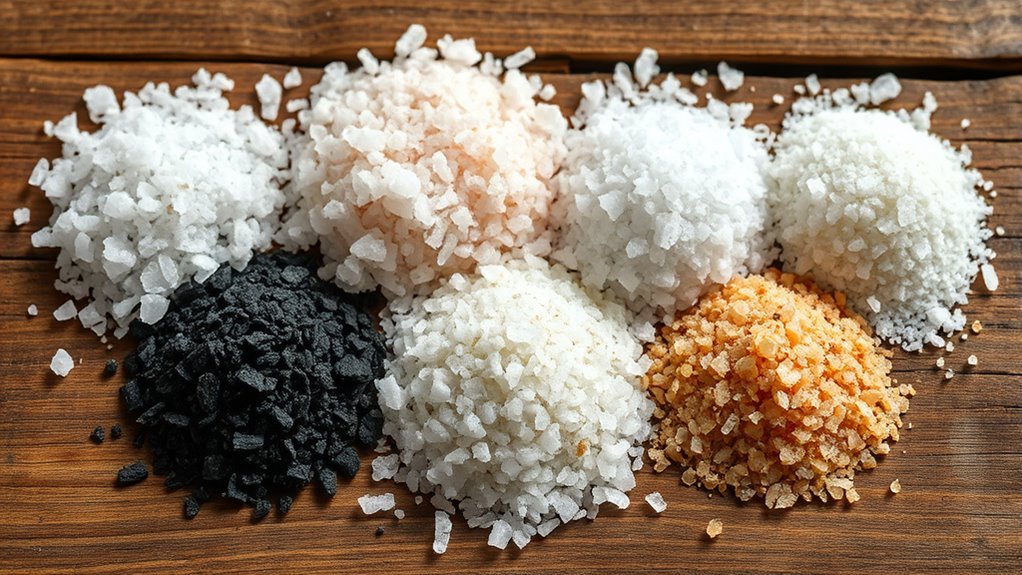
- Mineral-rich colorful salts like Himalayan pink or black Hawaiian salt provide complex tastes and striking hues.
- Flavored salts enhance dishes with subtle herb and spice infusions, adding depth.
- Smoked salts offer a smoky aroma that transforms simple meals into gourmet experiences.
Best Salts for Pickling and Brining?
Specialty salts can enhance flavors and textures in many ways, but choosing the right salt becomes even more important in pickling and brining. For these processes, you want to use a non-iodized salt like pickling salt or sea salt to avoid cloudiness and protect fermentation quality.
Pickling salt is ideal because it dissolves quickly, contains no anti-caking agents, and ensures consistent brine results. While kosher salt and coarse sea salt also work well for brining, you might need to grind them finer so they dissolve properly.
Himalayan pink salt and Celtic grey sea salt, with their rich mineral content and varying textures, are excellent alternatives. Using the correct salt helps you maintain the desired flavor, preserve your pickles effectively, and achieve a clean brine.
Avoid salts with additives that can interfere with fermentation, and you’ll get the best results every time you brine or pickle.
Frequently Asked Questions
What Is the Healthiest Kind of Salt for Cooking?
The healthiest salt for cooking is minimally processed, like Himalayan pink or Celtic sea salt. They contain natural minerals, but don’t overuse them.
You’ll get added nutrients while keeping your sodium intake balanced and healthy. Just remember, a little goes a long way!
What Are the 4 Types of Salt?
Picture coarse white crystals, fine white grains, sparkling pink chunks, and rough ocean flakes—that’s kosher, table, Himalayan pink, and sea salt.
You’ll use each for seasoning, finishing, or adding texture to your dishes. It’s pretty cool how different salts can change the vibe of your meal!
Is Kosher or Iodized Salt Better for Cooking?
You’ll find kosher salt better for cooking because its flaky crystals are easy to handle and evenly season food.
Iodized salt is great for baking and nutrition but can taste bitter if overused in cooking.
Which Salt to Avoid?
Don’t use fine table salt for finishing dishes because it dissolves too fast. But avoid unrefined salts in baking where precision matters.
Also, skip salts with additives or strong flavors that might overpower your recipe’s balance. It’s all about keeping the right taste in check!
Conclusion
You might think salt is just salt, but as you’ve seen, it’s anything but simple. From the humble table salt to the fancy Himalayan pink, each type brings something unique to your cooking.
So, next time you reach for that plain shaker, remember—your dish deserves better. After all, why settle for ordinary when a pinch of the extraordinary is just a sprinkle away?
Choosing the best salt for cooking can truly elevate your meals. Whether it’s sea salt, kosher salt, or fleur de sel, each variety offers distinct flavors and textures that can enhance your recipe. Salt smarter, not harder, and watch how your dishes transform with the right type of salt.