
10 Key Differences Between Pickling Salt and Kosher Salt
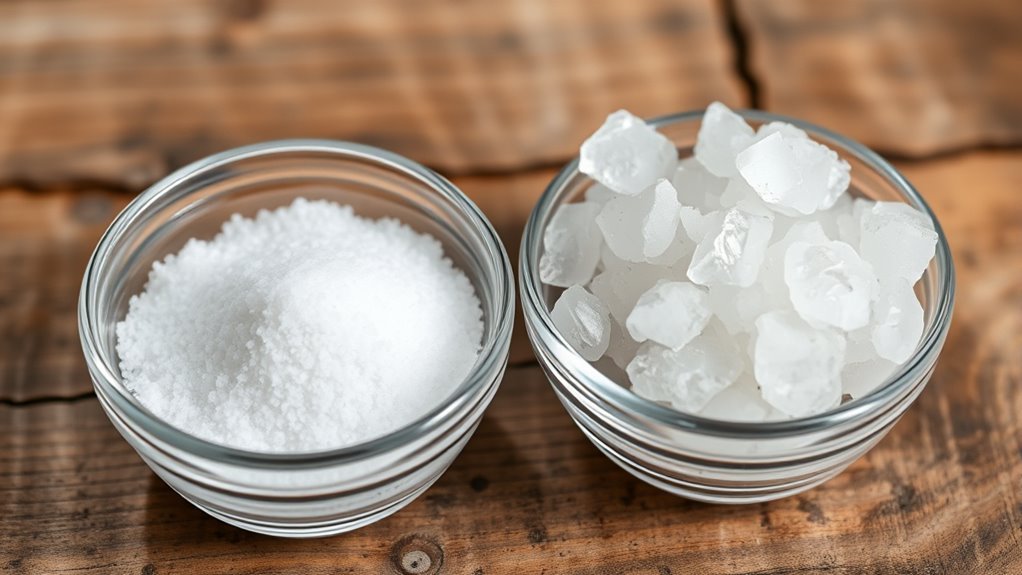
You’ll notice pickling salt has fine grains and no additives, making it dissolve quickly and keep brines clear. This is why it’s a favorite for canning and preserving, where clarity and purity matter.
Kosher salt, on the other hand, has larger flakes that dissolve slower and often contain anti-caking agents but no iodine. Its texture makes it perfect for seasoning and dry brining meats.
Pickling salt’s density means you need to measure carefully to match flavors when substituting it for kosher salt.
But when it comes to preserving crispness and bright flavors, pickling salt truly shines.
Keep going—you’ll uncover how these differences impact your cooking and preserving, helping you decide which salt suits your needs best.
Key Takeaways
- Pickling salt is pure sodium chloride without additives, while kosher salt may contain anti-caking agents and typically lacks iodine.
- Pickling salt has fine grains that dissolve quickly, producing clear brines; kosher salt has larger flakes that dissolve slower and can be gritty.
- Pickling salt is denser, so volume measurements differ; kosher salt requires about 25% more by volume for equivalent saltiness.
- Pickling salt is ideal for clear, bright brines and preservation; kosher salt suits seasoning, dry brining, and moisture control.
- Pickling salt ensures crisp texture and bright flavor in pickles, whereas kosher salt promotes even seasoning and moisture evaporation.
What Is Pickling Salt And How Is It Made?
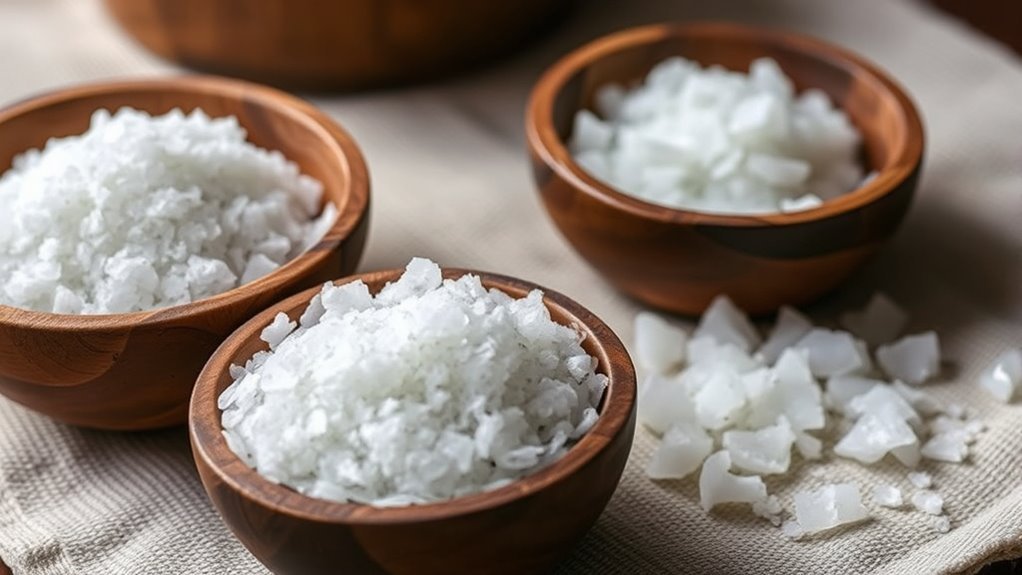
Pickling salt is a finely ground, pure sodium chloride designed specifically for making pickles and preserving foods. Unlike regular table salt, it’s free from anti-caking agents and iodine, which can cause cloudiness or discoloration in your brine.
When you use pickling salt, you’re relying on its pure sodium chloride content to create a clear, bright solution that lets the flavors of your preserved foods shine.
The production of pickling salt involves refining sodium chloride to remove impurities and additives typically found in ordinary salts. Its fine grain size means it dissolves quickly, so you don’t have to wait for your brine to clear up.
This rapid dissolution is essential when you want a precise, clean pickling process. By choosing pickling salt, you guarantee your preserved foods maintain their appearance and taste without unwanted residues or cloudiness caused by anti-caking agents or trace minerals.
What Makes Kosher Salt Different From Pickling Salt?
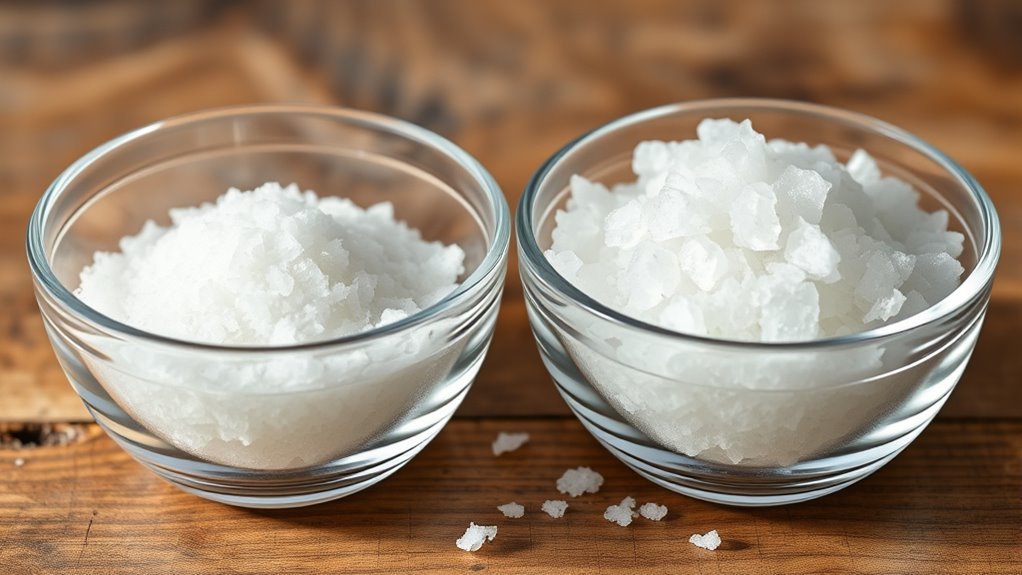
Although both salts serve important roles in cooking and preserving, kosher salt differs substantially from pickling salt in texture, composition, and usage. When you compare the two, here’s what stands out:
Kosher and pickling salts differ greatly in texture, composition, and how you use them in the kitchen.
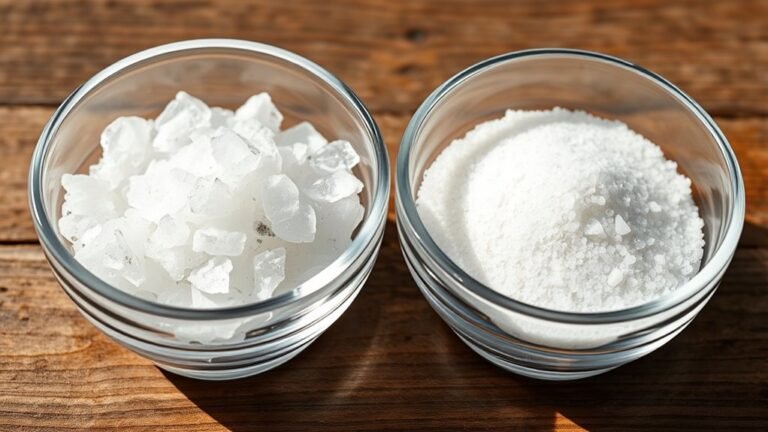
Kosher salt features larger, coarser flakes, while pickling salt has fine granules designed to dissolve quickly. Pickling salt dissolves fast to create a clear brine, essential for preserving, whereas kosher salt dissolves more slowly.
Pickling salt is pure sodium chloride without anti-caking agents, but kosher salt may contain them to prevent clumping. The density varies—pickling salt is usually denser than kosher salt, so equal volumes won’t weigh the same.
Understanding these differences helps you choose the right salt for your task—whether it’s pickling or seasoning—ensuring the best texture and flavor in your dishes. It’s all about picking the right salt to get the job done perfectly!
How Does Salt Grain Size Affect Pickling And Cooking?
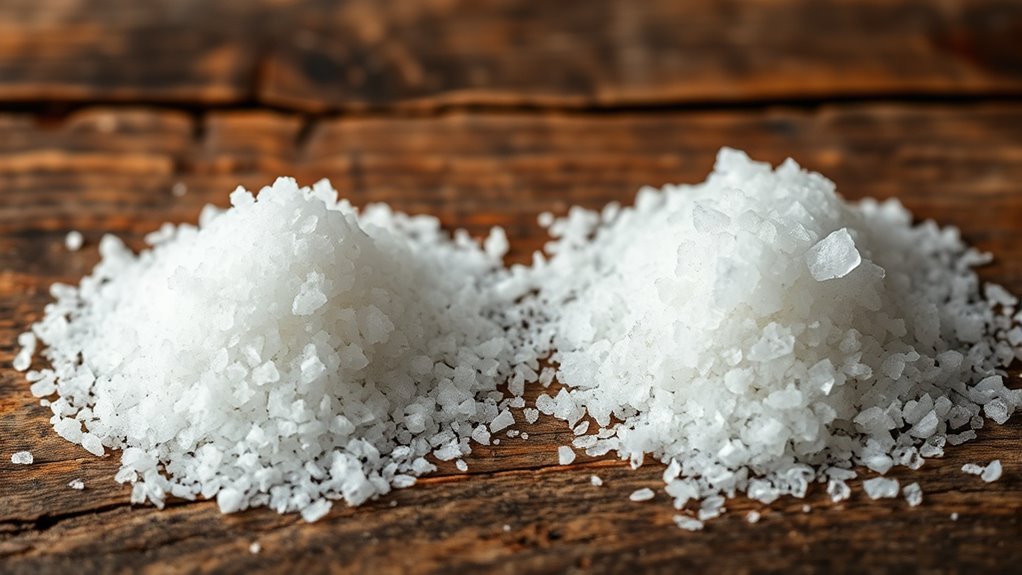
You’ll notice that salt grain size changes how quickly it dissolves and spreads flavor in your recipes. Finer grains like pickling salt dissolve fast for even seasoning, while coarse kosher salt takes longer and can be less precise.
This also affects how you measure salt, since volume doesn’t equal weight between different grain sizes. So, it’s good to keep that in mind when you’re cooking or pickling!
Grain Size And Dissolution
When you dissolve salt in a brine or recipe, the grain size plays a crucial role in how quickly and evenly it dissolves. The crystal size affects not only the dissolution rate but also the clarity and texture of your final dish.
Here’s what you should know:
- Fine-grain pickling salt dissolves rapidly, creating a clear brine without cloudiness.
- Coarse-grain kosher salt takes longer to dissolve, sometimes needing extra stirring or grinding.
- Large crystals from kosher salt may leave a gritty texture if not fully dissolved.
- Grain size influences measurement accuracy since coarse grains occupy more volume per weight than fine grains.
Understanding these factors guarantees consistent flavor and a smooth pickling or cooking experience. It really makes a difference when you get it right!
Texture Impact On Flavor
Salt grain size doesn’t just affect how quickly it dissolves—it also shapes the texture and flavor experience in your pickling and cooking. When you use fine grain salt like pickling salt, it dissolves quickly and evenly, giving your dishes a smooth texture and a consistent, clean flavor.
On the other hand, kosher salt’s coarser grains dissolve more slowly, which can create uneven seasoning but add a pleasant burst of saltiness when bitten into. This larger grain size also introduces a subtle crunch or residual graininess, changing the overall texture.
Because fine grain salt packs more salt per teaspoon, it intensifies flavor more efficiently. So, understanding these texture impacts helps you adjust your seasoning to get the best taste and feel in your recipes.
Measuring Salt Accurately
Although pickling salt and kosher salt may look similar, their differing grain sizes can considerably affect how you measure them in recipes. When measuring salt, grain size impacts both volume measurements and how salt dissolves in your dish.
Here’s what you need to know:
- Fine-grain pickling salt dissolves faster and more evenly than coarse kosher salt. It’s ideal for clear brines.
- Kosher salt’s larger crystals mean one tablespoon weighs more, so volume measurements aren’t interchangeable.
- You might need to grind kosher salt finer to mimic pickling salt’s dissolving properties.
- For accuracy, weighing salt is better than relying on volume measurements, especially when substituting between types.
Understanding these differences ensures your pickling and cooking results turn out just right every time.
Why You Should Avoid Additives And Iodine In Pickling Salt
Because additives and iodine can cause cloudiness and off-flavors, you should avoid salts containing them when pickling. Iodine reacts with the acids in your pickling brine, which can lead to cloudy liquids and an unpleasant taste that masks your food’s natural flavors.
Additives like anti-caking agents also pose problems by interfering with fermentation and causing uneven seasoning. This impacts both texture and taste, making your pickles less enjoyable. So, it’s best to stick with pure pickling salt for the best results.
How Salt Density Affects Measurement And Recipe Accuracy
You’ll notice that pickling salt is denser than kosher salt, so a tablespoon of each won’t weigh the same. Measuring by volume alone can throw off the salt concentration in your recipe.
To get accurate results, you need to adjust your measurements based on weight rather than just scooping out tablespoons. It’s a small change, but it can make a big difference in how your dish turns out.
Salt Density Variations
When measuring salt for your recipes, it’s important to recognize that pickling salt is denser than kosher salt. It packs about 3/4 oz per tablespoon compared to kosher salt’s 5/8 oz. This difference in salt density affects how you use volume measurements and means you might need to adjust your recipes.
Here’s what to keep in mind:
- A tablespoon of pickling salt contains more actual salt than the same volume of kosher salt.
- Using volume measurements without adjusting for density can cause under- or over-salting.
- Recipes specifying salt by weight require careful adjustments when substituting between salt types.
- For accuracy, weigh your salt rather than relying solely on volume measurement, especially when swapping salts.
Getting a handle on these variations will help you keep your flavors just right and maintain preservation quality.
Volume Versus Weight
Understanding the difference between volume and weight is essential when measuring pickling salt versus kosher salt. Because pickling salt is denser, a tablespoon of it weighs more than a tablespoon of kosher salt.
This means volume measurements can mislead you if you don’t adjust for weight, affecting your recipe’s accuracy.
| Salt Type | Volume (1 tbsp) | Weight (grams) |
|---|---|---|
| Pickling Salt | 1 tbsp | 18 g |
| Kosher Salt | 1 tbsp | 12 g |
| Difference | Same volume | Pickling salt is 50% heavier |
To get consistent measurement and recipe results, always weigh your salt instead of relying on volume. This eliminates guesswork from density differences.
Recipe Measurement Adjustments
Measuring salt by volume can throw off your recipe’s salt content because pickling salt packs more weight into the same space than kosher salt. When you’re making recipe measurement adjustments, keep these points in mind:
Use weight, not volume, for accurate salt measurement. Pickling salt is denser, so 1 tablespoon weighs more than kosher salt’s tablespoon.
Substitution requires reducing the amount of pickling salt compared to kosher salt to avoid over-salting. A kitchen scale guarantees consistent and precise salt amounts regardless of crystal size.
Why Pickling Salt Ensures Clear Brine And Better Preservation
Because pickling salt dissolves quickly and completely, it creates a clear brine that prevents cloudiness and discoloration in your preserved foods. When you use pickling salt, its fine, pure grains and lack of additives keep the brine transparent, which is essential for the best preservation of your vegetables.
Without anti-caking agents, there’s no risk of staining or clouding, so your pickled goods stay crisp and visually appealing.
Here’s a quick comparison of pickling salt’s benefits for creating a clear brine and ensuring better preservation:
| Feature | Pickling Salt | Effect on Brine |
|---|---|---|
| Grain Size | Fine and uniform | Dissolves quickly |
| Additives | None | Prevents discoloration |
| Anti-caking Agents | Absent | No cloudiness |
| Solubility | High | Consistent clear brine |
| Preservation | Ideal | Maintains crispness |
Using pickling salt guarantees the best preservation results every time.
Why Kosher Salt Is Best For Dry Brining And Seasoning
You’ll find kosher salt’s coarse texture perfect for dry brining because it efficiently draws out moisture and creates a flavorful crust. Its flaky grains let you spread salt evenly, so your seasoning hits every bite just right.
Plus, its mild flavor won’t overpower the natural taste of your food. It’s a simple way to boost flavor without going overboard.
Coarse Texture Benefits
When you use kosher salt for dry brining, its coarse flakes draw out moisture more effectively from meat and vegetables, enhancing flavor and texture. The coarse texture and larger crystal size make a big difference in how you season.
Here’s why kosher salt excels:
- Coarse grains promote better evaporation during dry brining, resulting in a crispier finish.
- Chunky flakes give you precise control when applying salt or dry rubs.
- The coarse texture prevents clumping, ensuring even coverage on surfaces.
- Larger crystals dissolve slowly, allowing a gradual, controlled flavor infusion during curing.
These benefits make kosher salt your go-to for dry brining and seasoning. It’s all thanks to its unique crystal structure and handling advantages.
Flavor Distribution Advantages
Although seasoning might seem straightforward, choosing kosher salt gives you superior control over flavor distribution during dry brining. Its coarse grains allow you to spread salt evenly, preventing clumps and ensuring consistent seasoning across the meat’s surface.
Because kosher salt dissolves slowly, it coats and penetrates meat more uniformly, letting you taste the full depth of flavor with every bite. The large flakes also make it easy to visually monitor how much salt you’ve applied, so you can adjust seasoning precisely.
Plus, kosher salt’s texture promotes moisture evaporation, which helps concentrate flavors without drawing out too much liquid too quickly. This combination of factors makes kosher salt the best choice when you want balanced, controlled flavor distribution in dry brining and seasoning.
Moisture Extraction Efficiency
Because kosher salt’s coarse, flaky crystals have a larger surface area, they draw moisture from meat more efficiently during dry brining. This moisture extraction process is key to seasoning and texture enhancement.
Here’s why kosher salt’s coarse grains excel for dry brining:
- The larger surface area boosts contact with meat, speeding up moisture extraction.
- Coarse grains distribute evenly, ensuring consistent dehydration.
- The slower absorption rate gives you better control over how much moisture is drawn out.
- Without anti-caking agents, kosher salt won’t hinder natural evaporation.
You’ll find that kosher salt’s texture and composition make it ideal for optimizing moisture extraction. It helps you achieve perfectly seasoned, juicy meat every time.
Can You Safely Substitute Kosher Salt For Pickling Salt?
You can safely substitute kosher salt for pickling salt as long as you measure by weight, since both consist of pure sodium chloride without additives. This substitution works well because neither salt contains anti-caking agents that could cloud or discolor your pickling brine.
However, keep in mind that kosher salt has larger crystals, so if you measure by volume, you might end up using less salt than needed, affecting flavor and preservation. Also, kosher salt may take longer to dissolve, so grinding it finer can help it blend properly in your brine.
Always check that your kosher salt is free from additives to maintain the clarity and safety of your pickling solution. By focusing on weight rather than volume, you guarantee consistent saltiness and effective preservation when substituting kosher salt for pickling salt in your recipes.
How To Measure And Adjust Salt When Substituting
When substituting kosher salt for pickling salt, paying close attention to how you measure and adjust quantities makes all the difference. Because pickling salt is denser, volume measurements can mislead you.
Substituting kosher for pickling salt requires careful measurement since pickling salt’s density can skew volume-based amounts.
Here’s how to get it right:
- For volume substitution, use about 3/4 teaspoon of pickling salt to replace one teaspoon of kosher salt, accounting for density differences.
- Whenever possible, weigh your salts—3/4 ounce (21 grams) of pickling salt equals one tablespoon, while kosher salt weighs about 5/8 ounce (17 grams) per tablespoon.
- If your kosher salt is coarse, crush or grind it to help it dissolve more easily in brining solutions.
- Check for additives or anti-caking agents in your salt, as they can affect solubility and clarity, which is pretty important when you’re pickling.
How Salt Type Impacts Pickle Flavor, Texture, And Appearance
Although both pickling salt and kosher salt serve the basic purpose of seasoning, they impact your pickles’ flavor, texture, and appearance in distinct ways. Pickling salt dissolves quickly thanks to its fine grains, creating a clear brine that keeps your pickles looking bright and free from cloudiness.
This rapid dissolution also helps maintain a consistent, crisp texture, giving your pickles that perfect crunch. In contrast, kosher salt’s larger, coarser crystals dissolve more slowly, which can lead to uneven texture and a less uniform appearance, sometimes resulting in a cloudier brine.
Flavor-wise, pickling salt offers a pure, clean taste that intensifies the pickle flavor, while kosher salt provides a milder, less salty profile. So, if you want pickles with sharp flavor, crisp texture, and a sparkling appearance, pickling salt is the better choice.
Using kosher salt might work for milder results but can affect both texture and appearance.
Frequently Asked Questions
Can I Substitute Pickling Salt for Kosher Salt?
Yes, you can substitute pickling salt for kosher salt, but you’ll need to use less by volume since pickling salt is finer.
Measure by weight to avoid over-salting and watch for additives that affect brine clarity.
Just keep an eye on those details, and you’ll be good to go!
How Much Pickling Salt Is Equal to 1 Cup of Kosher Salt?
Think of it like filling a glass with water versus syrup—use about 7/8 cup of pickling salt to match 1 cup of kosher salt.
You’ll get the same punch without overdoing it.
Do I Really Need Pickling Salt?
You don’t always need pickling salt, but using it helps keep your brine clear and your pickles crisp.
If you want the best appearance and flavor, especially for canning, pickling salt’s definitely worth it.
How Much Kosher Salt to Replace Pickling Salt?
You’ll need about 1 1/3 cups of kosher salt to replace one cup of pickling salt.
Weigh your salt for accuracy and guarantee it’s free from additives to maintain proper flavor and preservation.
It’s pretty important to keep things precise here. Otherwise, your pickles might not turn out quite right!
Conclusion
Now that you know the key differences between pickling salt and kosher salt, you can confidently choose the right one for your recipes. Using the proper salt really makes a difference in flavor, texture, and even the look of your pickles.
No need to send a telegram to your pantry for advice! Just measure carefully and avoid additives to keep things simple and delicious.
Remember, pickling salt dissolves easily and doesn’t contain anti-caking agents, making it perfect for clear, crisp pickles. Kosher salt, on the other hand, has a different texture and may contain additives that can cloud your brine or affect taste.
So, whether you’re brining, pickling, or seasoning, picking the right salt is key to perfect results. Enjoy your perfectly seasoned creations every time. Happy pickling, old sport!