
When to Use Salted Vs Unsalted Butter With 7 Key Cooking Tips
You’ll want to use salted butter for everyday cooking, spreading, and adding quick flavor since it enhances taste and lasts longer. It’s perfect for when you want that extra touch of seasoning without thinking too much about it. Salted butter adds a nice boost to your dishes and keeps well in the fridge.
Choose unsalted butter when baking or making sauces to control salt precisely and guarantee consistent results. Baking especially needs that exact balance, so unsalted butter gives you full control.
Plus, it’s easier to measure salt separately when you’re aiming for perfection.
Remember to adjust added salt when swapping types, store butter chilled, and thaw frozen butter properly for best texture. Keeping both on hand means you’re ready for any recipe. Explore these tips to master your butter use.
Key Takeaways
- Use unsalted butter for baking to control salt levels and ensure consistent flavor and texture. It gives you more control over the taste of your baked goods.
- Salted butter is ideal for spreading, sautéing, and finishing dishes to quickly enhance flavor. It’s super convenient when you want a quick boost without measuring salt.
- Adjust added salt in recipes when substituting between salted and unsalted butter to maintain balance. This way, your dish won’t end up too salty or bland.
- Store butter properly in the refrigerator or freezer to preserve freshness and extend shelf life. Keeping it wrapped tight helps avoid absorbing other flavors.
- Keep both types on hand to suit different cooking needs: unsalted for precision, salted for convenience. That way, you’re always ready no matter what you’re cooking!
What’s the Difference Between Salted and Unsalted Butter?
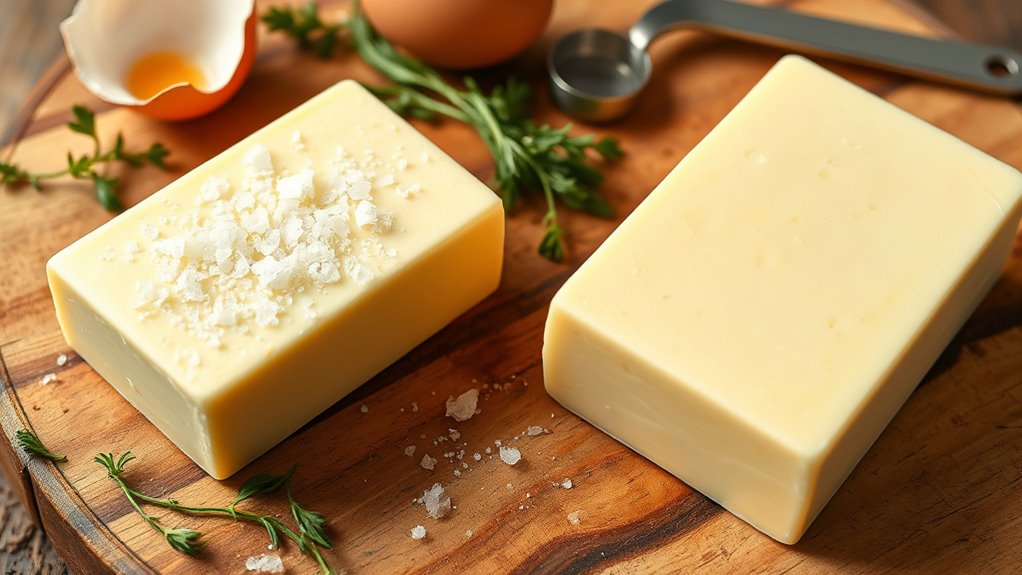
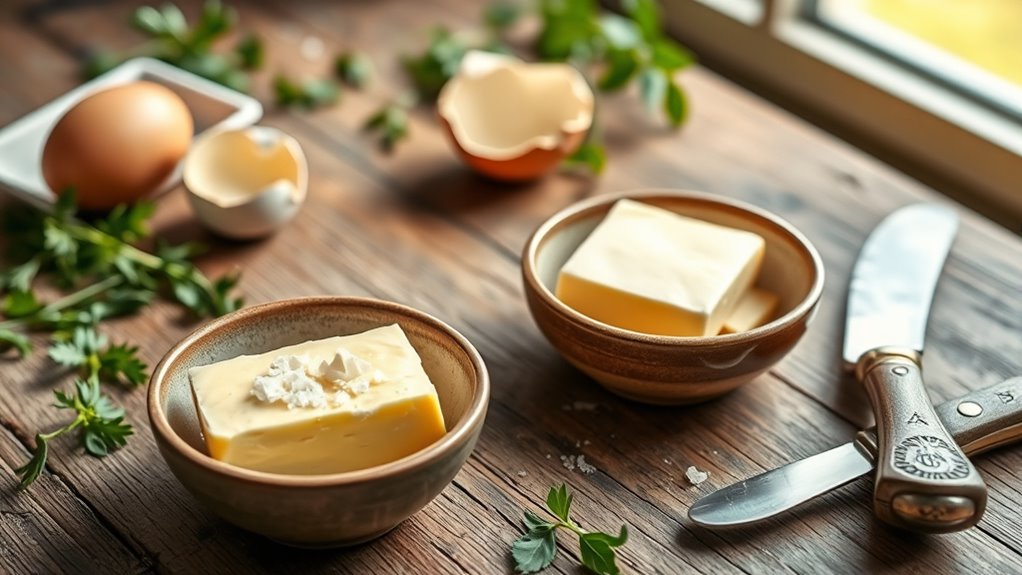
Although both salted and unsalted butter come from the same churned cream, the key difference lies in the added salt content—salted butter includes about 1-2% salt, while unsalted butter has none. This salt content varies by brand and batch, affecting taste and sodium levels, which range roughly from 90 mg to 120 mg per teaspoon in salted butter.
When you bake, unsalted butter is usually your best bet because it lets you control seasoning precisely without unexpected saltiness. Salted butter, on the other hand, benefits from salt acting as a preservative, giving it a longer shelf life compared to unsalted butter.
When to Use Salted Butter for Cooking and Spreading
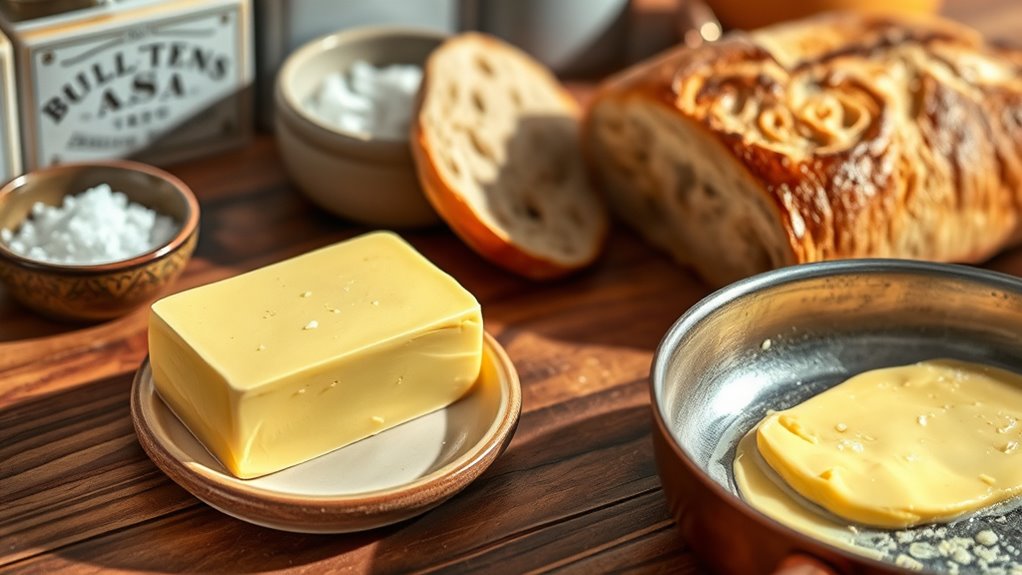
When you want to add a quick burst of flavor without extra effort, salted butter is perfect for spreading on bread, toast, or bagels. Its built-in salt provides a natural flavor enhancement, so you don’t need to add anything extra.
Salted butter also shines in everyday cooking, like sautéing or pan-frying, because it seasons your dish as it cooks. When using salted butter for cooking, just be sure to taste your food before adding additional salt to prevent over-salting.
It’s also great for finishing dishes—try melting salted butter over vegetables, popcorn, or baked potatoes to boost their flavor effortlessly. Because of its convenience and tasty profile, many prefer salted butter for everyday use when precise salt control isn’t critical.
Why Unsalted Butter Is Best for Baking
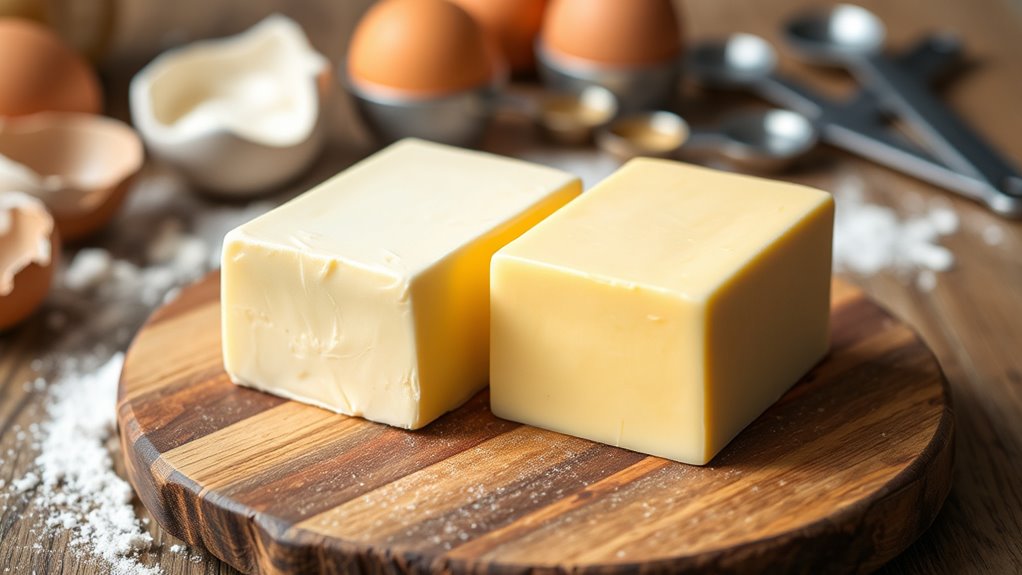
When you bake, using unsalted butter gives you precise control over how much salt goes into your recipe, ensuring consistent results every time. It lets the true flavors of your ingredients shine without any unexpected saltiness sneaking in.
Choosing unsalted butter helps you maintain the perfect balance and preserve the integrity of your baked goods. Plus, it’s just easier to tweak the seasoning exactly how you want it.
Precise Salt Control
Because unsalted butter contains no added salt, you can control the exact amount of salt in your recipes. This control is essential for baking.
Using unsalted butter gives you precise control over salt levels, making sure your baked goods turn out just right. Salted butter’s variable salt content can throw off the delicate balance in cakes and pastries. But unsalted butter lets you measure salt accurately every time.
Here’s why precise salt control matters in baking:
- Prevents unintended saltiness that masks flavors
- Maintains the intended taste of delicate recipes
- Allows you to adjust salt to recipe specifications
- Supports consistent texture and dough structure
Choosing unsalted butter helps you master baking with confidence and accuracy. It’s the little trick that can make a big difference.
Consistent Baking Results
Although it might seem like a small detail, using unsalted butter gives you consistent baking results by eliminating the unpredictability of salt content. When you choose unsalted butter, you gain full salt control, allowing you to add the exact amount your recipe calls for.
This precise measurement guarantees recipe consistency every time you bake. Different brands of salted butter vary in salt levels, which can throw off your baking results and affect chemical reactions like leavening and gluten development.
Unsalted butter also tends to be fresher, reducing the risk of off-flavors in your baked goods. By using unsalted butter, you maintain better control over your ingredients, helping you achieve reliable, delicious results with every batch.
Flavor Integrity Preservation
If you want your baked goods to showcase their true flavors, using unsalted butter is essential. It gives you complete salt control, ensuring no unexpected saltiness disrupts the flavor preservation in your recipes.
This precision supports baking consistency and recipe accuracy, so every batch tastes just right. Plus, unsalted butter lets the subtle butter flavor shine through without interference from added salt.
Here’s why you should choose unsalted butter for baking:
- Maintains delicate flavor balances in pastries and cakes
- Preserves the original dairy taste and aroma
- Avoids variability in salt content that affects baking consistency
- Enhances recipe accuracy by allowing precise salt adjustments
For true flavor integrity, unsalted butter is your best bet. It just makes everything taste better!
How Salt Levels in Salted Butter Affect Recipes
You’ll notice that salt levels in salted butter can vary a lot between brands, which affects how salty your dish turns out. This variability makes controlling flavor especially important in baking, where precise salt amounts matter.
Knowing your butter’s salt content helps you adjust other seasonings to get the taste just right. It’s a simple step that can really make a difference in your cooking.
Salt Variability Impact
Because salt content in salted butter varies a lot depending on the brand and region, understanding these differences can really help you control your recipes better. Salt variability between salted and unsalted butter impacts both your baking results and the flavor balance.
With inconsistent salt levels, you might notice your dough behaves differently or your dishes end up tasting saltier than you expected. To keep things in check, here are some simple tips to consider:
- Check your butter’s salt content to avoid accidentally over-salting.
- Adjust the amount of added salt in your recipes based on the butter’s sodium level.
- Keep in mind that European butters often have more salt, which can change the taste.
- If you want full control over salt in your cooking, go for unsalted butter.
Making these recipe tweaks will help you get consistent, delicious results every time.
Baking Flavor Control
Salt content differences in salted butter don’t just affect seasoning—they can substantially influence the flavor and texture of your baked goods. Since salt levels in salted butter vary between 1% and 2%, using it in baking recipes often leads to unpredictable salt content.
This inconsistency can throw off the balance, making desserts too salty or altering sweetness and texture, especially in delicate pastries and cakes. By choosing unsalted butter, you gain precise salt control, ensuring flavor consistency and proper chemical reactions during baking.
Because salt content varies even among salted butter brands, relying on unsalted butter helps you maintain accuracy and achieve the intended taste every time. For consistent, controlled baking results, unsalted butter is the smart choice in most baking recipes.
How to Adjust Salt When Swapping Butter Types
When swapping between salted and unsalted butter, you’ll need to adjust the added salt in your recipe to keep flavors balanced. Salted butter already contains salt, so modifying your recipe’s salt is essential to avoid over- or under-seasoning.
Here are key baking tips for salt adjustment when making this recipe modification:
- Reduce added salt by about ¼ teaspoon per stick if you switch from unsalted butter to salted butter.
- Increase salt by roughly ¼ teaspoon per stick when replacing salted butter with unsalted butter.
- Check the sodium content of your butter brand since American salted butter usually has 90-120 mg sodium per teaspoon.
- Taste your dough or batter after swapping and adjust salt gradually, especially if using European-style salted butter, which can have nearly twice the sodium.
How to Store Salted and Unsalted Butter for Freshness
To keep your butter fresh and flavorful, store both salted and unsalted varieties in the refrigerator at or below 40°F (4°C). Proper butter storage is essential to maintain freshness and prevent spoilage.
Keep your butter in its original packaging or transfer it to an airtight container to avoid absorbing odors from other foods. Always use clean utensils when cutting butter to reduce contamination and extend shelf life. This is especially important for unsalted butter, which has a shorter lifespan and is best consumed within 1 to 3 months.
If you want to store butter longer, consider freezer storage. Wrap it tightly in foil or plastic wrap to prevent freezer burn, and it’ll keep well for 6 to 9 months.
When you’re ready to use frozen butter, thaw it in the refrigerator to maintain texture and taste. Following these butter storage tips will help you enjoy fresh, flavorful butter every time you cook or bake.
Why Keep Both Salted and Unsalted Butter at Home
Storing both salted and unsalted butter properly guarantees you always have the right kind on hand for any cooking or baking task. Keeping both types gives you culinary flexibility, letting you tailor your dishes to perfection.
Properly storing salted and unsalted butter ensures you always have the perfect option for cooking or baking.
Unsalted butter lets you control salt levels precisely, which is crucial in baking or delicate recipes. Salted butter, with its longer shelf life, is perfect for everyday spreading and cooking.
Here’s why you should keep both at home:
- You can follow any recipe accurately, especially baking ones that need exact salt amounts.
- Salted butter enhances flavor when spreading on bread or finishing dishes.
- Unsalted butter is your go-to for sauces and recipes where salt balance matters.
- Having both means you’re always ready, no matter the culinary challenge or taste preference.
Frequently Asked Questions
Do Professional Chefs Use Salted or Unsalted Butter?
Professional chefs use both salted and unsalted butter, depending on the dish. You’ll find them choosing unsalted butter for precise baking control and salted butter for adding quick flavor in savory recipes or finishing touches.
It really comes down to what the recipe needs. Unsalted butter gives them the ability to control the saltiness exactly. Meanwhile, salted butter is great when they want to add a bit of flavor quickly without extra measuring.
What Happens if I Use Salted Butter Instead of Unsalted in Cooking?
If you use salted butter instead of unsalted, you risk adding too much salt, which can throw off your dish’s balance.
You’ll need to adjust other seasonings carefully to avoid an overpowering salty taste.
It’s a bit tricky, but with some attention, you can still make it work!
How Do You Know When to Use Salted or Unsalted Butter?
You use unsalted butter in baking for precise salt control and salted butter for spreading or cooking when extra salt enhances flavor.
Always check recipes and adjust seasoning if you substitute one for the other. It’s pretty simple once you get the hang of it!
What Butter Do Chefs Prefer?
Chefs prefer unsalted butter for precise control, yet they keep salted butter handy for flavor boosts.
You’ll rely on unsalted for baking, but salted shines when finishing dishes or spreading on warm bread.
Balance both wisely. It really comes down to what you’re making and your taste preference.
Conclusion
Now that you know when to use salted or unsalted butter, you can cook with more confidence. For example, imagine baking your favorite chocolate chip cookies—using unsalted butter lets you control the exact salt level, ensuring perfect flavor every time.
Meanwhile, salted butter shines when spreading on warm toast or seasoning vegetables. It adds a quick burst of flavor without any extra effort.
Keeping both types of butter at hand means you’re always ready to bring out the best in your recipes. Whether you’re baking, cooking, or simply enjoying a snack, knowing when to use salted vs unsalted butter makes all the difference.
So, next time you’re in the kitchen, remember these tips. Using the right butter not only enhances taste but also helps you master your cooking skills with ease.