
5 Reasons Which Salt Is Better: Sea Salt or Himalayan Salt
You’ll find Himalayan salt offers better purity since it’s hand-mined and minimally processed, reducing contaminants. It also has more diverse minerals, including calcium and magnesium, compared to sea salt’s inconsistent content.
Himalayan salt usually contains less sodium, which helps with blood pressure control. It avoids microplastics and pollutants common in sea salt.
Overall, Himalayan salt is the cleaner, healthier choice for your kitchen. Keep exploring to uncover all the key differences.
Key Takeaways
- Himalayan salt contains more diverse and higher mineral content, including calcium, magnesium, and iron, compared to sea salt.
- It is hand-mined and minimally processed, resulting in greater natural purity and fewer contaminants than sea salt.
- Himalayan salt has lower sodium content per teaspoon, which might help with better blood pressure control compared to sea salt.
- Sea salt is more prone to contamination from ocean pollutants, including microplastics and heavy metals.
- Overall, Himalayan salt is considered cleaner, safer, and a healthier choice when consumed in moderation.
How Himalayan and Sea Salt Differ
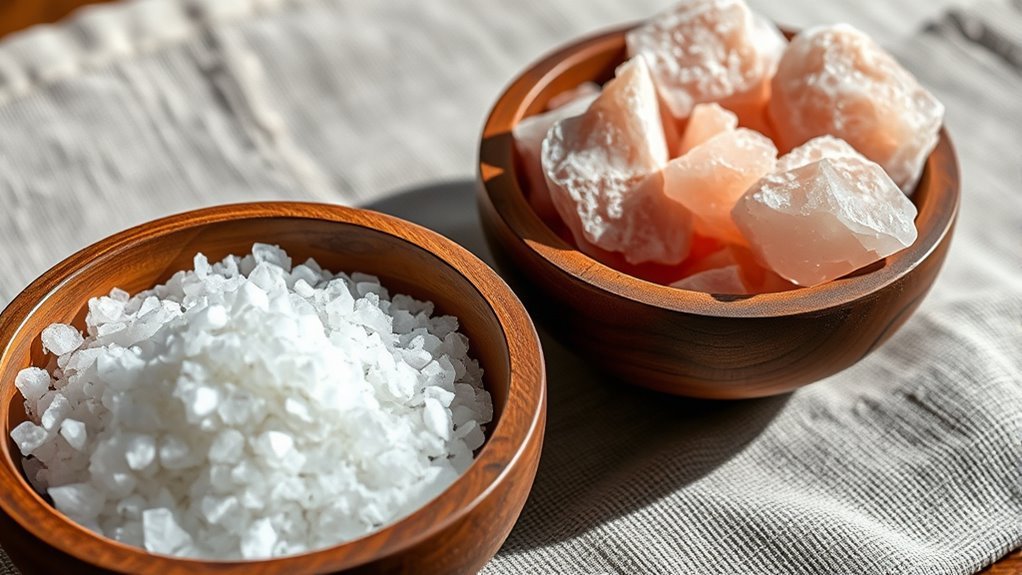
Although both Himalayan and sea salt come from natural sources, they differ considerably in origin, mineral content, and processing methods. When you choose Himalayan salt, you’re getting a product mined from ancient mountain deposits, rich in all 84 trace minerals.
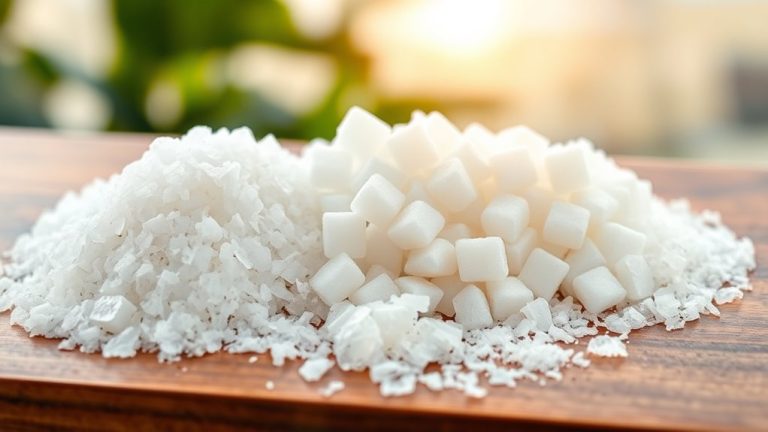
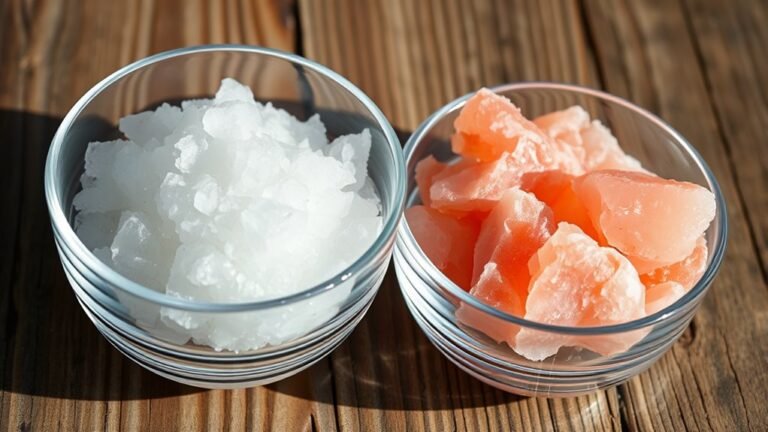
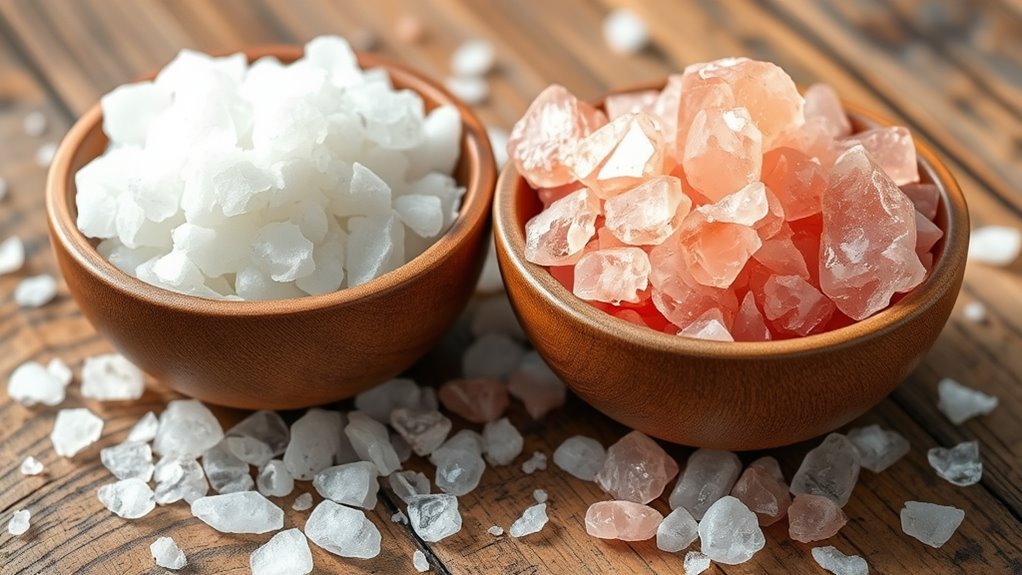
This gives it a unique pink or grey color, thanks to mineral impurities. In contrast, sea salt forms through the evaporation of seawater, so its mineral profile varies depending on where it’s harvested. You’ll find sea salt generally whiter, with fewer trace minerals.
Himalayan salt usually has a higher and more diverse mineral content, including calcium, magnesium, and iron. On the other hand, sea salt’s mineral content can be inconsistent.
Plus, Himalayan salt tends to be less contaminated by microplastics and pollution because it comes from pristine, ancient seas. Sea salt, however, is more exposed to ocean pollution, which can introduce microplastics and heavy metals.
In terms of processing, Himalayan salt is hand-mined and minimally processed, whereas sea salt undergoes more evaporation and refinement. So, depending on what you’re looking for, each salt has its own perks!
Origins and Mineral Content Compared
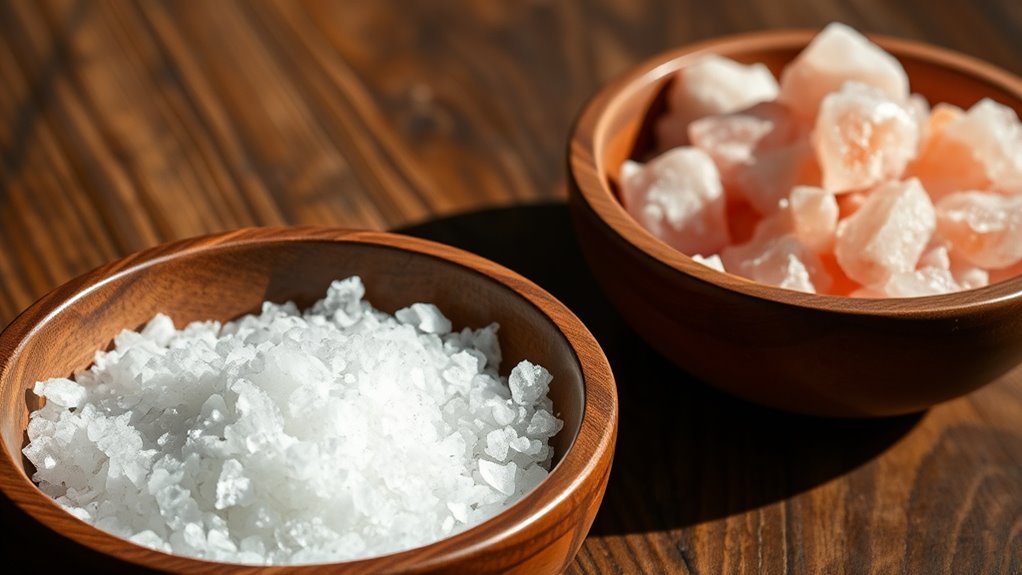
Understanding where Himalayan and sea salt come from and what minerals they contain can help you choose the best option for your needs. Himalayan salt is mined from ancient mountain deposits in Pakistan. It’s rich in all 84 essential trace minerals, which give it its pink or grey hue.
Its mineral profile reflects formation in a mineral-rich environment, free from modern environmental pollutants. In contrast, sea salt is harvested through evaporation of seawater, and its mineral content varies depending on geographic salt origin.
Sea salt typically contains magnesium, calcium, and potassium but may also include microplastics and other environmental pollutants due to ocean contamination. Himalayan salt generally has a higher concentration of diverse mineral impurities, while sea salt tends to be whiter and less mineral-dense.
Hydration and Blood Pressure Effects of Both Salts
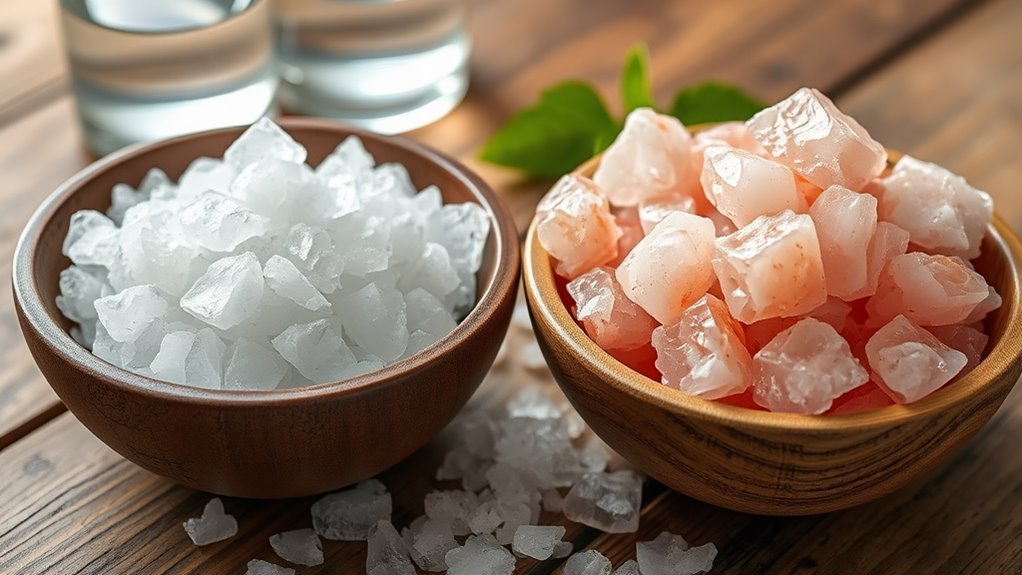
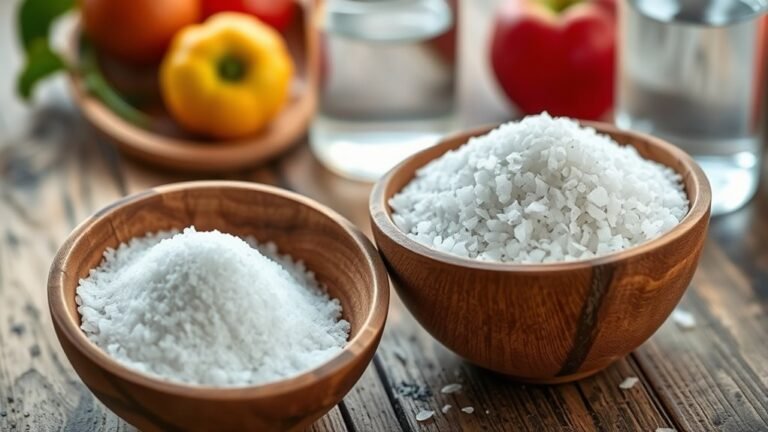
How do sea salt and Himalayan salt affect your hydration and blood pressure? Both salts contain less sodium per teaspoon than table salt, with Himalayan salt having slightly less sodium than sea salt. This difference can influence your hydration and blood pressure in subtle ways.
Salt helps with water absorption into cells, supporting hydration and maintaining electrolyte balance, especially after exercise or dehydration. However, excessive sodium intake from either salt can lead to fluid retention and increased blood pressure.
Consider these key points:
- Himalayan salt’s lower sodium content may offer a slight advantage in controlling blood pressure.
- Both salts aid hydration by promoting water absorption and electrolyte balance.
- Moderation is essential since too much sodium from any source can raise blood pressure through fluid retention.
Ultimately, your overall sodium intake matters more for hydration and blood pressure than the salt type you choose. So, it’s more about how much salt you consume rather than which one you pick.
Mineral Benefits and Health Considerations
While Himalayan salt contains all 84 essential trace minerals, including calcium, magnesium, and potassium, you shouldn’t expect these minerals to provide meaningful health benefits because their amounts are very small. Its unique mineral composition offers greater mineral diversity compared to most sea salts, which vary in mineral content depending on origin but generally contain fewer trace minerals.
Despite this, the nutritional benefits from these trace amounts are negligible. Both salts have similar sodium levels per teaspoon, meaning the mineral differences don’t meaningfully affect your overall sodium intake or health considerations.
The trace minerals in Himalayan salt, like iron oxide that gives its pink color, don’t significantly impact your health. Ultimately, while the mineral diversity of Himalayan salt might seem appealing, you won’t gain notable health benefits from these trace minerals alone.
Your focus should remain on moderating sodium intake rather than relying on salt’s mineral content for nutritional advantages.
Safety and Which Salt Is Healthier to Use
Because Himalayan salt is mined from ancient deposits untouched by modern pollution, it generally offers a cleaner and safer option for culinary use compared to sea salt. Sea salt can contain microplastics and heavy metals from ocean contamination.
You should consider safety and health risks when choosing between these salts. While both contain mostly sodium chloride, Himalayan salt’s minimal processing and natural origin reduce exposure to pollutants. Sea salt’s contact with ocean pollutants increases the potential for microplastics ingestion, posing long-term health concerns.
Keep these points in mind: Himalayan salt has fewer contaminants due to its natural origin and careful processing. Sea salt may introduce microplastics and heavy metals, raising safety concerns.
Regardless of salt type, managing sodium intake is vital to minimize health risks.
Ultimately, Himalayan salt is generally the healthier choice based on purity and safety. But remember, moderation in sodium consumption remains key to your well-being.
Frequently Asked Questions
Is Himalayan Salt as Healthy as Sea Salt?
Yes, Himalayan salt can be as healthy as sea salt, but the differences are minimal. You’ll benefit more by moderating your salt intake than worrying about which type you use.
Both provide trace minerals, so the choice isn’t a huge deal. It’s really about how much salt you consume overall.
What Is the Healthiest Form of Salt to Eat?
The healthiest salt to eat is one you use sparingly. Focus on limiting overall sodium intake, regardless of type, and prioritize whole foods.
Honestly, neither sea salt nor Himalayan salt offers significant health advantages. So, it’s more about how much salt you use, not really the kind. Keep it simple and don’t go overboard!
What Are the Disadvantages of Himalayan Pink Salt?
Himalayan pink salt isn’t all sunshine and rainbows; it can contain trace heavy metals and pollutants. You might pay more for it, yet gain little health benefit.
Over time, you risk consuming too much sodium and potential contamination. So, it’s worth thinking twice before making it your go-to salt.
Can I Replace Sea Salt With Pink Himalayan Salt?
Yes, you can replace sea salt with pink Himalayan salt in recipes. They have similar sodium levels and flavor, so your dish won’t change much.
Though Himalayan salt’s mineral content might add a subtle taste difference. It’s a small change, but some people notice it and like it!
Conclusion
When you choose between Himalayan and sea salt, you might find it’s no coincidence that both offer unique benefits. Himalayan salt’s rich minerals can boost your hydration, while sea salt’s trace elements support your overall health.
You’ll notice their differences in taste and texture too, making your meals more enjoyable. So, whether you pick one or the other, you’re already stepping toward a healthier lifestyle without even realizing it!
Both Himalayan salt and sea salt bring valuable nutrients to the table. Himalayan salt is known for its pink hue and mineral content, including potassium and magnesium, which can aid hydration. On the other hand, sea salt contains natural trace elements that promote overall well-being.
Choosing between sea salt or Himalayan salt ultimately depends on your taste preference and nutritional goals. Either way, incorporating these salts into your diet can enhance flavor and contribute to better health, making both excellent choices for a balanced lifestyle.