
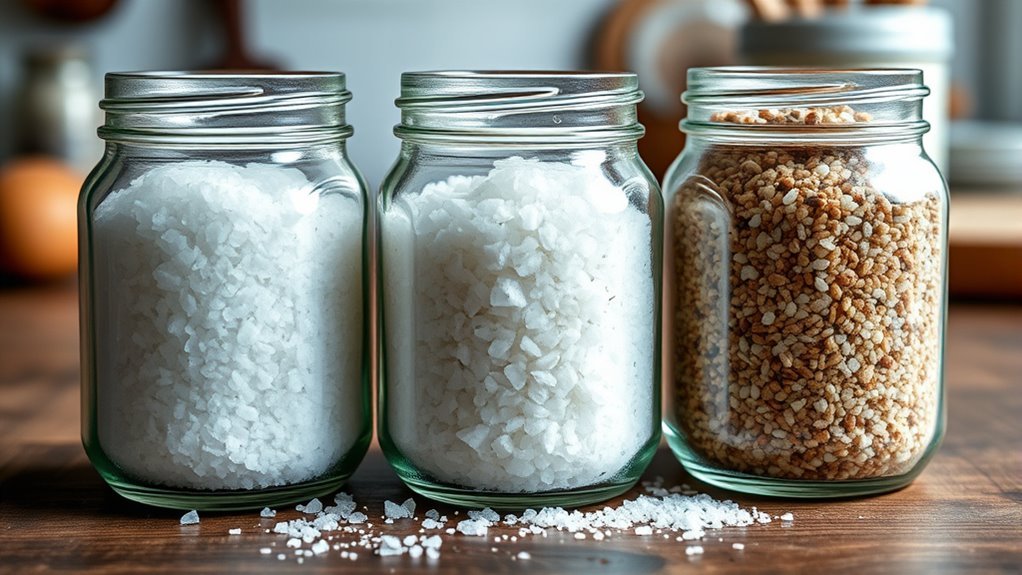
3 Reasons to Think Twice Before Using Kosher Salt Substituted for Canning Salt
You should think twice before substituting kosher salt for canning salt because its larger crystals make volume measurements unreliable, risking unsafe salt levels. This can be a real problem when you’re trying to preserve food safely.
Getting the salt amount wrong might spoil your batch or even cause health risks.
The coarse texture of kosher salt also slows down how quickly it dissolves. That means your brine might not be evenly salty, which affects the pickling process and overall quality.
Nobody wants uneven flavors in their homemade pickles, right?
Plus, additives and minerals in kosher salt can cloud your brine and change its appearance. This can compromise the look and preservation of your canned goods.
If you want to keep your canned foods safe and tasty, understanding proper measurement and salt choice is key—and there’s definitely more to take into account.
Key Takeaways
- Kosher salt’s larger crystals cause inaccurate volume measurements, which can risk unsafe salt levels in your preservation process.
- Plus, the coarse grains dissolve slowly. This leads to uneven brine concentration and can delay fermentation.
- Also, additives and minerals in kosher salt might cloud your brine and discolor your preserved foods.
- It’s really important to use weight-based measurement because volume conversions between kosher and canning salt just aren’t reliable.
- If you underdose or overdose salt by substituting, it can compromise both the safety and quality of your canned goods.
Can You Safely Substitute Kosher Salt for Canning Salt?
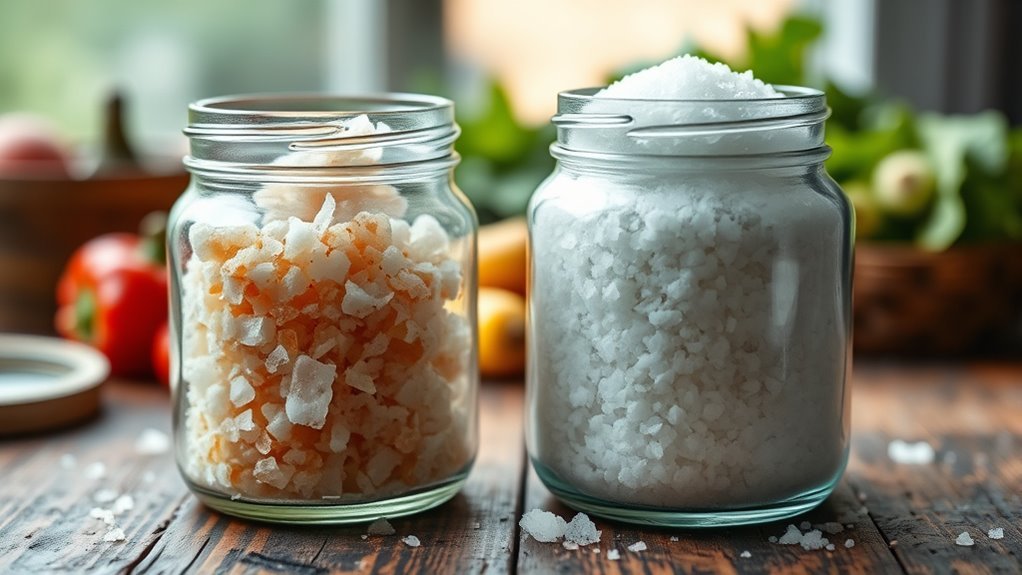
Can you safely substitute kosher salt for canning salt? While it’s technically possible, you need to be cautious. Kosher salt’s larger crystals can throw off measurement accuracy, leading to uneven salting in your recipes.
If you rely on volume measurements, you risk not hitting the precise salt levels required for safe food preservation. This is especially critical for fermentation, where exact salt amounts prevent harmful bacteria growth.
Additionally, kosher salt often contains anti-caking agents and minerals that can cause a cloudy brine or discoloration. This can impact the appearance and quality of your preserved foods.
To safely use kosher salt as a salt substitution, you must weigh it carefully to match the exact salt content called for in canning salt recipes. Without this precision, you compromise food safety and the effectiveness of your preservation efforts.
How Kosher Salt’s Texture Affects Pickling and Canning Results
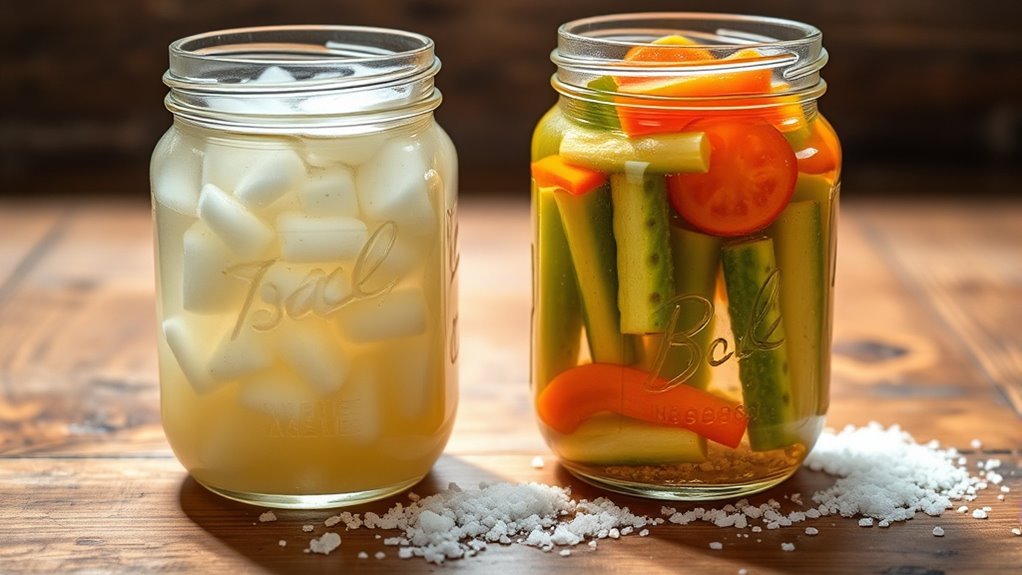
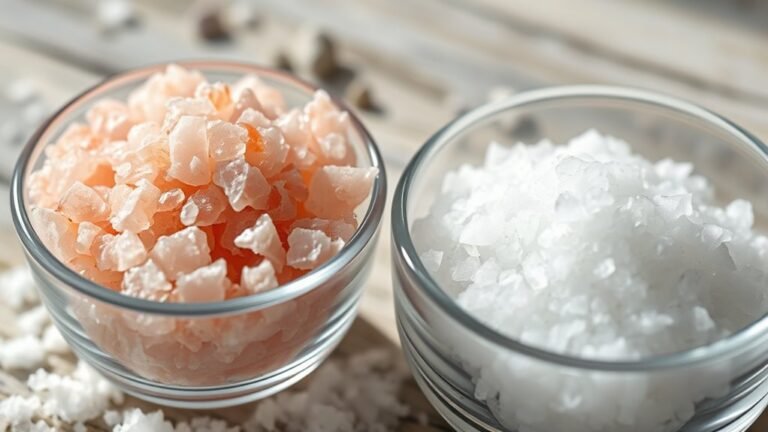
Understanding how kosher salt’s texture influences your pickling and canning results can help you avoid common pitfalls. Kosher salt’s coarse grain size means its chunky crystals dissolve more slowly than fine pickling salt, which can lead to uneven brine concentration.
Kosher salt’s coarse grains dissolve slowly, potentially causing uneven brine concentration in pickling and canning.
This slower dissolution rate may leave undissolved particles in your brine, reducing brine clarity and affecting the appearance of your preserved foods. In pickling and fermentation, uniform salt distribution is essential. Uneven salt can delay fermentation or alter the final flavor and texture.
Because kosher salt’s larger crystals don’t measure the same volume as finer salts, relying on volume-based salt measurement can cause inconsistencies in your recipes. These texture differences impact not only flavor but also the safety and quality of your canned or pickled foods.
Paying attention to kosher salt’s unique texture guarantees you get reliable, tasty results when preserving at home.
Measuring Kosher Salt Correctly for Canning Salt Substitution
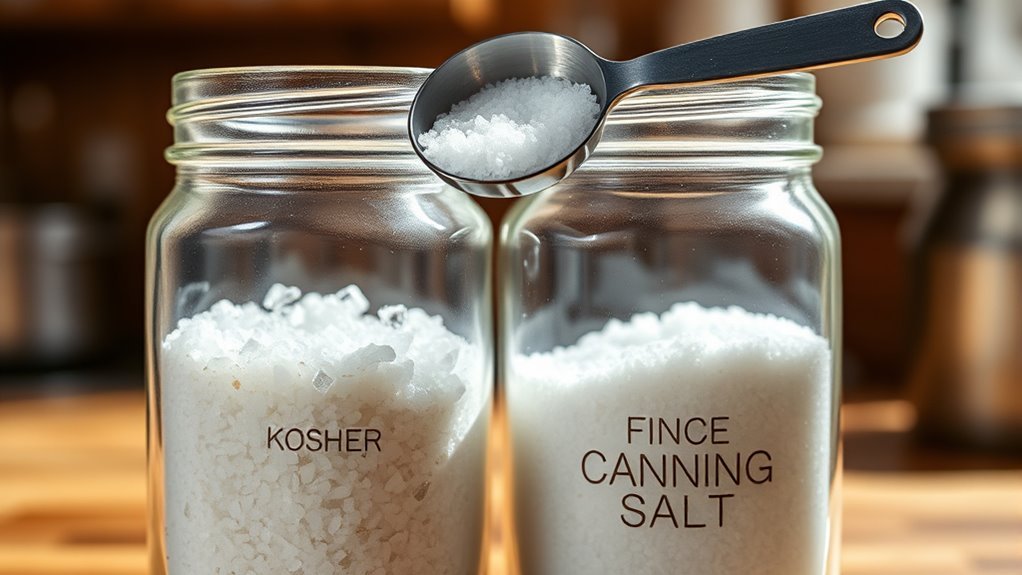
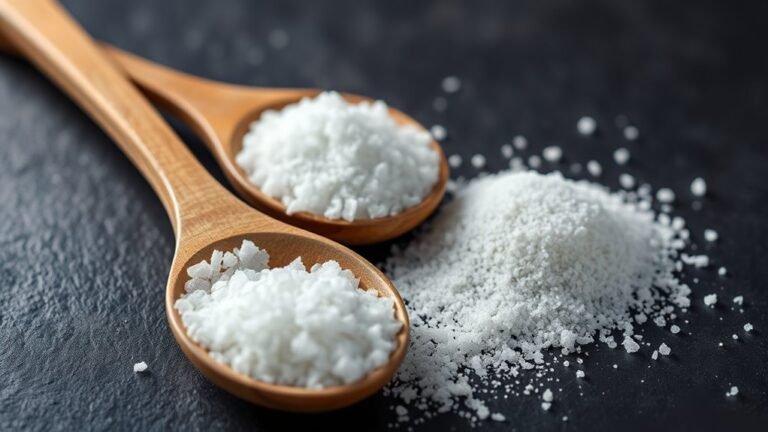
Since kosher salt crystals are larger and less dense than canning salt, you’ll need to measure it by weight rather than volume to get accurate results. When measuring kosher salt for canning salt substitution, rely on weight measurement to guarantee canning safety and consistent flavor.
Because of its grain size and salt density, volume measurements can lead to under- or over-salting. You can pulse kosher salt in a food processor to create finer grains that dissolve more evenly.
Use the table below for quick salt conversion and recipe adjustment:
| Salt Type | Volume (1 tbsp) | Weight (oz) | Notes |
|---|---|---|---|
| Canning Salt | 1 tbsp | 0.75 | Fine grain, high density |
| Kosher Salt (coarse) | 1 tbsp | 0.625 | Larger grain, lower density |
| Kosher Salt (processed) | 1 tbsp | ~0.70 | Finer grain after processing |
| Recommended Weight | – | Adjust accordingly | Use scale, not volume |
| Measurement Tip | – | Use kitchen scale | Ensures accurate measurement |
Always prioritize weight for safe, reliable results.
Frequently Asked Questions
Can I Use Kosher Salt Instead of Canning Salt?
You can use kosher salt instead of canning salt, but you need to weigh it carefully since its larger grains affect volume.
Keep in mind it may dissolve slower and contain additives that impact your preserves’ quality. So, it’s not always a perfect swap. Just be sure to check the ingredients on your kosher salt package before you start.
Do Chefs Prefer Kosher Salt or Sea Salt?
Chefs usually prefer kosher salt for its clean flavor and easy handling. But you might choose sea salt when you want unique mineral flavors or a finishing touch.
It all depends on your cooking style and dish. So, think about what you’re making and how you want it to taste!
What Happens if I Use Sea Salt Instead of Kosher Salt?
If you use sea salt instead of kosher salt, you might end up with cloudy brine and uneven salting. It’s like mixing apples with oranges—your canned goods could lose safety, flavor, and that perfect texture you want.
Trust me, the difference in salt type really matters here. So stick with kosher salt for the best results!
How Much Kosher Salt Equals Canning Salt?
You’ll need about 1.5 times the volume of kosher salt to equal canning salt.
For example, 1 teaspoon of canning salt equals roughly 1.5 teaspoons of kosher salt by volume to match the weight. It’s a handy rule to keep in mind when you’re swapping salts in recipes.
Conclusion
When it comes to canning, don’t rush to swap kosher salt for canning salt without thinking twice. Its coarse texture and varying grain sizes can throw off your recipe’s balance, affecting taste and preservation.
Remember, “a stitch in time saves nine”—measuring kosher salt correctly or sticking to canning salt guarantees your pickles turn out just right.
So, play it safe and keep your canning results consistent by choosing the right salt from the start. Using kosher salt instead of canning salt can lead to inconsistent flavor and may compromise the preservation process. For the best outcome, always opt for canning salt when preserving your favorite foods. This simple step ensures your pickles and preserves stay safe, tasty, and perfectly seasoned every time.