
When to Use Salted Butter Vs Unsalted Butter – 5 Key Tips
You should use unsalted butter when you want full control over salt levels, especially in baking delicate cookies, cakes, or pastries where flavor consistency matters. It’s perfect for recipes that require precise seasoning.
Salted butter works best for spreading on bread, seasoning dishes like popcorn, and simplifying everyday cooking because it adds flavor and preserves freshness. It’s a convenient choice when you want a little extra taste without thinking about adding salt separately.
Remember to adjust added salt depending on which butter you use. Keep going to uncover how to balance flavors perfectly with each type.
Key Takeaways
- Use unsalted butter for baking to control salt levels and ensure consistent flavor in delicate recipes. It gives you more control over the taste.
- Choose salted butter for spreading on bread or enhancing savory dishes like popcorn and baked potatoes. It adds a nice little kick of flavor right away.
- Opt for unsalted butter when precise seasoning is required, as recipes typically assume its use. This way, you won’t accidentally over-salt your dish.
- Salted butter’s added salt acts as a preservative, extending shelf life for everyday cooking needs. So, it can be handy to have around for quick meals.
- Adjust added salt in recipes when substituting between salted and unsalted butter to maintain flavor balance. Just a small tweak keeps everything tasting just right.
What’s the Difference Between Salted and Unsalted Butter?
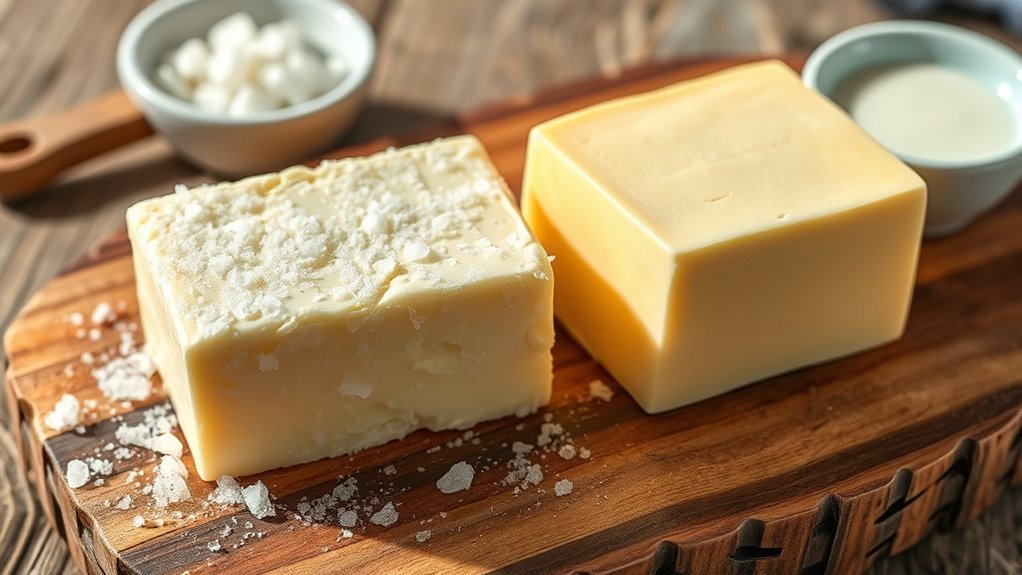
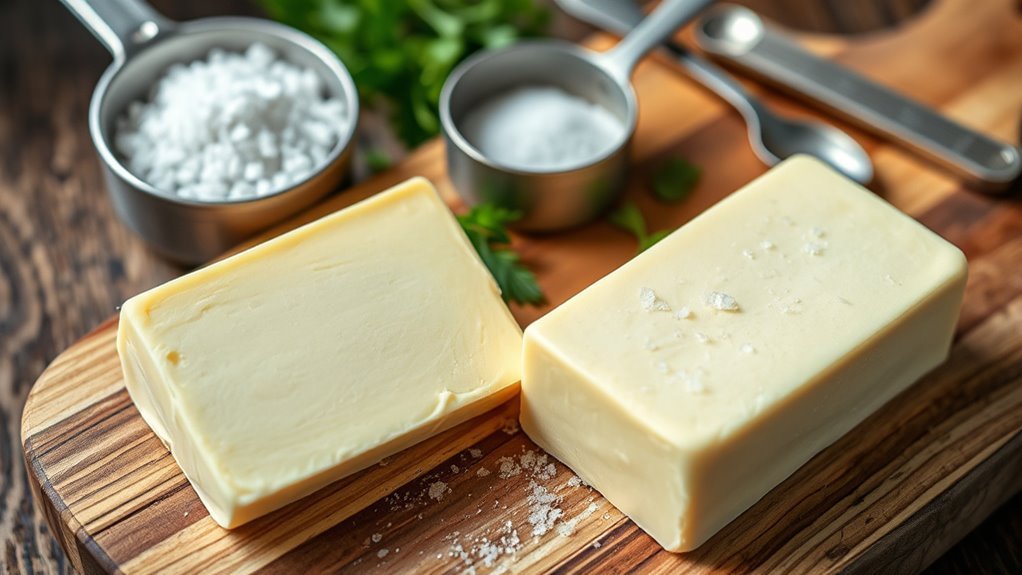
Although both salted and unsalted butter come from the same Grade AA cream, the key difference lies in the added salt content. Salted butter contains added salt, which varies by brand and batch, making its salt content less consistent.
Salted and unsalted butter share the same cream; the main difference is the added salt in salted butter.
This added salt not only influences flavor but also extends the shelf life of salted butter to about five months.
Unsalted butter, on the other hand, is made from pure cream without any added salt. This gives you precise control over salt levels in your recipe, especially important when baking where accuracy matters.
Choosing the right butter type depends on your culinary needs, but quality butter—whether salted or unsalted—starts with the same high-grade cream.
While salted butter offers convenience and longer shelf life due to its preservative salt, unsalted butter lets you tailor saltiness exactly. So, it’s a preferred choice when you want full control over flavor and seasoning.
When to Choose Unsalted Butter for Baking and Cooking
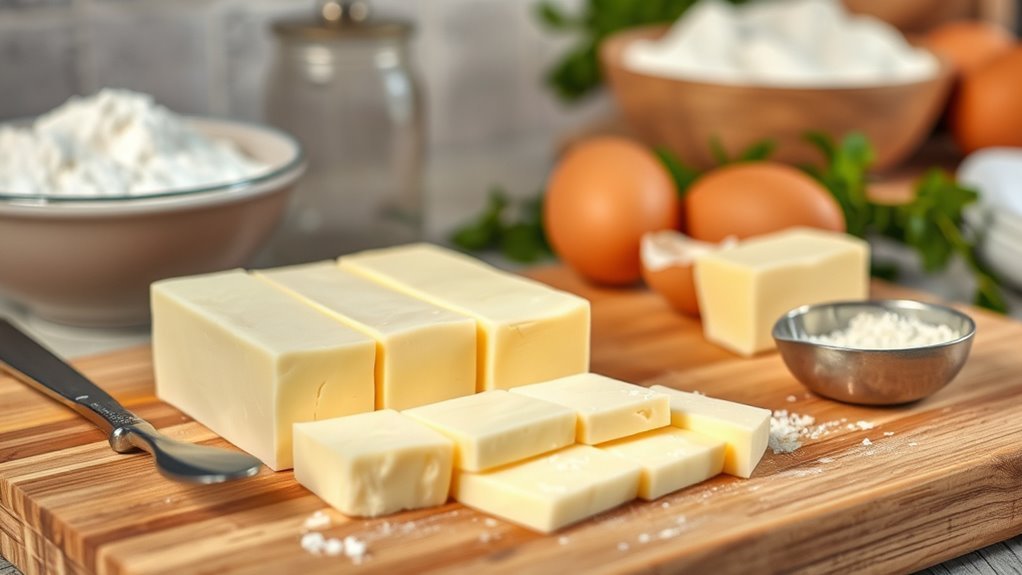
When you bake or cook, choosing unsalted butter gives you full control over the salt content in your dish. It lets you manage the flavor precisely, ensuring your recipes come out just right.
Unsalted butter is usually fresher than salted, providing a clean, natural taste that’s perfect for delicate baked goods. It really helps if you want to keep flavors subtle and balanced.
Use unsalted butter when you want:
- Precise measurement of salt in baking ingredients
- Consistent flavor without unexpected saltiness
- Fresh butter’s pure taste to enhance subtle flavors
- Control of salt in recipes like cookies, cakes, and pastries
- A neutral base for both baking and cooking
Why Salted Butter Works Best for Spreading and Everyday Use
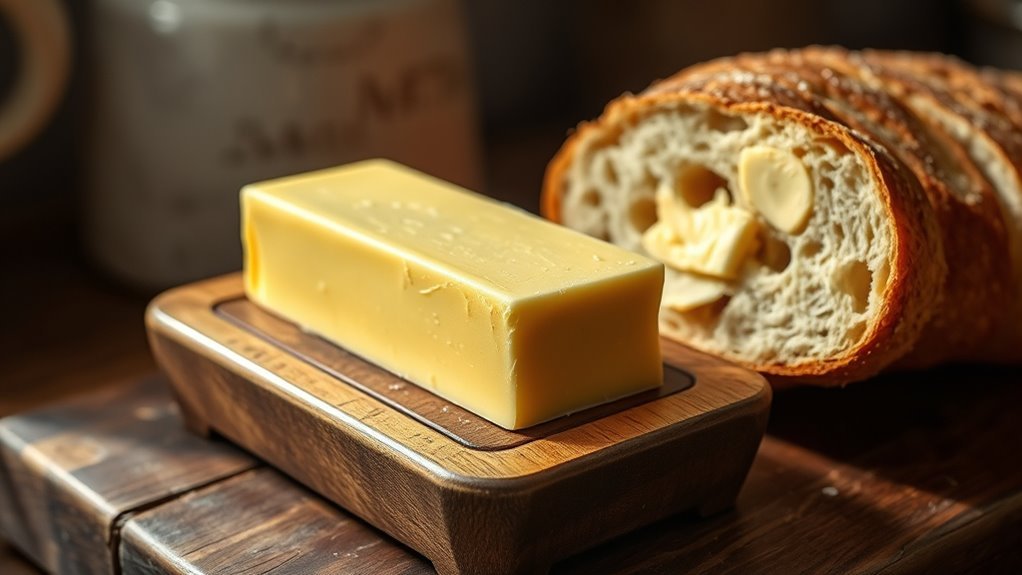
Because salted butter contains added salt, it enhances the flavor of bread and toast, making it an excellent choice for spreading. You’ll appreciate its savory taste that instantly elevates simple dishes like popcorn or baked potatoes.
The consistent salt content guarantees you get reliable flavor every time, so you don’t have to worry about adjusting seasoning. Salted butter also acts as a natural preservative, extending its shelf life, which makes it perfect for everyday use.
This convenience means you can keep it on hand without worrying about spoilage. Its culinary versatility goes beyond just spreading—salted butter simplifies meal prep by eliminating the need to add extra salt, saving you time and effort.
When you want a quick, flavorful addition to your meals, salted butter delivers consistent flavor and ease, making it your go-to for general spreading and everyday kitchen tasks.
Salted vs. Unsalted Butter in Baking: Managing Salt and Flavor
Selecting between salted and unsalted butter in baking directly impacts the flavor and salt balance of your final product. Using unsalted butter gives you full control over seasoning, ensuring the salt level matches what the recipe calls for.
Salted butter contains about 1/4 teaspoon of salt per 1/2 cup, but this varies by brand, making salt control tricky. For consistent flavor management and recipe adaptation, unsalted butter is usually preferred.
Here’s what you should keep in mind:
- Unsalted butter lets you precisely control salt levels in baked goods.
- Salted butter can add flavor but may cause unpredictable saltiness.
- Recipes usually assume unsalted butter for accurate salt control.
- Using salted butter requires adjusting added salt in the recipe.
- Control over seasoning is easier when you start with unsalted butter.
Choosing unsalted butter in baking helps you manage flavor and salt level with confidence.
How to Adjust Salt When Substituting Salted and Unsalted Butter
Controlling salt levels becomes even more important once you start swapping salted and unsalted butter in your recipes. When you substitute salted butter for unsalted, reduce the added salt by about 1/4 teaspoon per 1/2 cup of butter.
If you replace salted butter with unsalted, add the same amount to keep the flavor balanced. Since salt content varies by brand, taste and adjust accordingly to avoid over- or under-salting.
To make a precise recipe salt adjustment, consider measuring the baking salt in the butter or use the standard estimate.
Here’s a quick guide to help you adjust salt when you substitute butter:
| Butter Substitution | Salt Adjustment Needed |
|---|---|
| Salted butter → Unsalted | Reduce added salt by 1/4 tsp |
| Unsalted butter → Salted | Add 1/4 tsp salt per 1/2 cup |
| Salt variation in brands | Taste & adjust salt accordingly |
Keep these tips in mind to perfectly balance salt in your dishes.
Frequently Asked Questions
How to Know When to Use Salted Vs Unsalted Butter?
You use unsalted butter when you need control over salt, especially in baking or delicate dishes. It lets you add just the right amount of salt without guessing.
Salted butter works well for general cooking or spreading. But if you swap it into recipes, make sure to adjust the added salt so your dish doesn’t get too salty.
How Bad Is It if I Use Salted Butter Instead of Unsalted Butter?
It’s not terrible if you use salted butter instead of unsalted, but your baked goods might end up saltier or unevenly seasoned. Just reduce added salt to keep flavors balanced and avoid overpowering your dish.
Honestly, it’s pretty easy to adjust. Just keep an eye on how much salt you add next time you bake, and you’ll be fine. No big deal!
Do Chefs Prefer Salted or Unsalted Butter?
Chefs prefer unsalted butter because it lets you control the salt precisely and guarantees fresher, more consistent results.
You might keep salted butter handy for spreading or finishing dishes where extra flavor’s welcome. It’s all about knowing when to use which.
What Butter Do Chefs Prefer?
Chefs usually prefer unsalted butter because it lets you control the saltiness and guarantees freshness.
You’ll find them using salted butter sometimes for flavor in savory dishes, but unsalted is their primary choice overall. It just gives them more flexibility in the kitchen.
Conclusion
So, next time you’re lost in the butter aisle, remember: unsalted butter is your baking BFF, letting you play salt boss. Salted butter? Perfect for your toast’s daily drama.
Don’t overthink it—unless you want your cookies tasting like the ocean or your bread as bland as your Monday morning. Butter wisely, my friend.
After all, life’s too short for salty disasters or flavorless fails! Choosing between salted butter and unsalted butter can really make or break your recipe. So keep these tips in mind to master your cooking and baking every time. Whether you’re aiming for perfect cookies or that ideal toast, knowing when to use salted butter vs unsalted butter is key to delicious results.